2026 Dividend Kings List: All 58 Ranked & Analyzed
There are 58 Dividend Kings in 2026, companies that have raised their dividends for at least 50 consecutive years. Pentair, Carlisle, and McDonald's reached that mark in the past year. Kenvue left the list in November 2026, when Kimberly-Clark completed its acquisition of the company. Black Hills remains on the list under its new name, Bright Horizon Energy, after completing its merger with NorthWestern Energy in November 2026.
We rate all 58 for dividend safety. Twenty-eight earn a Very Safe Dividend Safety Score and 25 score Safe. Four are Borderline Safe, and one, Universal, scores Unsafe.
A 50-year streak is not a guarantee. We lowered the Dividend Safety Scores of 15 Kings over the past 12 months and raised two. Six of the downgrades were tied to acquisitions, and three to shoppers trading down to cheaper brands.
Unlike Dividend Aristocrats, Dividend Kings do not need to belong to the S&P 500, so the list includes small companies such as Tootsie Roll, Middlesex Water, and Farmers & Merchants Bancorp.
2026 Dividend Kings List by Yield
Here is every Dividend King, with its current yield and Dividend Safety Score:
Clorox is next in line to be crowned. Its July 2026 raise was its 49th in a row, so another increase in 2027 would make it a King. Medtronic and Sherwin-Williams, both with streaks in the high 40s, follow.
How Safe Are the Dividend Kings' Dividends?
To see what owning all of them looks like, we built an equal-weight portfolio of all 58 Dividend Kings in our portfolio tools, putting about $1,724 into each for a $100,000 total.
It yields 2.54%, or about $2,540 a year in dividends. Its beta, a measure of how much a portfolio moves with the market, is 0.65, so it has been about a third less volatile than the S&P 500.
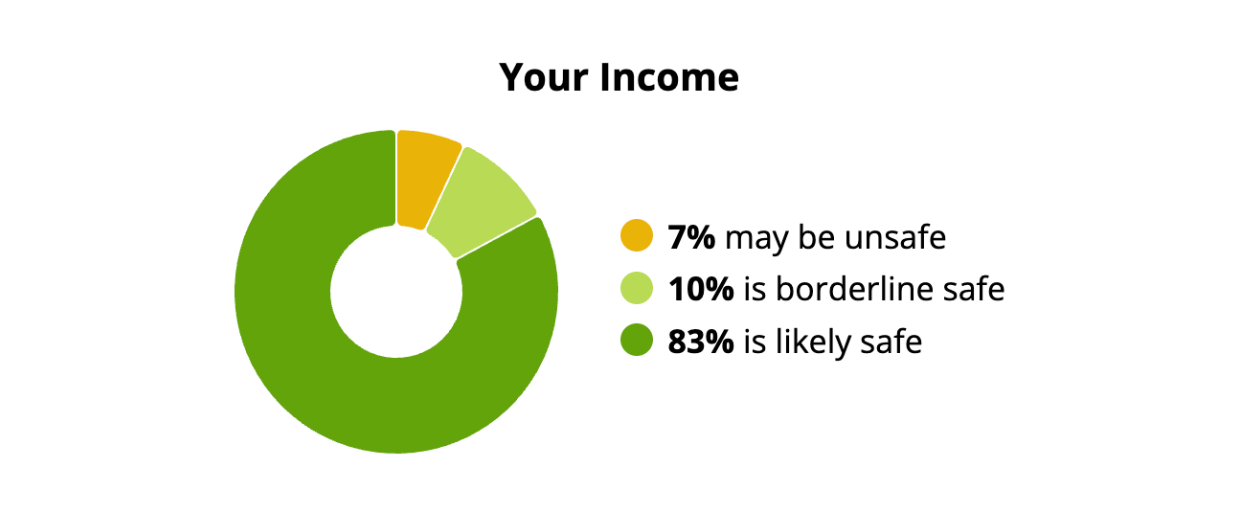
Most of that income is well protected. Stocks with Safe or Very Safe Dividend Safety Scores produce 83% of the portfolio's income. The four Borderline Safe names, Altria, Stanley Black & Decker, Genuine Parts, and Sysco, produce 10%, and Universal alone produces the remaining 7%.
The downgrades of the past year show where the pressure is. Six came after companies agreed to large acquisitions or received a buyout offer: Sysco, H2O America, Marzetti, Pentair, Genuine Parts, and Hormel. Deals add debt and take management's attention, which leaves less room for error.
Three more reflected shoppers trading down to store brands and cheaper products. Procter & Gamble, PepsiCo, and Stepan all saw volumes slip as years of price increases pushed consumers toward value.
Only two of those nine, Sysco and Genuine Parts, fell below Safe. That is the usual pattern for Kings, with slower dividend growth showing up long before any threat to the payout itself.
Dividend Kings' Performance, Sector Mix, and Dividend Growth
Over most long-term periods, the current group of Dividend King stocks has delivered similar total returns to the S&P 500 but with lower volatility.
However, in recent years the Kings have not kept up with the increasingly tech-heavy S&P 500 as investors have flocked to growth stocks and AI companies.
However, in recent years the Kings have not kept up with the increasingly tech-heavy S&P 500 as investors have flocked to growth stocks and AI companies.
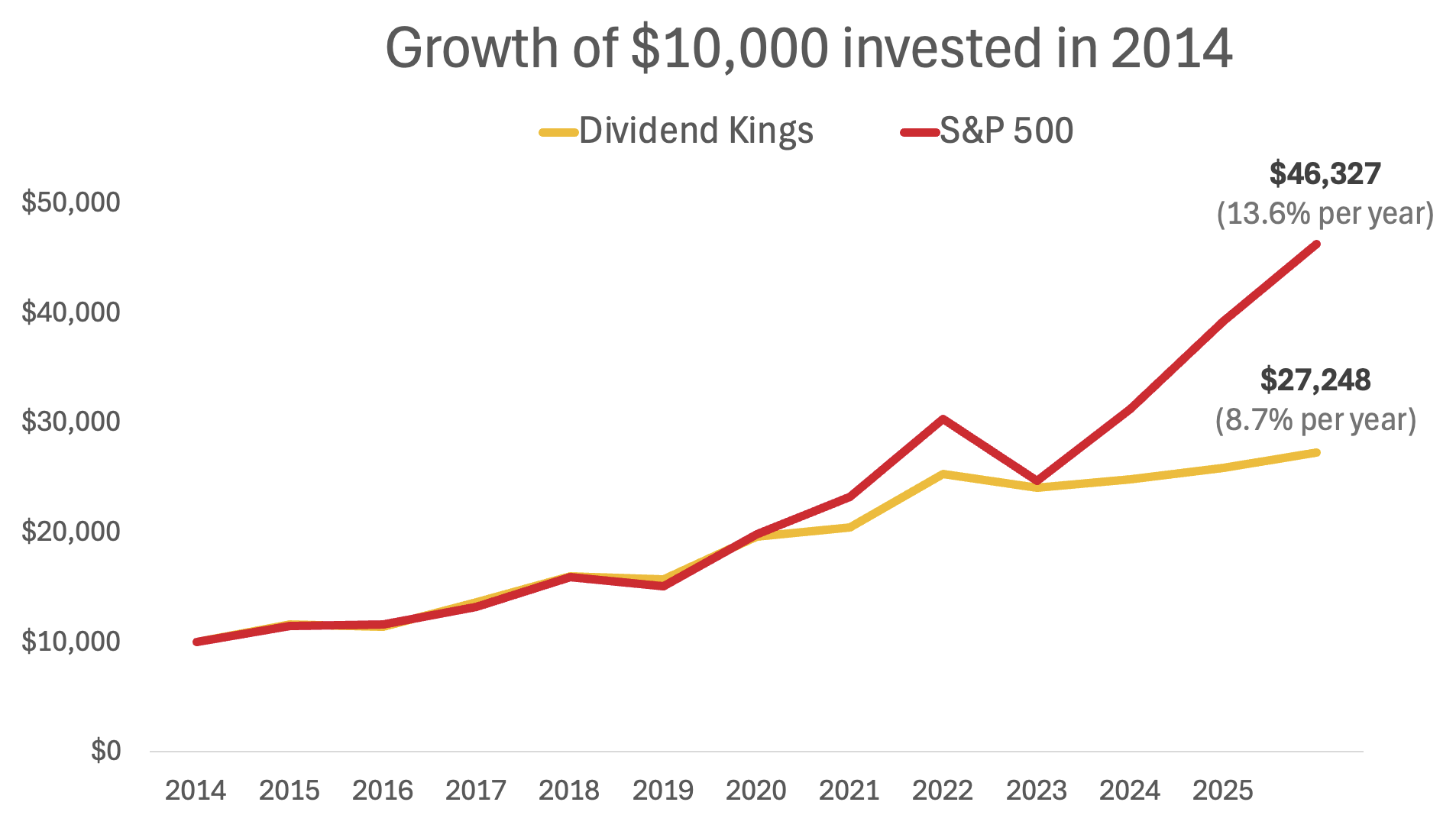
This shortfall doesn't come as a big surprise since the Dividend Kings look nothing like the S&P 500, which is nearly half made up of tech stocks (including Amazon, Meta, and Alphabet, which are technically in other sectors).
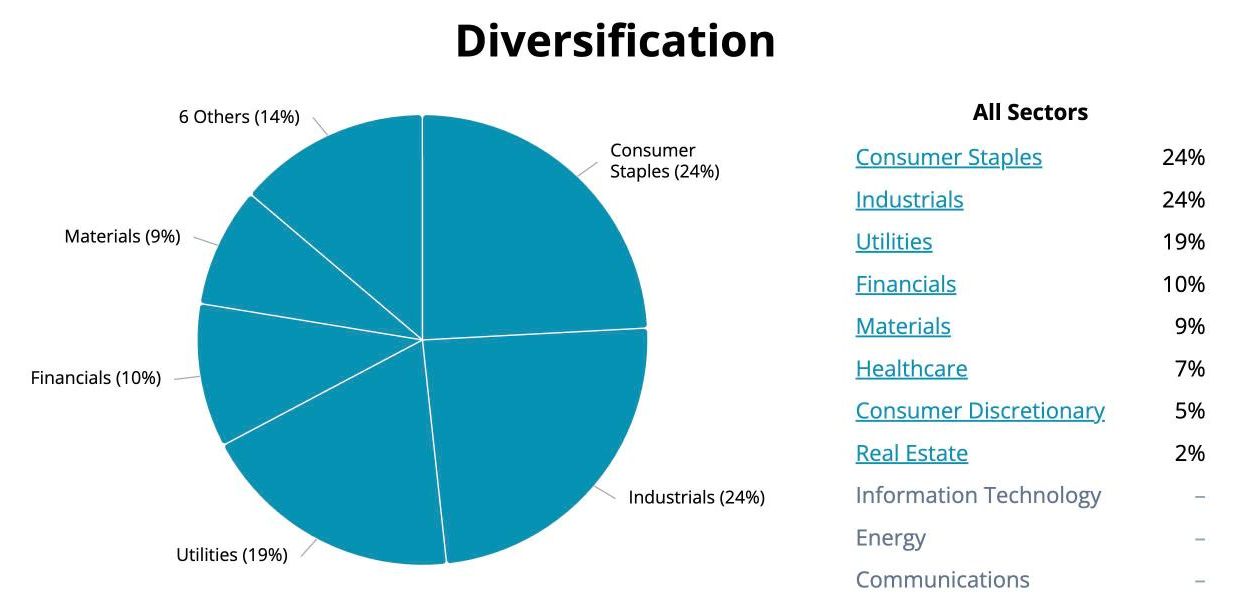
No Dividend Kings are in the technology, communications, or energy sectors. Consumer staples and industrials each make up 24% of an equal-weight portfolio of the Kings, followed by utilities at 19%.
These businesses generally sell things that are needed regardless of the economy, either because demand is inelastic, regulatory support limits competition, switching is more trouble than it's worth, or the consequences of changing suppliers are too risky to contemplate.
These businesses generally sell things that are needed regardless of the economy, either because demand is inelastic, regulatory support limits competition, switching is more trouble than it's worth, or the consequences of changing suppliers are too risky to contemplate.
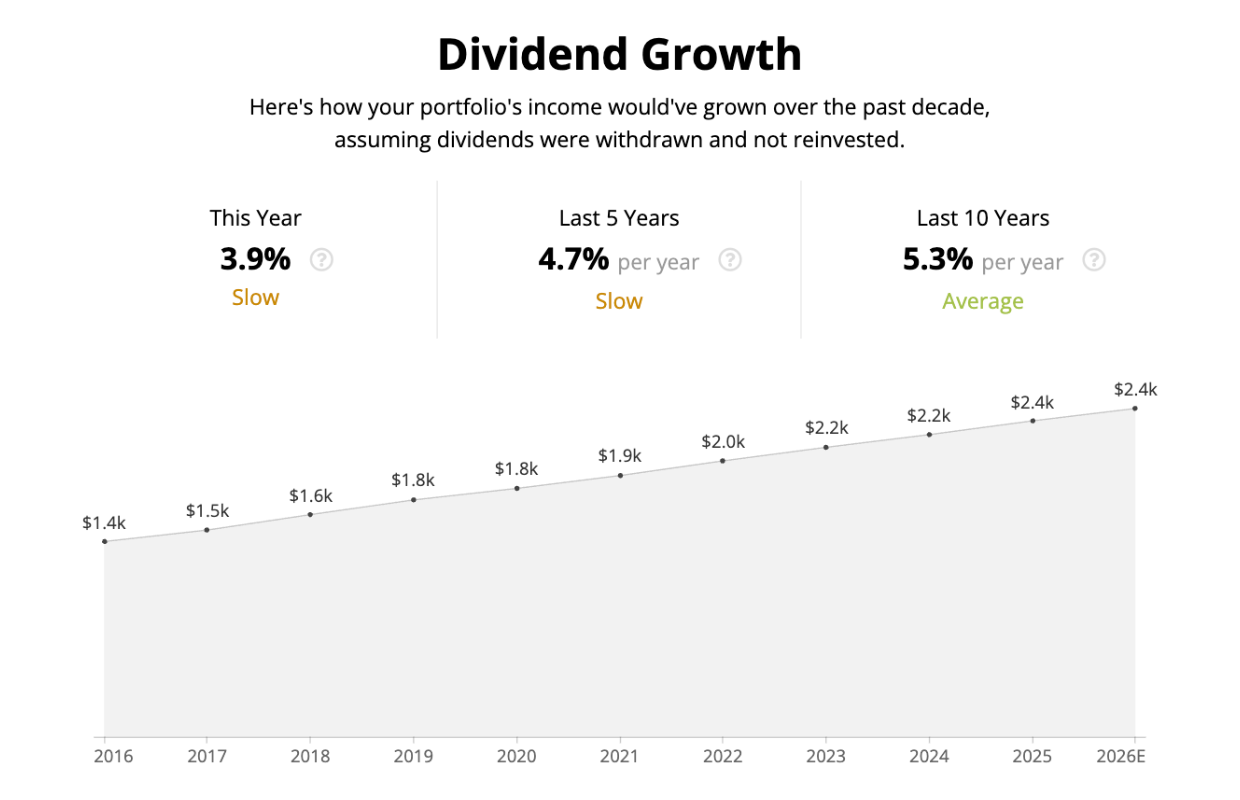
What Dividend Kings lack in excitement they make up for with consistency. The equal-weight portfolio's dividend income grew from about $1,480 in 2016 to an estimated $2,500 in 2026, or 5.3% a year. Growth has slowed to 4.7% a year over the past five years and 3.9% this year.
There is some survivorship bias since fallen Kings like 3M and Leggett & Platt are excluded, but we expect a similar pace of dividend growth to continue over the long run.
There is some survivorship bias since fallen Kings like 3M and Leggett & Platt are excluded, but we expect a similar pace of dividend growth to continue over the long run.
Every Dividend King Ranked by Dividend Safety
Below, we analyze all 58 Dividend Kings, ranked from safest to riskiest by Dividend Safety Score. Ties are broken by the length of each company's dividend growth streak, then by yield.
Each profile includes the company's payout ratio history and its current yield compared with its five-year average, a quick read on valuation.
Each profile includes the company's payout ratio history and its current yield compared with its five-year average, a quick read on valuation.
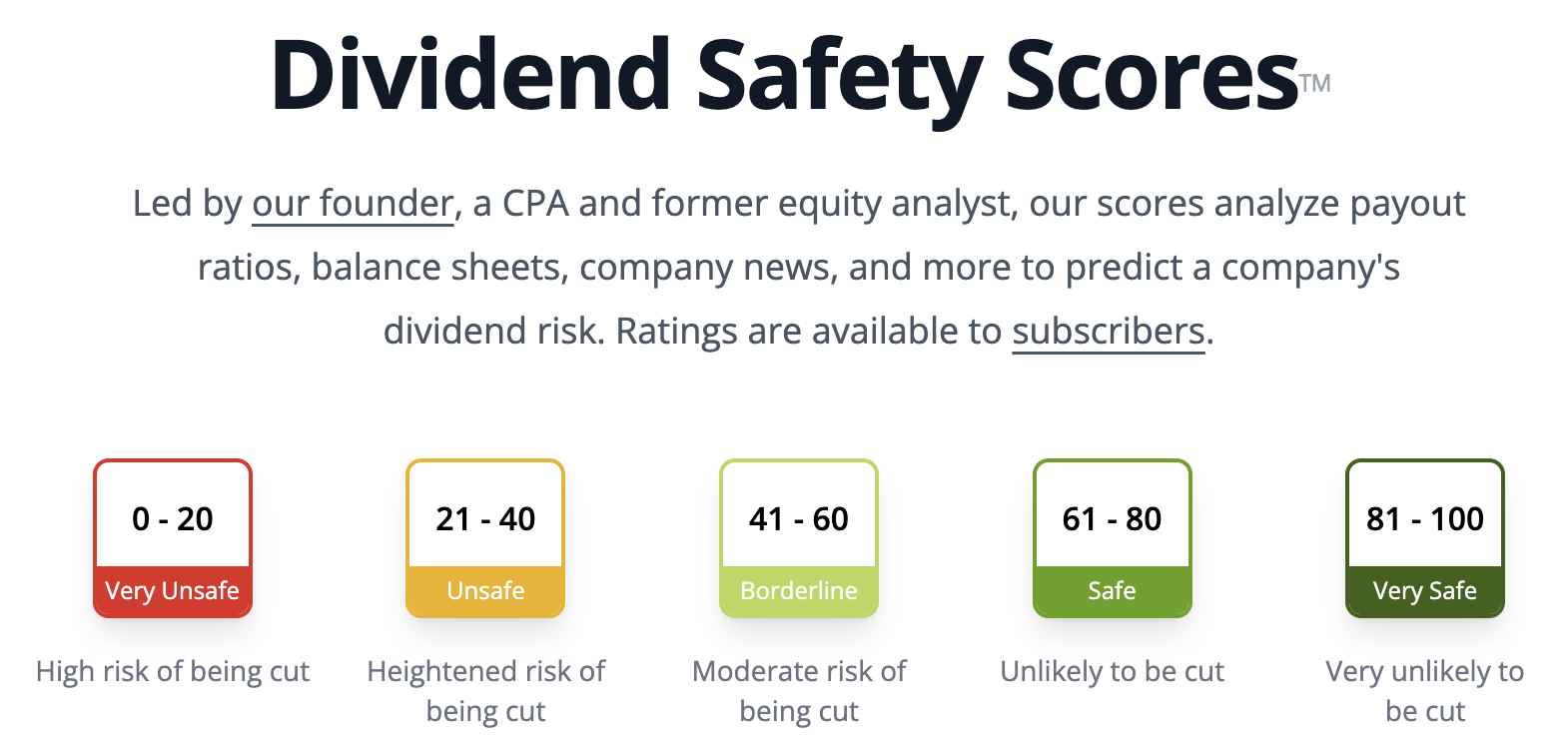
Our Dividend Safety Scores rate how likely a company is to cut its dividend, on a scale of 0 to 100. Scores of 81 to 100 are Very Safe, 61 to 80 Safe, 41 to 60 Borderline Safe, 21 to 40 Unsafe, and 20 or below Very Unsafe.
Scores are overseen by our analysts and weigh the payout ratio, which is the share of profits a company pays out as dividends, along with debt, recession performance, and industry trends. Our track record shows how they have performed in calling dividend cuts.
Scores are overseen by our analysts and weigh the payout ratio, which is the share of profits a company pays out as dividends, along with debt, recession performance, and industry trends. Our track record shows how they have performed in calling dividend cuts.
Johnson & Johnson (JNJ): Drug and Medical Device Maker, 63 Years of Dividend Growth
Sector: Healthcare – Pharmaceuticals
Dividend Growth Streak: 63 years
Dividend Safety Score: Very Safe (99)
Dividend Yield: 2.0%
Credit Rating: AAA
Dividend Growth Streak: 63 years
Dividend Safety Score: Very Safe (99)
Dividend Yield: 2.0%
Credit Rating: AAA
Johnson & Johnson now focuses on prescription drugs and medical devices after spinning off its consumer health business, Kenvue, in 2023. It plans to separate its orthopedics division, DePuy Synthes, as well.
It is one of only two U.S. companies with a AAA credit rating.
It is one of only two U.S. companies with a AAA credit rating.
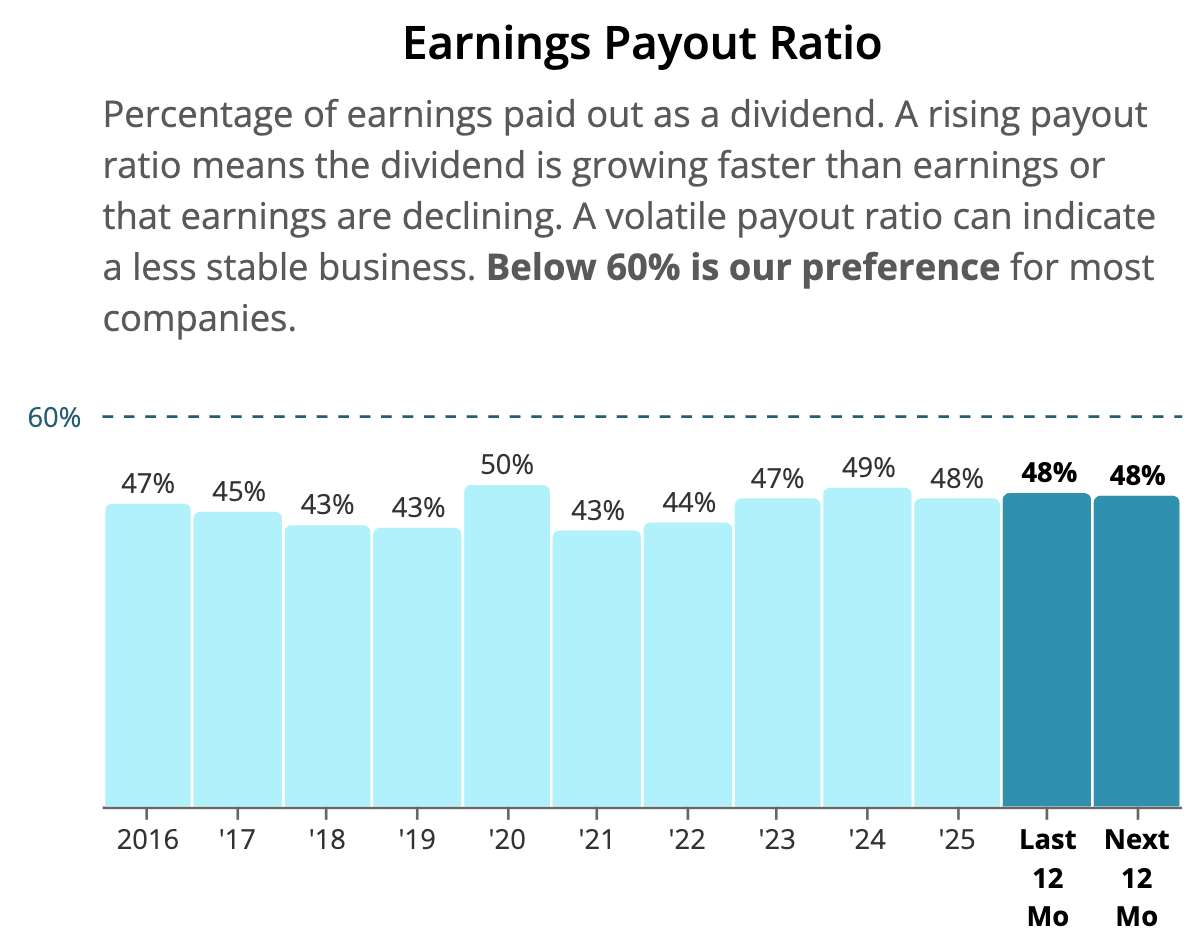
Johnson & Johnson has paid out between 43% and 50% of its earnings every year since 2016, a steady record for a drugmaker that constantly has to replace products losing patent protection.
Johnson & Johnson pays out 48% of its earnings, expected to be 48% next year.
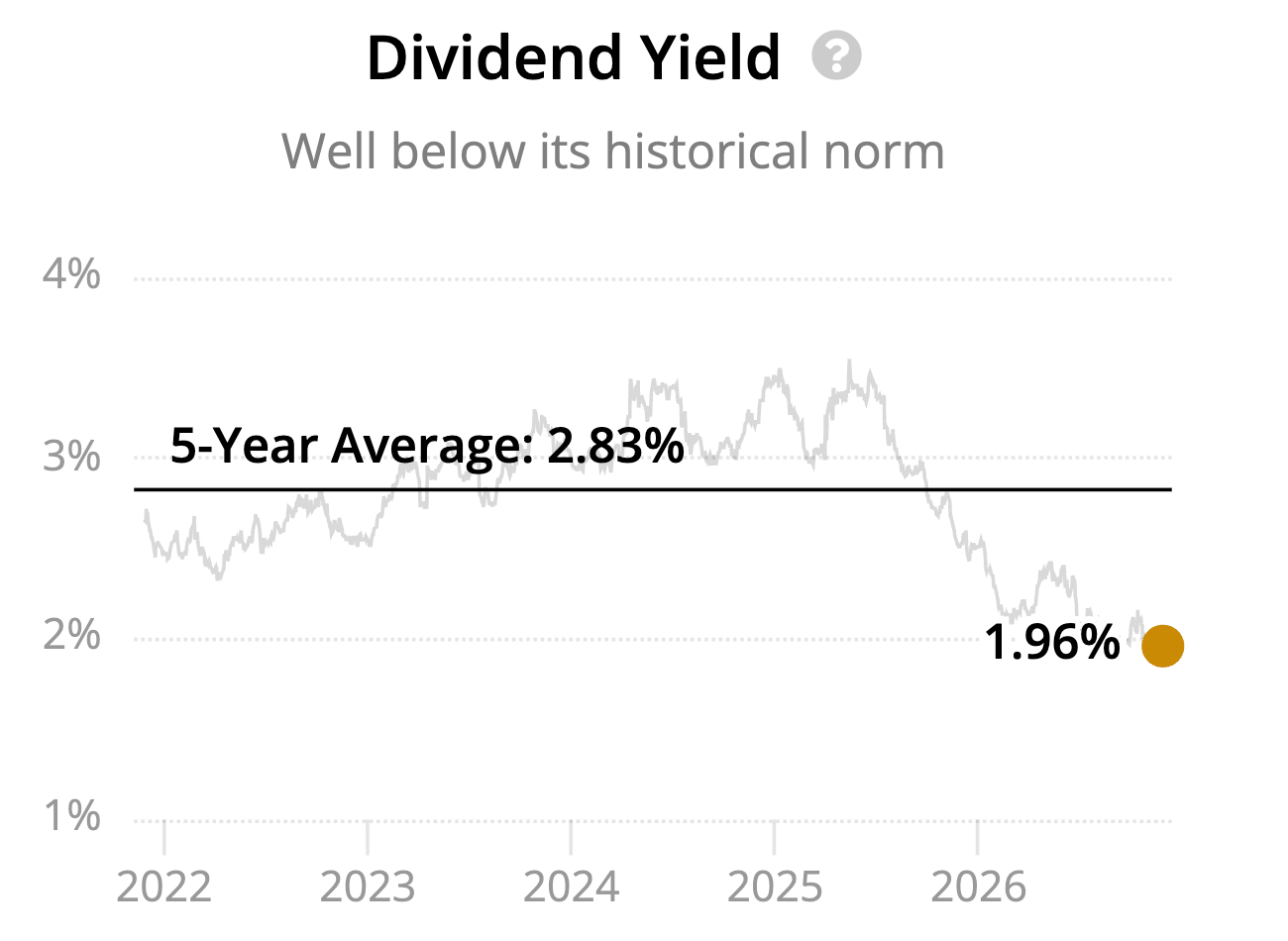
Shares have rallied, and the 1.96% yield sits well below its five-year average of 2.83%, which suggests the stock is pricier than usual.
MSA Safety (MSA): Safety Equipment Maker, 59 Years of Dividend Growth
Sector: Industrials – Office Services and Supplies
Dividend Growth Streak: 59 years
Dividend Safety Score: Very Safe (99)
Dividend Yield: 1.2%
Credit Rating: Not rated by S&P
Dividend Growth Streak: 59 years
Dividend Safety Score: Very Safe (99)
Dividend Yield: 1.2%
Credit Rating: Not rated by S&P
MSA Safety makes gas detectors, breathing equipment for firefighters, hard hats, and fall protection gear. Safety rules require much of this equipment, and replacement parts and service keep customers coming back.
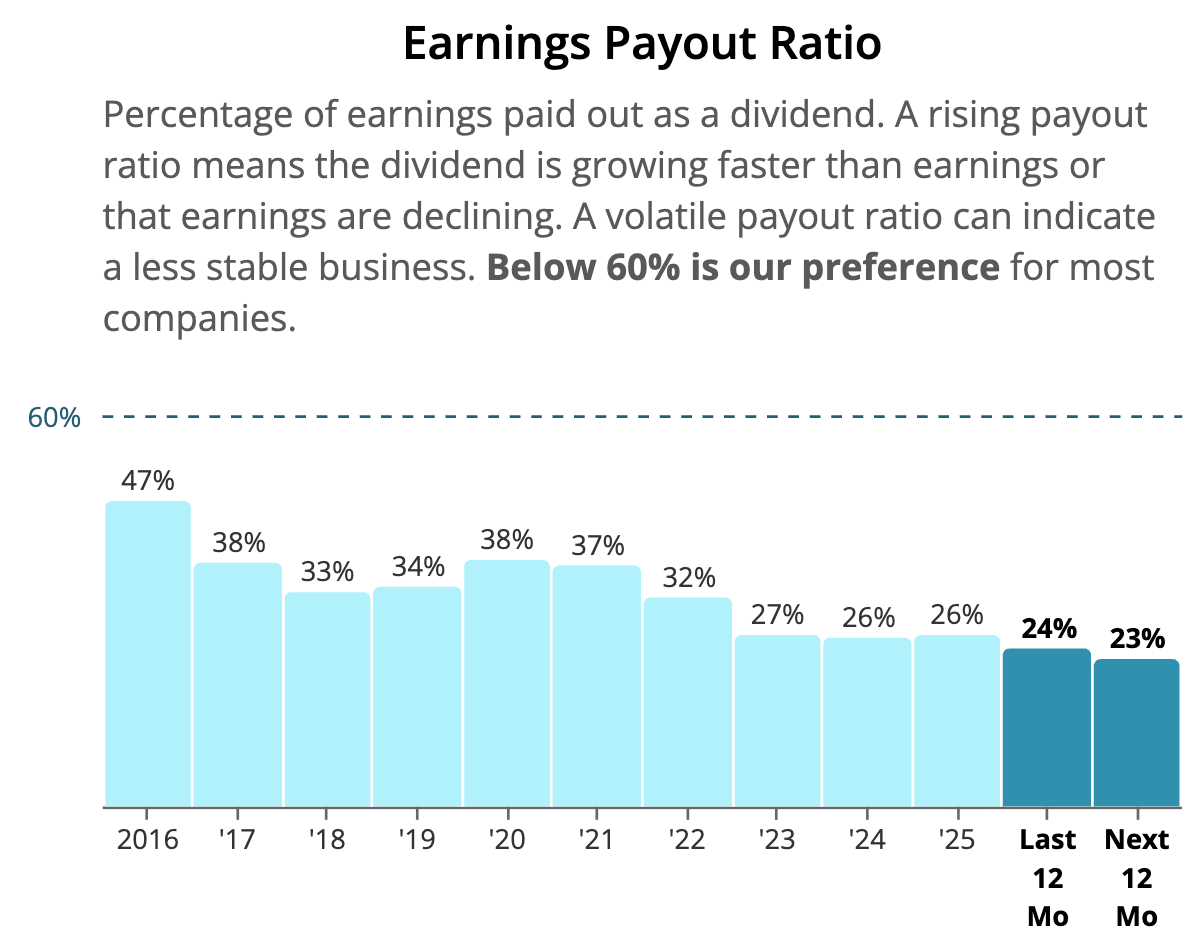
Its payout ratio has drifted down from 47% in 2016 to about 24% as earnings grew, and its leverage is very low.
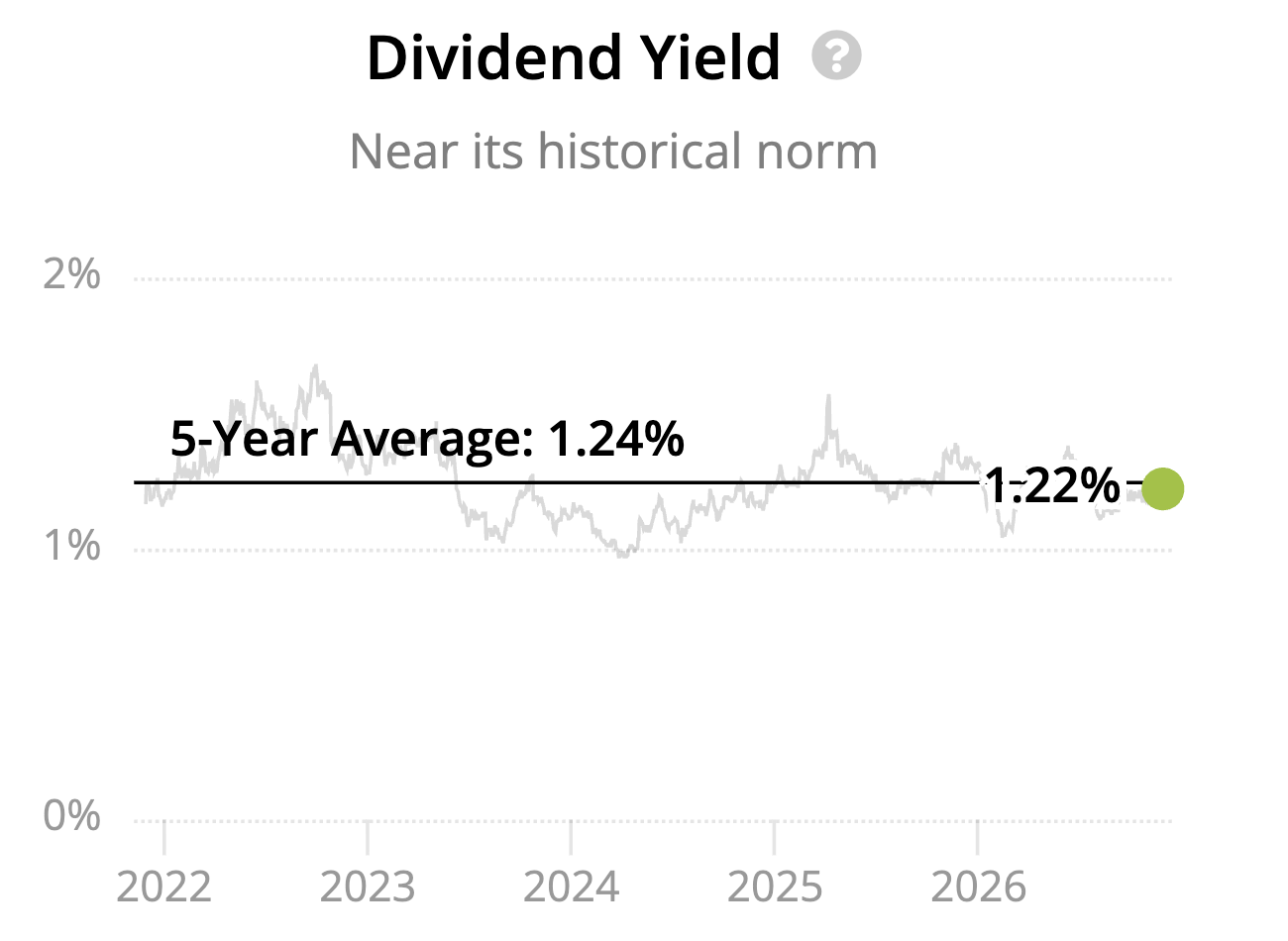
MSA yields 1.22%, almost exactly its five-year average of 1.24%, so the shares look fairly priced by this measure.
California Water Service Group (CWT): California Water Utility, 58 Years of Dividend Growth
Sector: Utilities – Water Utilities
Dividend Growth Streak: 58 years
Dividend Safety Score: Very Safe (99)
Dividend Yield: 2.7%
Credit Rating: A+
Dividend Growth Streak: 58 years
Dividend Safety Score: Very Safe (99)
Dividend Yield: 2.7%
Credit Rating: A+
California Water Service Group provides regulated water service, mostly in California, with smaller utilities in Washington, New Mexico, Hawaii, and Texas. State regulators set its rates to earn a return on the pipes and treatment plants it builds.
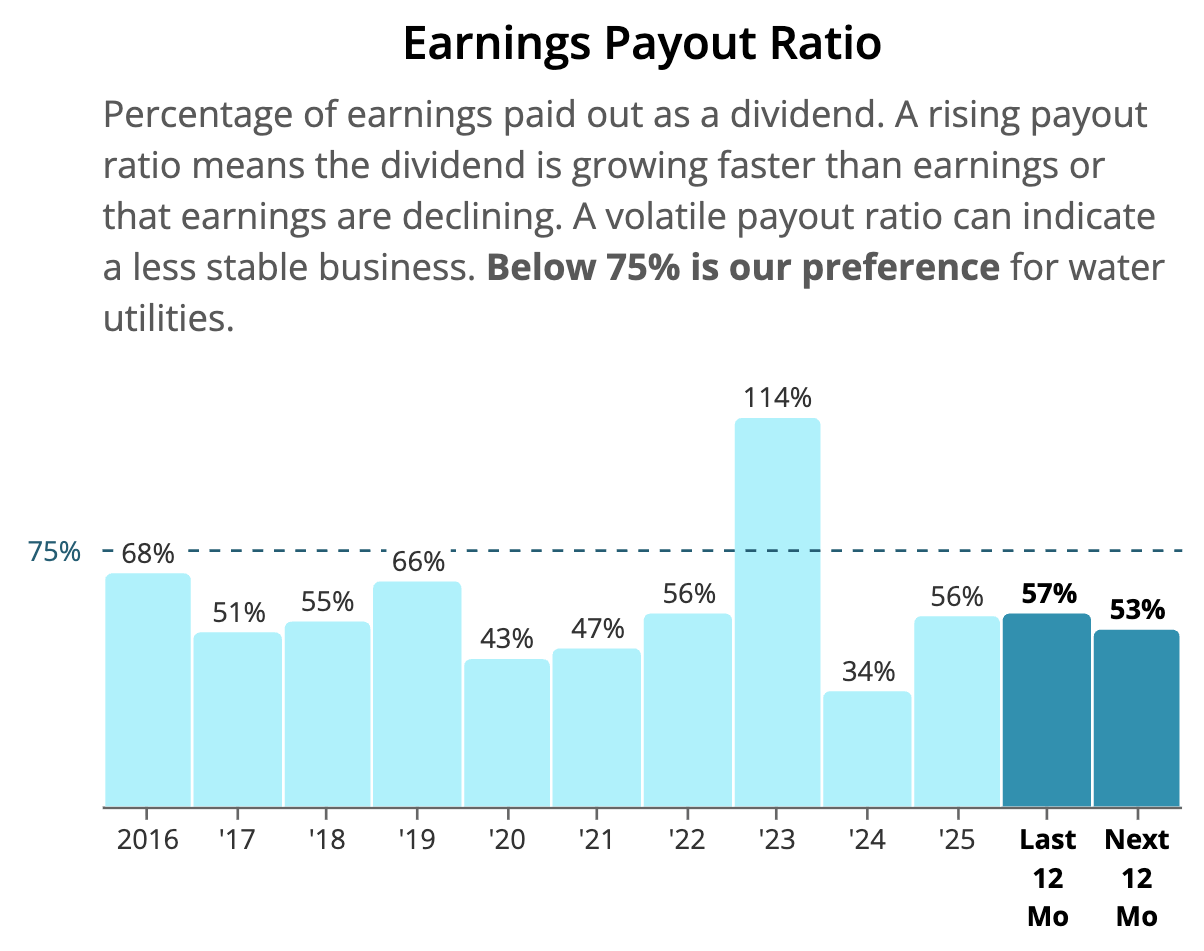
Its payout ratio has held steady in every year since 2016 except 2023, when earnings dipped and the ratio spiked to 114%. Its latest raise was 11.7%, well above its 10-year average of 6.0% a year.
California Water pays out 57% of its earnings, expected to be 53% next year.
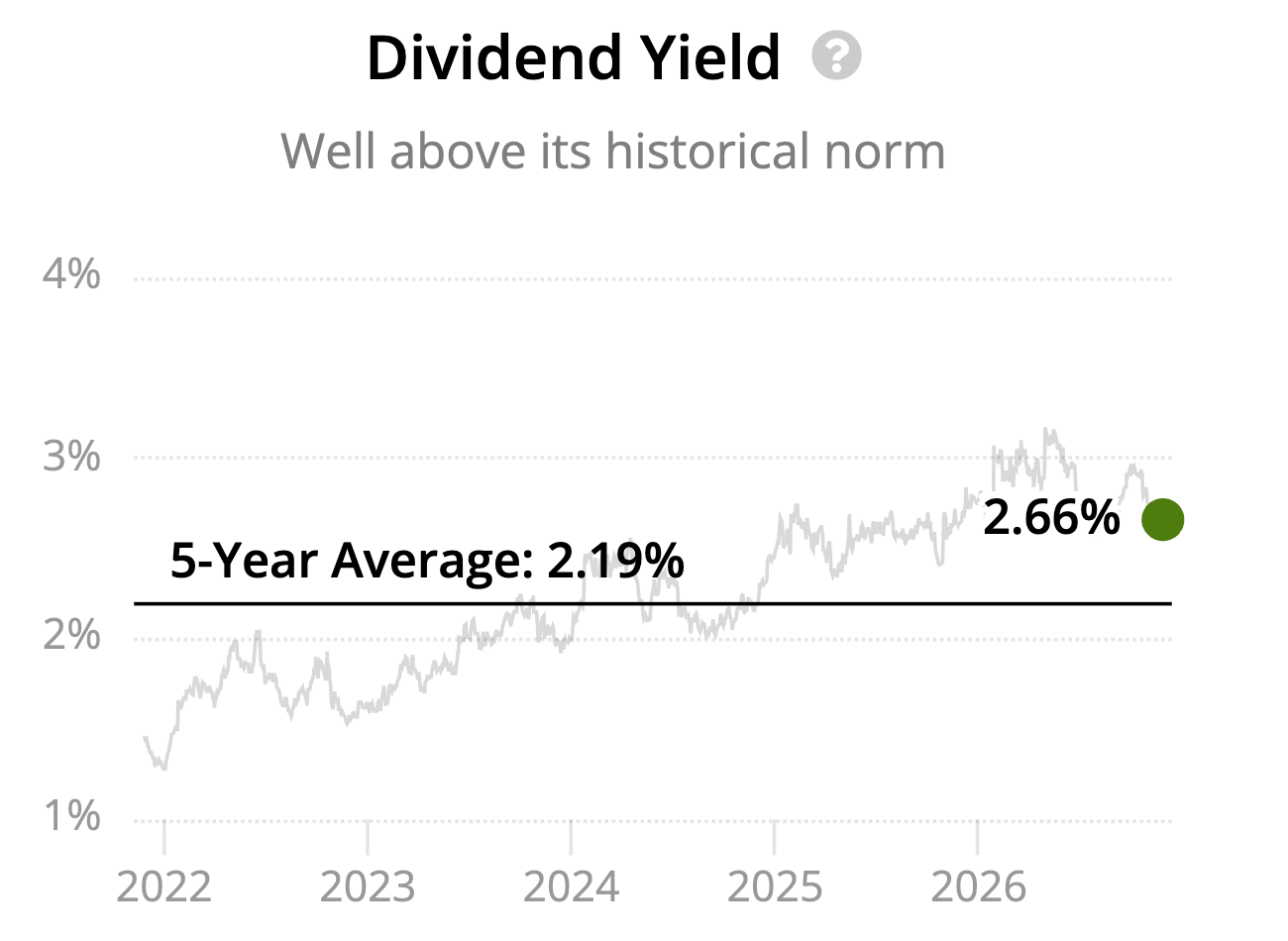
The 2.66% yield is well above its five-year average of 2.19%, because the dividend has kept growing while the shares have not, a sign the stock may be undervalued.
Commerce Bancshares (CBSH): Midwest Regional Bank, 58 Years of Dividend Growth
Sector: Financials – Regional Banks
Dividend Growth Streak: 58 years
Dividend Safety Score: Very Safe (99)
Dividend Yield: 2.0%
Credit Rating: A-
Dividend Growth Streak: 58 years
Dividend Safety Score: Very Safe (99)
Dividend Yield: 2.0%
Credit Rating: A-
Commerce Bancshares is a Missouri bank founded in 1865, with branches across Missouri, Kansas, Illinois, Oklahoma, and Colorado. Its wealth management and brokerage businesses add fee income that does not depend on lending.
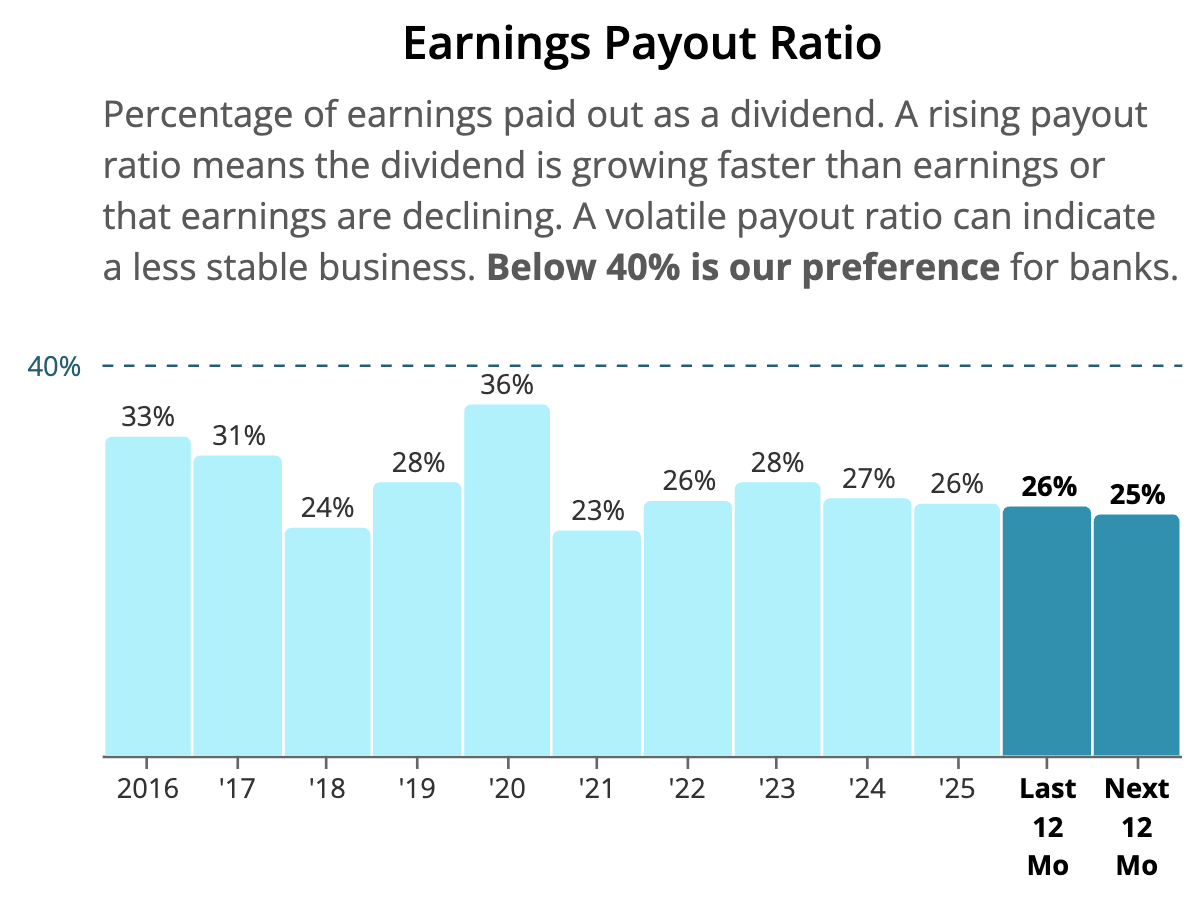
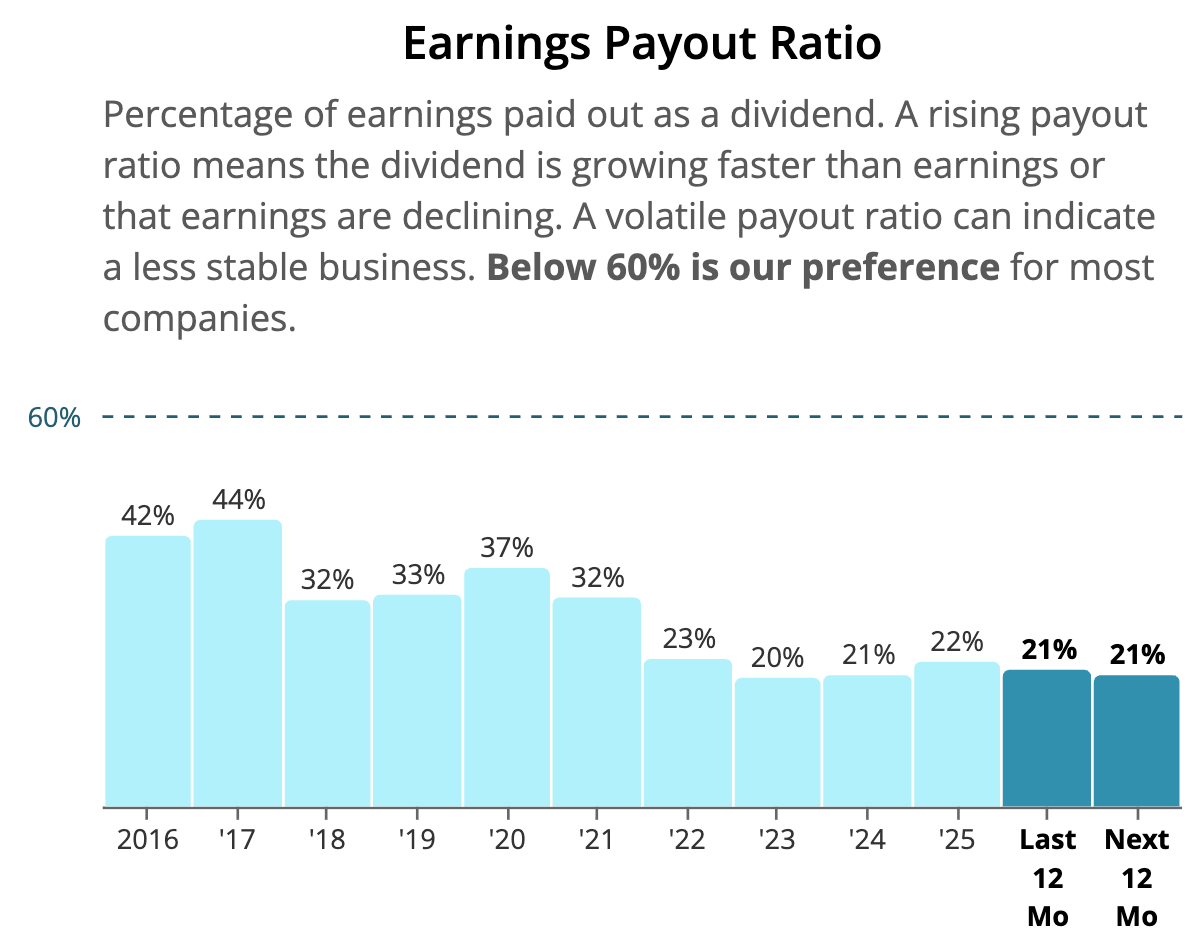
Commerce pays out about a quarter of its earnings. The ratio has stayed below 40% in every year of the past decade.
Commerce pays out 26% of its earnings, expected to be 25% next year.
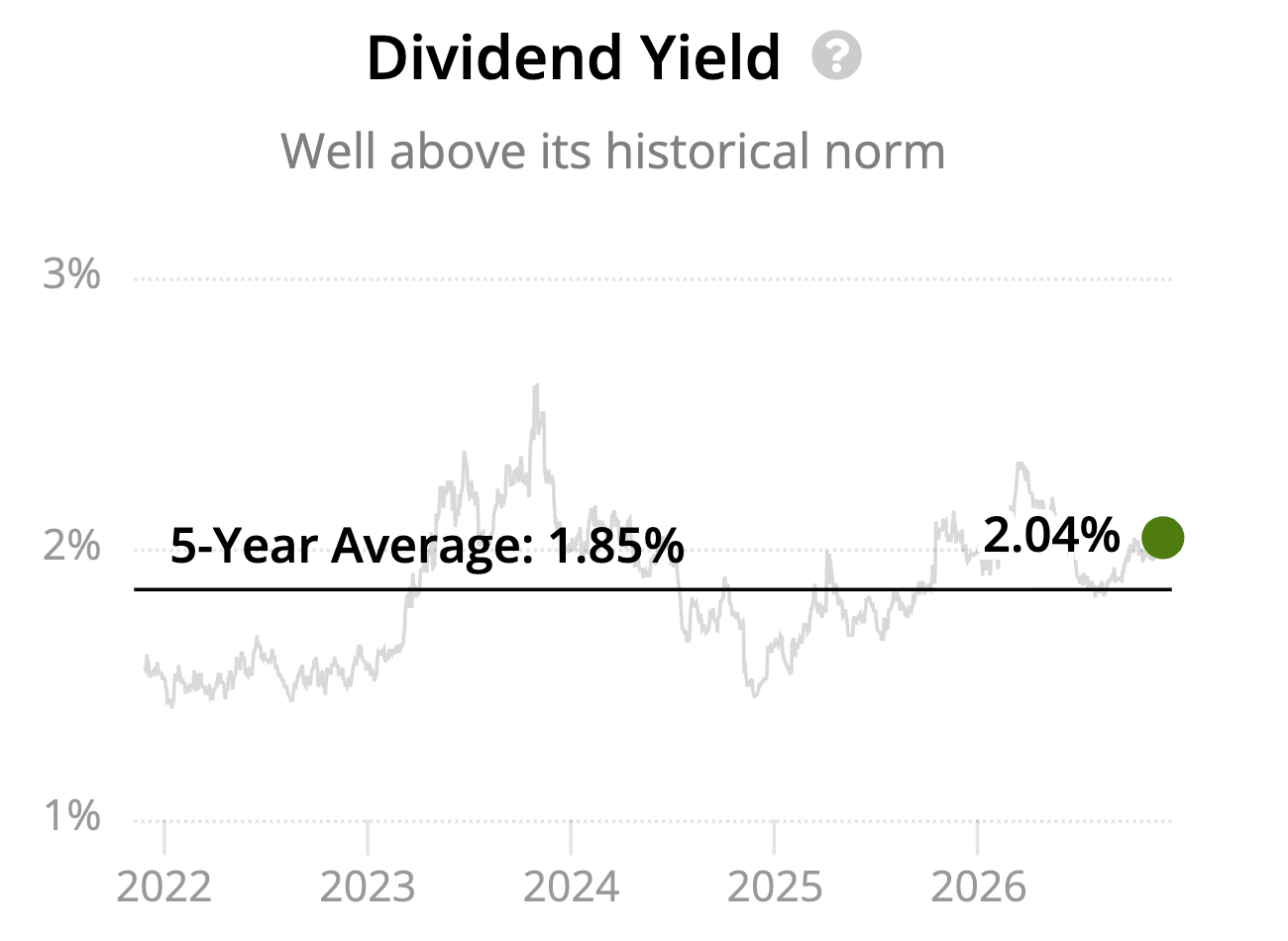
Commerce's 2.04% yield sits above its five-year average of 1.85%, which points to shares that are a little cheaper than usual.
W.W. Grainger (GWW): Industrial Supplies Distributor, 54 Years of Dividend Growth
Sector: Industrials – Trading Companies and Distributors
Dividend Growth Streak: 54 years
Dividend Safety Score: Very Safe (99)
Dividend Yield: 0.7%
Credit Rating: A+
Dividend Growth Streak: 54 years
Dividend Safety Score: Very Safe (99)
Dividend Yield: 0.7%
Credit Rating: A+
W.W. Grainger distributes maintenance, repair, and operating supplies, from safety gear to plumbing parts, to businesses and institutions. Customers buy these items to keep their facilities running, and Grainger's scale gives it purchasing and distribution advantages that smaller rivals struggle to match.
Its payout ratio has fallen from the low 40s in 2016 and 2017 to about 21%, because earnings have grown faster than the dividend. Its most recent raise was 10.2%.
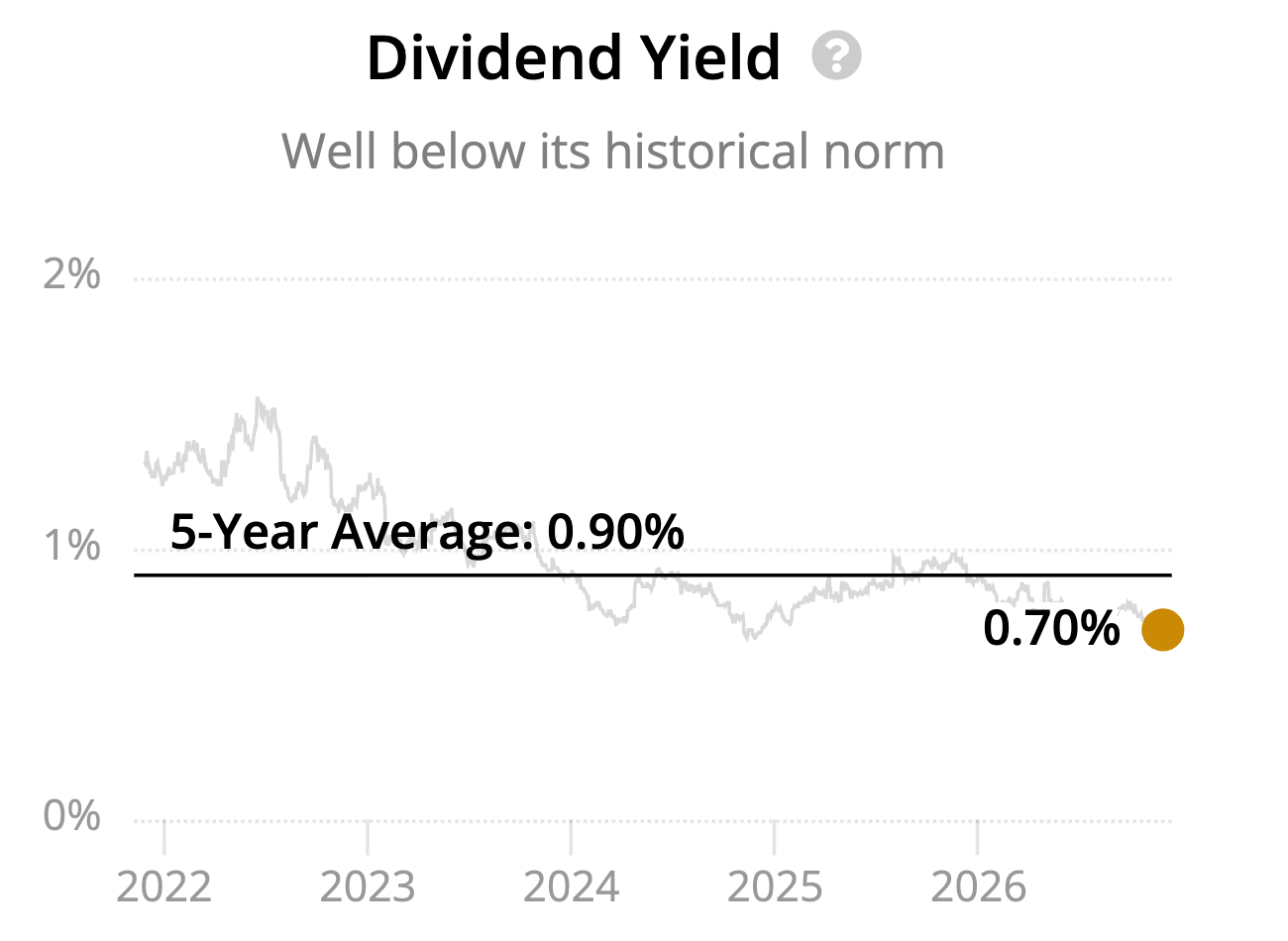
At 0.70%, Grainger has the lowest yield of any Dividend King, well below its five-year average of 0.90%, so the shares look expensive by this measure.
S&P Global (SPGI): Credit Ratings and Market Data Provider, 52 Years of Dividend Growth
Sector: Financials – Financial Exchanges and Data
Dividend Growth Streak: 52 years
Dividend Safety Score: Very Safe (99)
Dividend Yield: 0.8%
Credit Rating: Not rated by S&P
Dividend Growth Streak: 52 years
Dividend Safety Score: Very Safe (99)
Dividend Yield: 0.8%
Credit Rating: Not rated by S&P
S&P Global sells credit ratings, market data, and benchmarks such as the S&P 500 to the world's financial markets. Much of its revenue recurs, because bond issuers need ratings and fund managers pay to license its indexes.
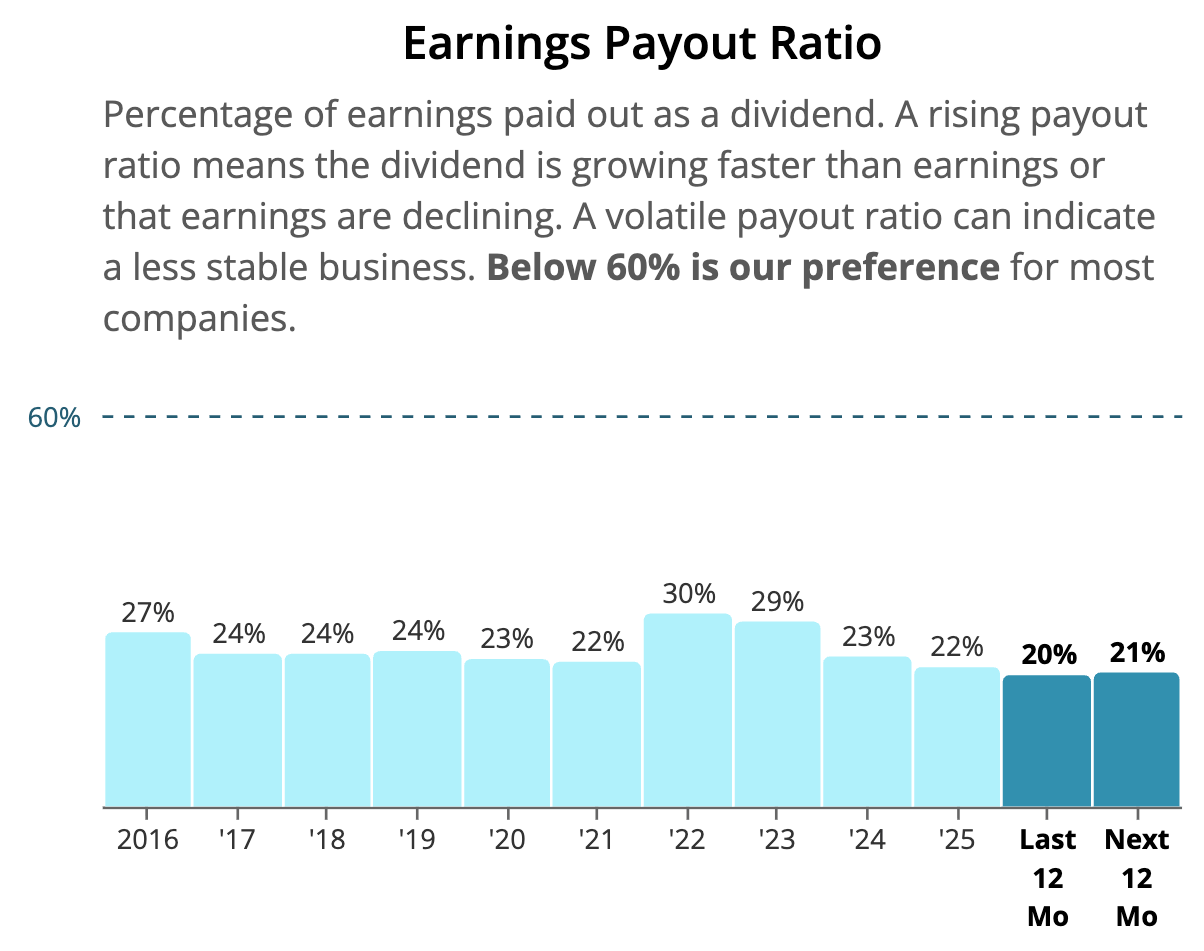
It pays out only about a fifth of its earnings, leaving plenty of room to keep raising the dividend in a year when bond issuance dries up. Its leverage is very low.
S&P Global pays out 20% of its earnings, expected to be 21% next year.
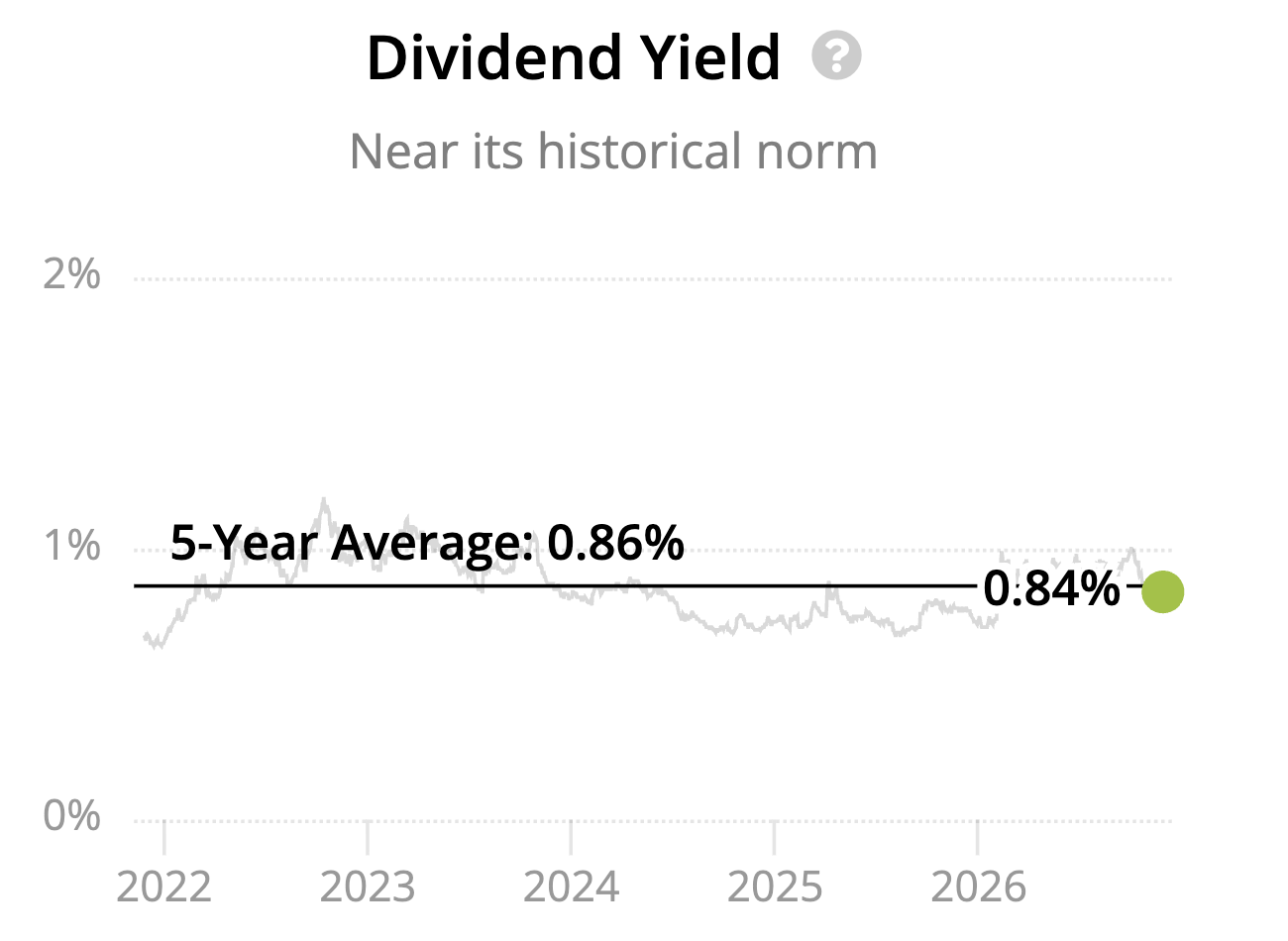
The stock yields 0.84%, in line with its five-year average of 0.86%, which suggests a fair valuation.
Carlisle Companies (CSL): Roofing and Building Envelope Maker, 50 Years of Dividend Growth
Sector: Industrials – Building Products
Dividend Growth Streak: 50 years
Dividend Safety Score: Very Safe (99)
Dividend Yield: 1.2%
Credit Rating: BBB
Dividend Growth Streak: 50 years
Dividend Safety Score: Very Safe (99)
Dividend Yield: 1.2%
Credit Rating: BBB
Carlisle makes roofing membranes, insulation, and waterproofing systems that seal commercial and residential buildings. Most of its roofing sales come from replacing roofs on existing buildings rather than new construction, which steadies demand.
Carlisle raised its dividend for the 50th consecutive year in August 2026, making it one of this year's new Dividend Kings.
Carlisle raised its dividend for the 50th consecutive year in August 2026, making it one of this year's new Dividend Kings.
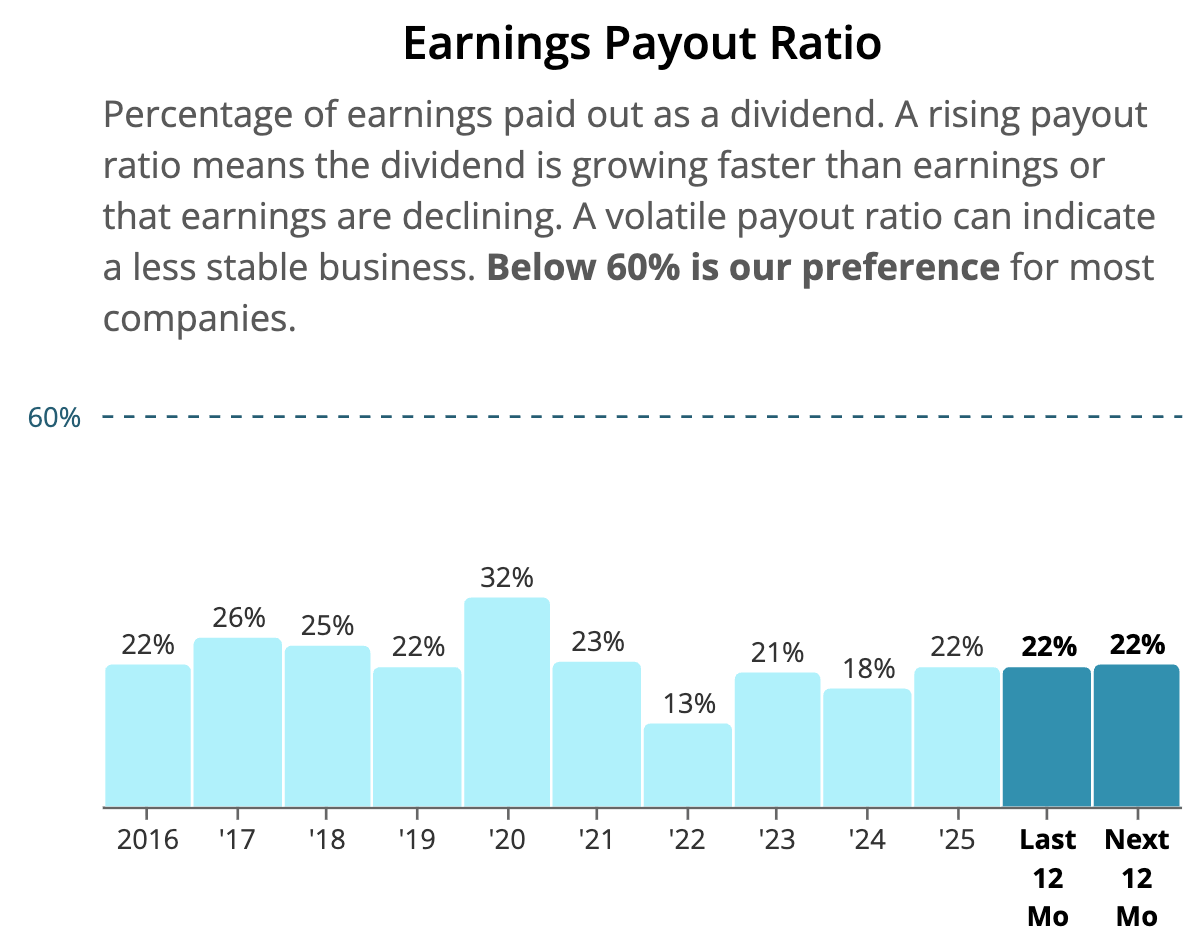
It pays out only about 22% of its earnings, and it has raised its dividend 15.4% a year over the past five years, one of the fastest paces among the Kings.
The 1.21% yield is near its five-year average of 1.13%, so the shares look roughly fairly valued.
American States Water (AWR): California Water Utility, 72 Years of Dividend Growth
Sector: Utilities – Water Utilities
Dividend Growth Streak: 72 years
Dividend Safety Score: Very Safe (98)
Dividend Yield: 2.5%
Credit Rating: A
Dividend Growth Streak: 72 years
Dividend Safety Score: Very Safe (98)
Dividend Yield: 2.5%
Credit Rating: A
American States Water owns Golden State Water, a regulated California water utility, along with a small electric utility and a business that runs water systems on military bases.
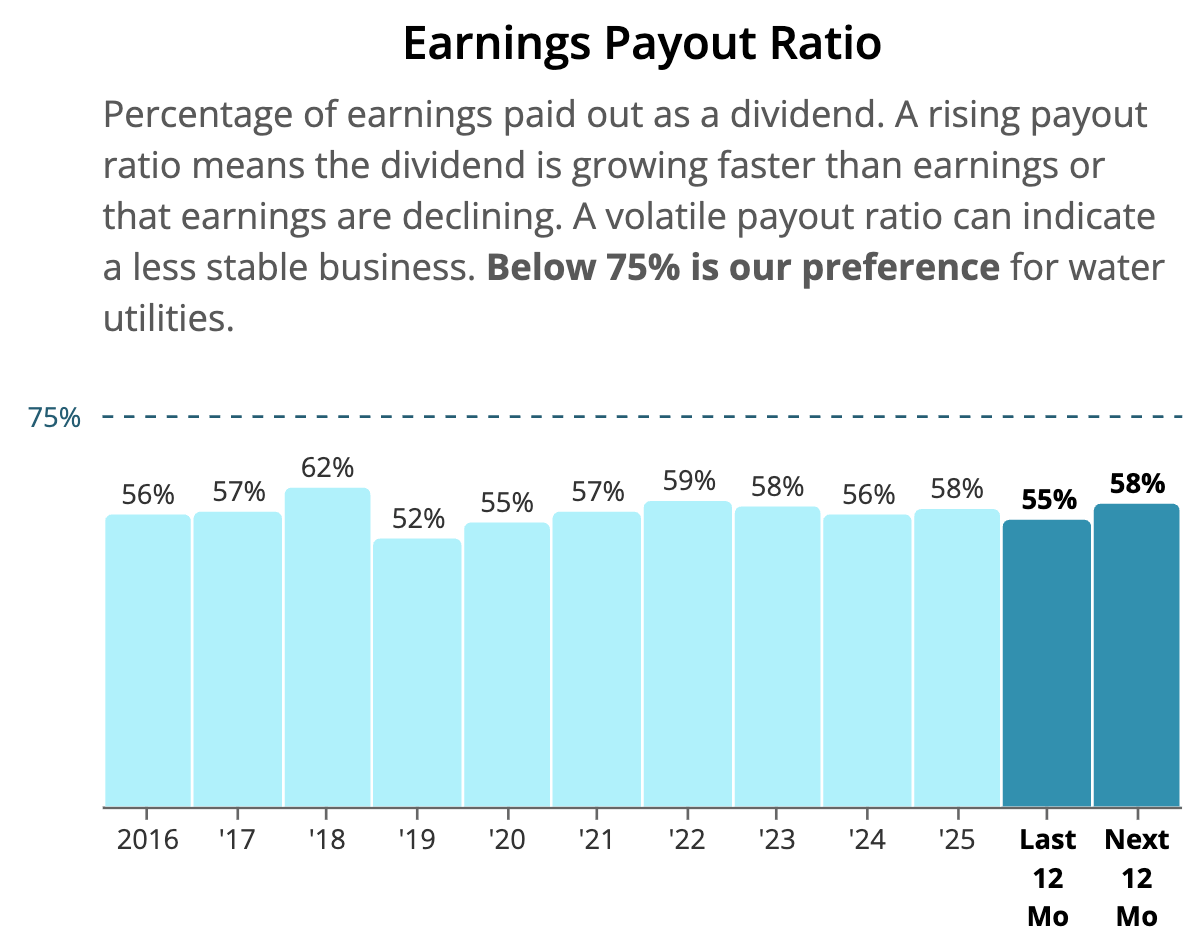
Its 72-year dividend growth streak is the longest of any Dividend King. Its payout ratio has held in the 50s for a decade, and its leverage is very low for the industry.
American States Water pays out 55% of its earnings, expected to be 58% next year.
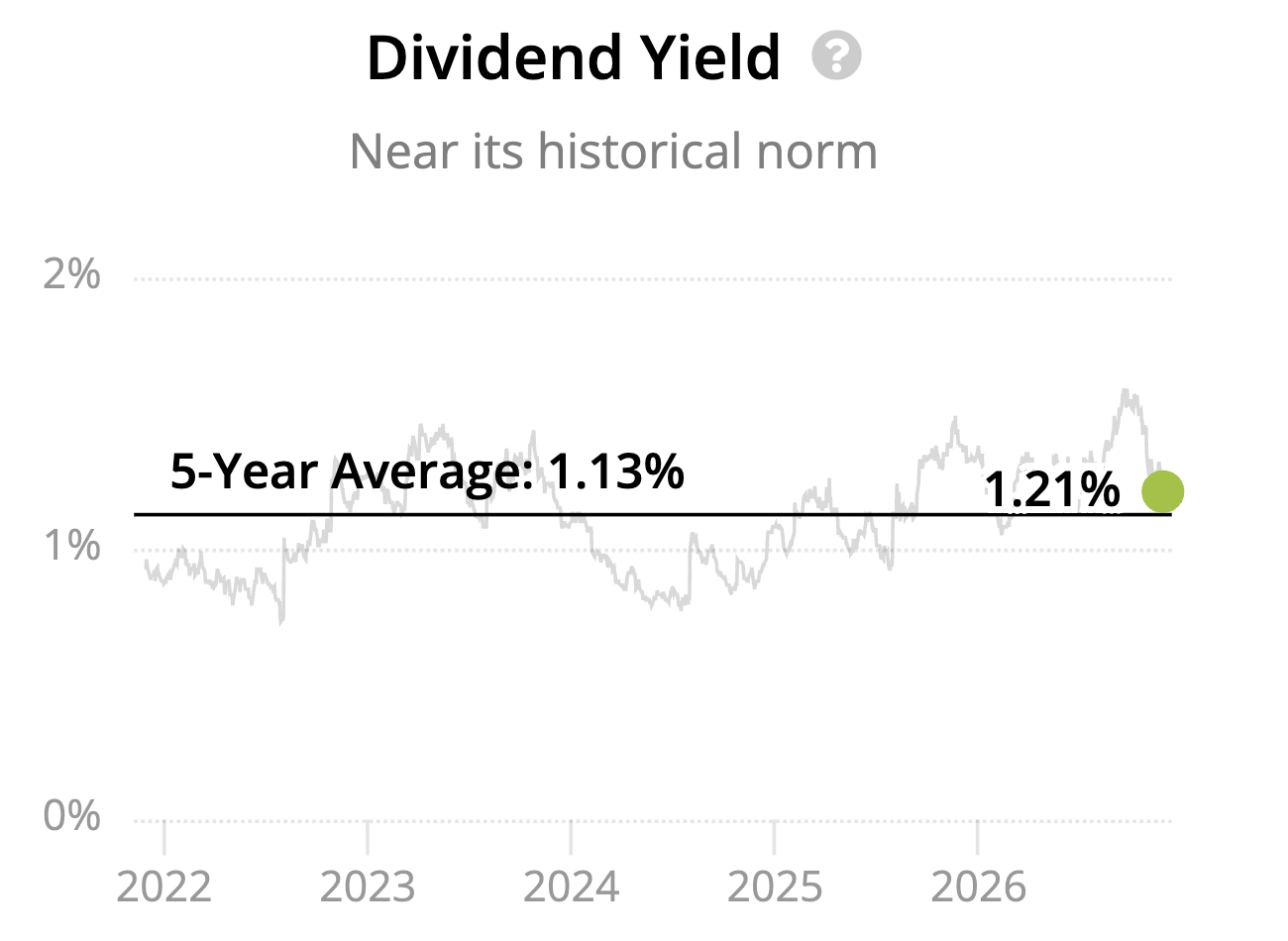
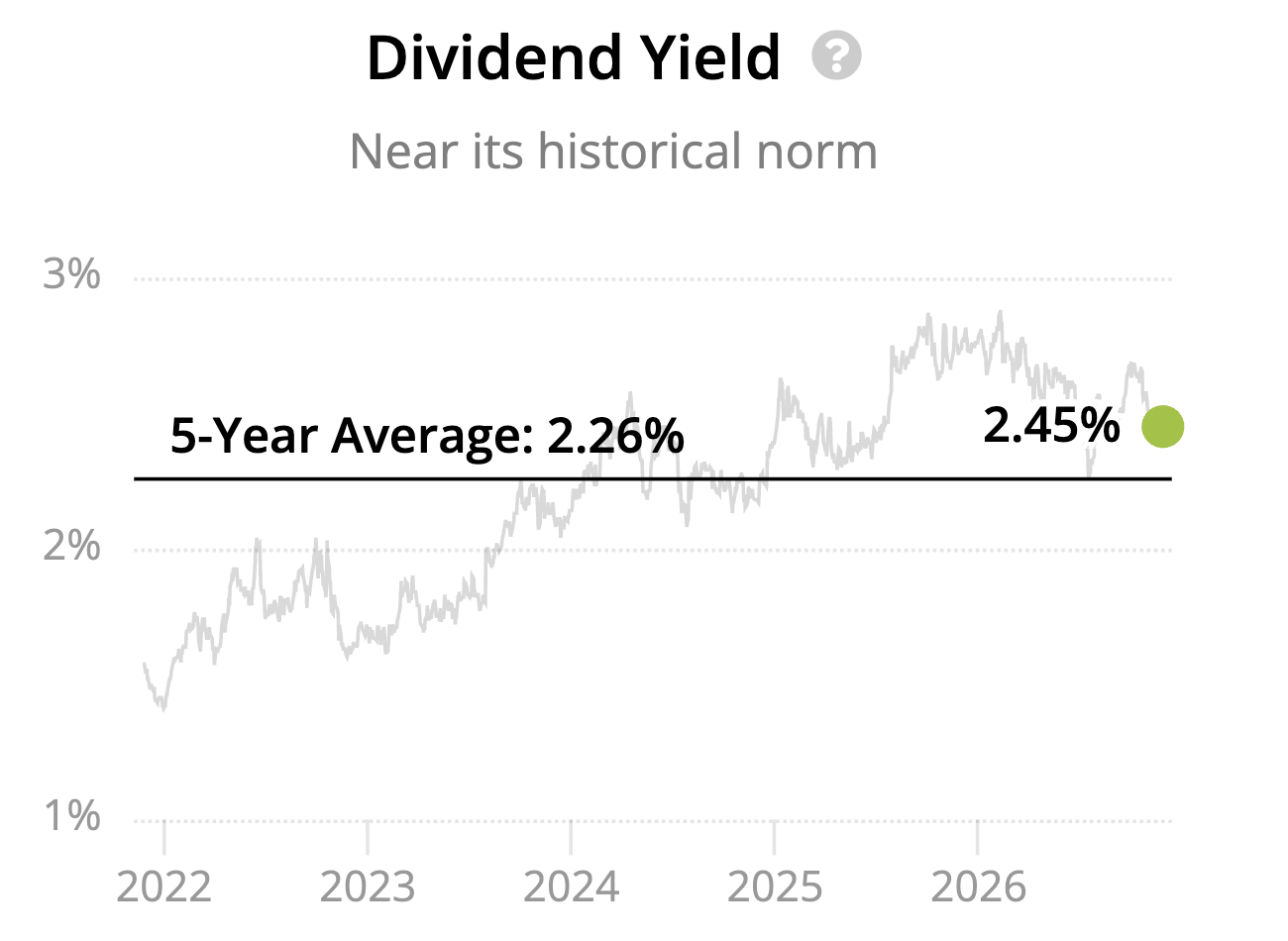
Its 2.45% yield is a bit above its five-year average of 2.26%, which suggests the stock is fairly priced to slightly cheap.
National Fuel Gas (NFG): Natural Gas Producer, Pipeline and Utility, 56 Years of Dividend Growth
Sector: Utilities – Gas Utilities
Dividend Growth Streak: 56 years
Dividend Safety Score: Very Safe (95)
Dividend Yield: 2.9%
Credit Rating: BBB-
Dividend Growth Streak: 56 years
Dividend Safety Score: Very Safe (95)
Dividend Yield: 2.9%
Credit Rating: BBB-
National Fuel Gas produces natural gas in Appalachia, moves it through its own pipelines and storage fields, and delivers it to homes in western New York and Pennsylvania. Its regulated utility and pipeline businesses steady results when gas prices swing.
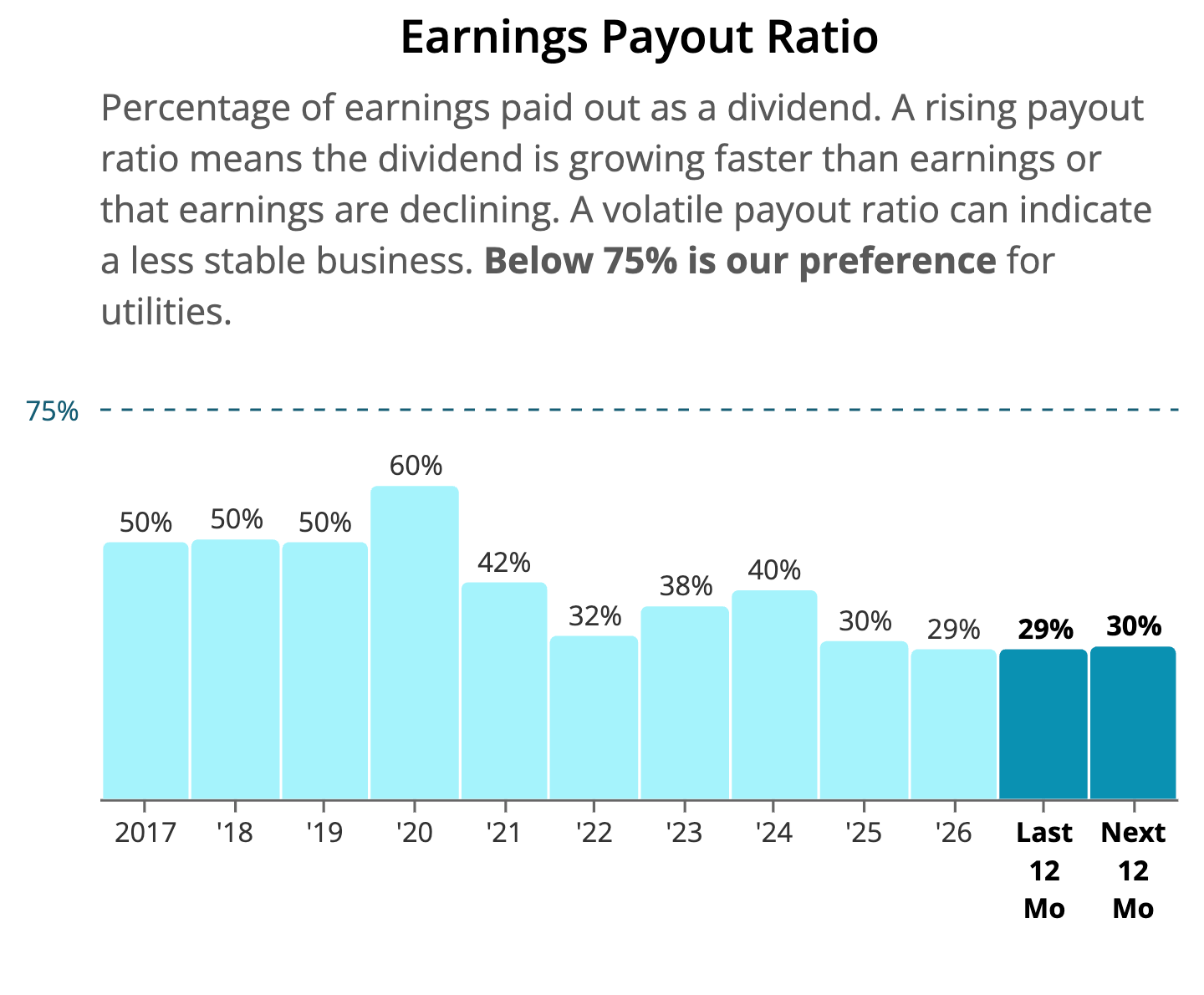
Its payout ratio has fallen from 60% in 2020 to about 30% as production grew, and its leverage is very low for a utility.
National Fuel Gas pays out 29% of its earnings, expected to be 30% next year.
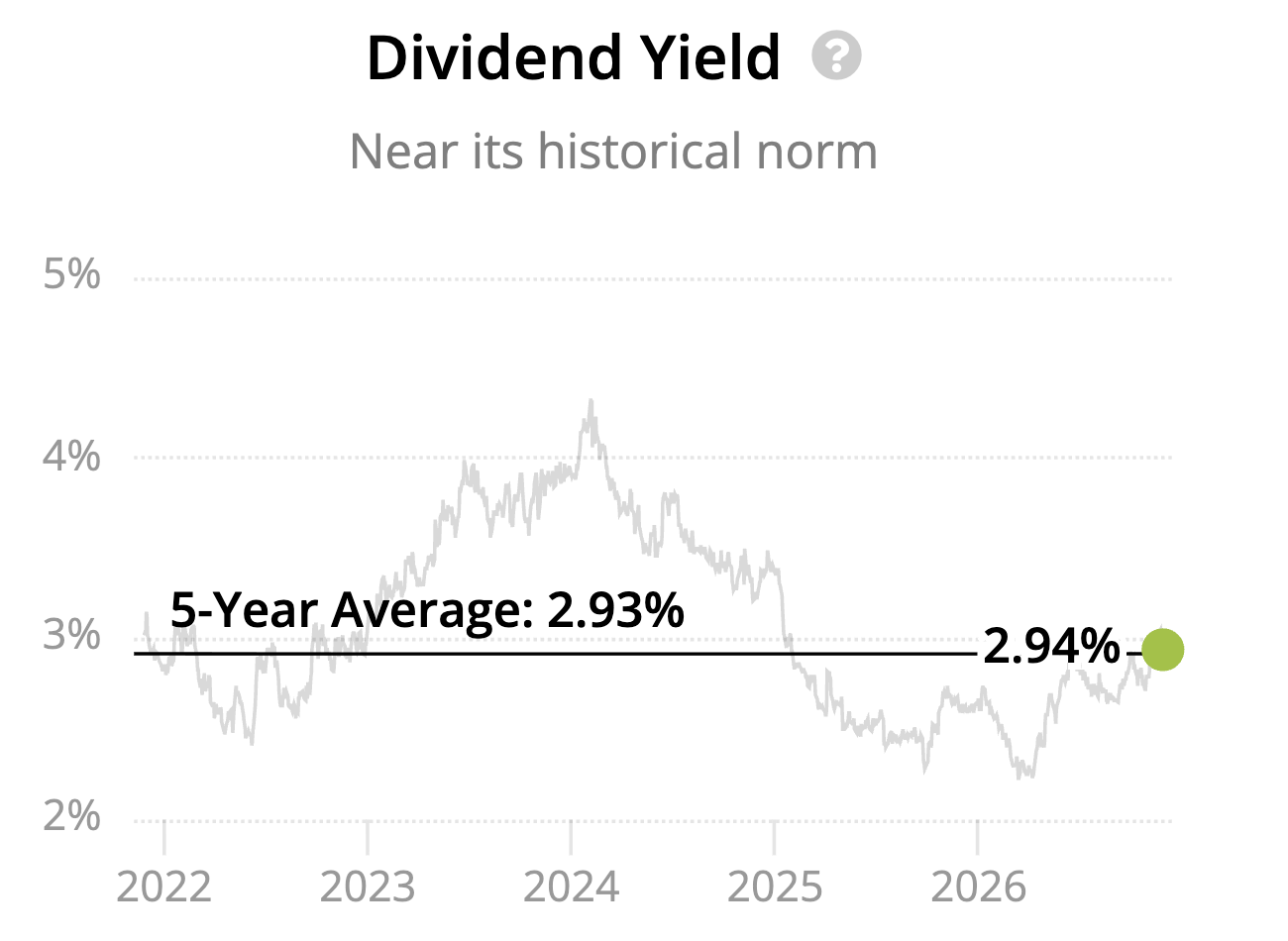
The 2.94% yield matches its five-year average of 2.93%, a sign the shares are trading about where they usually do.
Parker-Hannifin (PH): Motion and Control Components Maker, 70 Years of Dividend Growth
Sector: Industrials – Industrial Machinery and Components
Dividend Growth Streak: 70 years
Dividend Safety Score: Very Safe (94)
Dividend Yield: 0.9%
Credit Rating: BBB+
Dividend Growth Streak: 70 years
Dividend Safety Score: Very Safe (94)
Dividend Yield: 0.9%
Credit Rating: BBB+
Parker-Hannifin makes hydraulic, pneumatic, and electromechanical components that control motion in factories, heavy equipment, and aircraft. Much of its revenue comes from replacement parts that keep customers' machines running.
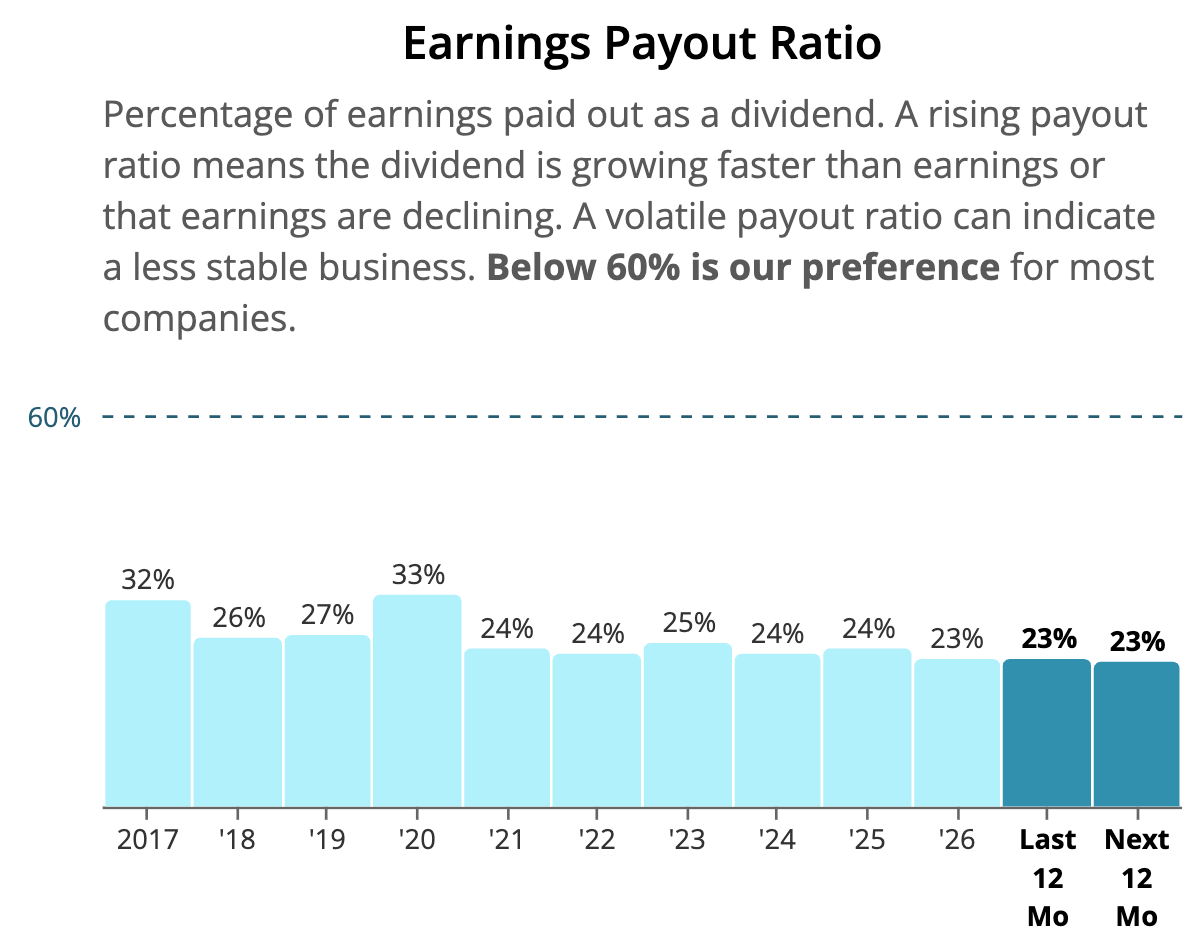
Its payout ratio has held near 23% for five years even as the dividend grew 15.1% a year.
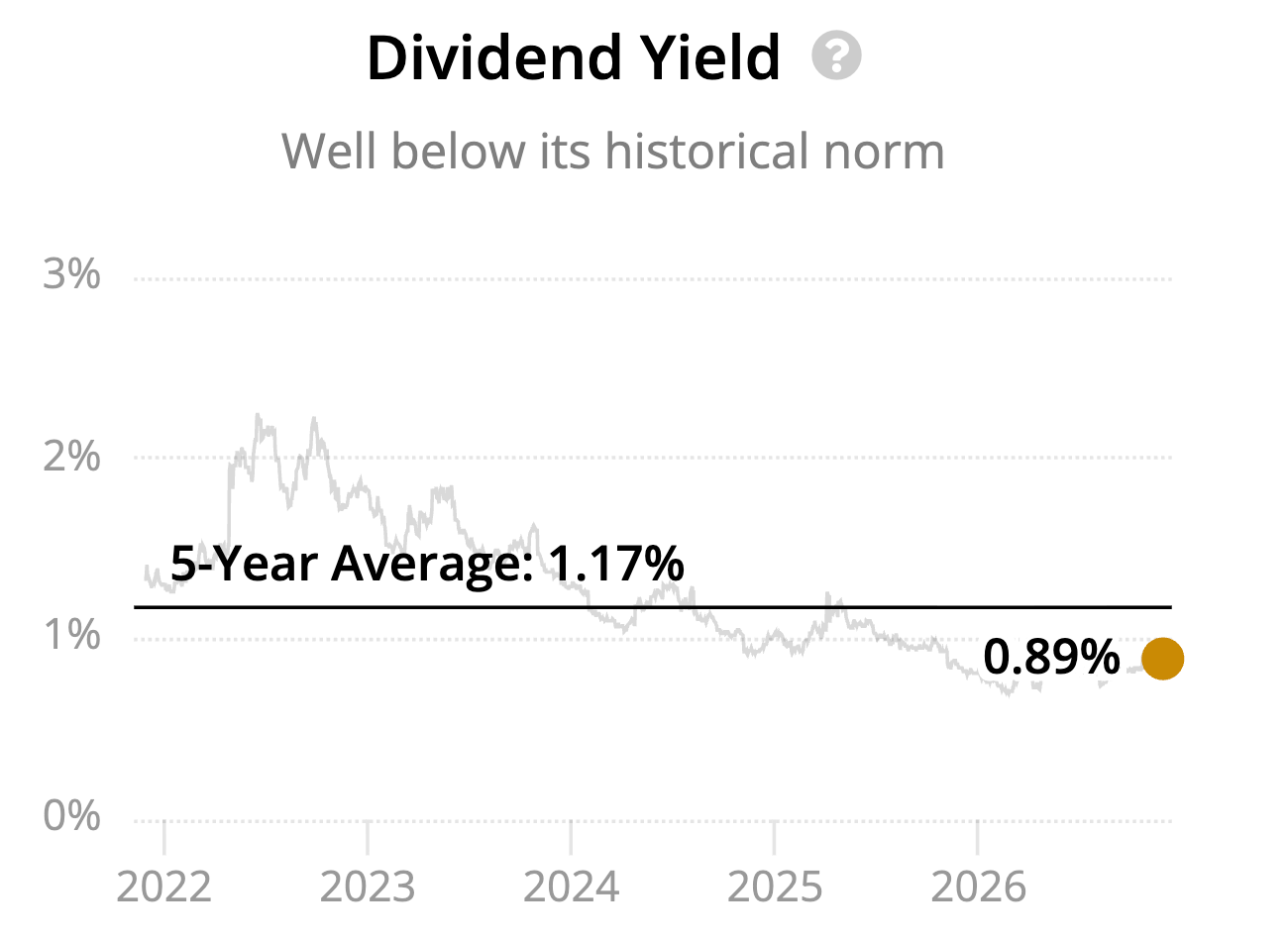
After a strong run in the shares, Parker-Hannifin yields 0.89%, well below its five-year average of 1.17%, so the stock looks expensive.
Nordson (NDSN): Precision Dispensing Equipment Maker, 63 Years of Dividend Growth
Sector: Industrials – Industrial Machinery and Components
Dividend Growth Streak: 63 years
Dividend Safety Score: Very Safe (94)
Dividend Yield: 1.2%
Credit Rating: BBB
Dividend Growth Streak: 63 years
Dividend Safety Score: Very Safe (94)
Dividend Yield: 1.2%
Credit Rating: BBB
Nordson makes precision equipment that dispenses adhesives, coatings, and sealants in packaging, electronics, and medical device manufacturing. Its installed systems keep buying parts and supplies long after the initial sale.
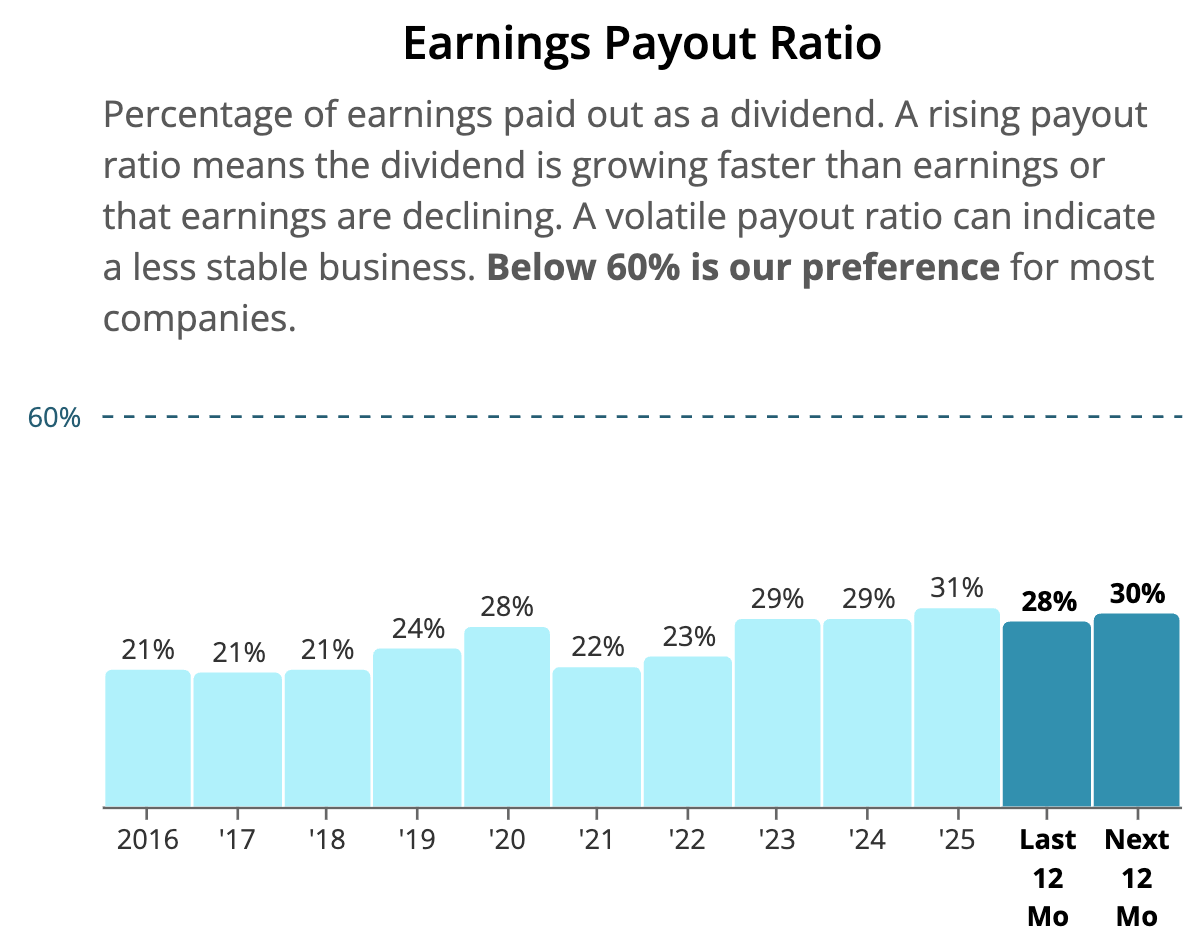
It pays out under 30% of its earnings. Its dividend has grown 15.6% a year over the past five years, tied with Lowe's for the fastest pace of any Dividend King.
Nordson pays out 28% of its earnings, expected to be 30% next year.
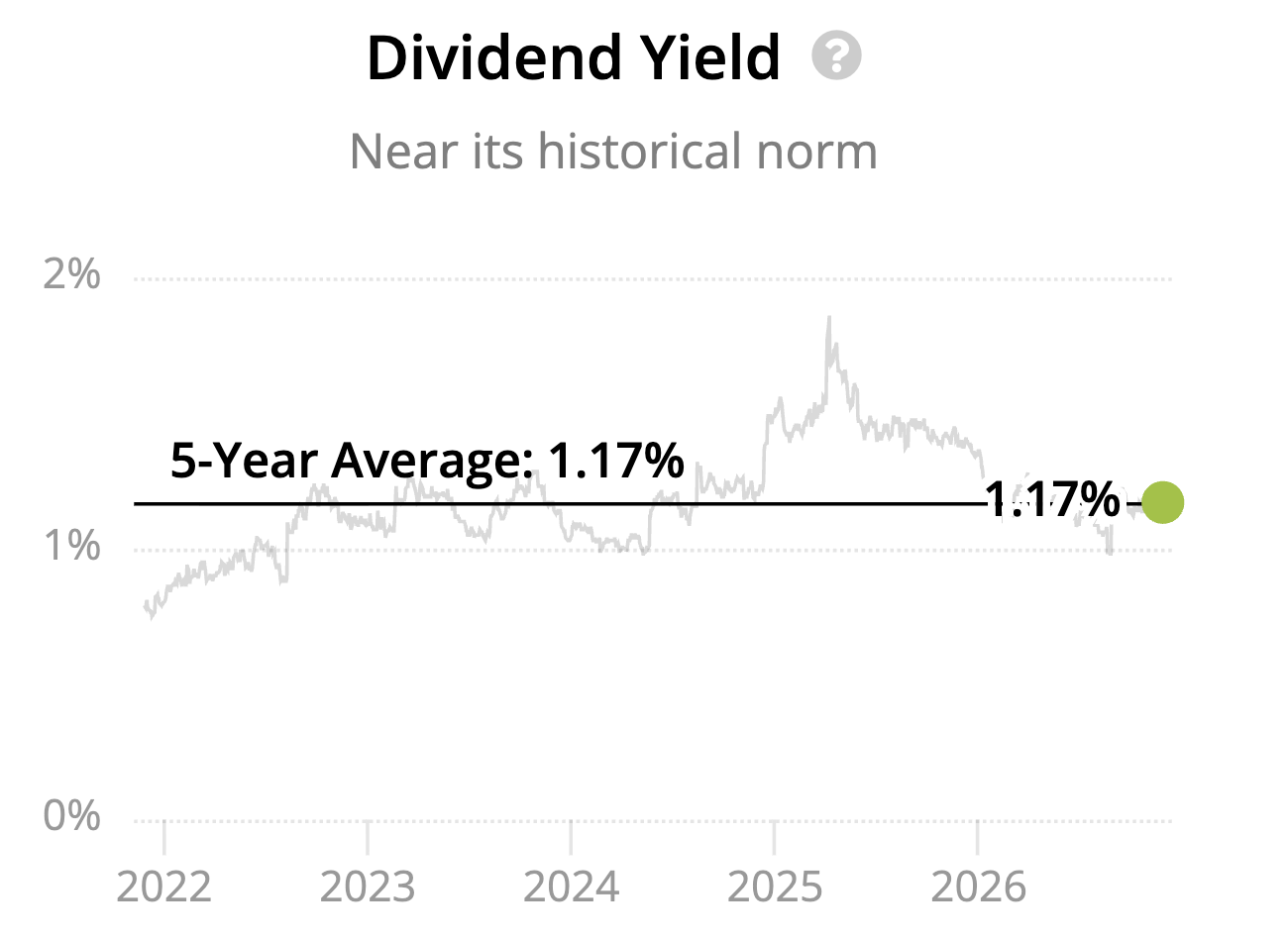
Nordson's 1.17% yield equals its five-year average, which suggests a fair valuation.
Becton Dickinson (BDX): Medical Supplies and Devices Maker, 55 Years of Dividend Growth
Sector: Healthcare – Health Care Equipment
Dividend Growth Streak: 55 years
Dividend Safety Score: Very Safe (91)
Dividend Yield: 1.9%
Credit Rating: BBB
Dividend Growth Streak: 55 years
Dividend Safety Score: Very Safe (91)
Dividend Yield: 1.9%
Credit Rating: BBB
Becton Dickinson makes syringes, needles, catheters, and infusion pumps used every day in hospitals. It completed the separation of its life sciences business in early 2026, leaving a simpler company built around products hospitals use constantly.
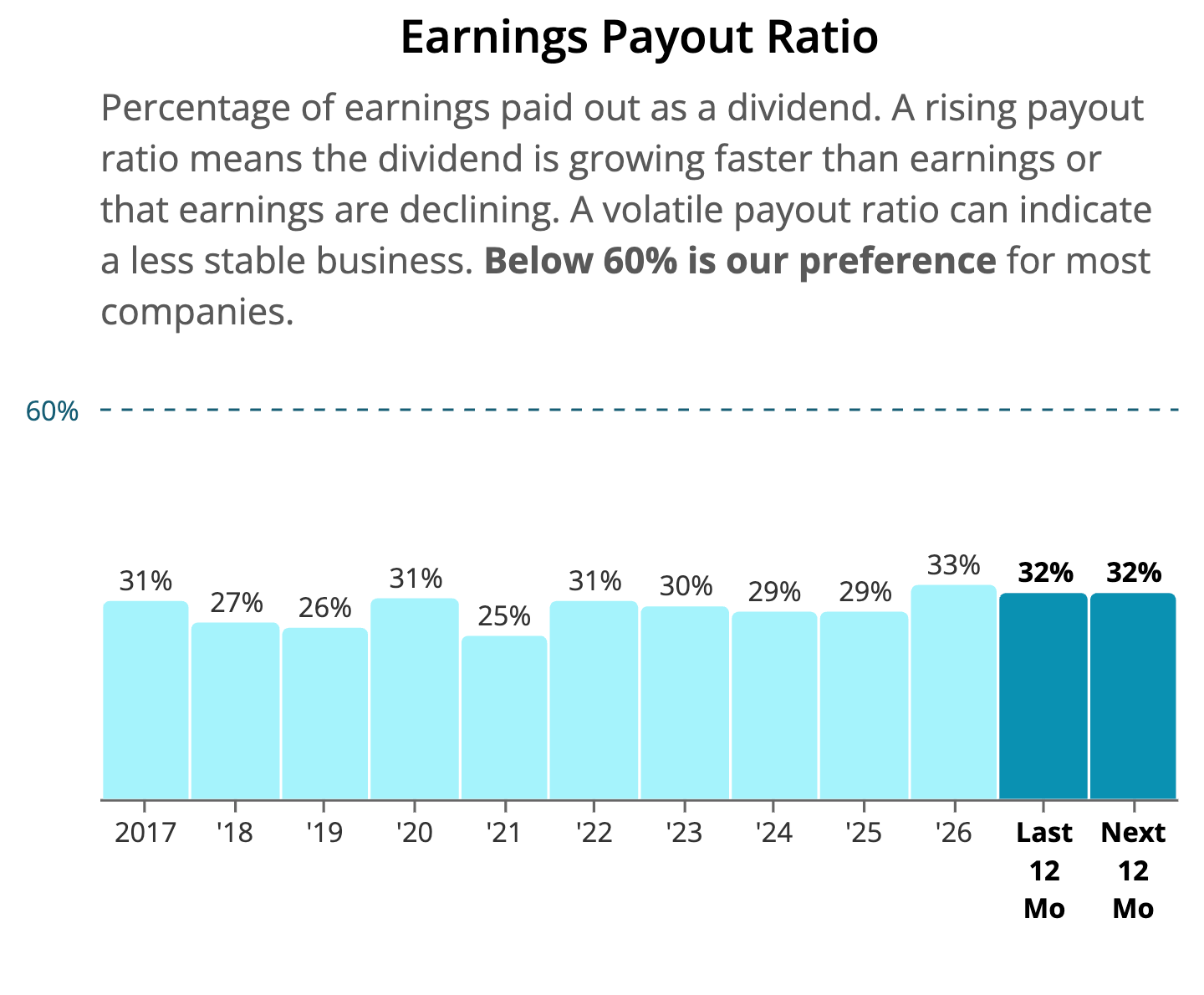
Its payout ratio has hovered around 30% for a decade, though its latest raise, in November 2026, was a token 1.0%. That raise was its 55th consecutive annual increase.
Becton Dickinson pays out 32% of its earnings, expected to be 32% next year.
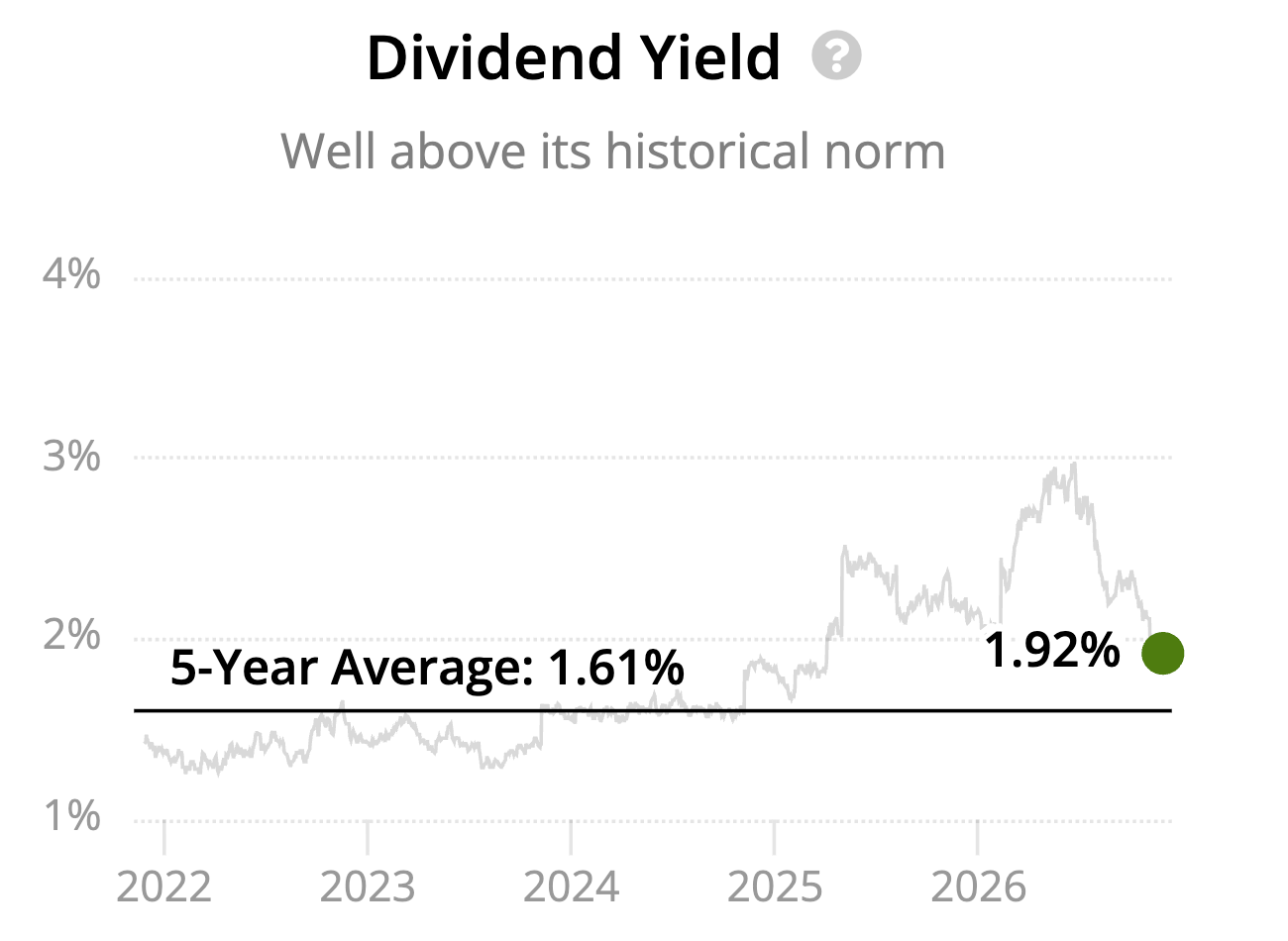
The 1.92% yield sits well above its five-year average of 1.61%, so the shares look cheaper than usual.
Middlesex Water (MSEX): New Jersey and Delaware Water Utility, 54 Years of Dividend Growth
Sector: Utilities – Water Utilities
Dividend Growth Streak: 54 years
Dividend Safety Score: Very Safe (91)
Dividend Yield: 2.6%
Credit Rating: A
Dividend Growth Streak: 54 years
Dividend Safety Score: Very Safe (91)
Dividend Yield: 2.6%
Credit Rating: A
Middlesex Water supplies drinking water and wastewater service in New Jersey and Delaware to a population of about half a million people.
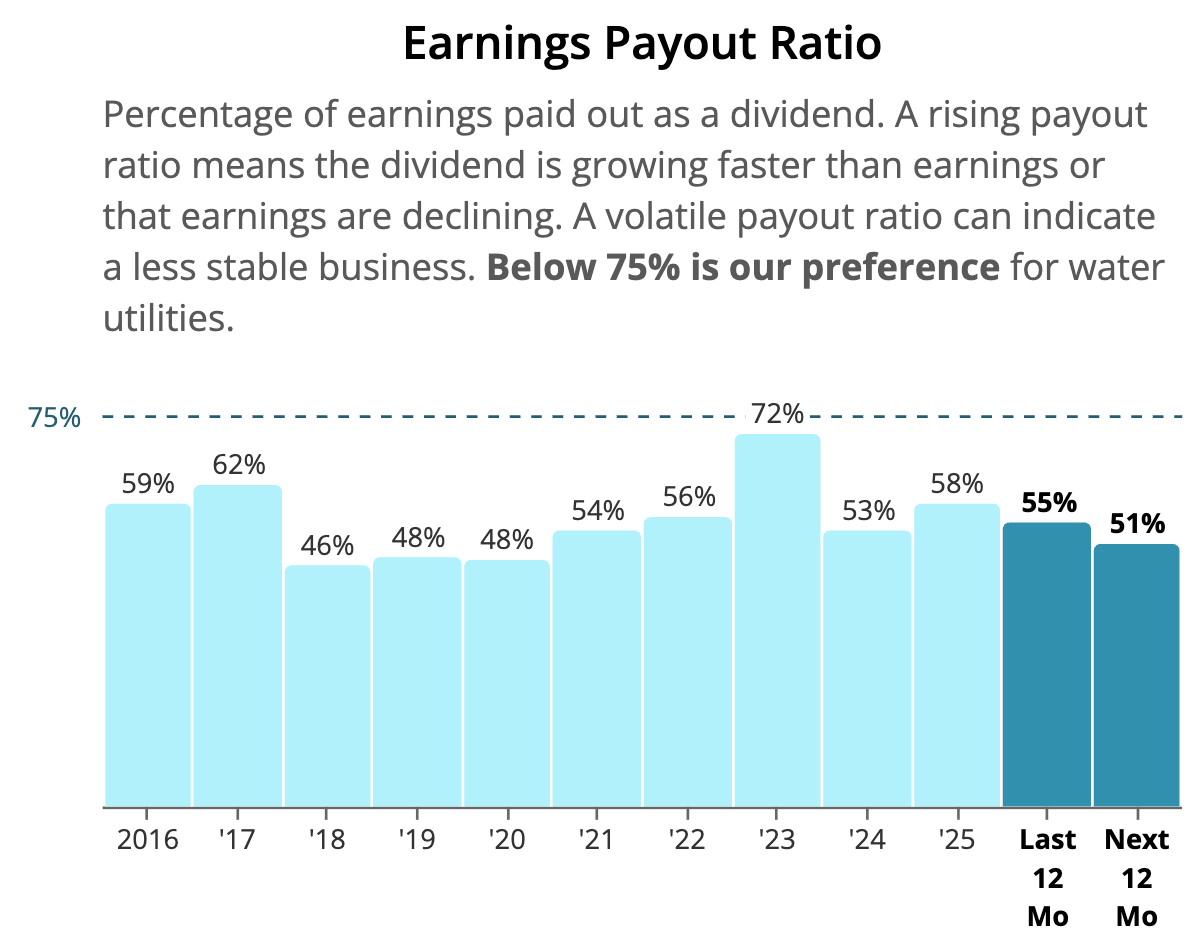
Its payout ratio has mostly stayed in the 50s, apart from a 72% reading in 2023.
Middlesex Water pays out 55% of its earnings, expected to be 51% next year.
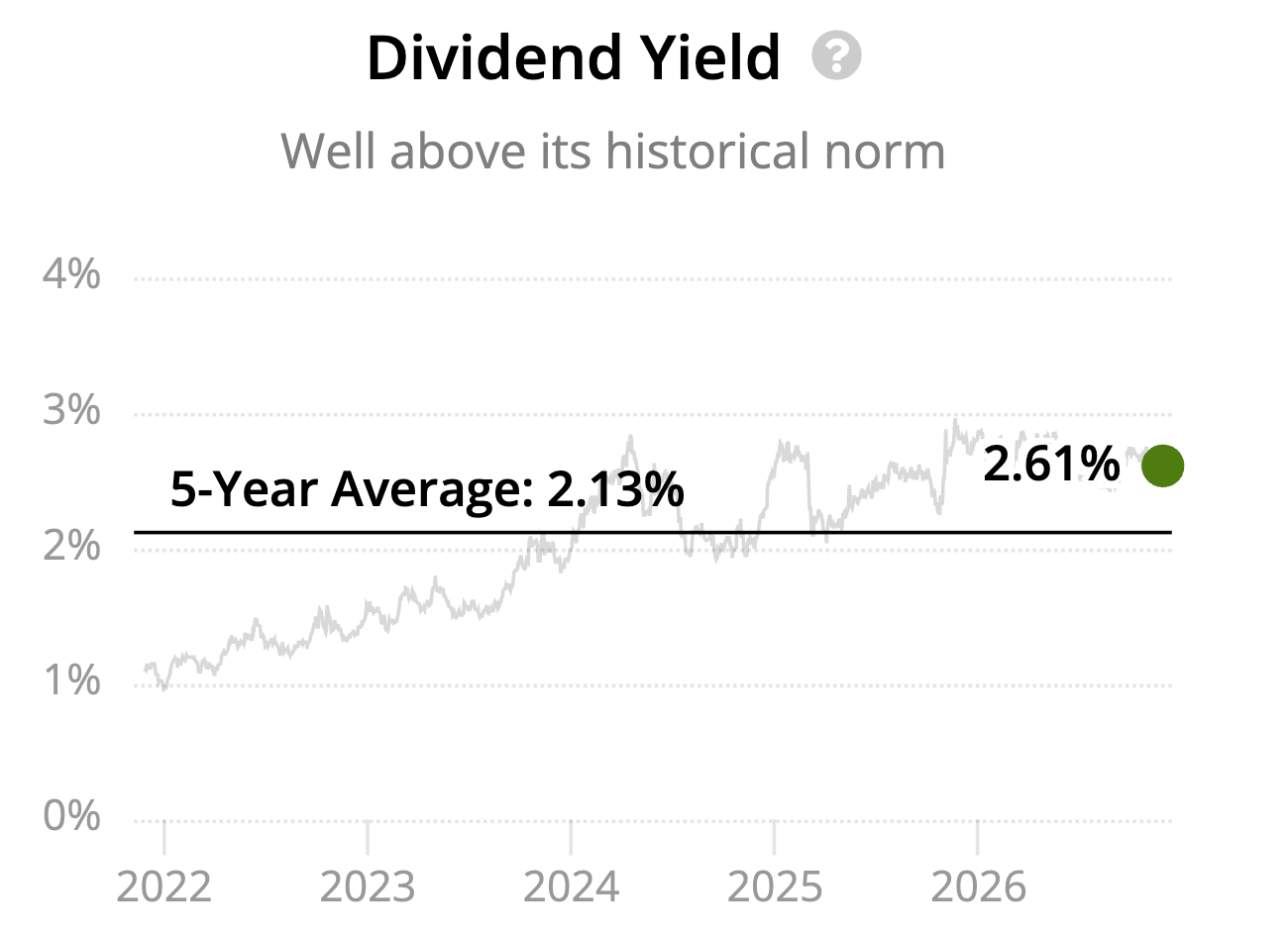
Its 2.61% yield is well above its five-year average of 2.13%, which suggests the stock may be undervalued.
Procter & Gamble (PG): Household Products Maker, 70 Years of Dividend Growth
Sector: Consumer Staples – Household Products
Dividend Growth Streak: 70 years
Dividend Safety Score: Very Safe (90)
Dividend Yield: 2.5%
Credit Rating: AA-
Dividend Growth Streak: 70 years
Dividend Safety Score: Very Safe (90)
Dividend Yield: 2.5%
Credit Rating: AA-
Procter & Gamble owns Tide, Pampers, Charmin, Gillette, and dozens of other household brands. We lowered its Dividend Safety Score from 99 to 90, still Very Safe, in September 2026 as store brands closed the quality gap in categories such as paper products.
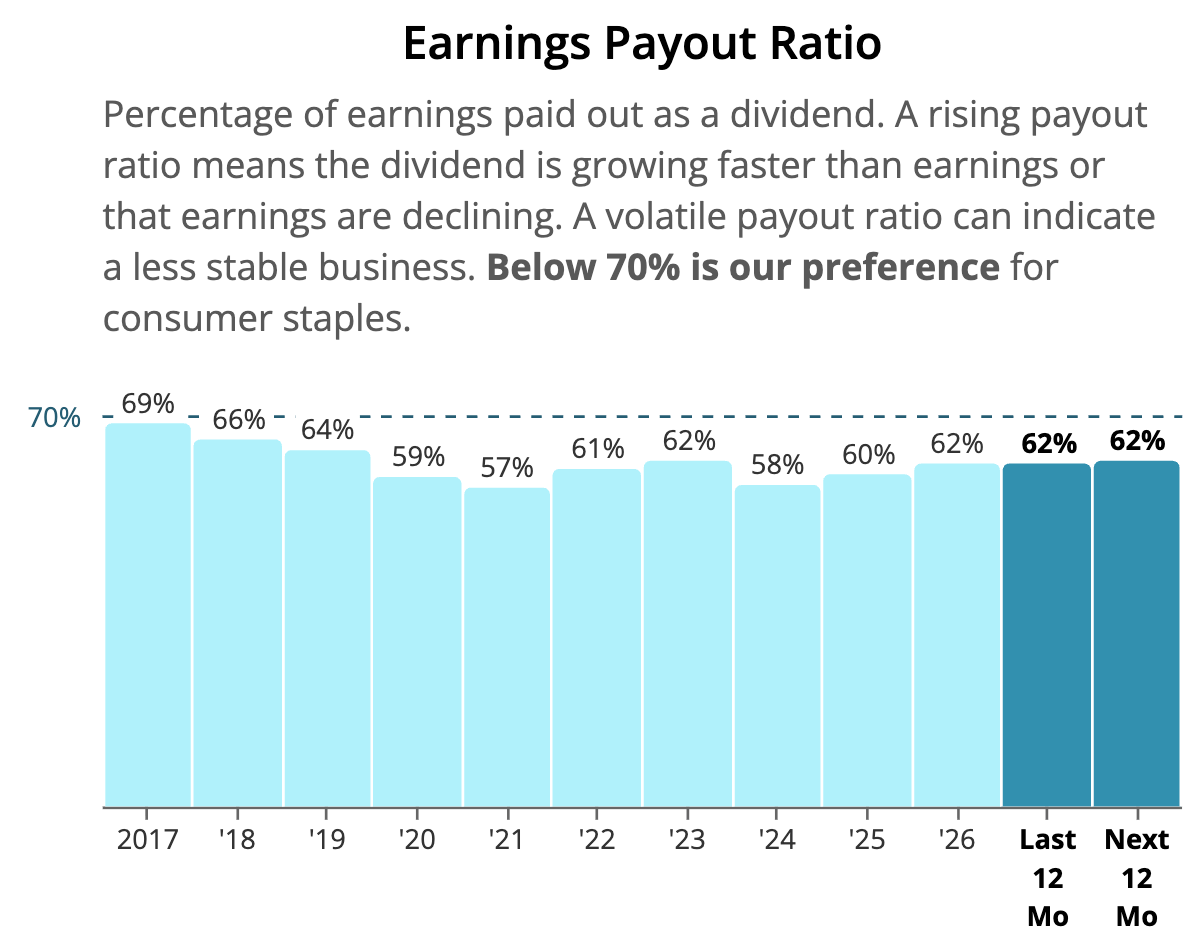
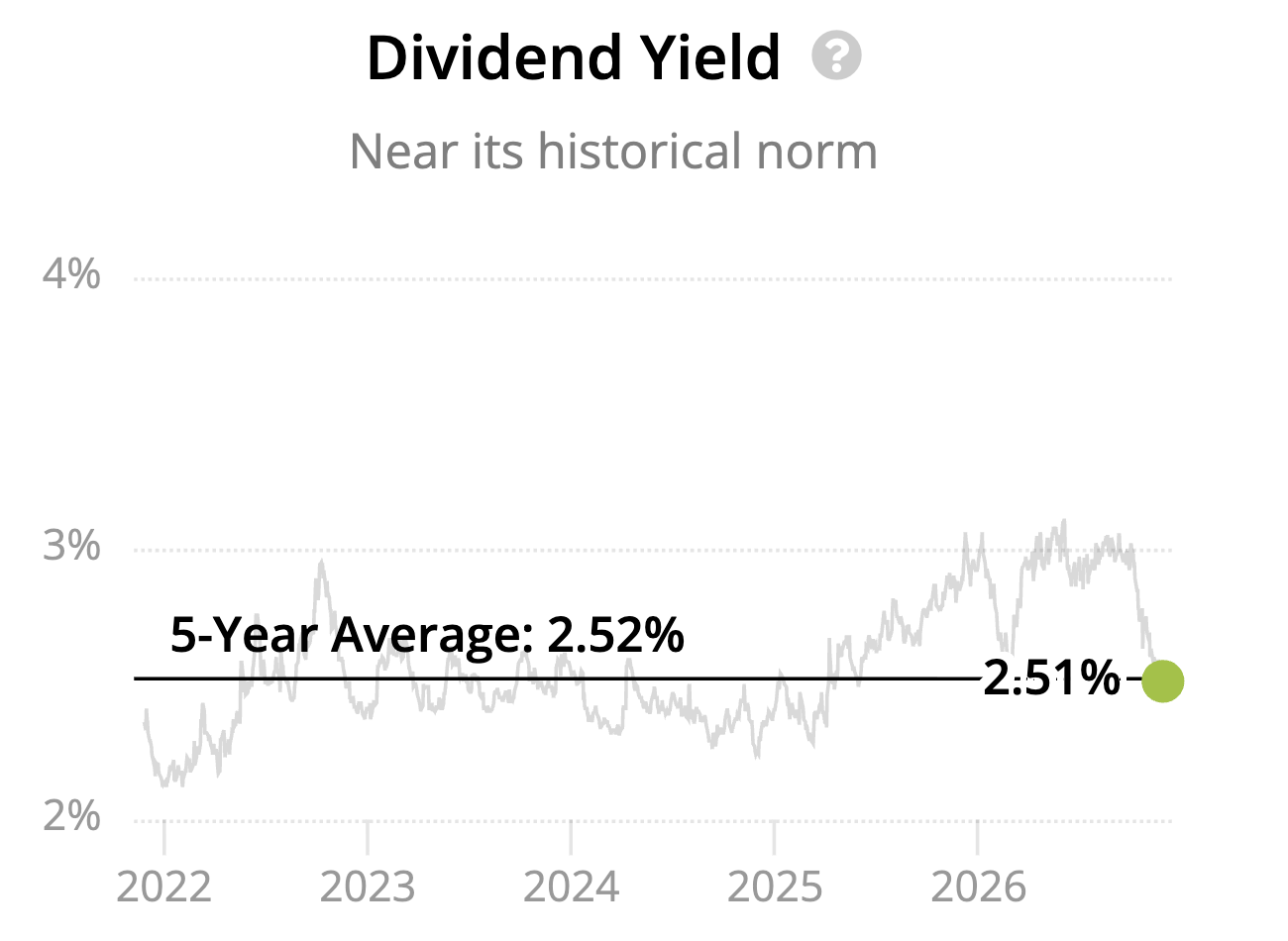
It pays out about 62% of its earnings, and its leverage is very low.
Procter & Gamble yields 2.51%, right at its five-year average of 2.52%, which points to a fair price.
Marzetti (MZTI): Dressings, Sauces and Frozen Bread Maker, 64 Years of Dividend Growth
Sector: Consumer Staples – Packaged Foods and Meats
Dividend Growth Streak: 64 years
Dividend Safety Score: Very Safe (90)
Dividend Yield: 3.7%
Credit Rating: Not rated by S&P
Dividend Growth Streak: 64 years
Dividend Safety Score: Very Safe (90)
Dividend Yield: 3.7%
Credit Rating: Not rated by S&P
Marzetti, formerly Lancaster Colony, sells Marzetti salad dressings, New York Bakery garlic bread, and Sister Schubert's rolls to grocery stores and restaurant chains.
We lowered its Dividend Safety Score from 95 to 90 in February 2026 after its $400 million purchase of Bachan's barbecue sauce, which left it with more debt than cash for the first time in at least a decade.
We lowered its Dividend Safety Score from 95 to 90 in February 2026 after its $400 million purchase of Bachan's barbecue sauce, which left it with more debt than cash for the first time in at least a decade.
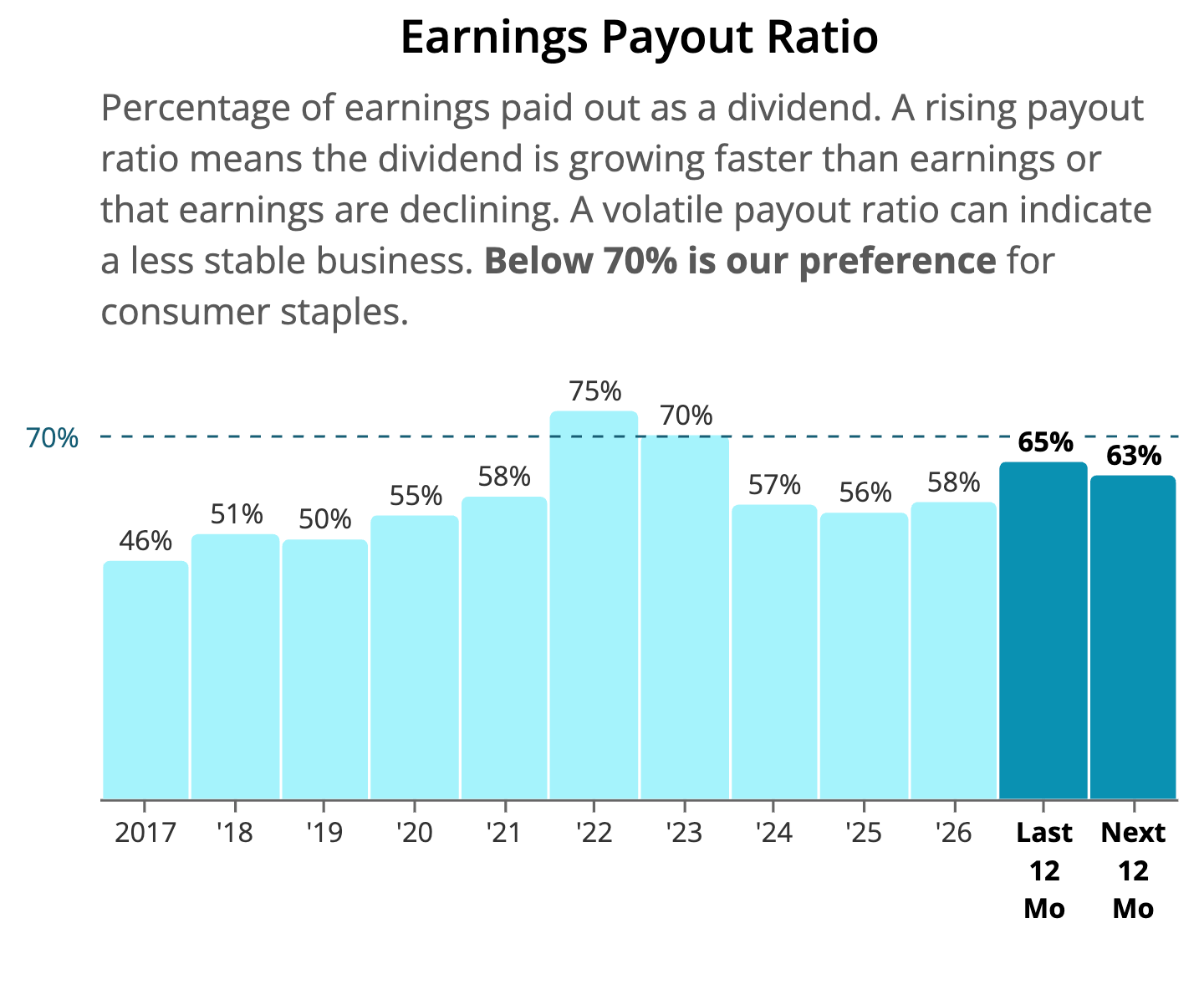
Its payout ratio stayed between 46% and 58% outside of 2022 and 2023 and has risen to 65% over the past year. It raised its dividend about 5% in November 2026, its 64th consecutive annual increase.
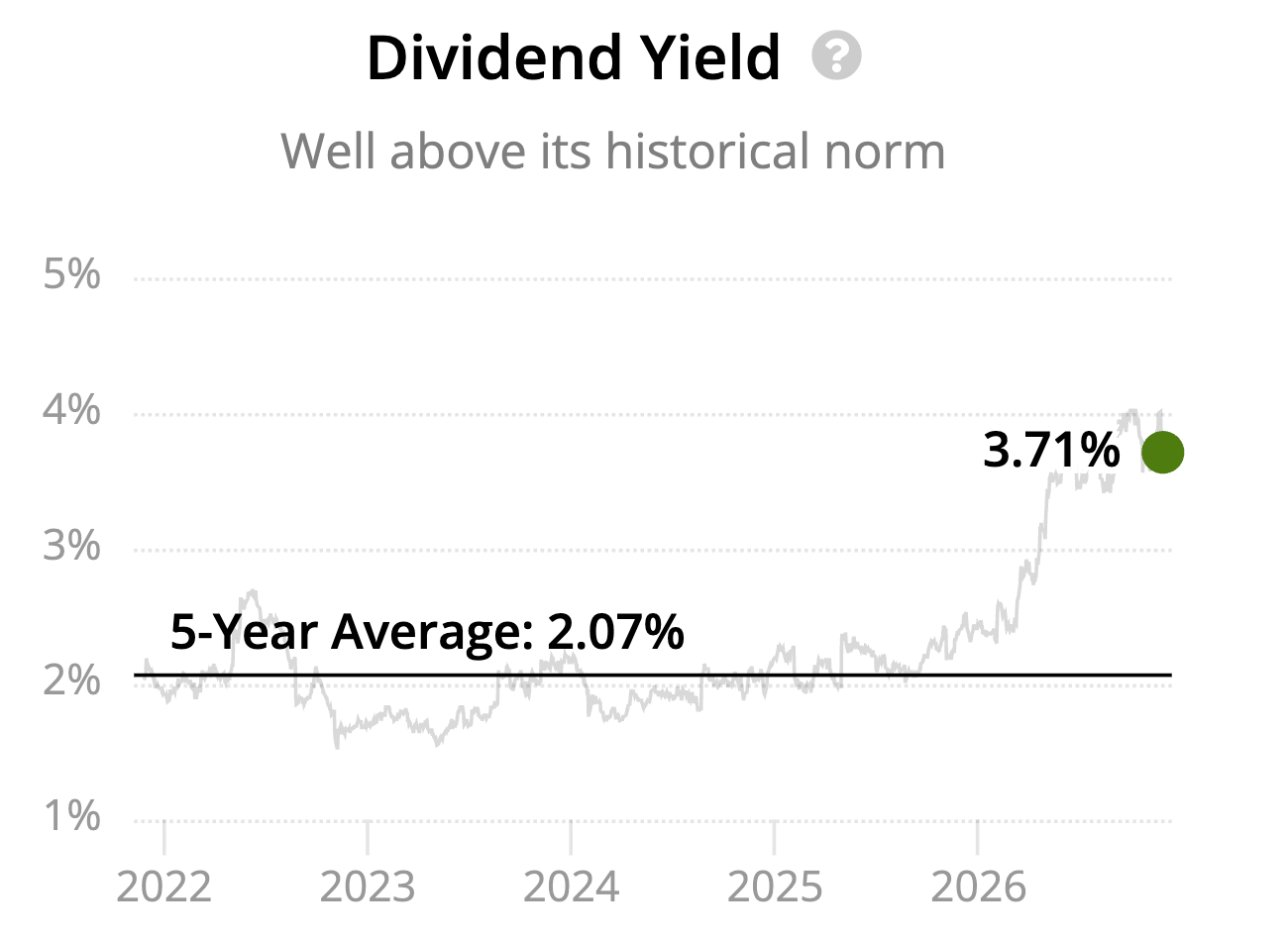
The yield of 3.71% is far above its five-year average of 2.07%, a sign the shares trade well below their usual valuation.
Colgate-Palmolive (CL): Toothpaste, Soap and Pet Food Maker, 63 Years of Dividend Growth
Sector: Consumer Staples – Household Products
Dividend Growth Streak: 63 years
Dividend Safety Score: Very Safe (90)
Dividend Yield: 2.1%
Credit Rating: A+
Dividend Growth Streak: 63 years
Dividend Safety Score: Very Safe (90)
Dividend Yield: 2.1%
Credit Rating: A+
Colgate-Palmolive sells toothpaste, soap, household cleaners, and Hill's pet food in more than 200 countries. Most of its sales come from outside the U.S., including fast-growing emerging markets.
Its payout ratio has stayed between 55% and 63% since 2016, and its leverage is very low.
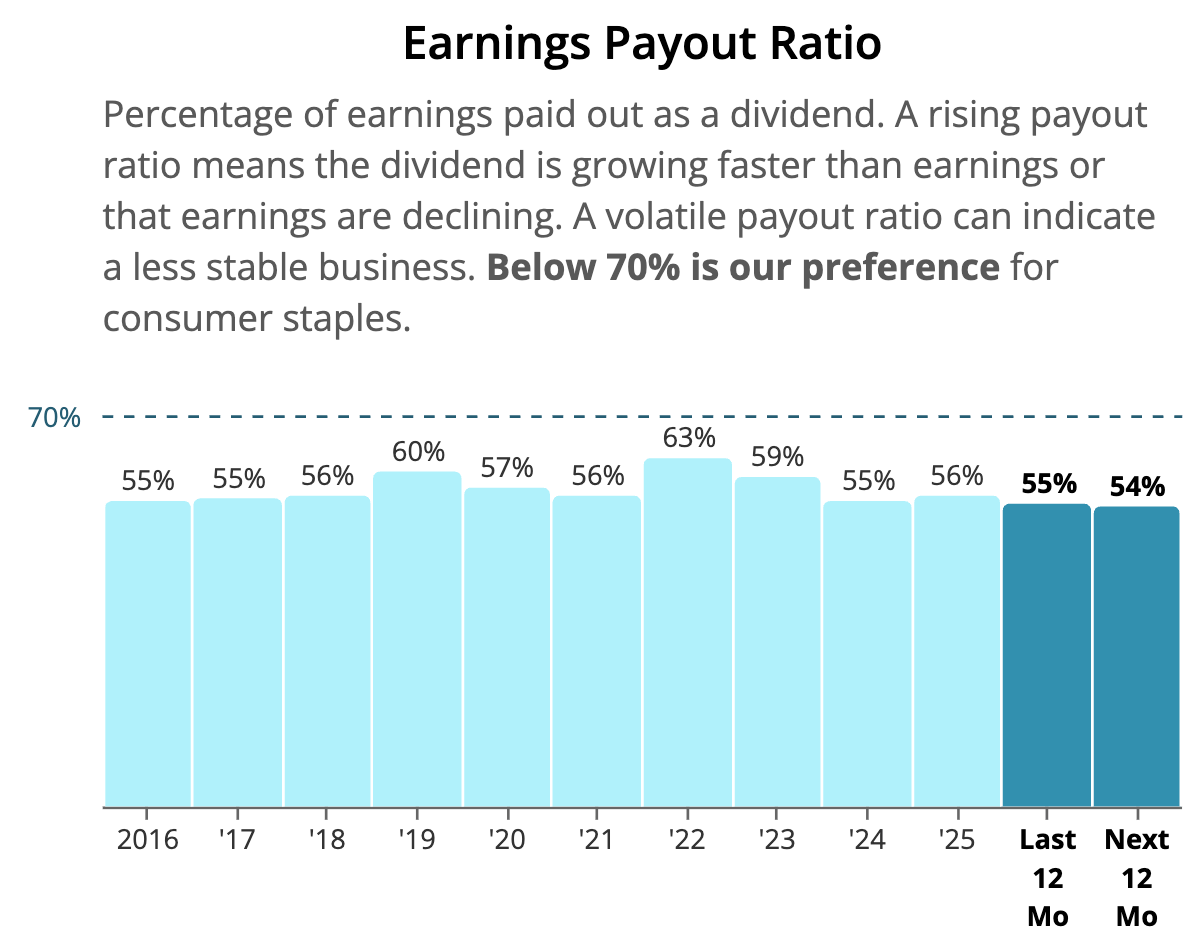
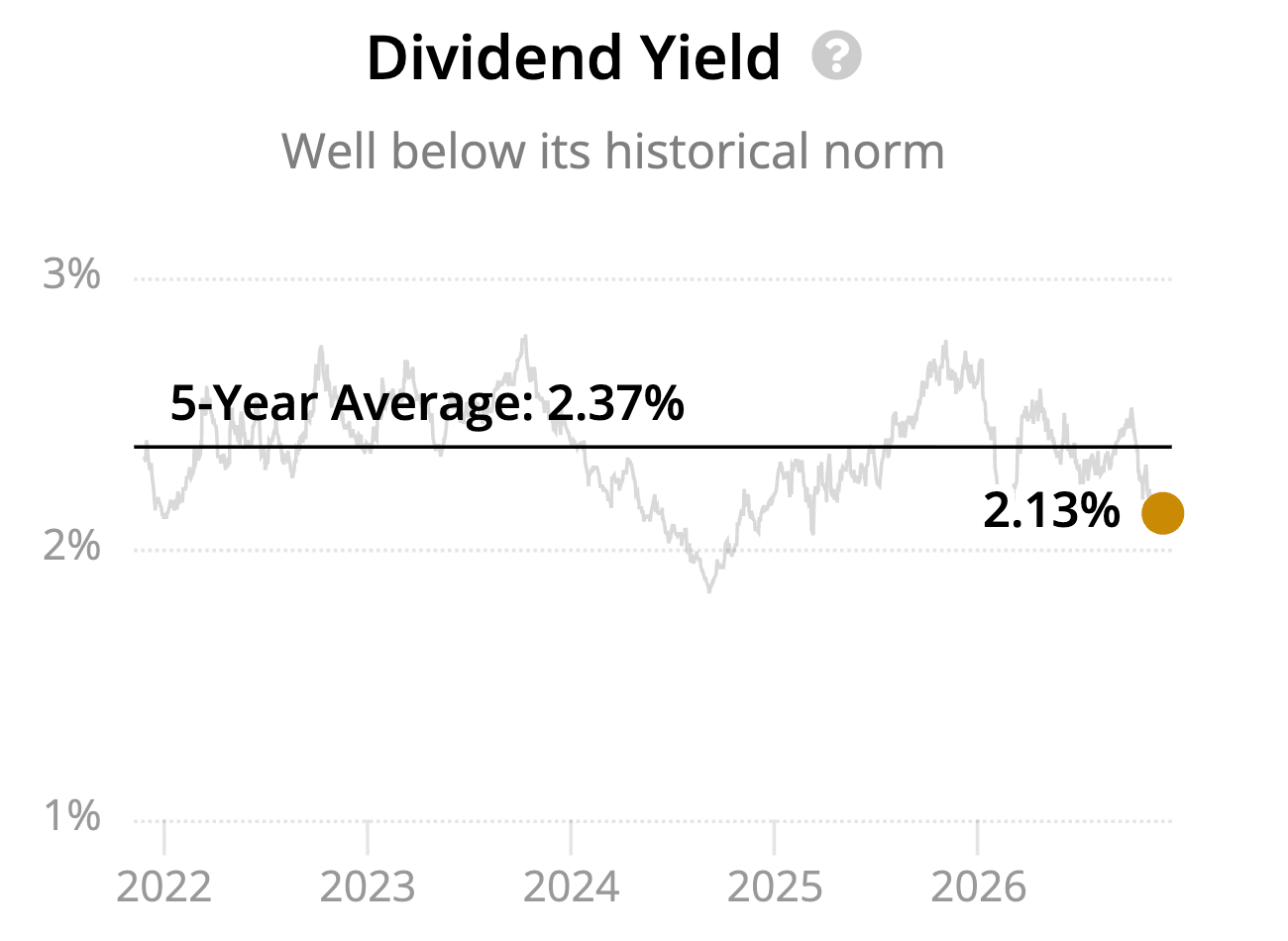
Colgate's 2.13% yield is below its five-year average of 2.37%, which suggests the stock is a little pricier than usual.
Tootsie Roll (TR): Candy Maker, 60 Years of Dividend Growth
Sector: Consumer Staples – Packaged Foods and Meats
Dividend Growth Streak: 60 years
Dividend Safety Score: Very Safe (90)
Dividend Yield: 1.0%
Credit Rating: Not rated by S&P
Dividend Growth Streak: 60 years
Dividend Safety Score: Very Safe (90)
Dividend Yield: 1.0%
Credit Rating: Not rated by S&P
Tootsie Roll makes Tootsie Pops, Junior Mints, Dots, and other old-line candy brands. It holds more than $125 million in cash and carries no net debt.
We still lowered its Dividend Safety Score from 99 to 90 in April 2026, because more consumers are cutting back on sugar.
We still lowered its Dividend Safety Score from 99 to 90 in April 2026, because more consumers are cutting back on sugar.
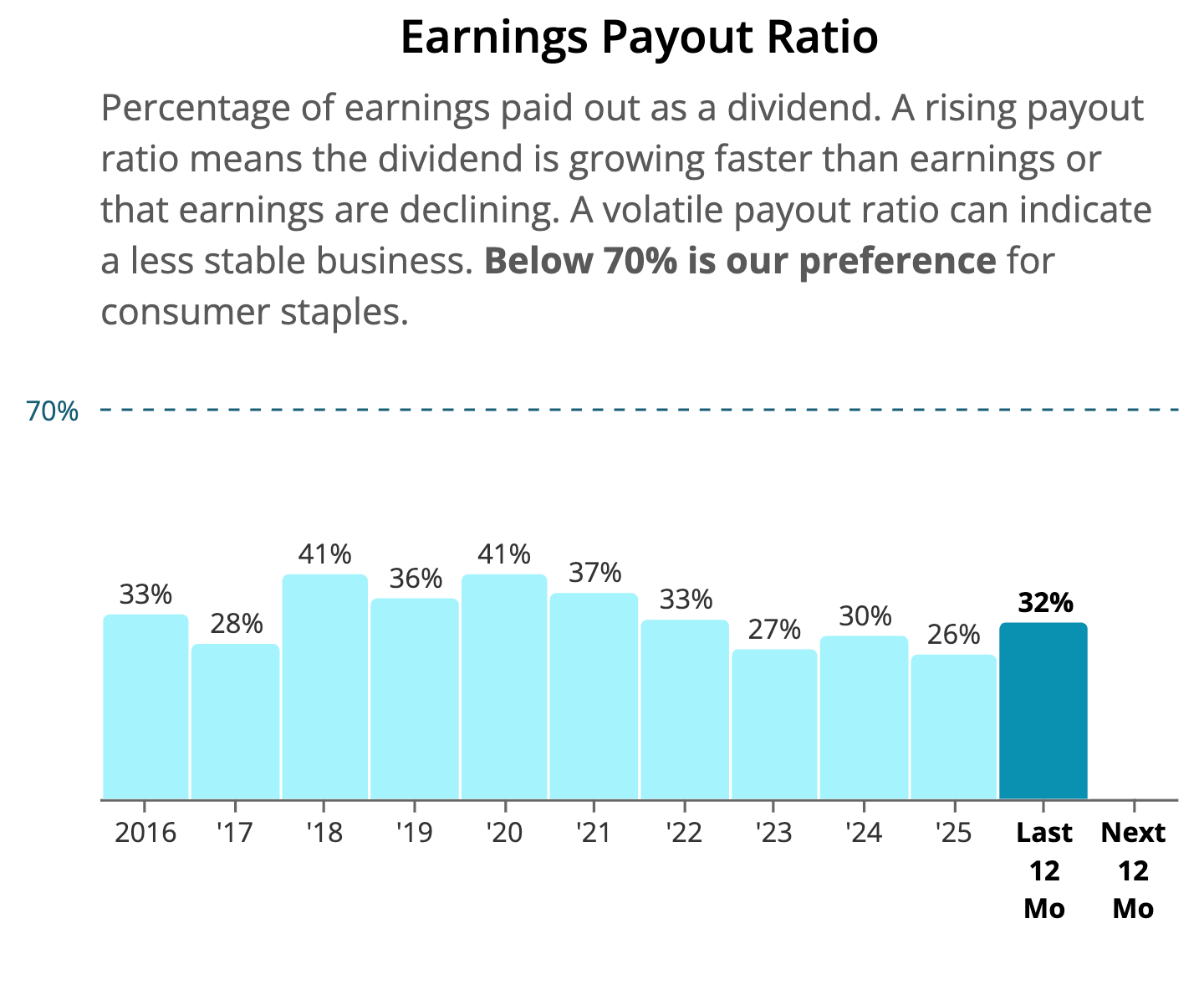
Its payout ratio has stayed between 26% and 41% since 2016, an unusually steady record.
Tootsie Roll pays out 32% of its earnings.
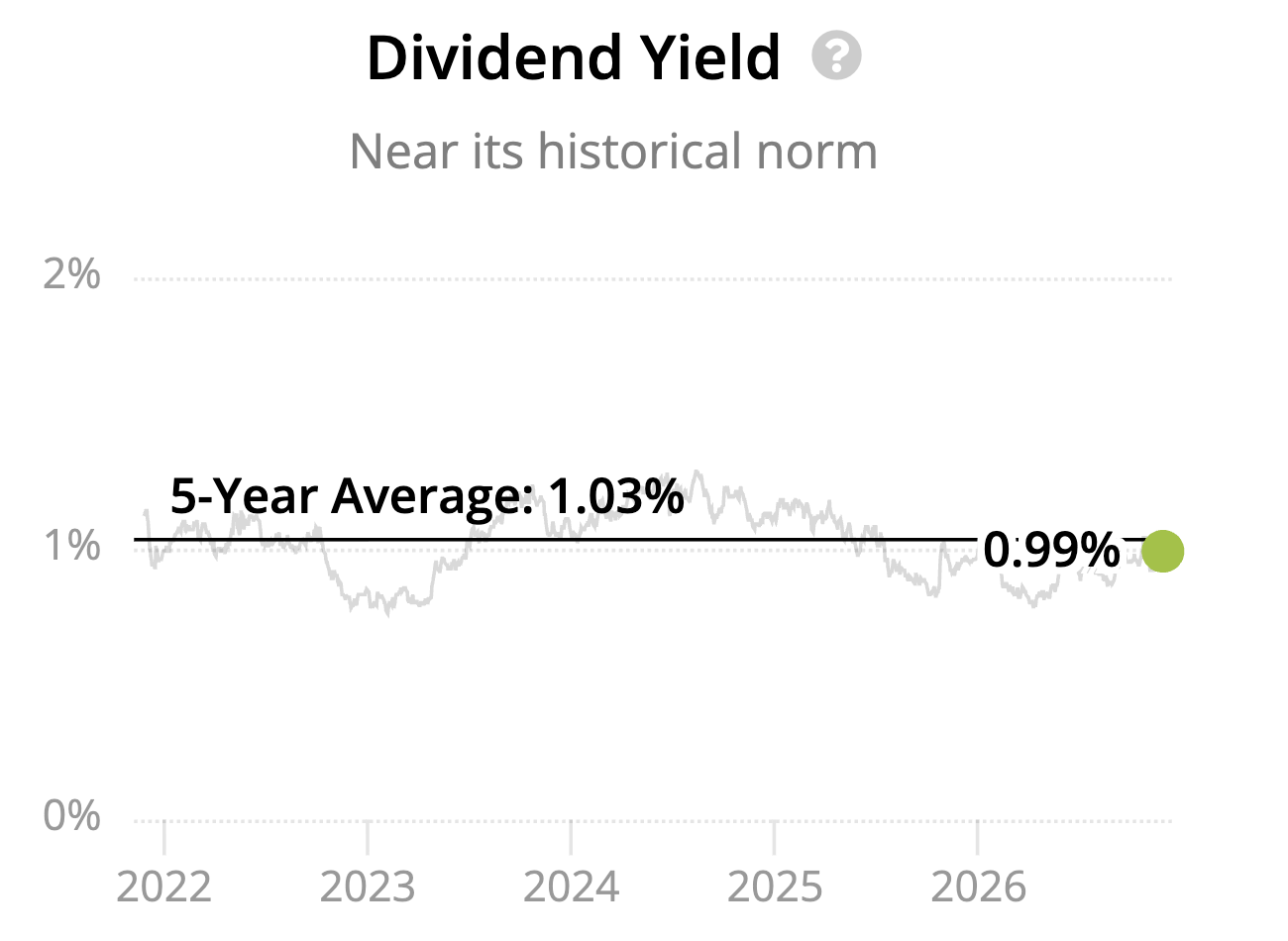
The 0.99% yield is close to its five-year average of 1.03%, so the shares look fairly valued.
H2O America (HTO): Multi-State Water Utility, 58 Years of Dividend Growth
Sector: Utilities – Water Utilities
Dividend Growth Streak: 58 years
Dividend Safety Score: Very Safe (90)
Dividend Yield: 3.0%
Credit Rating: A-
Dividend Growth Streak: 58 years
Dividend Safety Score: Very Safe (90)
Dividend Yield: 3.0%
Credit Rating: A-
H2O America, formerly SJW Group, owns regulated water utilities in California, Texas, Connecticut, and Maine. We lowered its Dividend Safety Score from 99 to 90, still Very Safe, in August 2026 after an acquisition narrowed its cushion.
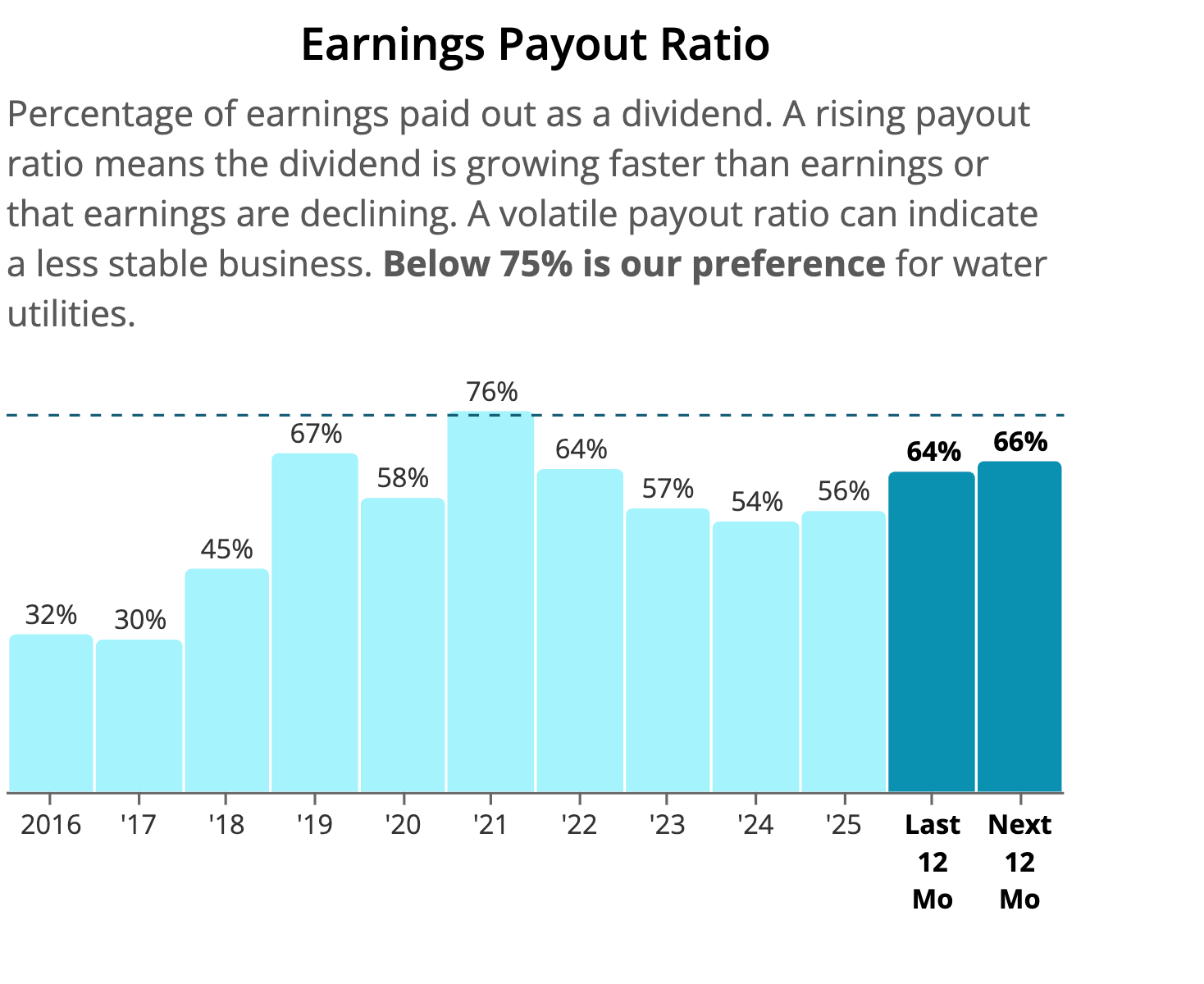
Its payout ratio is expected to rise to 66% over the next year, and its leverage is edging high for the industry.
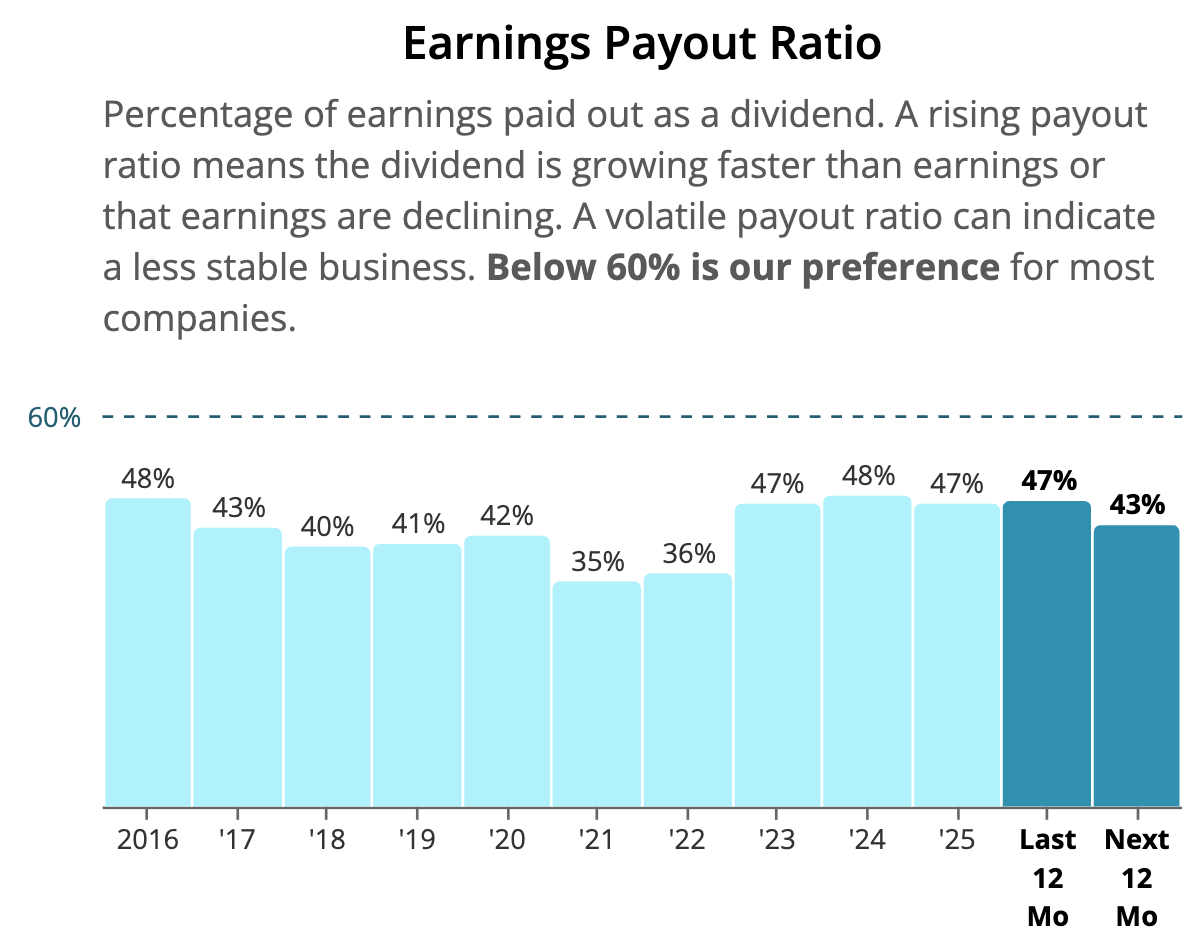
H2O America pays out 64% of its earnings, expected to be 66% next year.
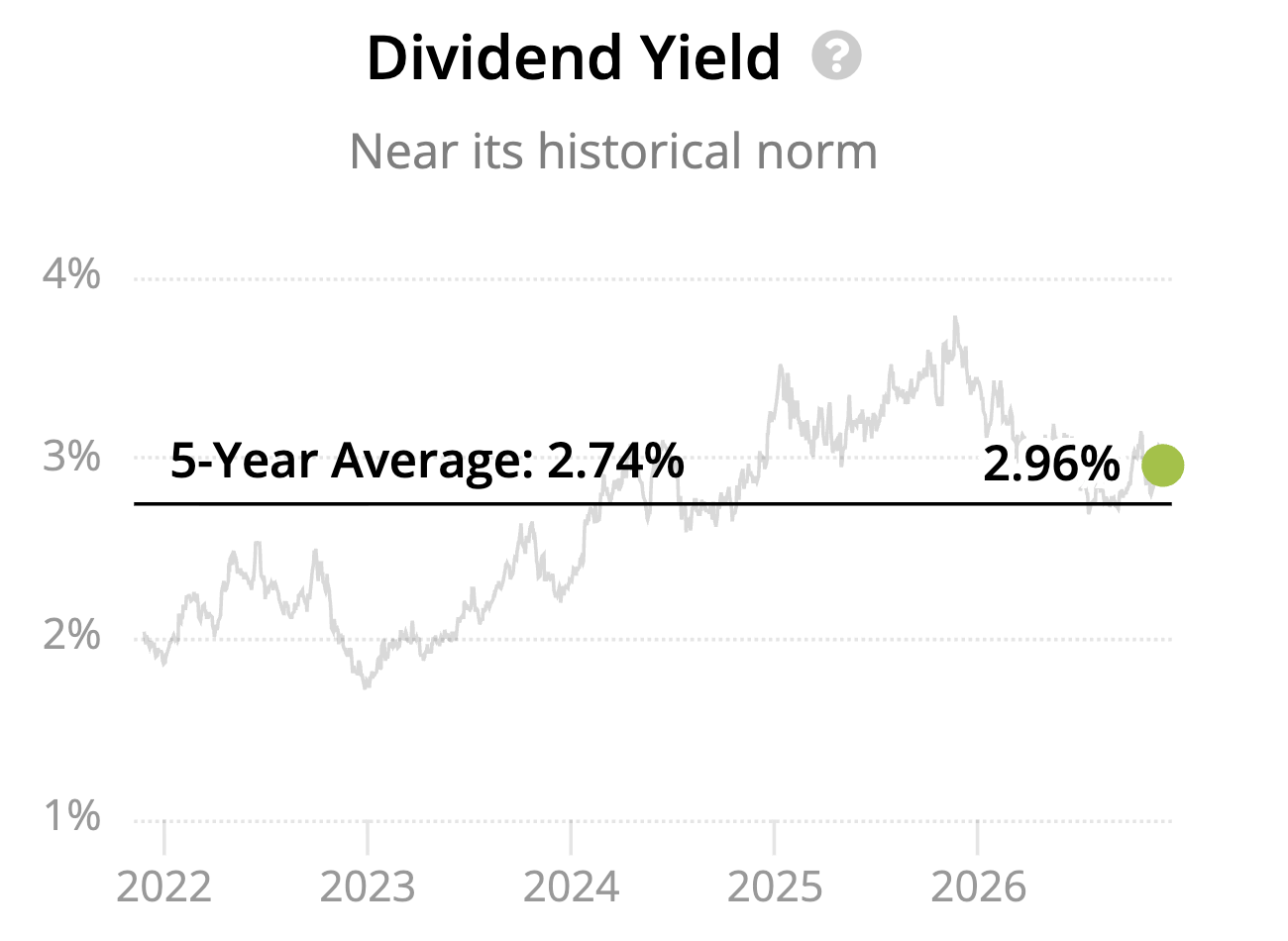
H2O America yields 2.96%, modestly above its five-year average of 2.74%, which suggests a fair to slightly cheap valuation.
Abbott Laboratories (ABT): Medical Devices and Diagnostics Maker, 54 Years of Dividend Growth
Sector: Healthcare – Health Care Equipment
Dividend Growth Streak: 54 years
Dividend Safety Score: Very Safe (90)
Dividend Yield: 2.3%
Credit Rating: A+
Dividend Growth Streak: 54 years
Dividend Safety Score: Very Safe (90)
Dividend Yield: 2.3%
Credit Rating: A+
Abbott makes medical devices, diagnostic tests, nutrition products, and branded generic drugs, led by its FreeStyle Libre glucose monitors. We lowered its Dividend Safety Score from 99 to 90, still Very Safe, in November 2025.
The stock fell more than 15% in January 2026 after its nutrition business missed expectations.
The stock fell more than 15% in January 2026 after its nutrition business missed expectations.
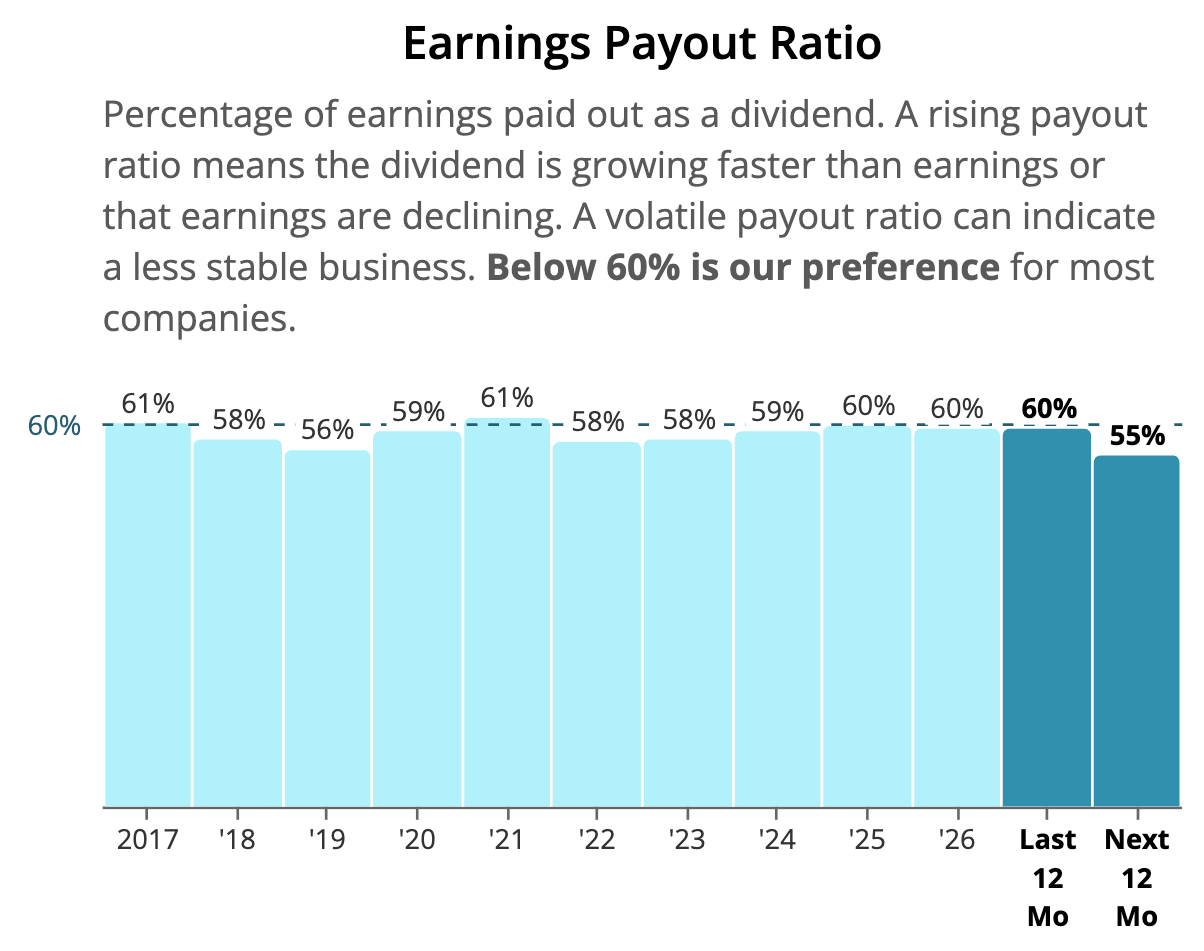
Abbott pays out 47% of its earnings, and its leverage is low.
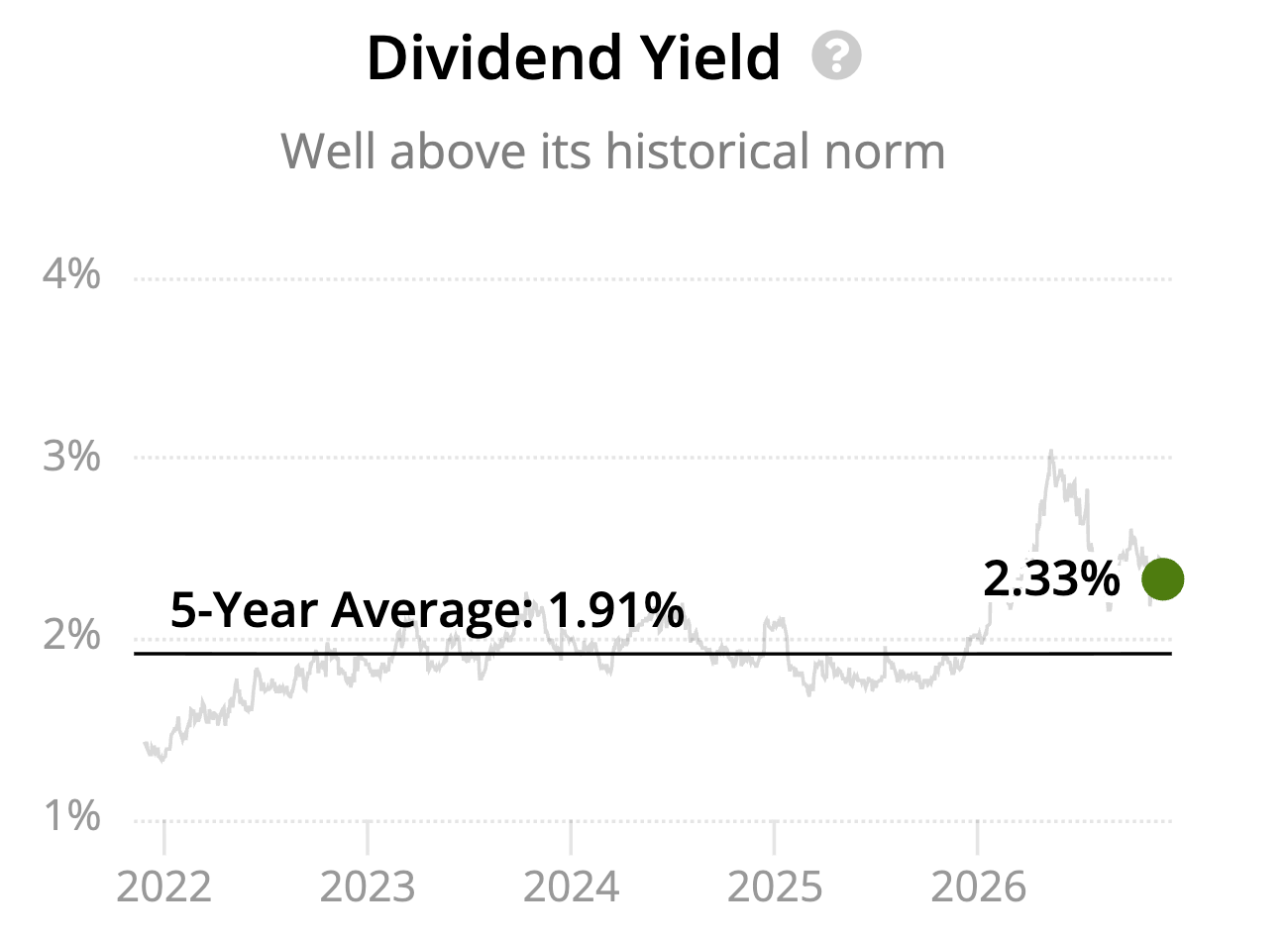
The January selloff lifted the yield to 2.33%, well above its five-year average of 1.91%, which suggests the shares may be undervalued.
Automatic Data Processing (ADP): Payroll and HR Software Provider, 52 Years of Dividend Growth
Sector: Industrials – Human Resource Services
Dividend Growth Streak: 52 years
Dividend Safety Score: Very Safe (90)
Dividend Yield: 2.4%
Credit Rating: AA-
Dividend Growth Streak: 52 years
Dividend Safety Score: Very Safe (90)
Dividend Yield: 2.4%
Credit Rating: AA-
ADP runs payroll and HR software for businesses of every size and pays roughly one in six American workers. We lowered its Dividend Safety Score from 97 to 90, still Very Safe, in February 2026 as its growth outlook slowed.
Its payout ratio has held near 60% for a decade, because ADP has raised its dividend about as fast as earnings have grown. It carries very little debt. It raised its dividend 12% in November 2026, its 52nd consecutive annual increase.
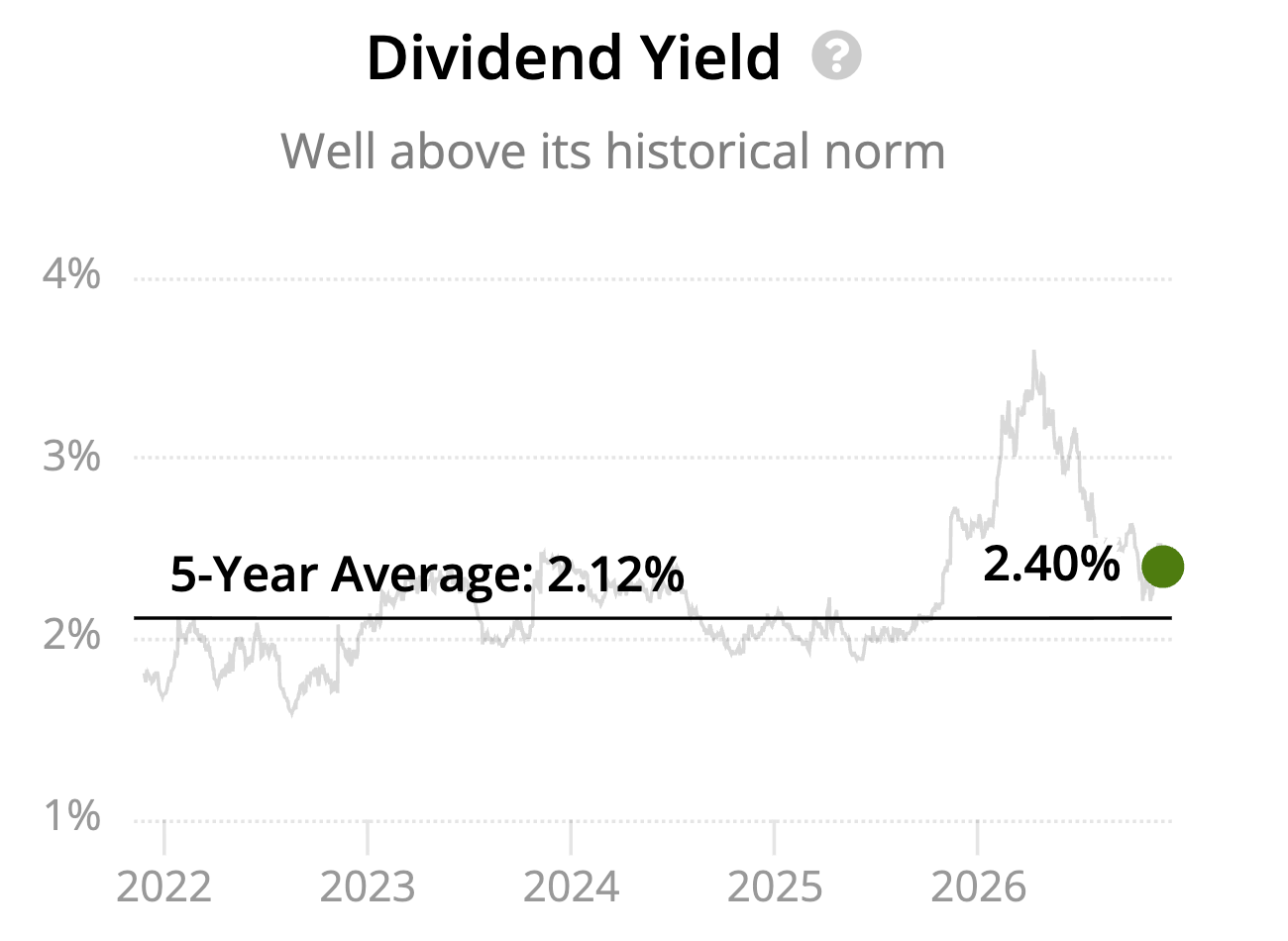
ADP yields 2.40%, above its five-year average of 2.12%, a sign the stock is cheaper than usual.
Nucor (NUE): Steel Producer and Recycler, 52 Years of Dividend Growth
Sector: Materials – Steel
Dividend Growth Streak: 52 years
Dividend Safety Score: Very Safe (90)
Dividend Yield: 0.9%
Credit Rating: A-
Dividend Growth Streak: 52 years
Dividend Safety Score: Very Safe (90)
Dividend Yield: 0.9%
Credit Rating: A-
Nucor is North America's largest steel producer and recycler, melting scrap in electric arc furnaces. Steel demand is cyclical, so Nucor pays a modest base dividend it can sustain through downturns.
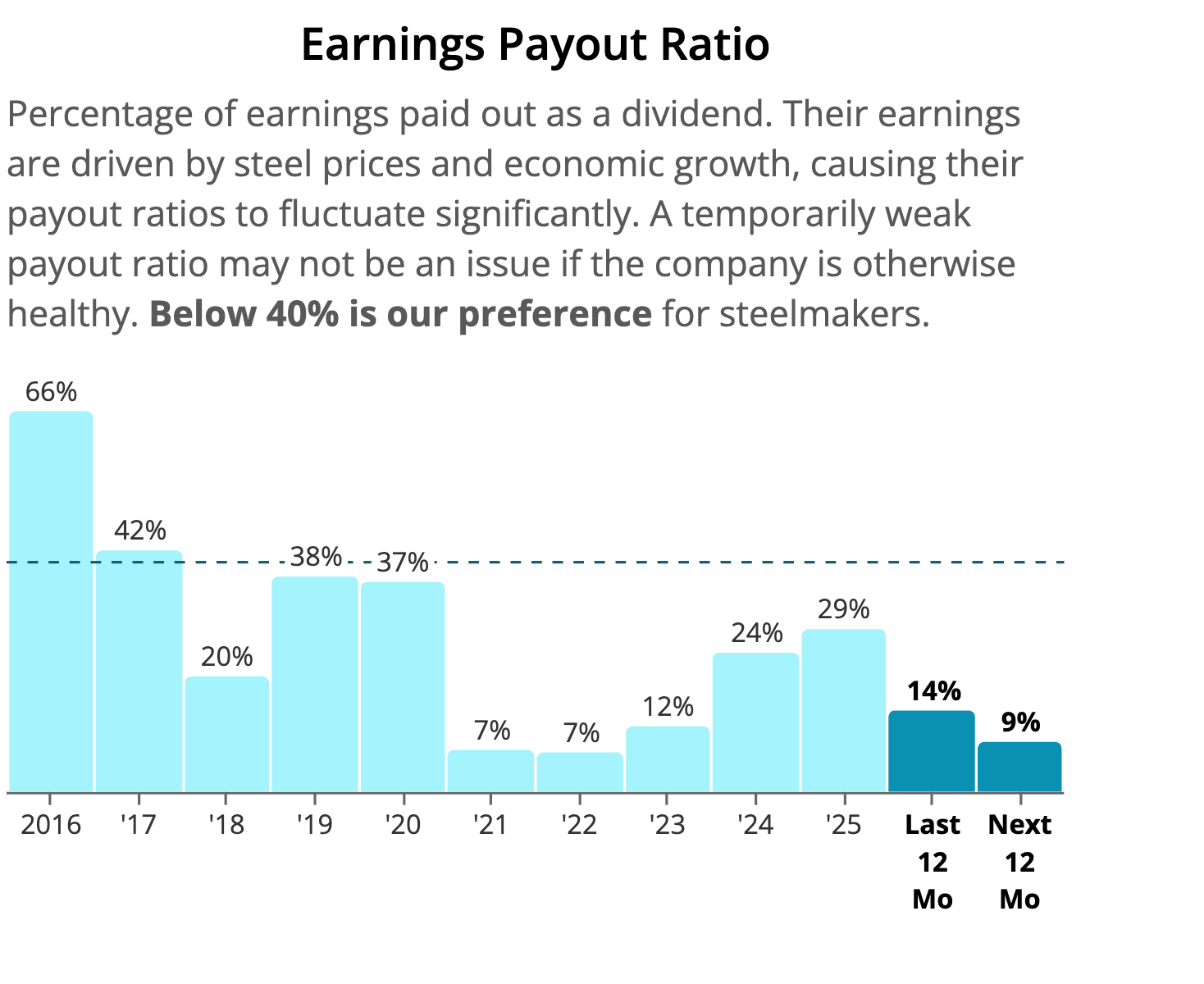
Its payout ratio swings with steel prices, from 66% in 2016 to 7% in 2021 and 2022, and it is low today. Its leverage is very low.
Nucor pays out 14% of its earnings, expected to be 9% next year.
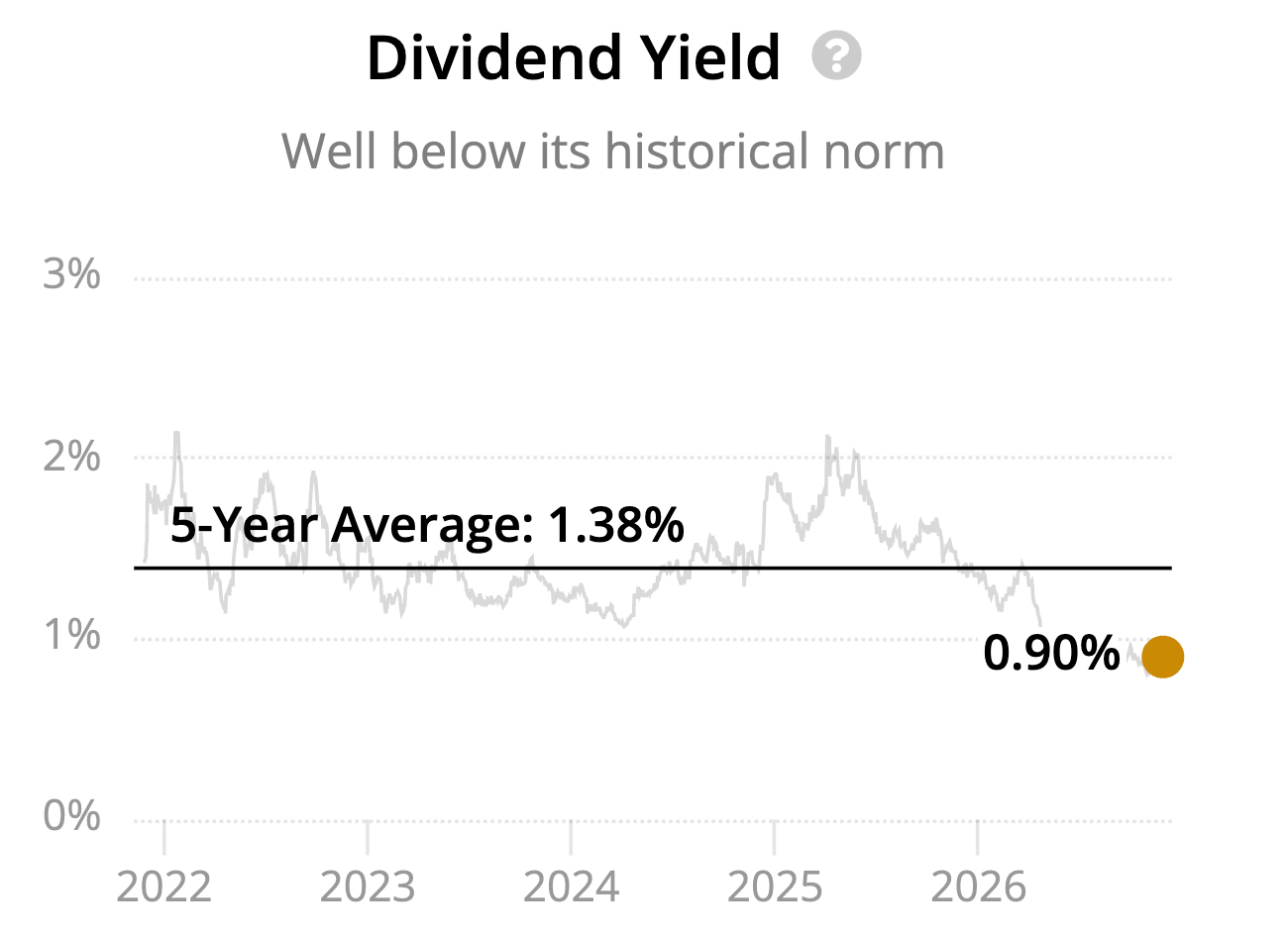
The 0.90% yield is well below its five-year average of 1.38%. Because Nucor's earnings swing with steel prices, yield alone is a rough guide to its valuation.
Walmart (WMT): Discount Retailer and Grocer, 52 Years of Dividend Growth
Sector: Consumer Staples – General Merchandise Retail
Dividend Growth Streak: 52 years
Dividend Safety Score: Very Safe (90)
Dividend Yield: 0.8%
Credit Rating: AA
Dividend Growth Streak: 52 years
Dividend Safety Score: Very Safe (90)
Dividend Yield: 0.8%
Credit Rating: AA
Walmart is the world's largest retailer, selling groceries and general merchandise at low prices through Supercenters, Sam's Club, and online. Advertising and membership fees are a growing source of profit.
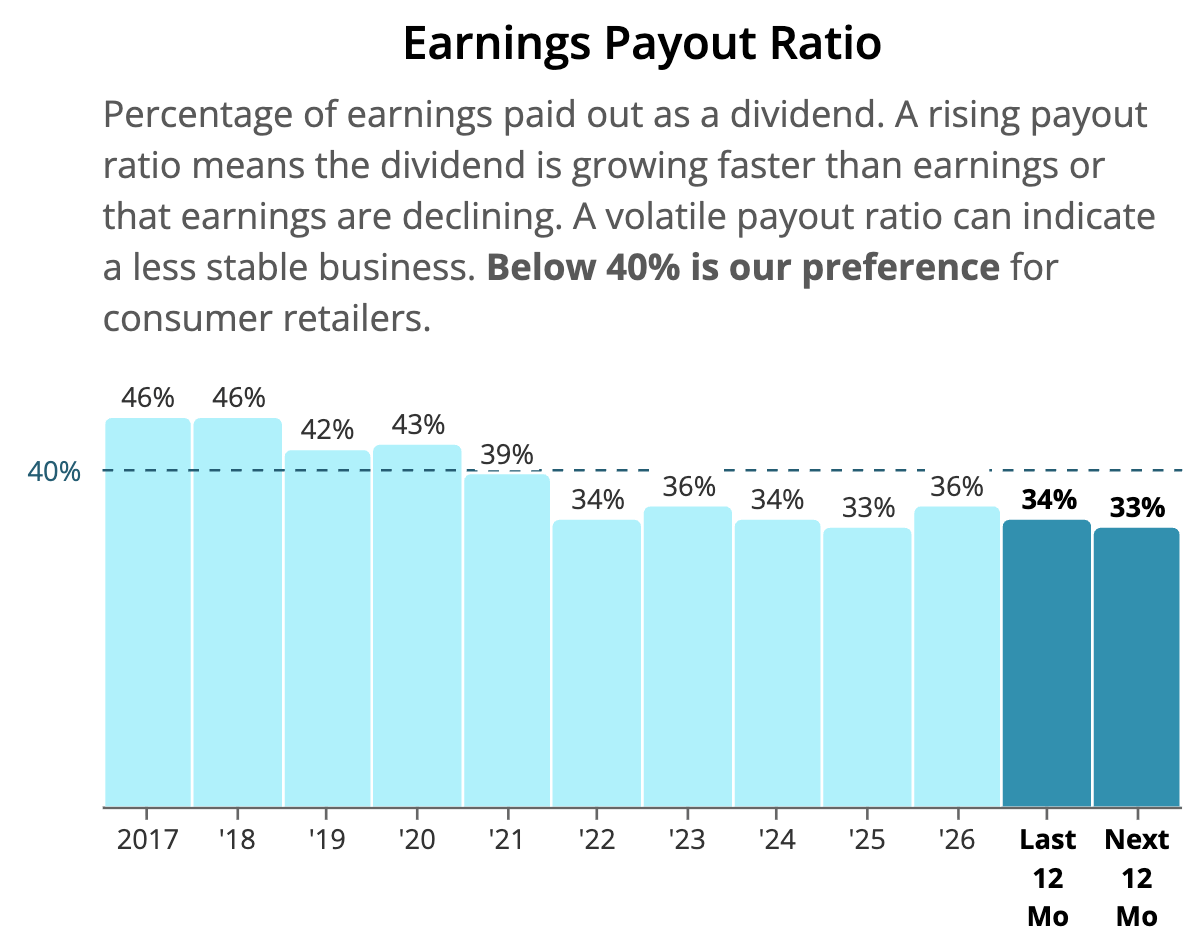
It pays out about a third of its earnings.
Walmart pays out 34% of its earnings, expected to be 33% next year.
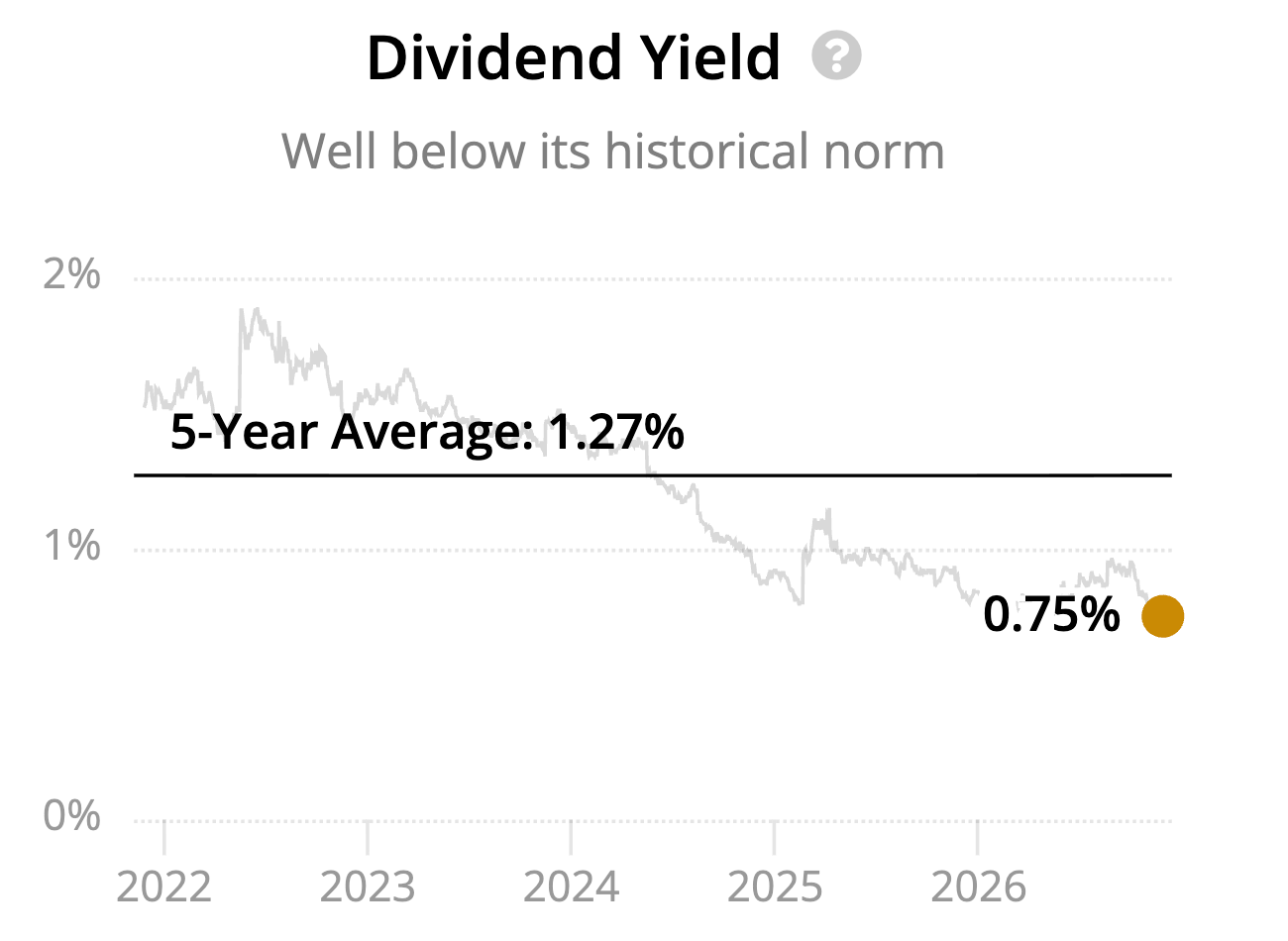
Shares have risen far faster than the dividend, pushing the yield to 0.75%, well below its five-year average of 1.27%, so the stock looks expensive.
Consolidated Edison (ED): New York City Electric and Gas Utility, 51 Years of Dividend Growth
Sector: Utilities – Multi-Utilities
Dividend Growth Streak: 51 years
Dividend Safety Score: Very Safe (90)
Dividend Yield: 3.0%
Credit Rating: A-
Dividend Growth Streak: 51 years
Dividend Safety Score: Very Safe (90)
Dividend Yield: 3.0%
Credit Rating: A-
Consolidated Edison delivers electricity, natural gas, and steam in and around New York City. Its regulated delivery business earns rates set by state regulators, which makes its cash flow predictable.
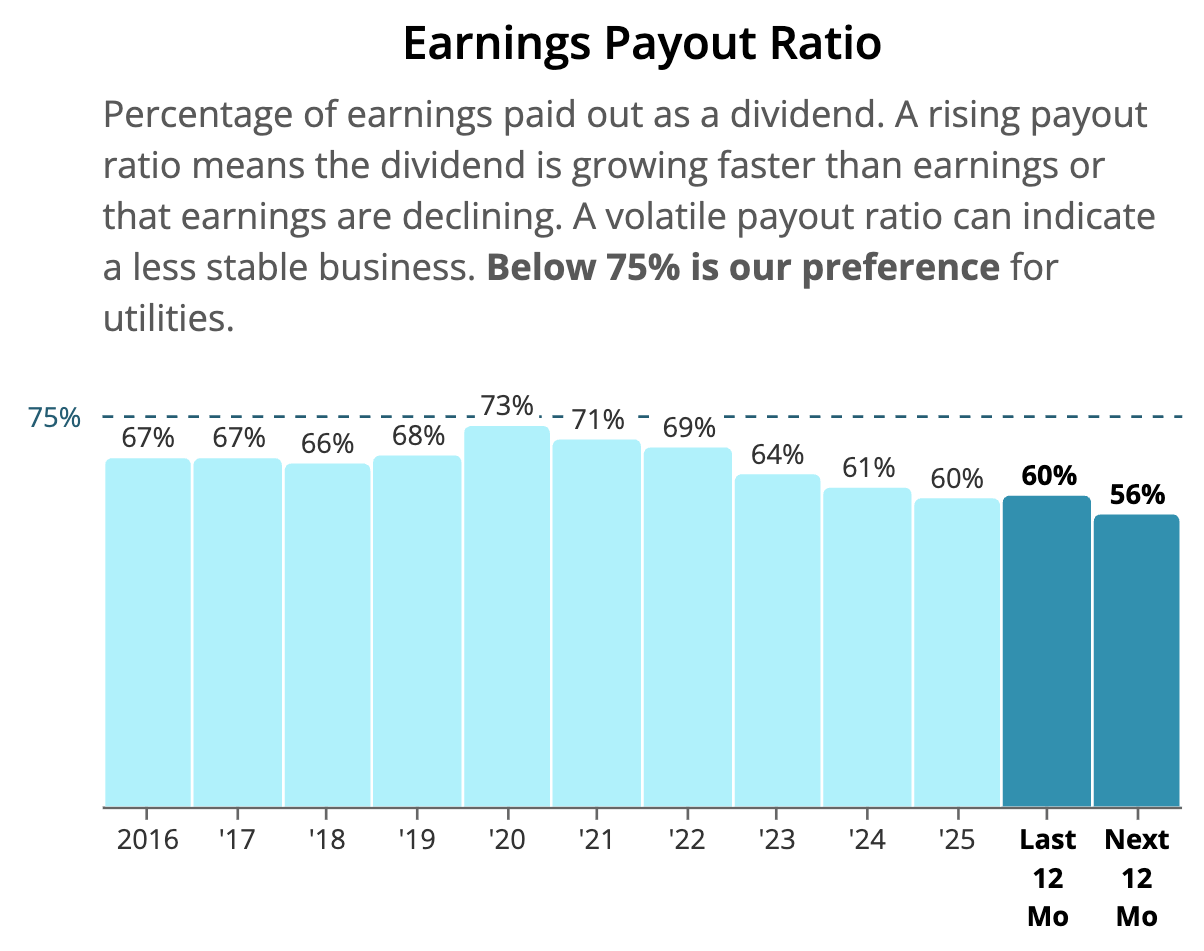
Management targets a payout ratio of 60% to 70% of earnings, and the ratio has come down from 73% in 2020 to about 60%.
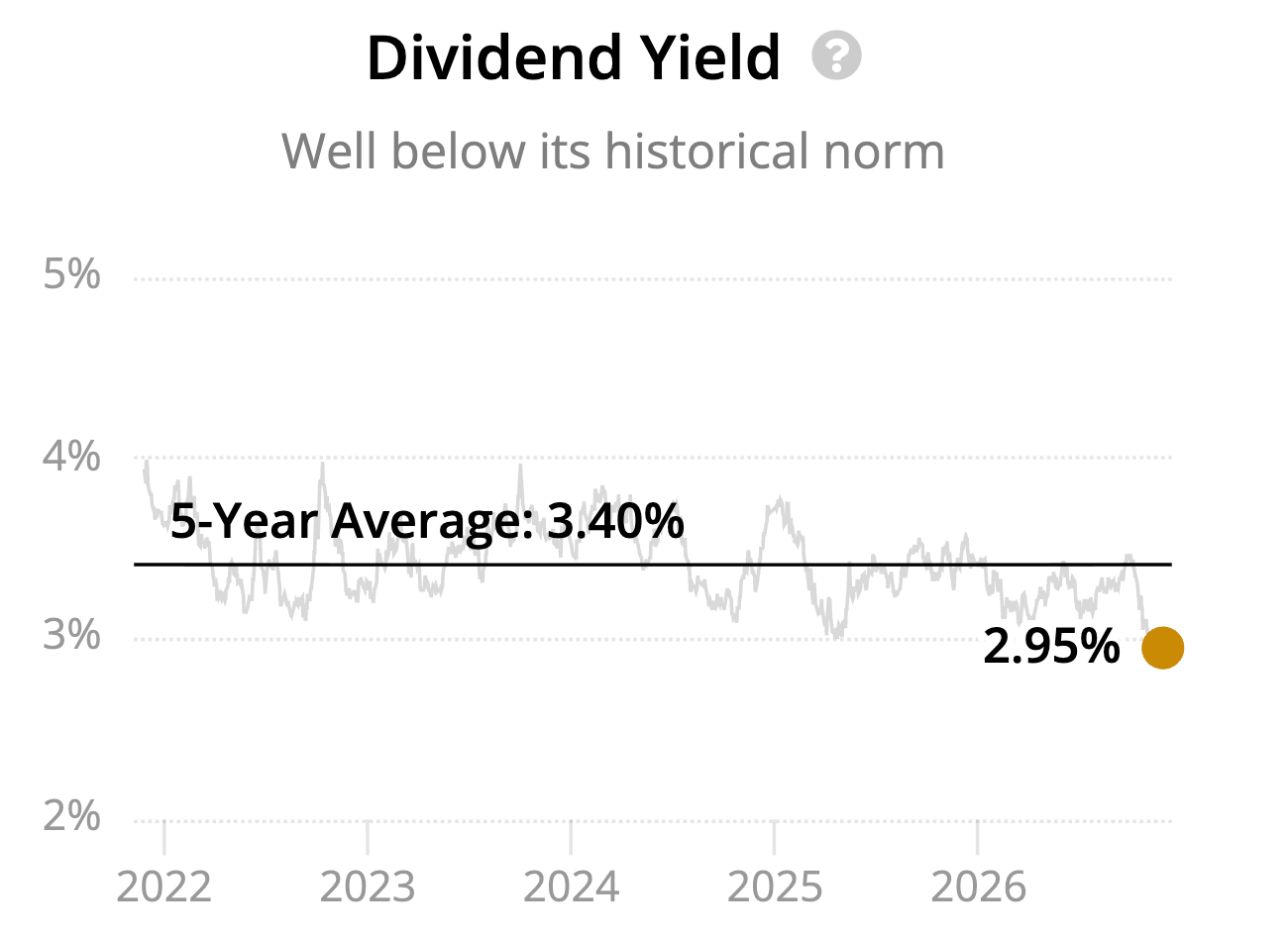
Con Ed yields 2.95%, well below its five-year average of 3.40%, which suggests the shares are pricier than usual.
Dover (DOV): Industrial Equipment Maker, 71 Years of Dividend Growth
Sector: Industrials – Industrial Machinery and Components
Dividend Growth Streak: 71 years
Dividend Safety Score: Very Safe (89)
Dividend Yield: 1.0%
Credit Rating: BBB+
Dividend Growth Streak: 71 years
Dividend Safety Score: Very Safe (89)
Dividend Yield: 1.0%
Credit Rating: BBB+
Dover makes industrial equipment ranging from fuel dispensers and pumps to the printers that mark dates and codes on packaged goods. It has raised its dividend for 71 straight years, tied with Northwest Natural for the second-longest streak on this list, but its raises have been small lately.
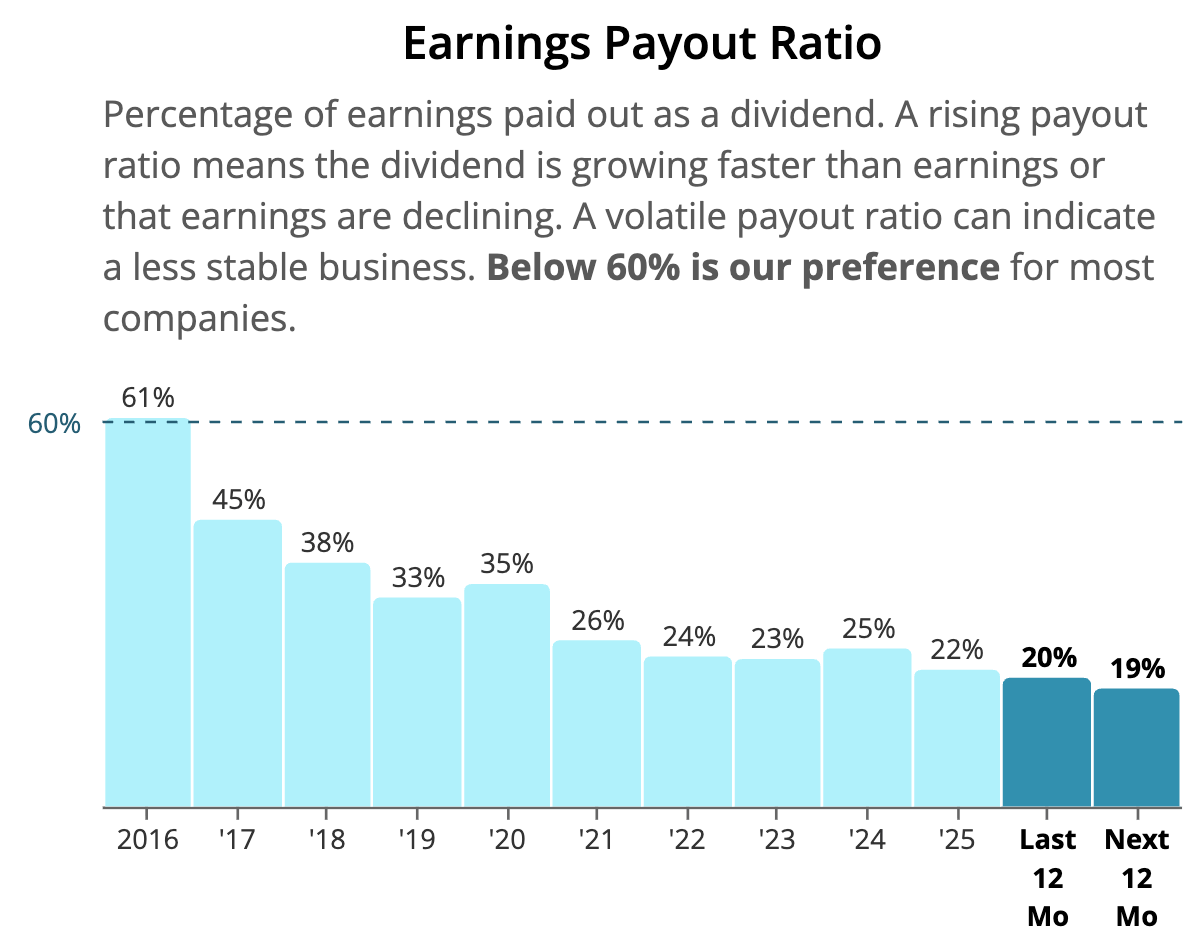
Dividend growth has averaged just 1.0% a year over the past five years, which is why its payout ratio has fallen from 61% in 2016 to about 20%.
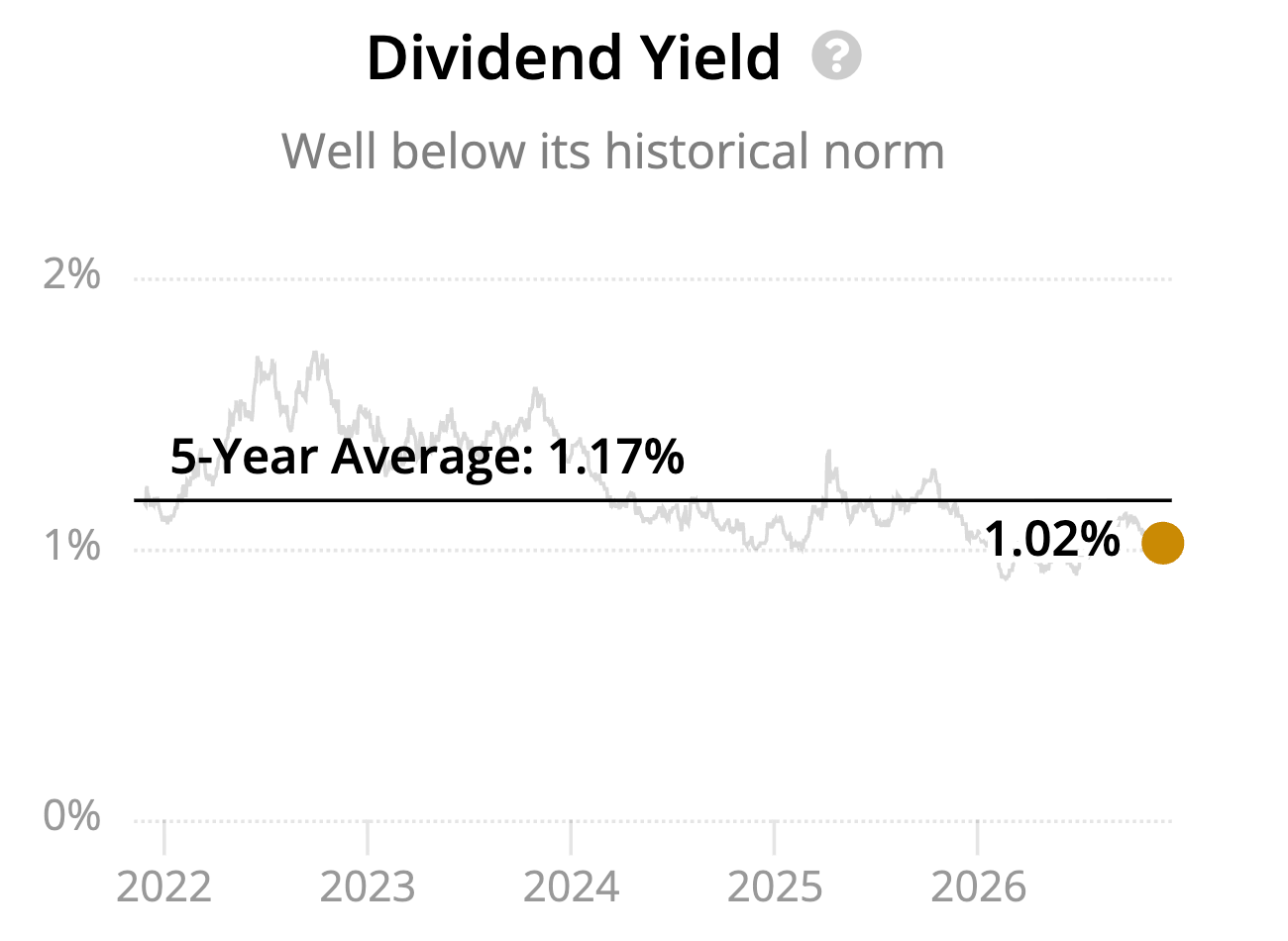
The yield is 1.02%, below its five-year average of 1.17%, so the stock looks somewhat expensive.
MGE Energy (MGEE): Wisconsin Electric and Gas Utility, 50 Years of Dividend Growth
Sector: Utilities – Electric Utilities
Dividend Growth Streak: 50 years
Dividend Safety Score: Very Safe (84)
Dividend Yield: 2.5%
Credit Rating: Not rated by S&P
Dividend Growth Streak: 50 years
Dividend Safety Score: Very Safe (84)
Dividend Yield: 2.5%
Credit Rating: Not rated by S&P
MGE Energy owns Madison Gas and Electric, which serves Madison, Wisconsin, and the surrounding counties.
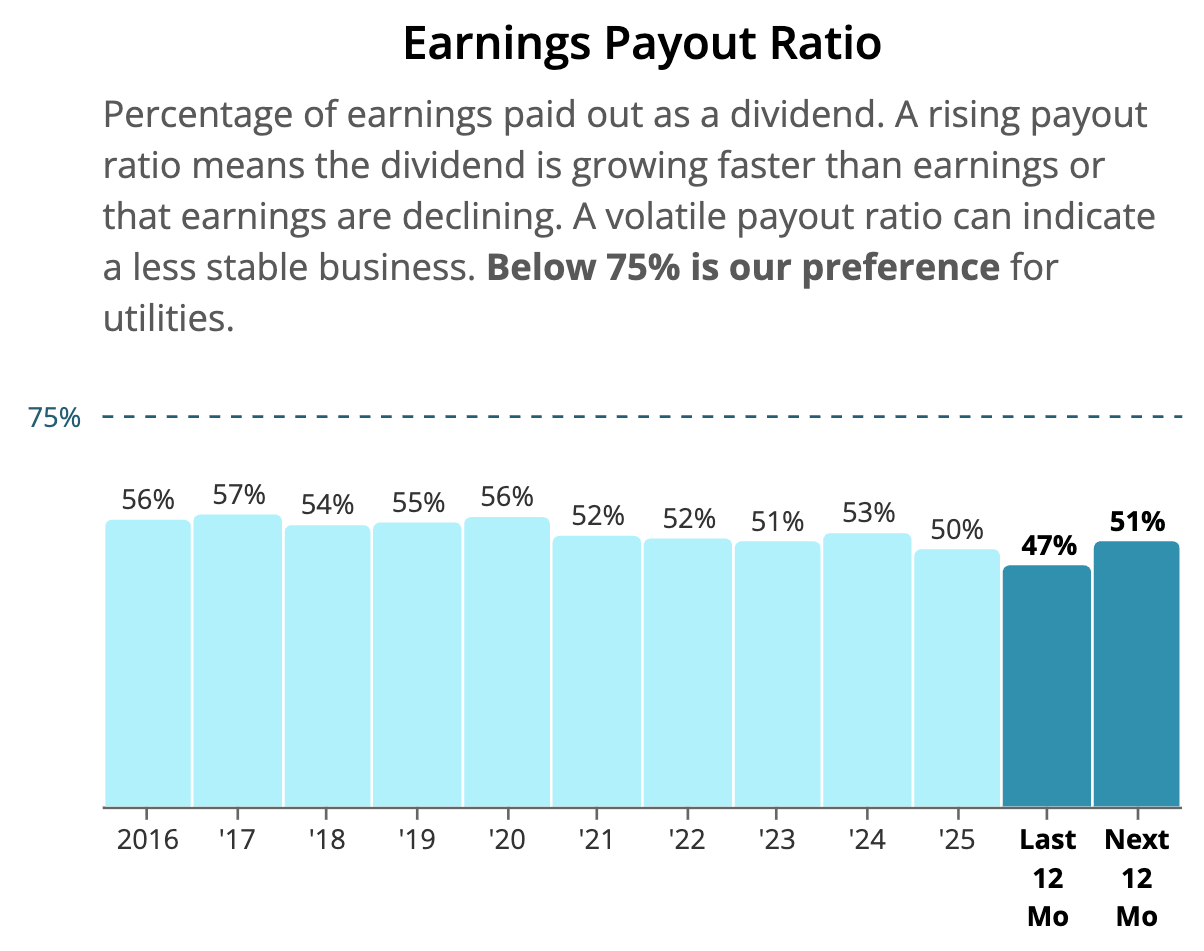
It pays out about half of its earnings, and its leverage is very low for a utility.
MGE Energy pays out 47% of its earnings, expected to be 51% next year.
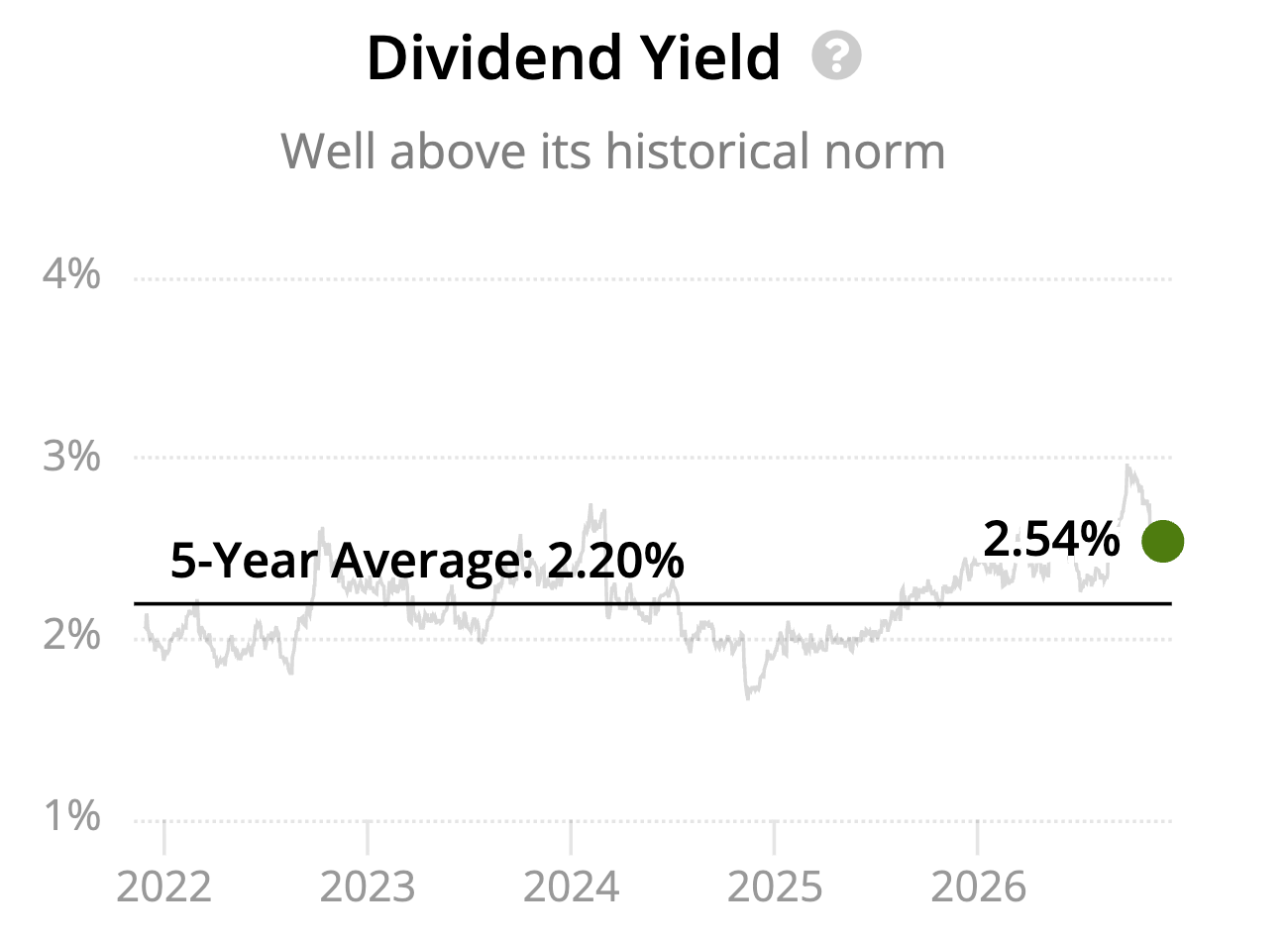
Its 2.54% yield is well above its five-year average of 2.20%, which suggests the stock may be undervalued.
RLI Corp. (RLI): Specialty Property and Casualty Insurer, 50 Years of Dividend Growth
Sector: Financials – Property and Casualty Insurance
Dividend Growth Streak: 50 years
Dividend Safety Score: Very Safe (82)
Dividend Yield: 1.0%
Credit Rating: BBB
Dividend Growth Streak: 50 years
Dividend Safety Score: Very Safe (82)
Dividend Yield: 1.0%
Credit Rating: BBB
RLI underwrites specialty property and casualty insurance for risks that standard insurers avoid, such as commercial excess liability and trucking. It has earned an underwriting profit for decades, and it often pays special dividends on top of its regular payout.
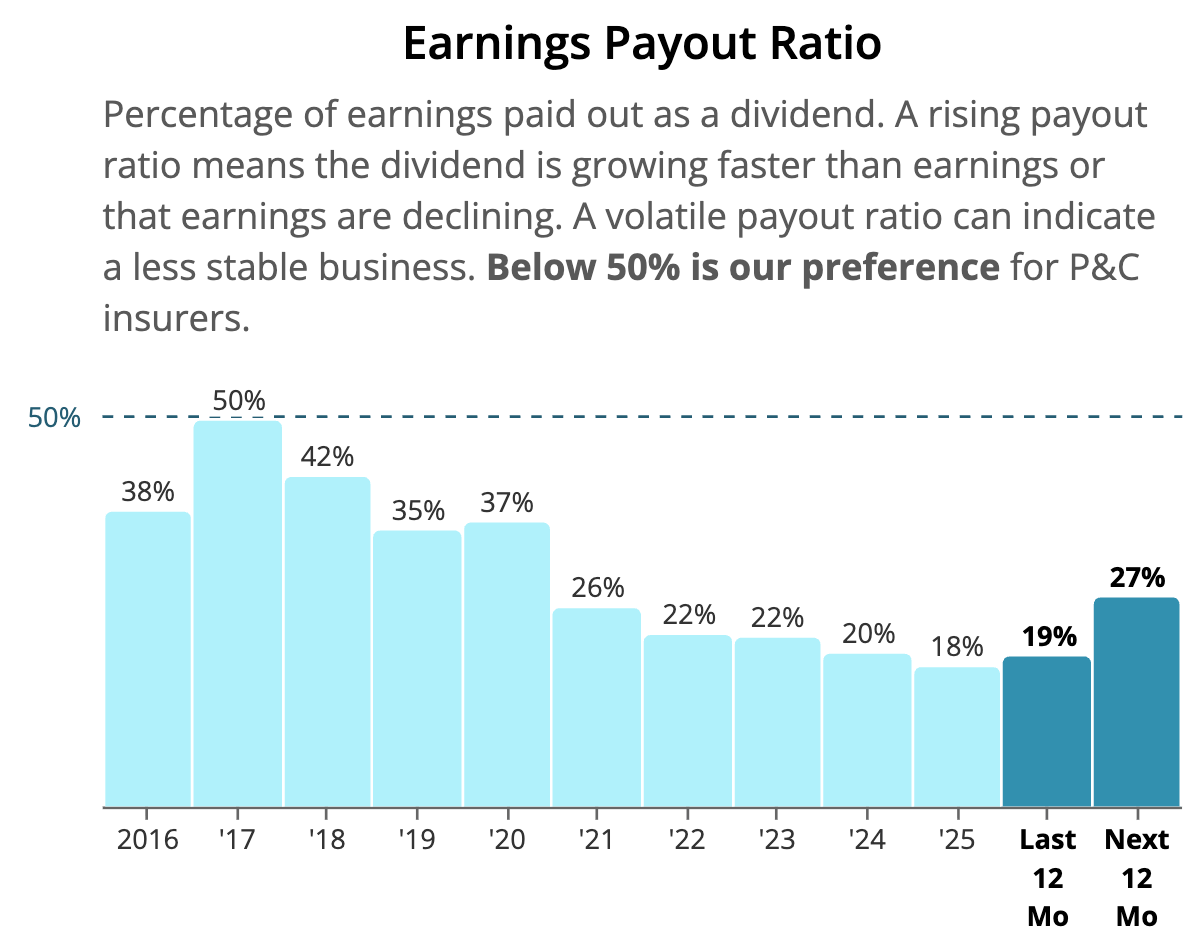
Its payout ratio on regular dividends has fallen to about 19%.
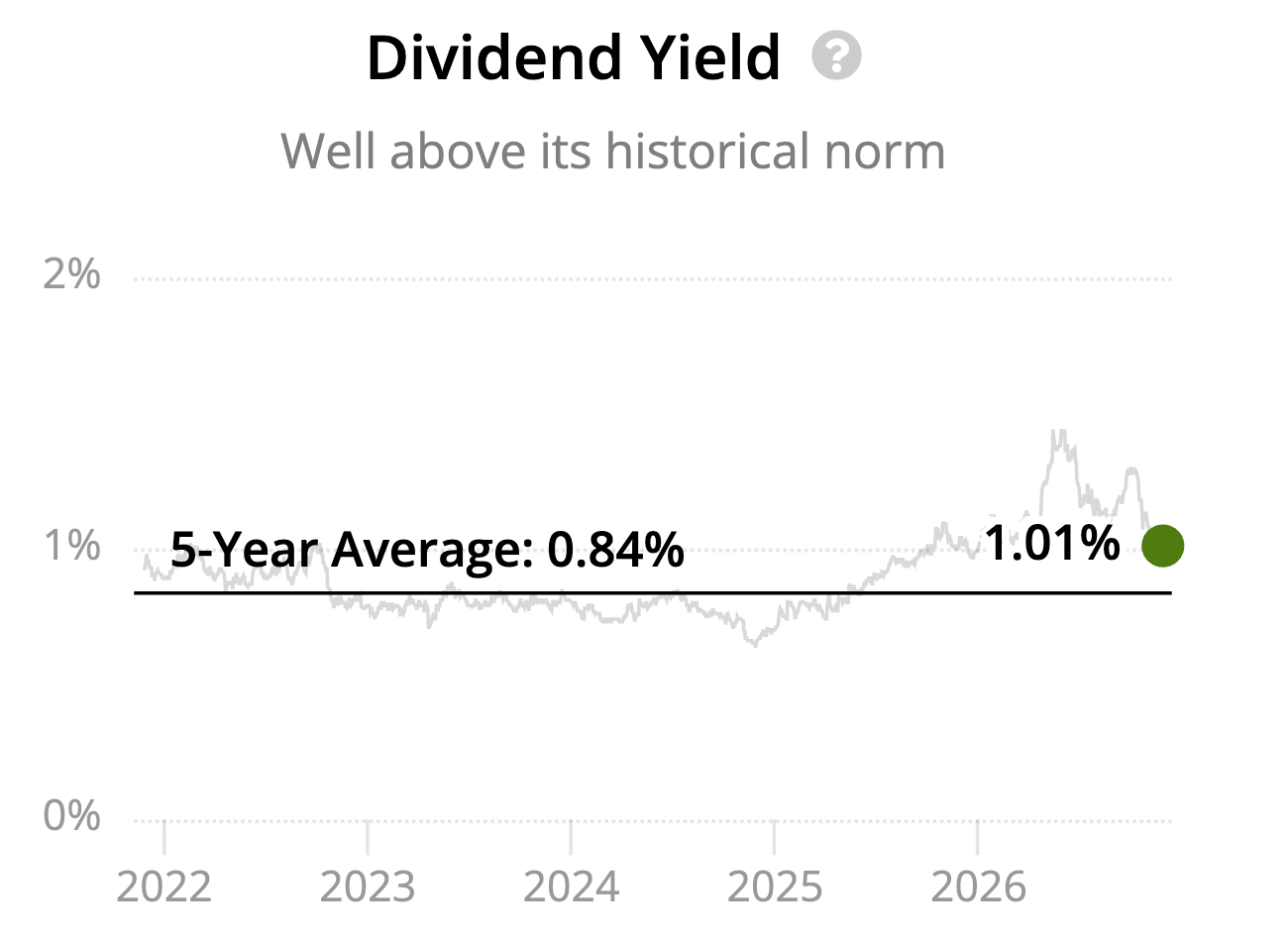
The 1.01% yield is well above its five-year average of 0.84%, a sign the shares are cheaper than usual.
Farmers & Merchants Bancorp (FMCB): California Community Bank, 63 Years of Dividend Growth
Sector: Financials – Regional Banks
Dividend Growth Streak: 63 years
Dividend Safety Score: Very Safe (81)
Dividend Yield: 1.6%
Credit Rating: Not rated by S&P
Dividend Growth Streak: 63 years
Dividend Safety Score: Very Safe (81)
Dividend Yield: 1.6%
Credit Rating: Not rated by S&P
Farmers & Merchants Bancorp is a community bank in California's Central Valley that lends to farms, businesses, and homeowners. Its shares trade over the counter.
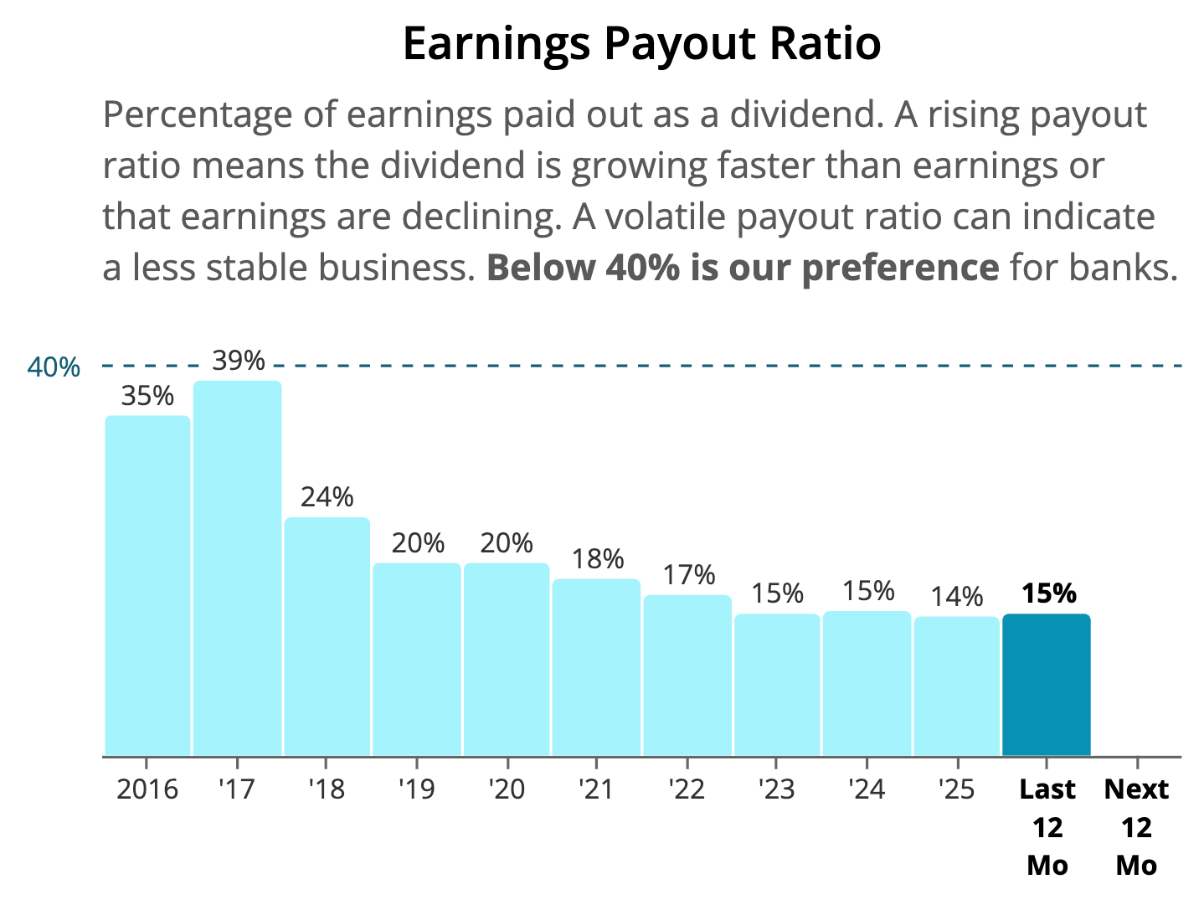
It pays out only about 15% of its earnings, one of the lowest payout ratios of any Dividend King.
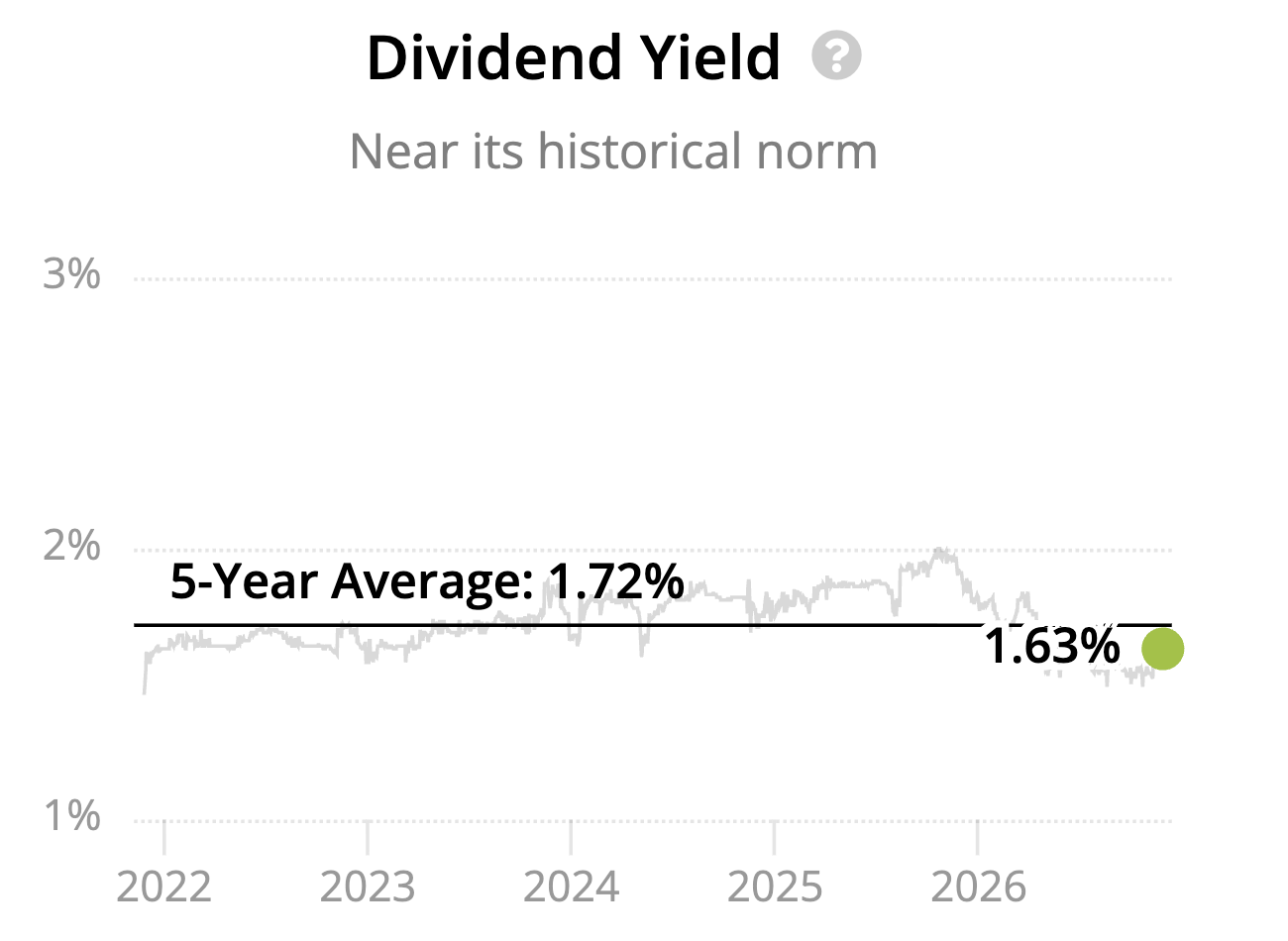
Farmers & Merchants yields 1.63%, a little below its five-year average of 1.72%, so the shares look fairly valued.
Illinois Tool Works (ITW): Diversified Industrial Manufacturer, 54 Years of Dividend Growth
Sector: Industrials – Industrial Machinery and Components
Dividend Growth Streak: 54 years
Dividend Safety Score: Very Safe (81)
Dividend Yield: 2.4%
Credit Rating: A+
Dividend Growth Streak: 54 years
Dividend Safety Score: Very Safe (81)
Dividend Yield: 2.4%
Credit Rating: A+
Illinois Tool Works makes specialized industrial products, from automotive components to commercial food equipment and welding tools. It concentrates on its most profitable products and customers, which supports some of the highest margins among industrial companies.
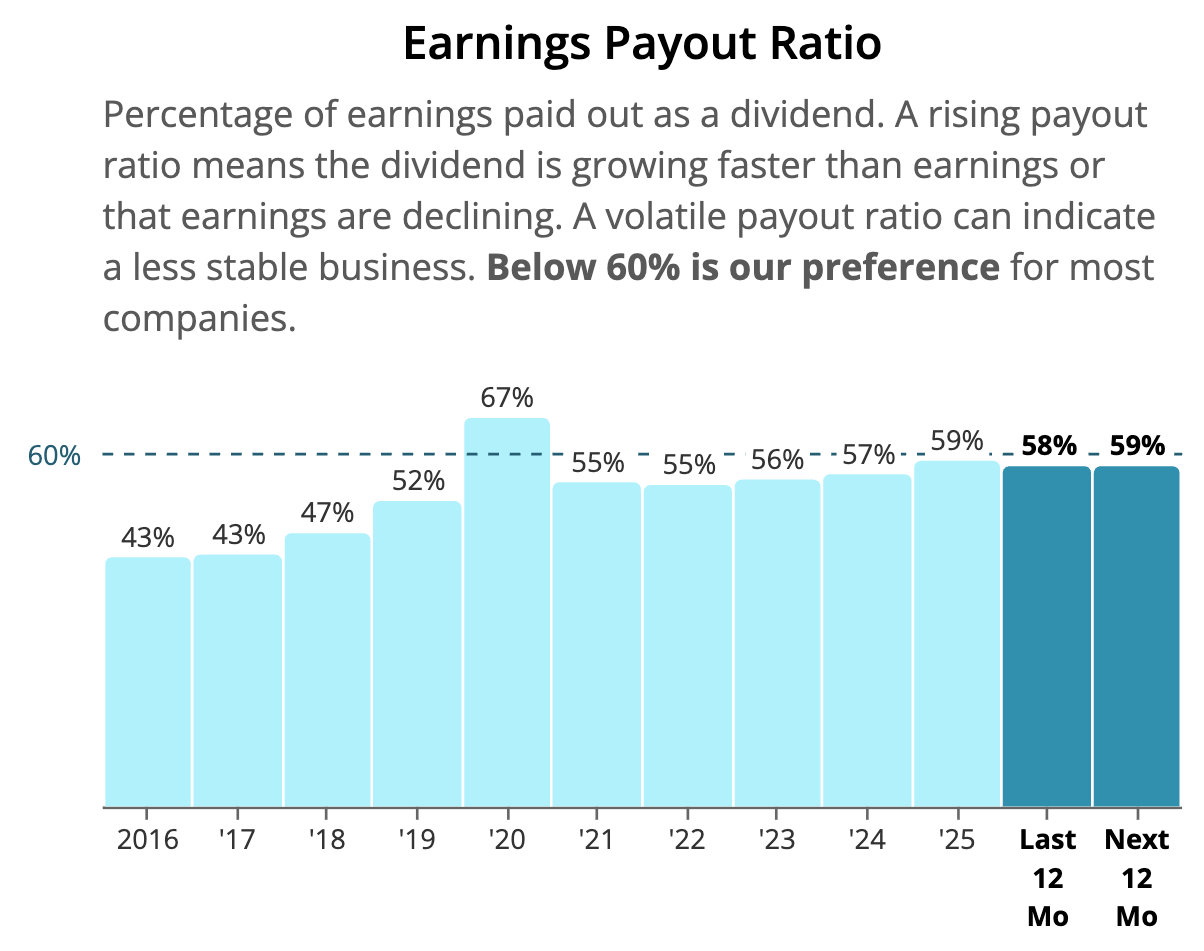
Its payout ratio has risen from 43% in 2016 to about 58% as dividend growth outpaced earnings.
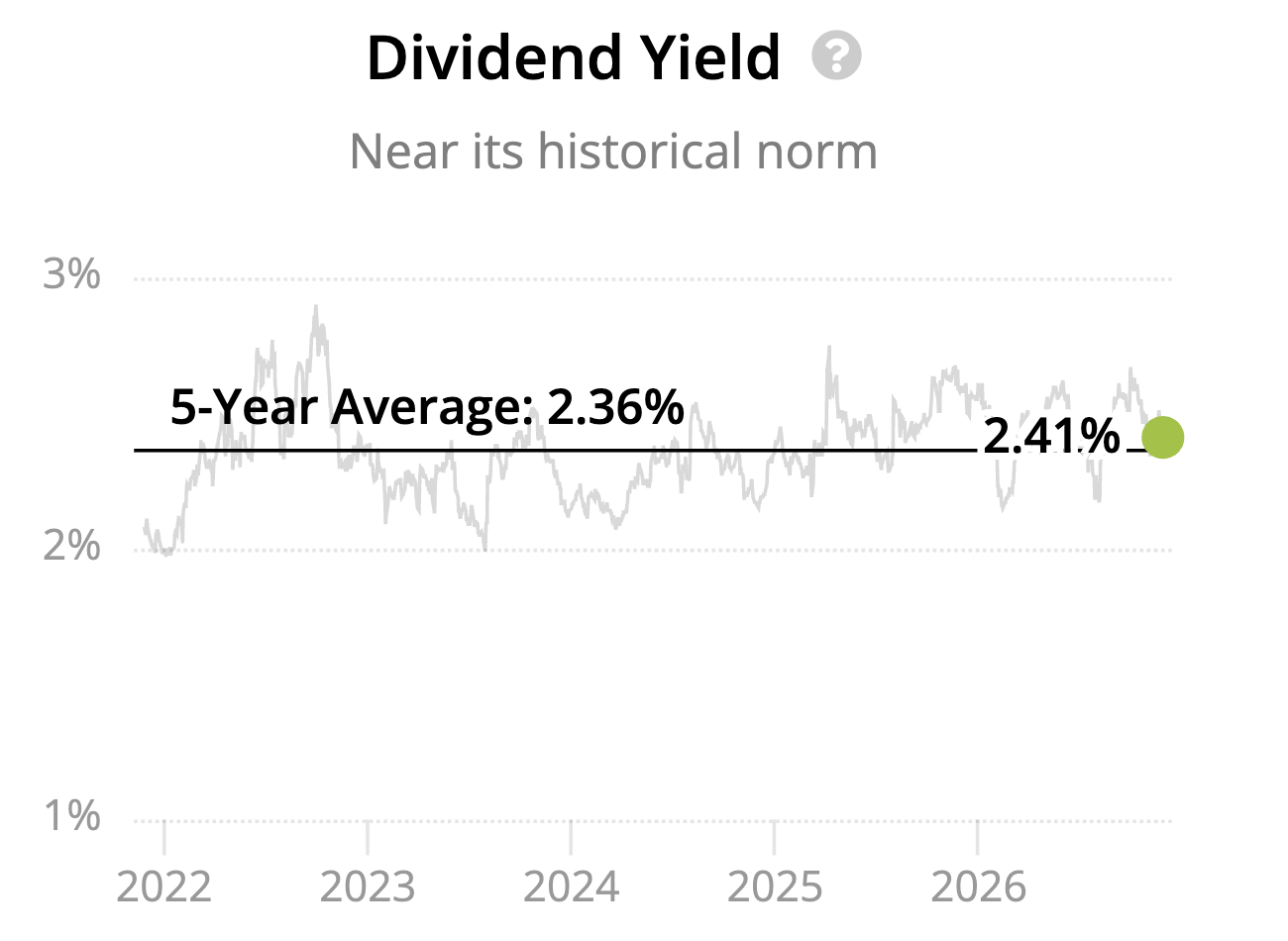
The 2.41% yield sits near its five-year average of 2.36%, which points to a fair valuation.
Lowe's (LOW): Home Improvement Retailer, 65 Years of Dividend Growth
Sector: Consumer Discretionary – Home Improvement Retail
Dividend Growth Streak: 65 years
Dividend Safety Score: Safe (80)
Dividend Yield: 2.1%
Credit Rating: BBB+
Dividend Growth Streak: 65 years
Dividend Safety Score: Safe (80)
Dividend Yield: 2.1%
Credit Rating: BBB+
Lowe's is one of the world's largest home improvement retailers. We lowered its Dividend Safety Score from Very Safe to Safe in August 2026 as a stalled housing market and higher leverage narrowed its cushion.
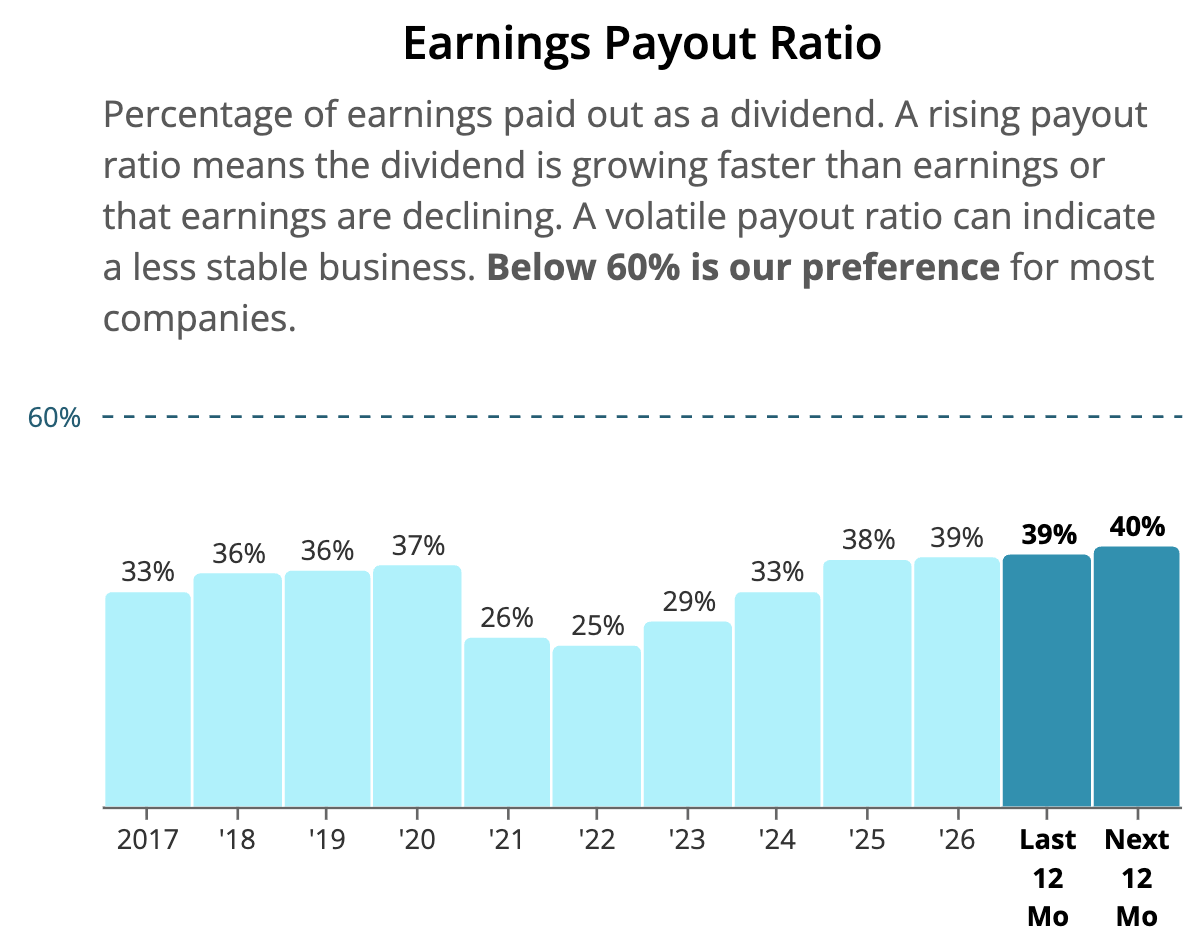
The payout ratio has crept just above management's 35% target, to about 39%.
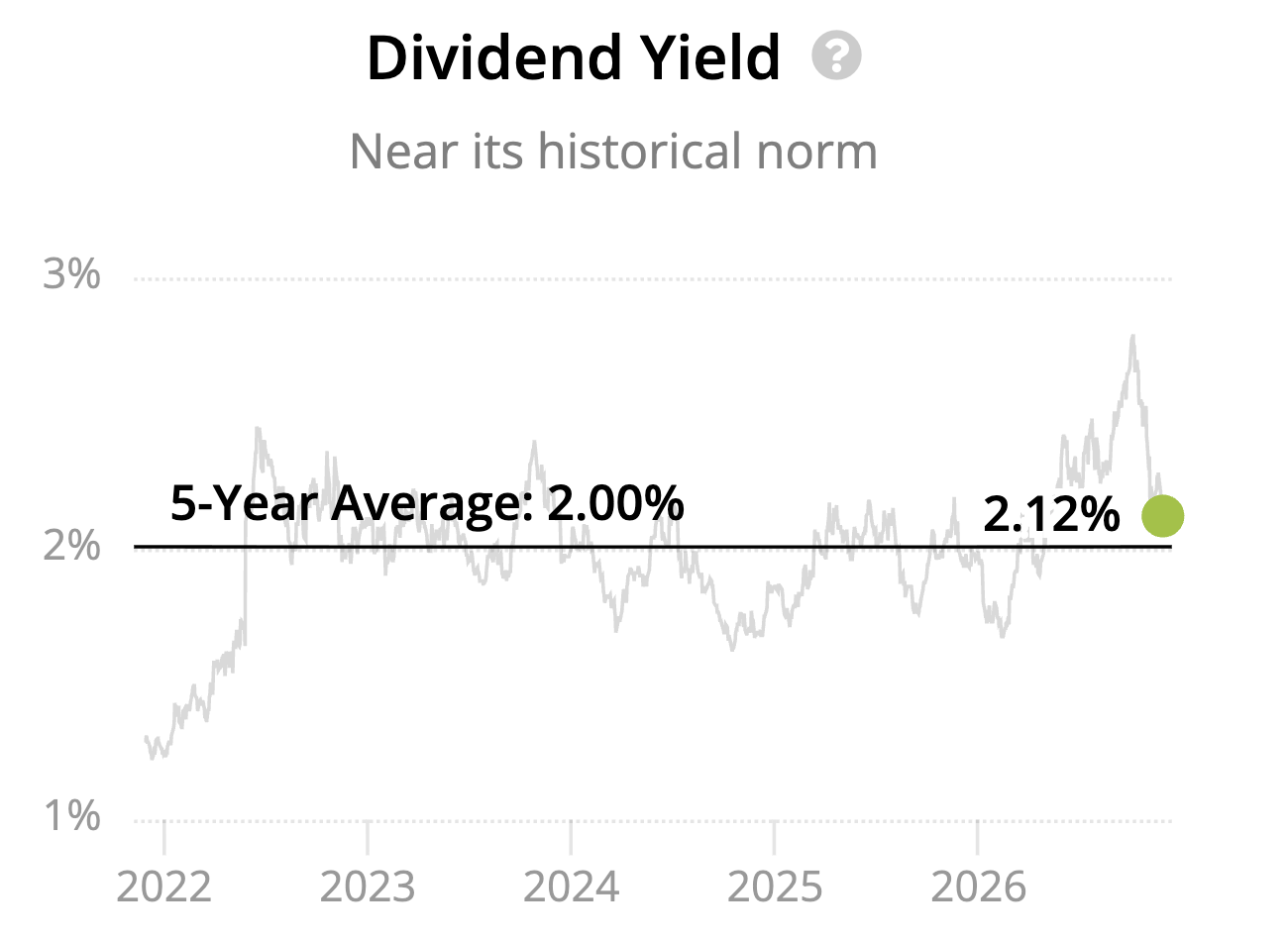
Lowe's yields 2.12%, close to its five-year average of 2.00%, so the shares look fairly priced.
Coca-Cola (KO): Beverage Maker, 63 Years of Dividend Growth
Sector: Consumer Staples – Soft Drinks and Beverages
Dividend Growth Streak: 63 years
Dividend Safety Score: Safe (80)
Dividend Yield: 2.2%
Credit Rating: A+
Dividend Growth Streak: 63 years
Dividend Safety Score: Safe (80)
Dividend Yield: 2.2%
Credit Rating: A+
Coca-Cola makes syrup concentrate and sells it to bottlers around the world, which keeps its business light on capital. Its brands include Coca-Cola, Sprite, Fanta, Dasani, and Minute Maid.
Its payout ratio has fallen from the mid-70s to about 64%.
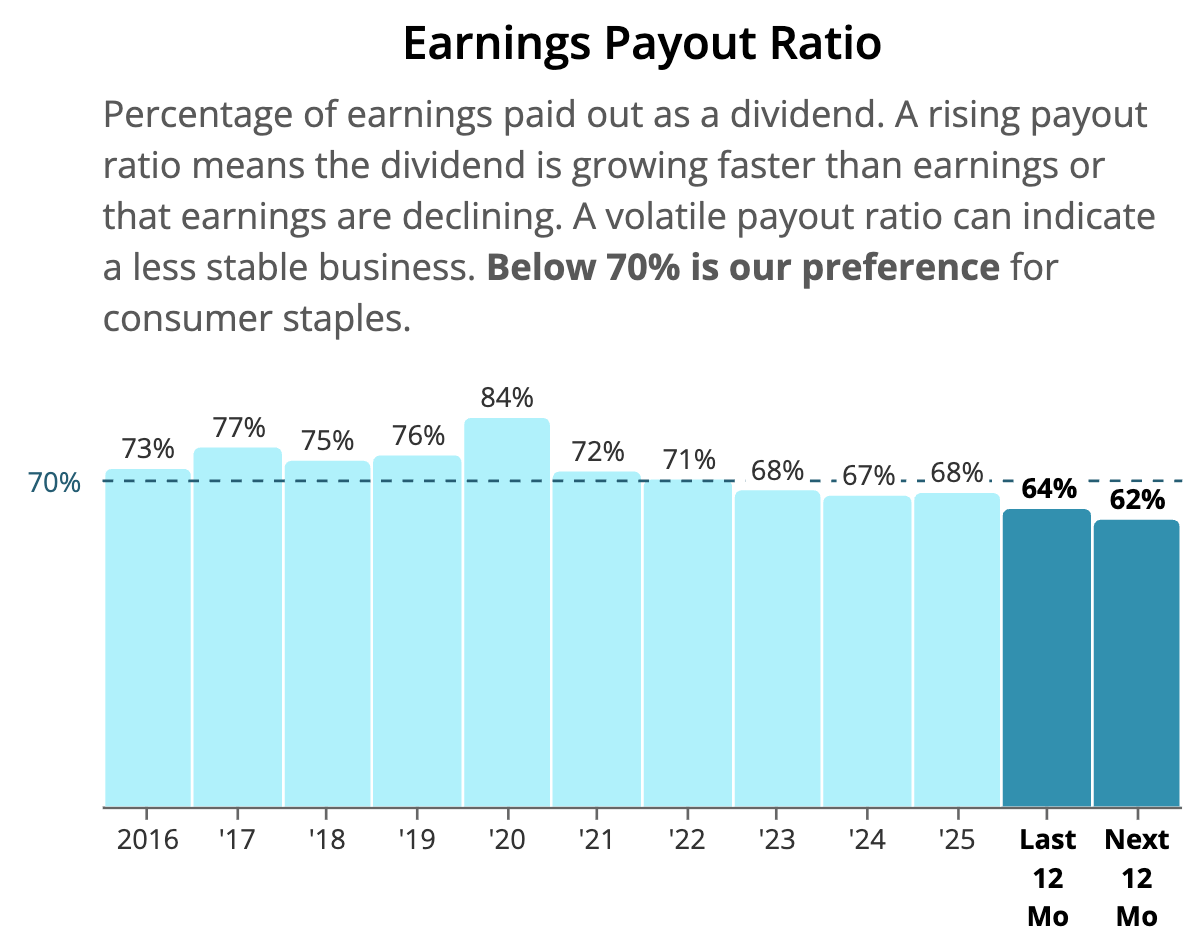
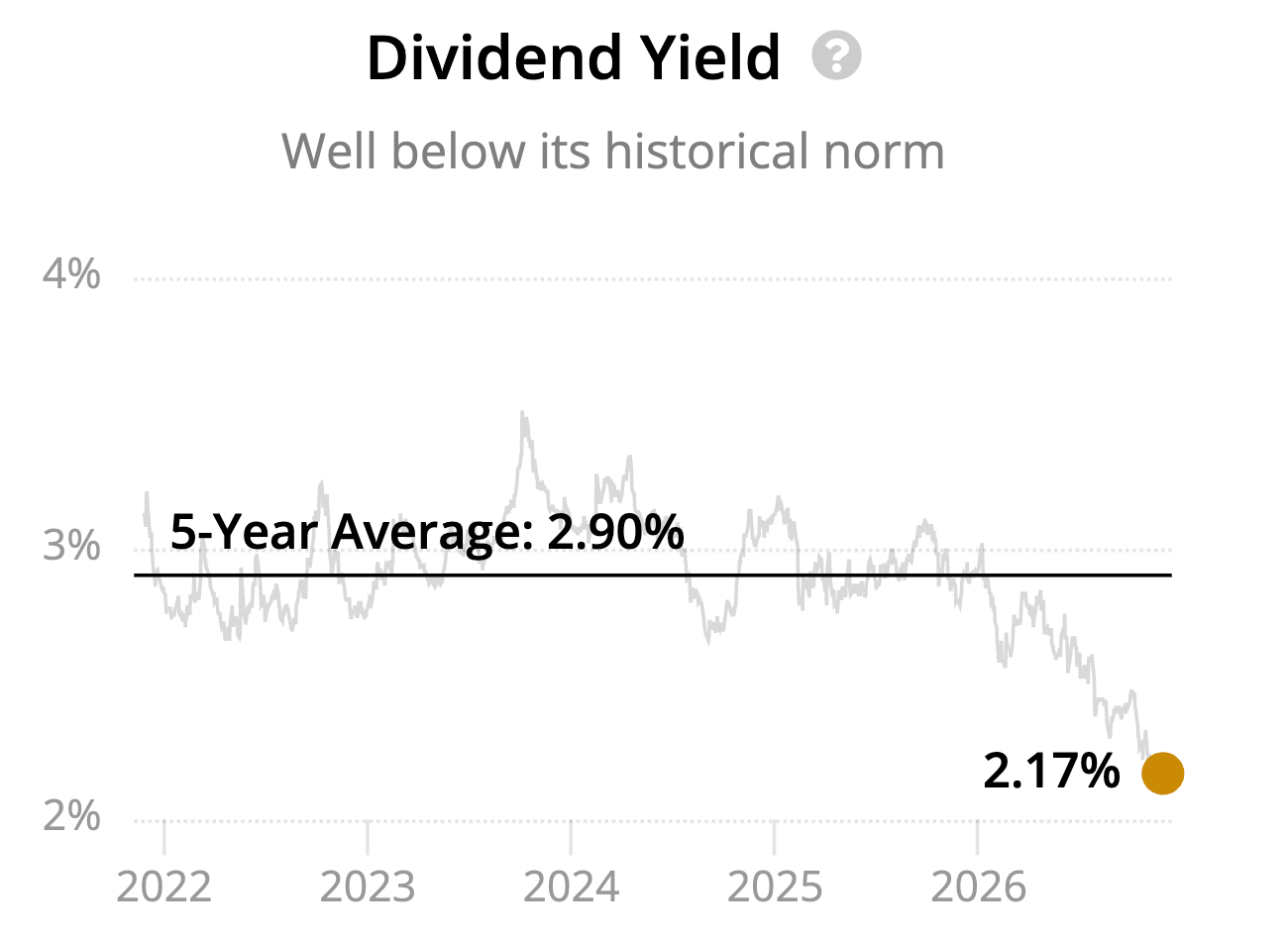
At 2.17%, the yield is well below its five-year average of 2.90%, which suggests the stock is expensive.
Federal Realty (FRT): Shopping Center REIT, 58 Years of Dividend Growth
Sector: Real Estate – Retail REITs
Dividend Growth Streak: 58 years
Dividend Safety Score: Safe (80)
Dividend Yield: 4.1%
Credit Rating: BBB+
Dividend Growth Streak: 58 years
Dividend Safety Score: Safe (80)
Dividend Yield: 4.1%
Credit Rating: BBB+
Federal Realty owns grocery-anchored shopping centers and mixed-use properties in affluent coastal markets. Its 58-year streak is the only one among REITs long enough to make this list.
We raised its Dividend Safety Score from 70 to 80 in July 2026 as its balance sheet improved and management guided for faster growth in funds from operations.
We raised its Dividend Safety Score from 70 to 80 in July 2026 as its balance sheet improved and management guided for faster growth in funds from operations.
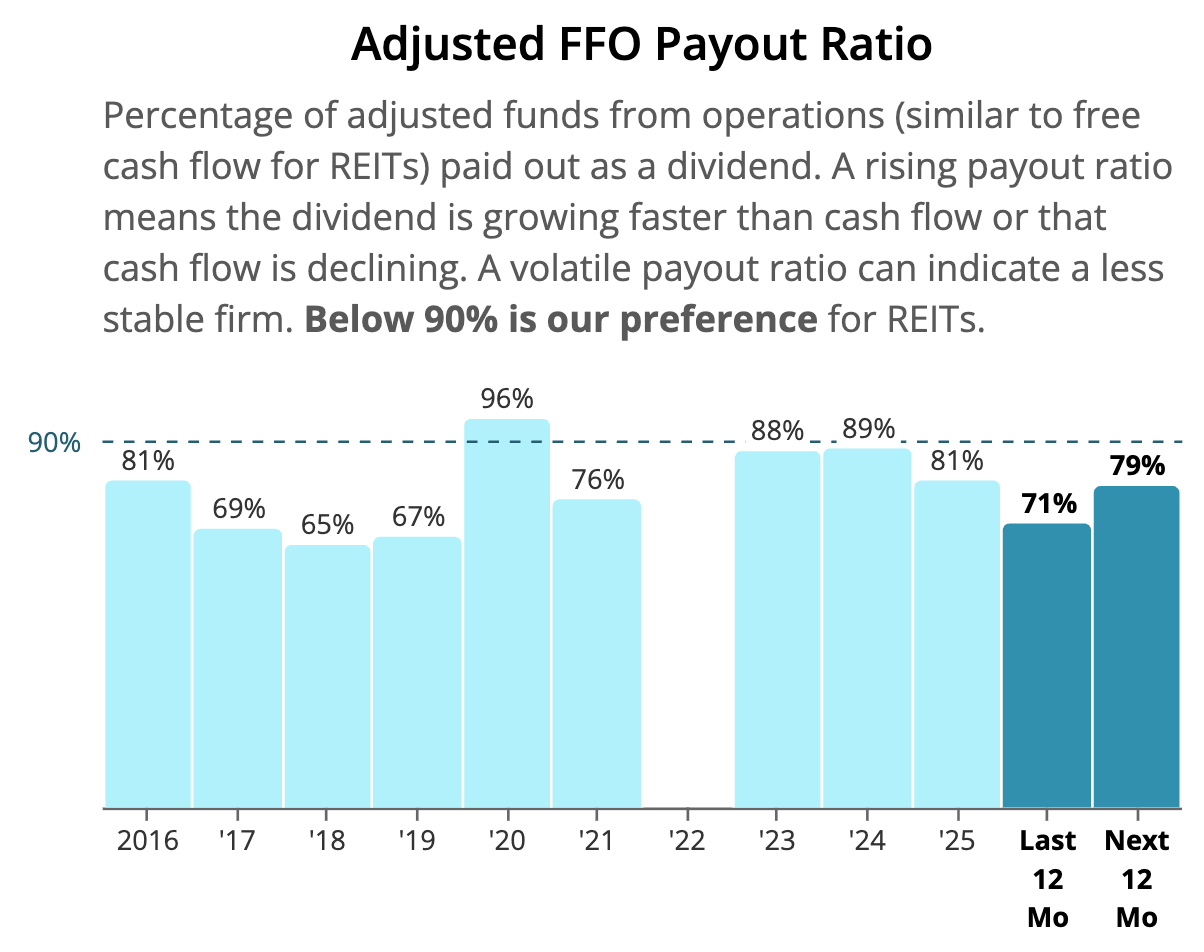
Federal Realty pays out 71% of its adjusted funds from operations, and its leverage is low for a REIT.
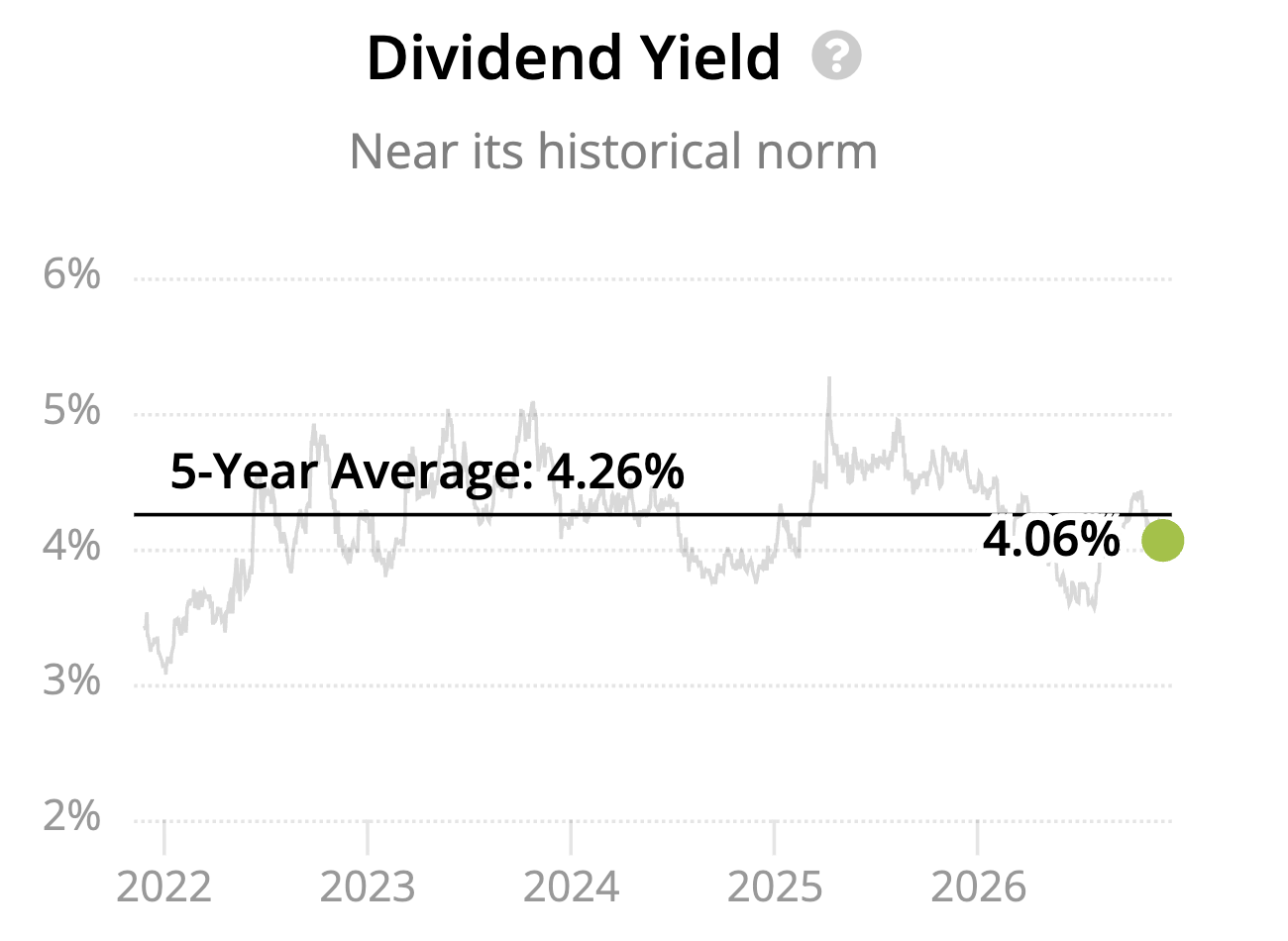
The 4.06% yield is slightly below its five-year average of 4.26%, so the shares look fairly valued.
ABM Industries (ABM): Facility Services Provider, 58 Years of Dividend Growth
Sector: Industrials – Waste and Facility Services
Dividend Growth Streak: 58 years
Dividend Safety Score: Safe (80)
Dividend Yield: 2.1%
Credit Rating: Not rated by S&P
Dividend Growth Streak: 58 years
Dividend Safety Score: Safe (80)
Dividend Yield: 2.1%
Credit Rating: Not rated by S&P
ABM cleans, maintains, and staffs office buildings, airports, hospitals, and data centers under multi-year contracts. Hybrid work has softened demand in offices, but its focus on high-quality buildings has kept results stable.
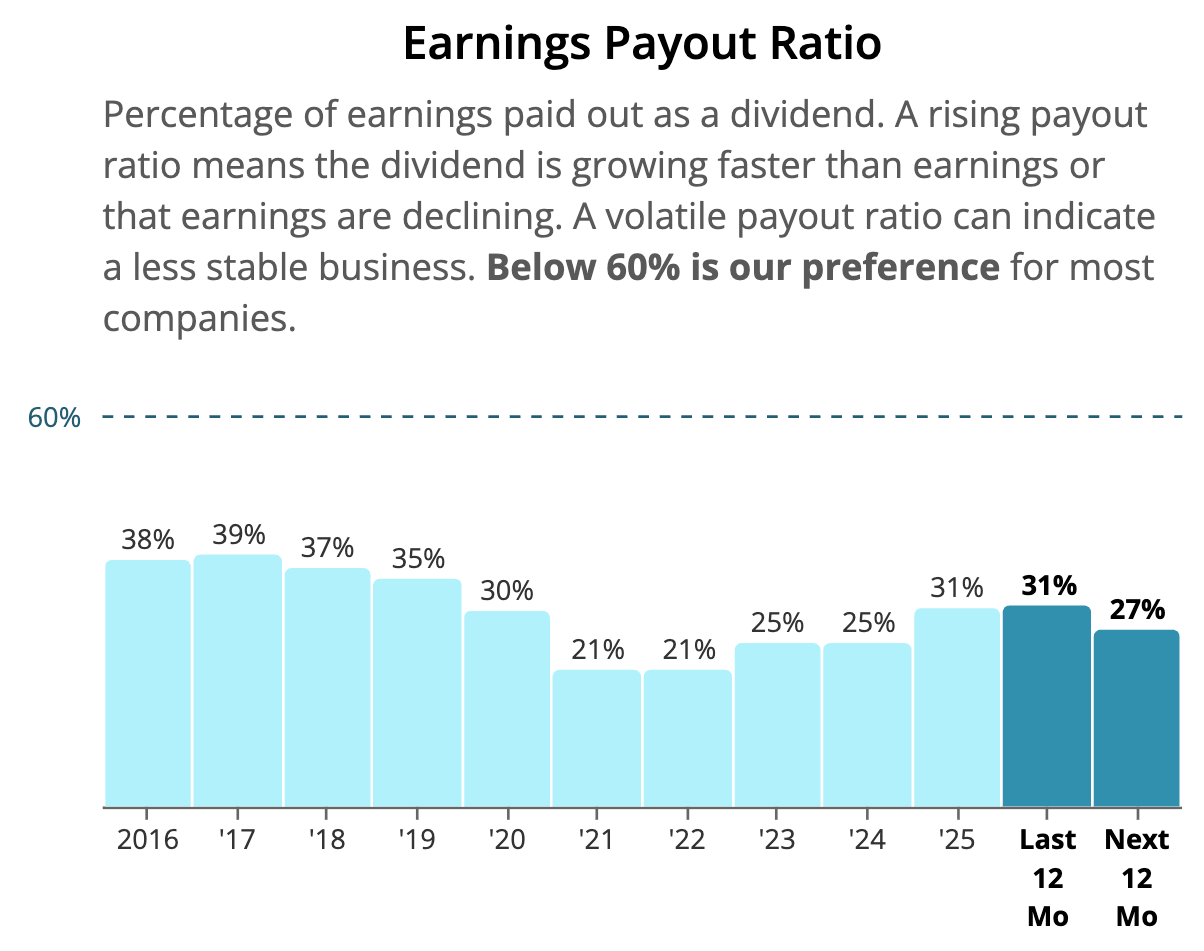
It pays out about 31% of its earnings, and it raised its dividend 9.4% in December 2025.
ABM yields 2.10%, close to its five-year average of 2.03%, which suggests a fair price.
AbbVie (ABBV): Immunology and Specialty Drugmaker, 54 Years of Dividend Growth
Sector: Healthcare – Biotechnology
Dividend Growth Streak: 54 years
Dividend Safety Score: Safe (80)
Dividend Yield: 2.5%
Credit Rating: A-
Dividend Growth Streak: 54 years
Dividend Safety Score: Safe (80)
Dividend Yield: 2.5%
Credit Rating: A-
AbbVie sells the immunology drugs Skyrizi and Rinvoq, along with Botox and cancer treatments. It spun off from Abbott in 2013 and counts Abbott's dividend history toward its streak.
Humira once produced nearly two-thirds of its profits. As of early 2025, that share was roughly 15%.
Humira once produced nearly two-thirds of its profits. As of early 2025, that share was roughly 15%.
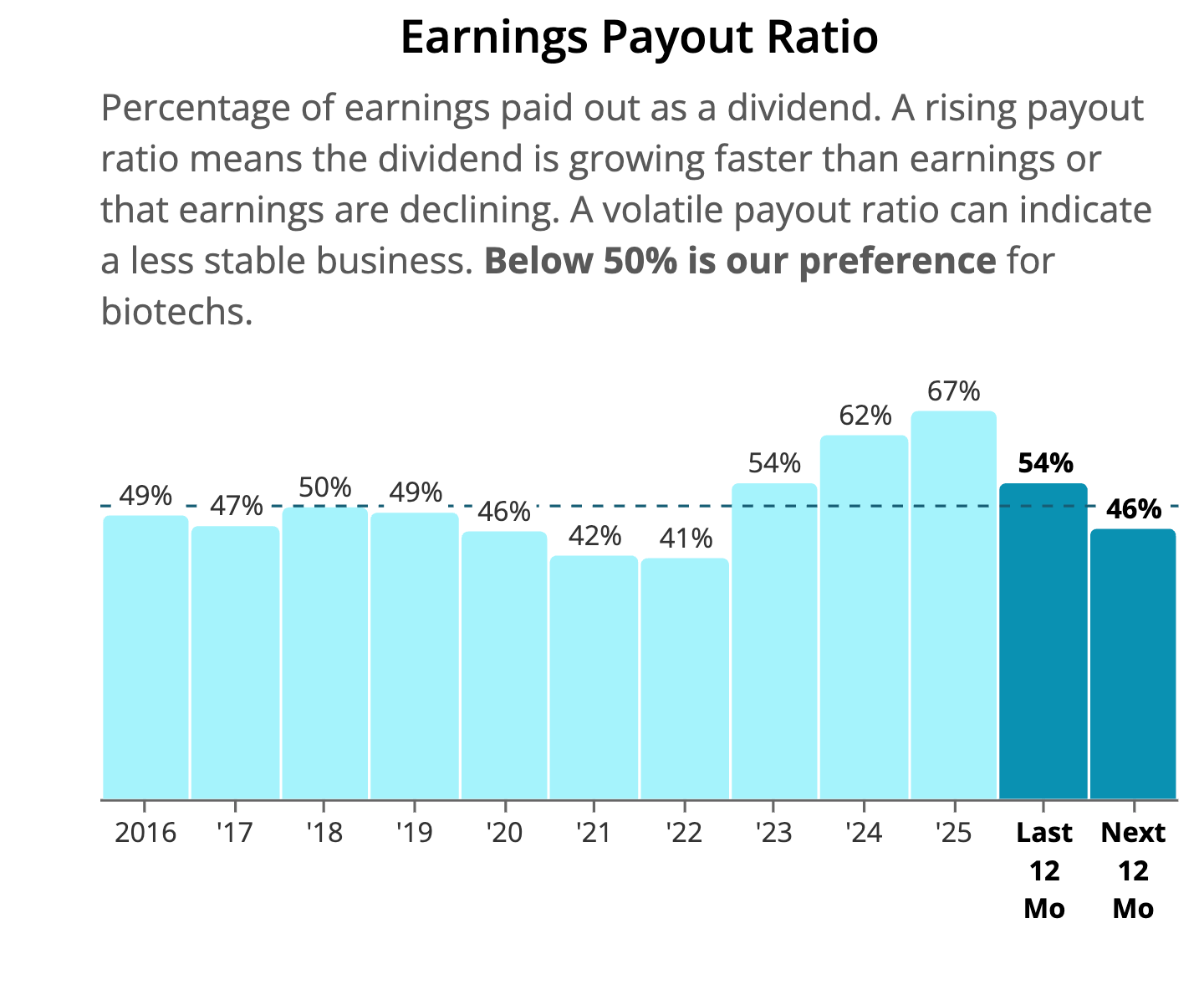
Its payout ratio rose to 67% in 2025 as Humira sales fell to cheaper biosimilar competition. It has eased to 54% over the past year and is expected to drop to 46%. In October 2026, AbbVie announced a 5.2% raise for 2027.
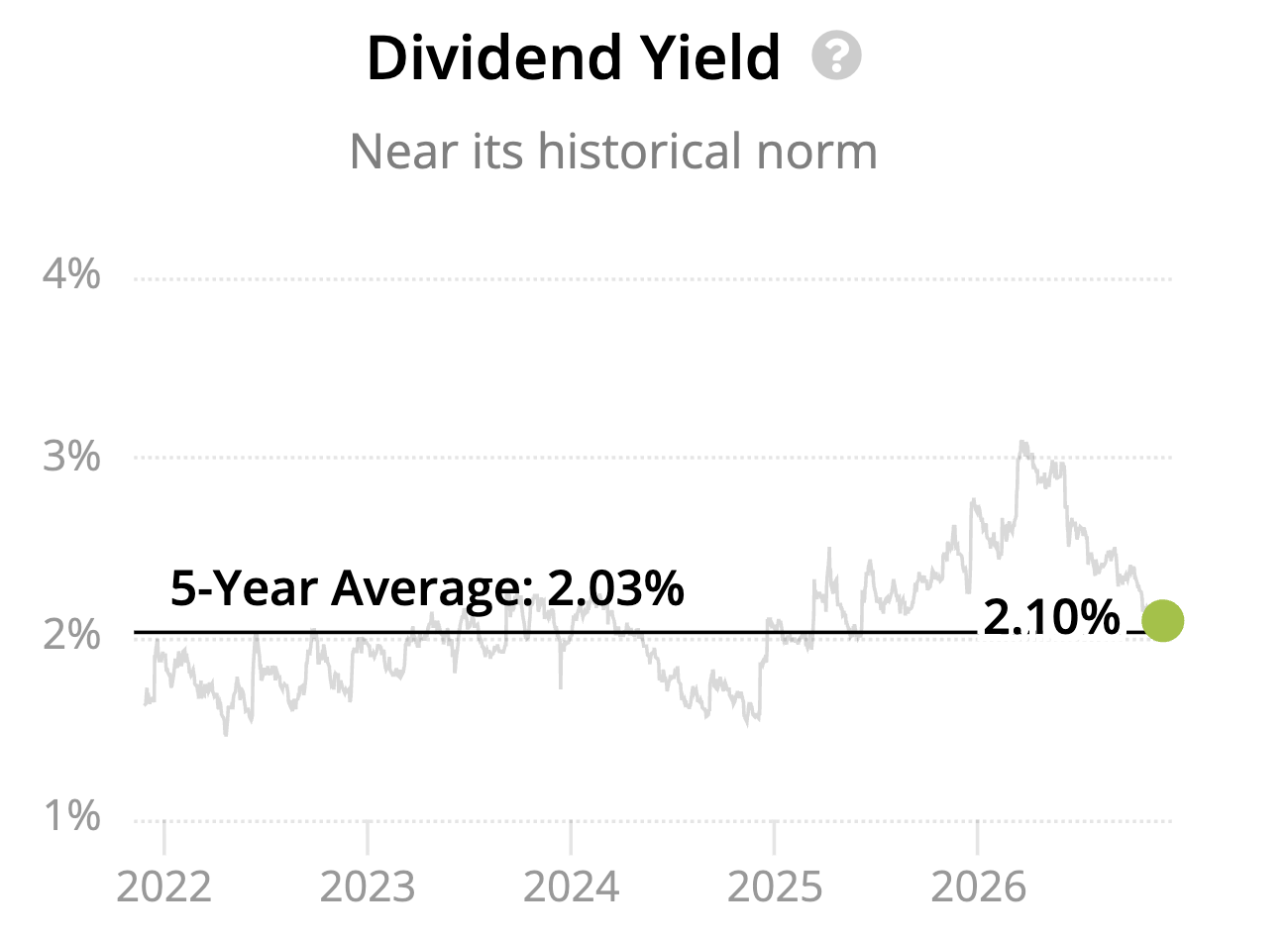
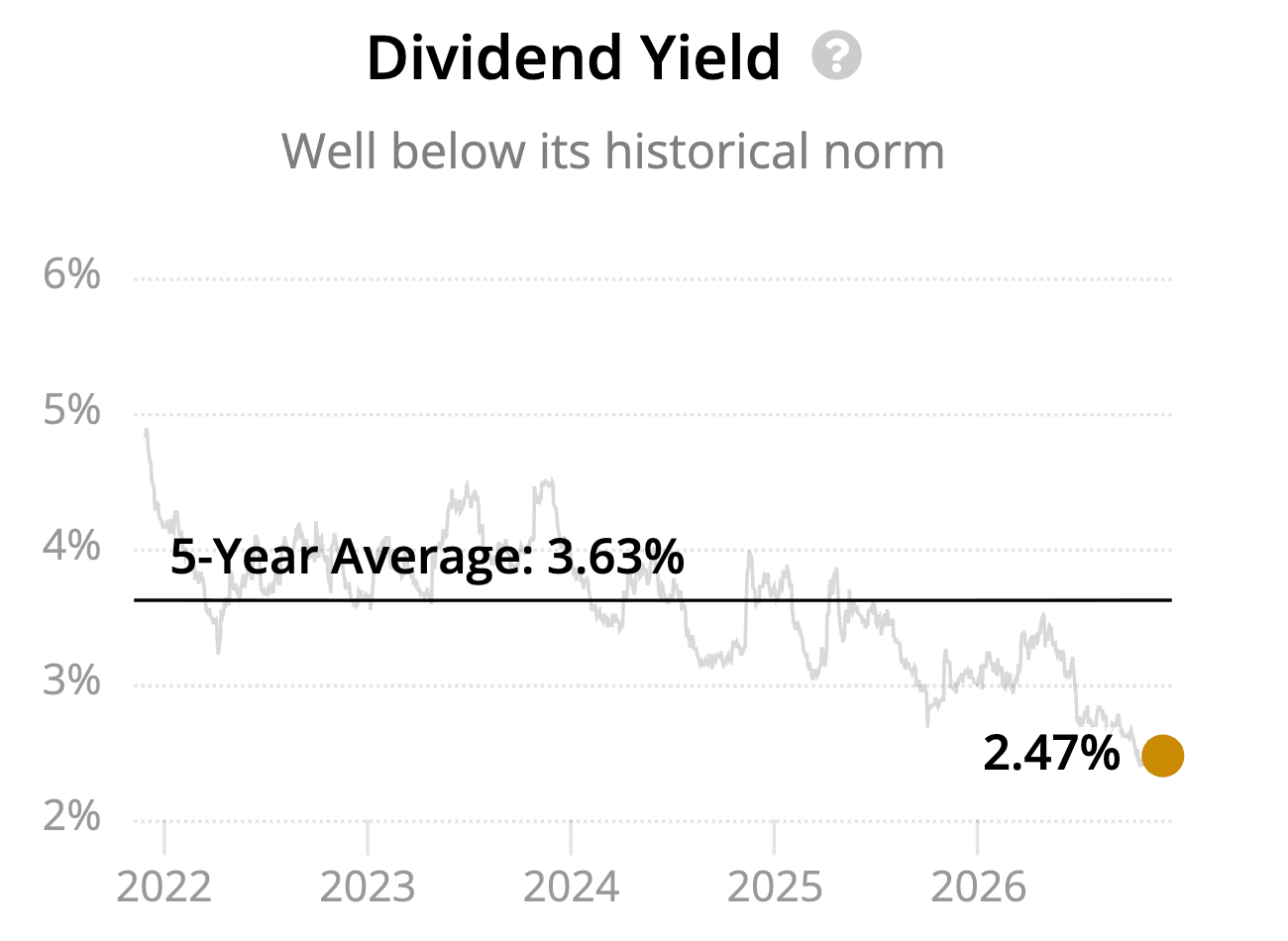
After a strong run in the shares, the 2.47% yield is well below its five-year average of 3.63%, so the stock looks expensive by this measure.
PPG Industries (PPG): Paints and Coatings Maker, 54 Years of Dividend Growth
Sector: Materials – Specialty Chemicals
Dividend Growth Streak: 54 years
Dividend Safety Score: Safe (80)
Dividend Yield: 2.4%
Credit Rating: BBB+
Dividend Growth Streak: 54 years
Dividend Safety Score: Safe (80)
Dividend Yield: 2.4%
Credit Rating: BBB+
PPG makes paints and coatings for aircraft, cars, beverage cans, and buildings. We lowered its Dividend Safety Score from Very Safe to Safe in September 2026 because demand across its industrial markets has been uneven.
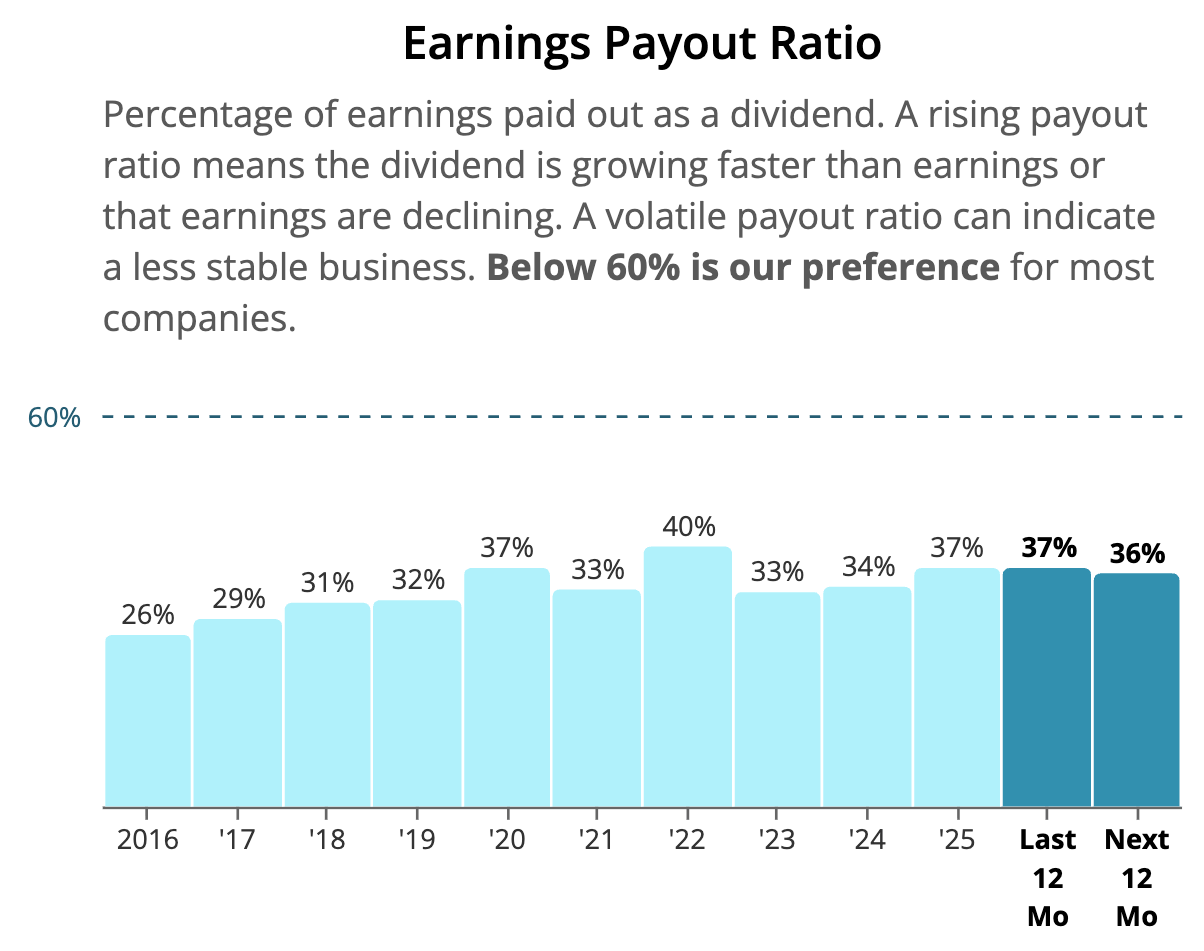
It still pays out only about 37% of its earnings, and its leverage is low.
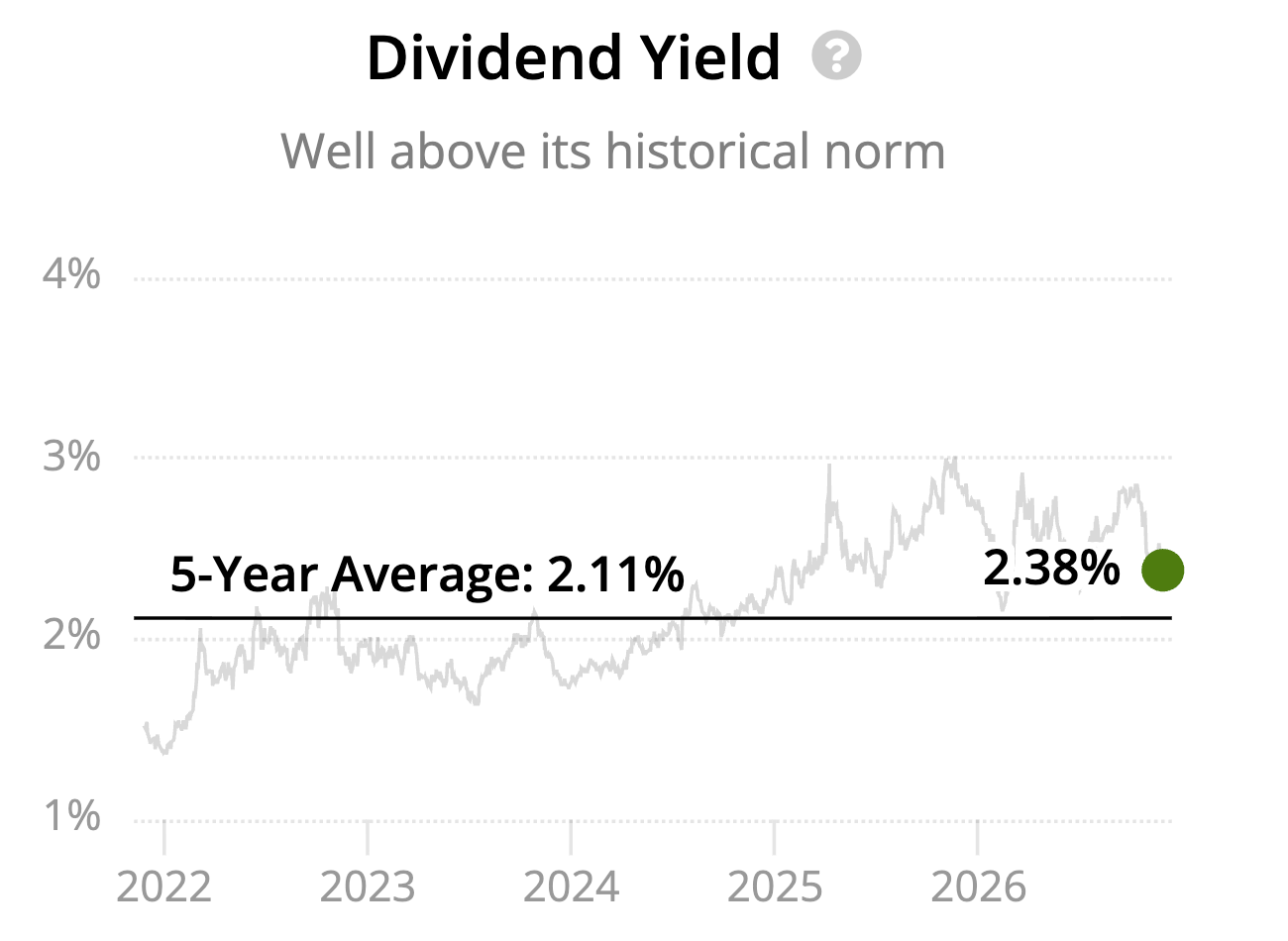
Its 2.38% yield is well above its five-year average of 2.11%, a sign the shares may be undervalued.
Gorman-Rupp (GRC): Pump Maker, 54 Years of Dividend Growth
Sector: Industrials – Industrial Machinery and Components
Dividend Growth Streak: 54 years
Dividend Safety Score: Safe (80)
Dividend Yield: 1.2%
Credit Rating: Not rated by S&P
Dividend Growth Streak: 54 years
Dividend Safety Score: Safe (80)
Dividend Yield: 1.2%
Credit Rating: Not rated by S&P
Gorman-Rupp makes pumps for water and wastewater treatment, construction, agriculture, and fire suppression. Its 2022 purchase of Fill-Rite added debt to a balance sheet that had long been debt-free.
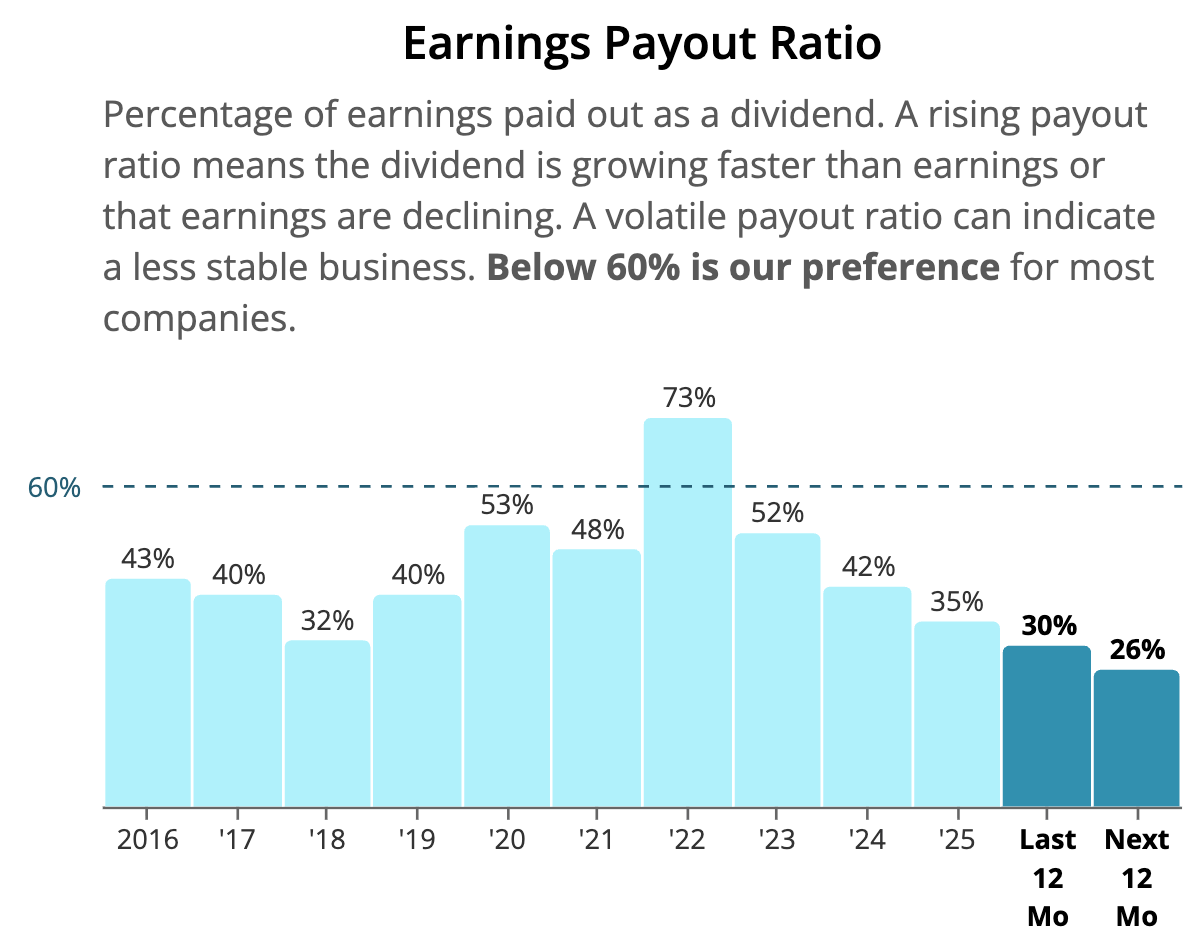
Its payout ratio has fallen from 73% in 2022 to about 30% as earnings recovered.
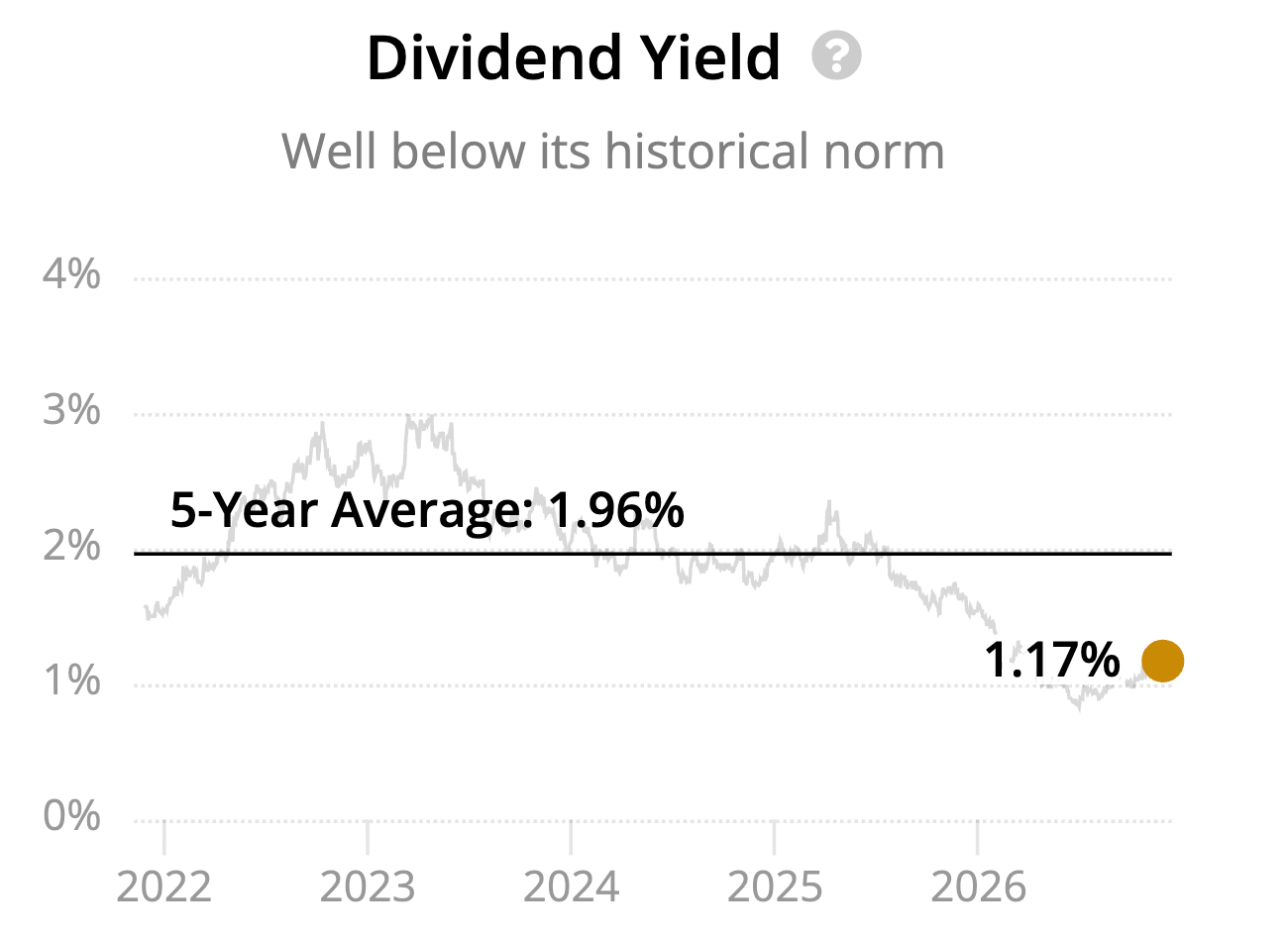
At 1.17%, the yield is well below its five-year average of 1.96%, which suggests the stock is pricey.
PepsiCo (PEP): Snack and Beverage Maker, 53 Years of Dividend Growth
Sector: Consumer Staples – Soft Drinks and Beverages
Dividend Growth Streak: 53 years
Dividend Safety Score: Safe (80)
Dividend Yield: 4.1%
Credit Rating: A+
Dividend Growth Streak: 53 years
Dividend Safety Score: Safe (80)
Dividend Yield: 4.1%
Credit Rating: A+
PepsiCo sells Lay's, Doritos, Gatorade, Quaker, and Pepsi. We lowered its Dividend Safety Score from Very Safe to Safe in April 2026 as price-conscious shoppers traded down and weight-loss drugs clouded the outlook for snacks and soda.
The payout ratio has crept up to 69%, so future raises may track earnings more closely.
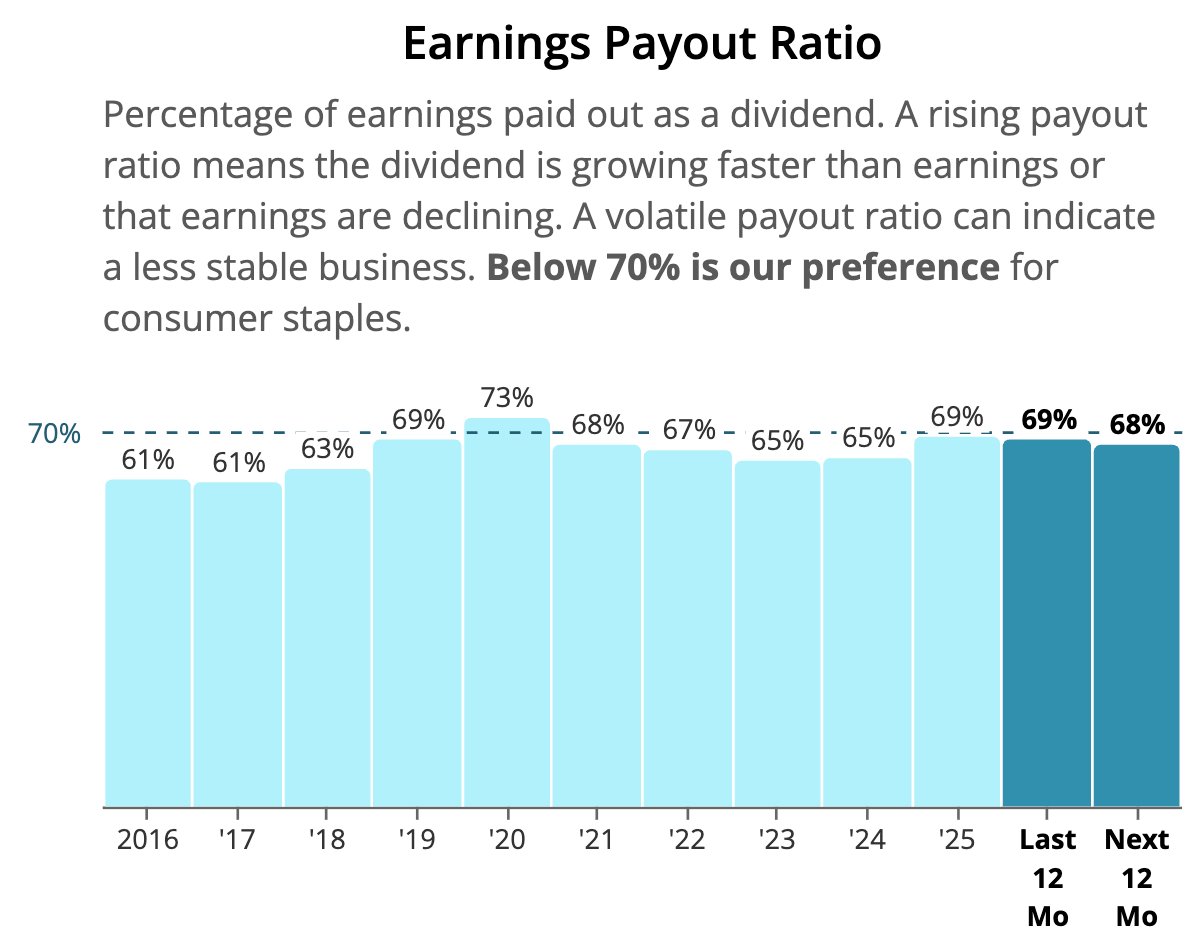
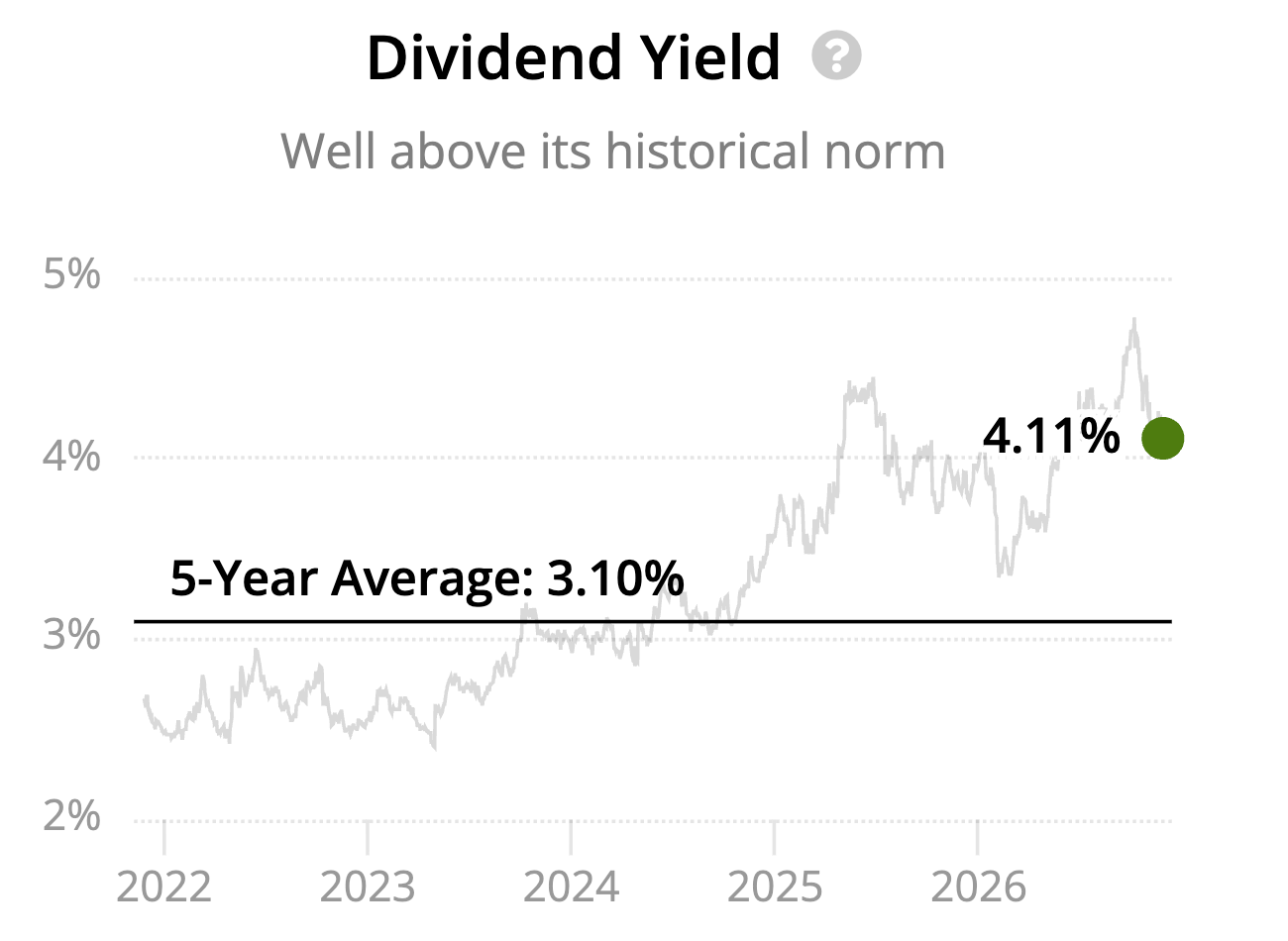
PepsiCo's 4.11% yield is well above its five-year average of 3.10%, which suggests the stock may be undervalued.
RPM International (RPM): Coatings and Sealants Maker, 53 Years of Dividend Growth
Sector: Materials – Specialty Chemicals
Dividend Growth Streak: 53 years
Dividend Safety Score: Safe (80)
Dividend Yield: 2.1%
Credit Rating: BBB
Dividend Growth Streak: 53 years
Dividend Safety Score: Safe (80)
Dividend Yield: 2.1%
Credit Rating: BBB
RPM makes Rust-Oleum paints, DAP caulks, Tremco roofing systems, and industrial coatings. Much of its growth has come from a long string of acquisitions.
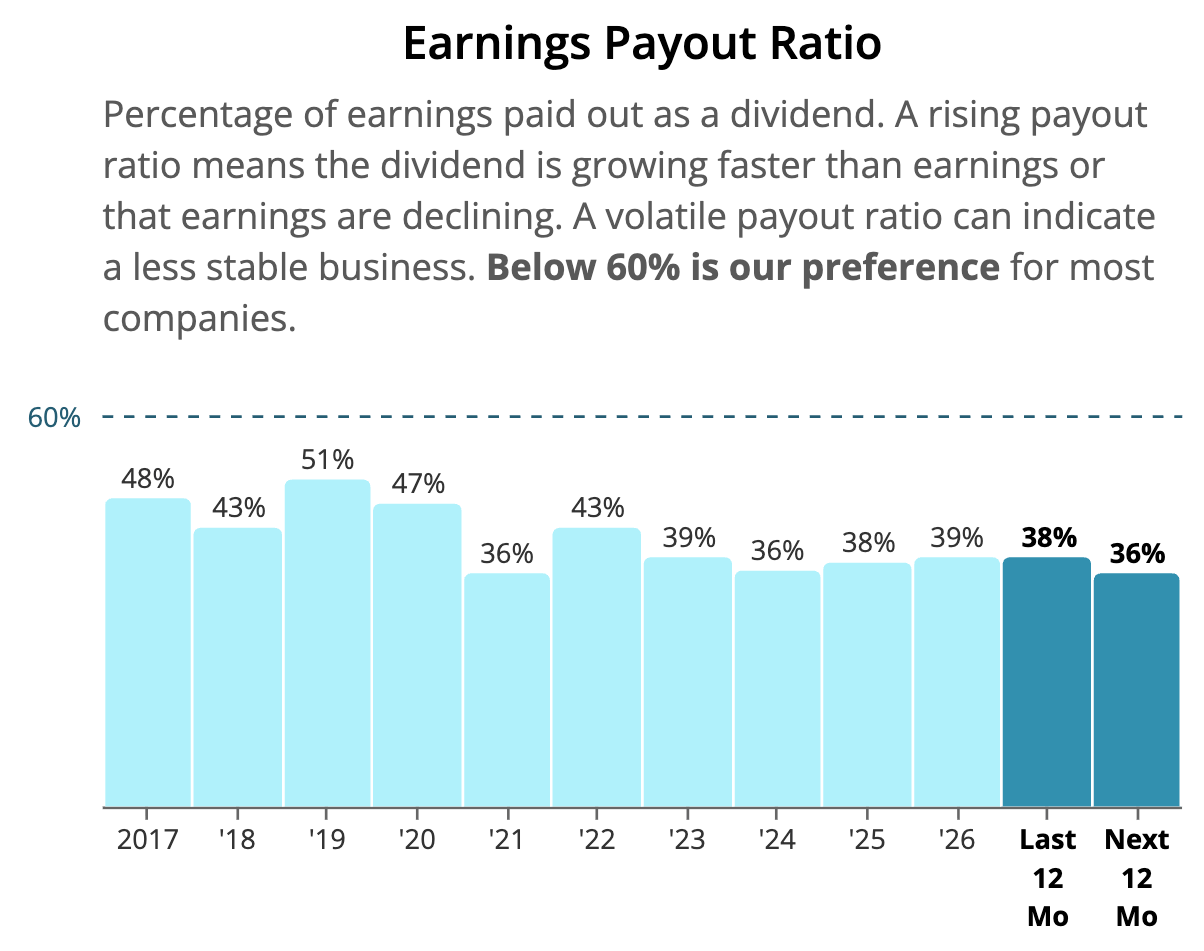
Its payout ratio has fallen from 48% in fiscal 2017 to about 38%.
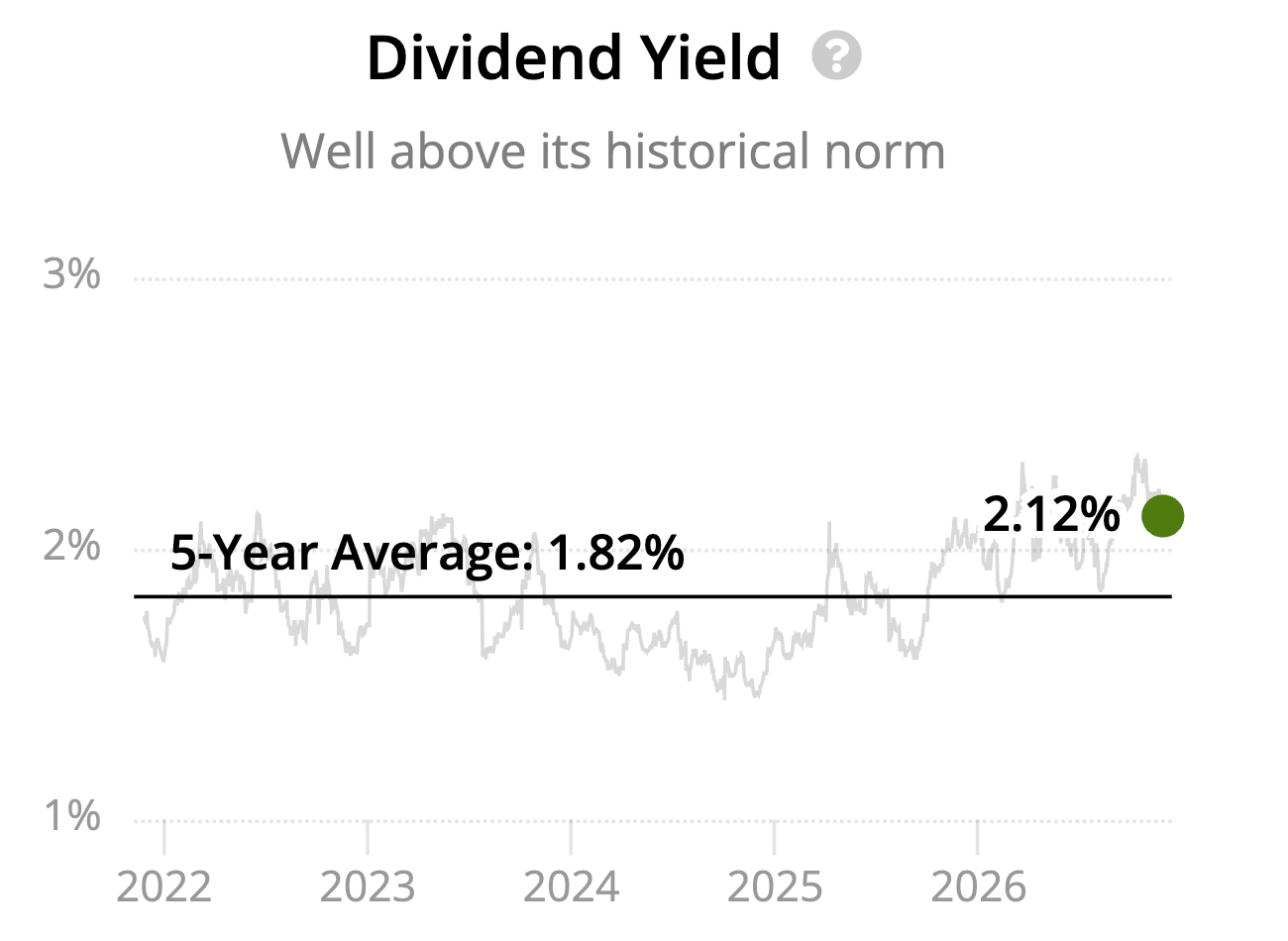
The 2.12% yield is well above its five-year average of 1.82%, a sign the shares are cheaper than usual.
Pentair (PNR): Water Treatment and Pool Equipment Maker, 50 Years of Dividend Growth
Sector: Industrials – Industrial Machinery and Components
Dividend Growth Streak: 50 years
Dividend Safety Score: Safe (80)
Dividend Yield: 1.5%
Credit Rating: BBB-
Dividend Growth Streak: 50 years
Dividend Safety Score: Safe (80)
Dividend Yield: 1.5%
Credit Rating: BBB-
Pentair makes pumps, filters, water treatment systems, and pool equipment. Its 50th straight dividend increase made it one of this year's new Dividend Kings.
We lowered its Dividend Safety Score from Very Safe to Safe in September 2026 after pool distributors cut orders and Pentair agreed to buy a pump and heating equipment maker.
We lowered its Dividend Safety Score from Very Safe to Safe in September 2026 after pool distributors cut orders and Pentair agreed to buy a pump and heating equipment maker.
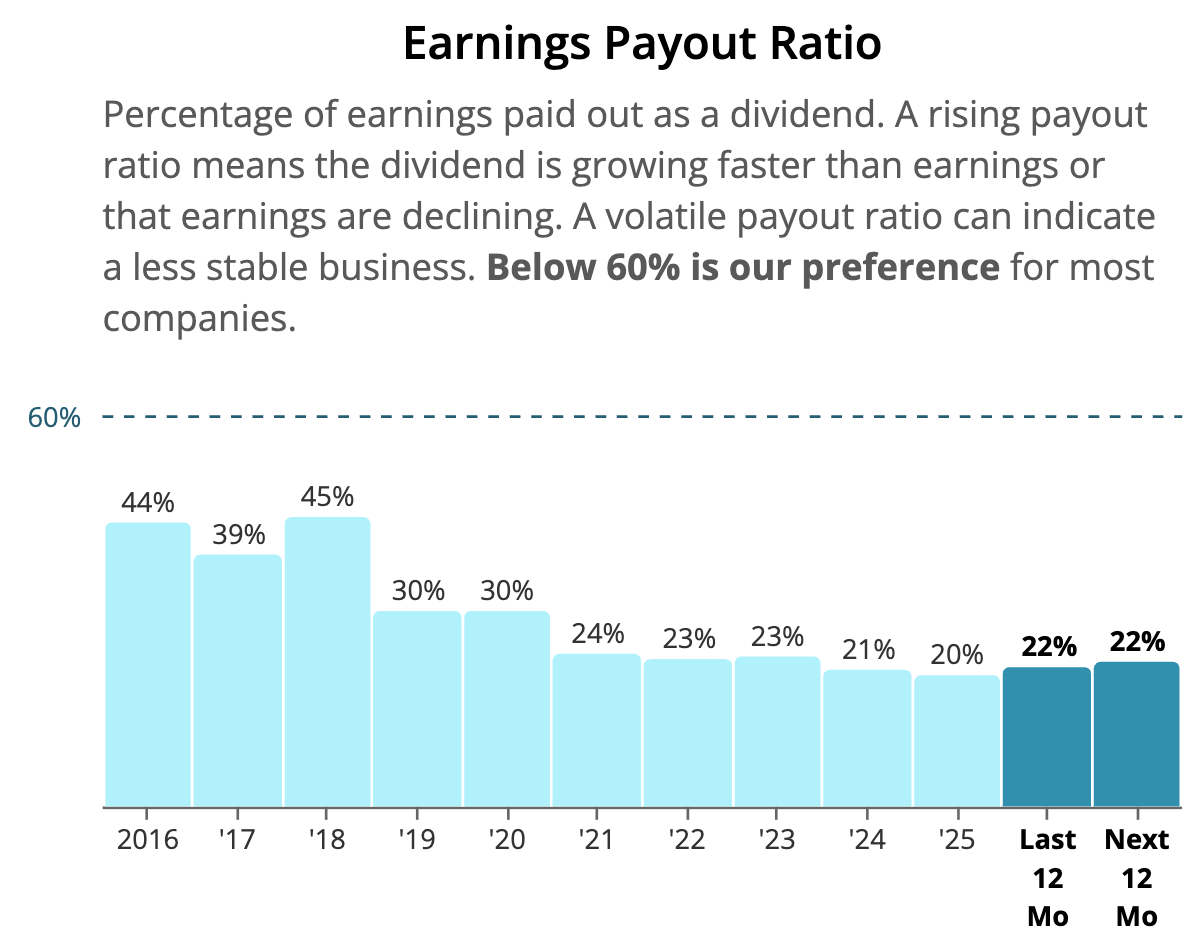
Even so, Pentair pays out only about 22% of its earnings.
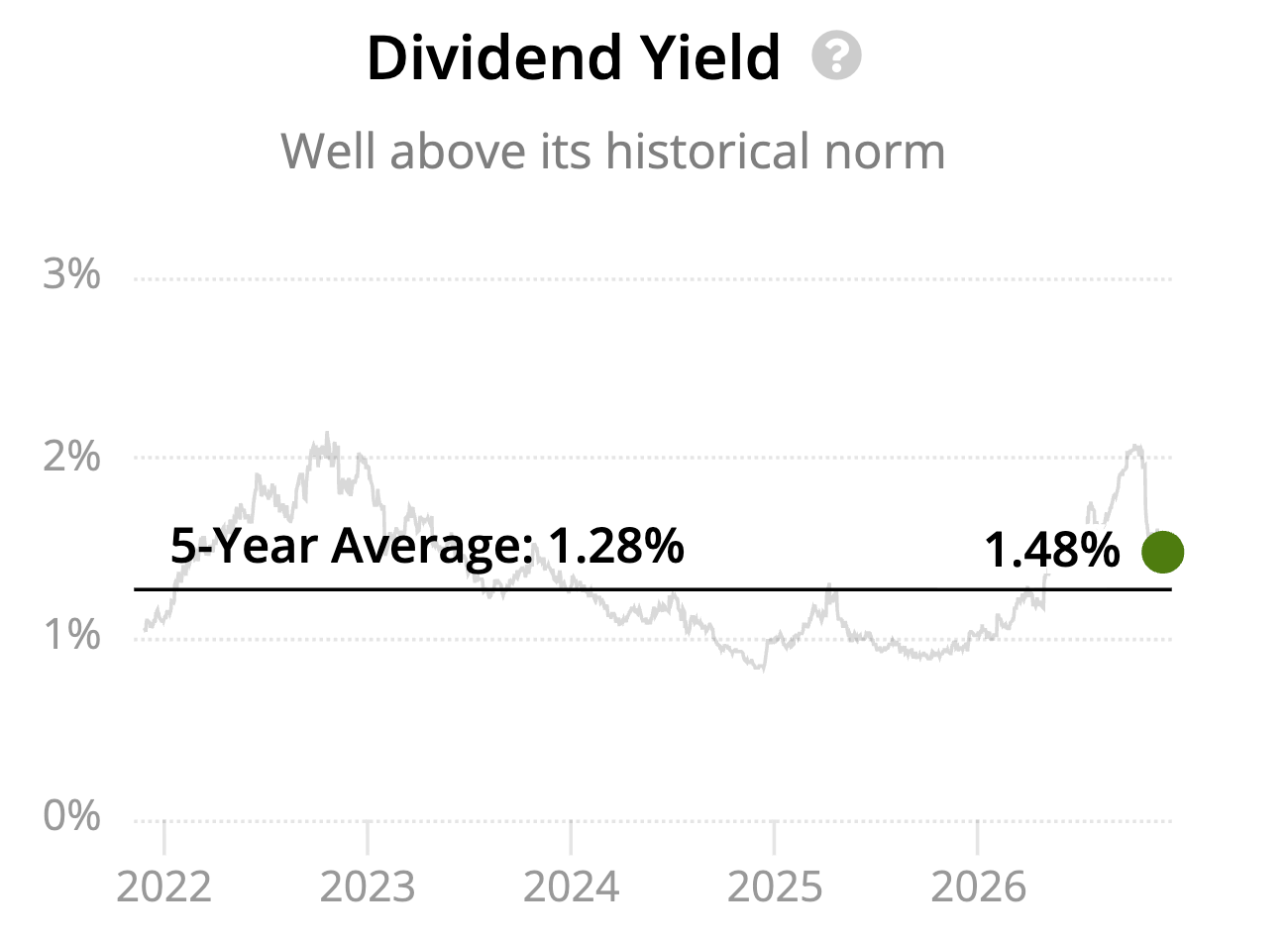
Pentair yields 1.48%, above its five-year average of 1.28%, which suggests the stock is somewhat undervalued.
United Bankshares (UBSI): Mid-Atlantic Regional Bank, 53 Years of Dividend Growth
Sector: Financials – Regional Banks
Dividend Growth Streak: 53 years
Dividend Safety Score: Safe (79)
Dividend Yield: 3.2%
Credit Rating: Not rated by S&P
Dividend Growth Streak: 53 years
Dividend Safety Score: Safe (79)
Dividend Yield: 3.2%
Credit Rating: Not rated by S&P
United Bankshares is a regional bank serving the Washington, D.C. area, nearby states, and Atlanta.
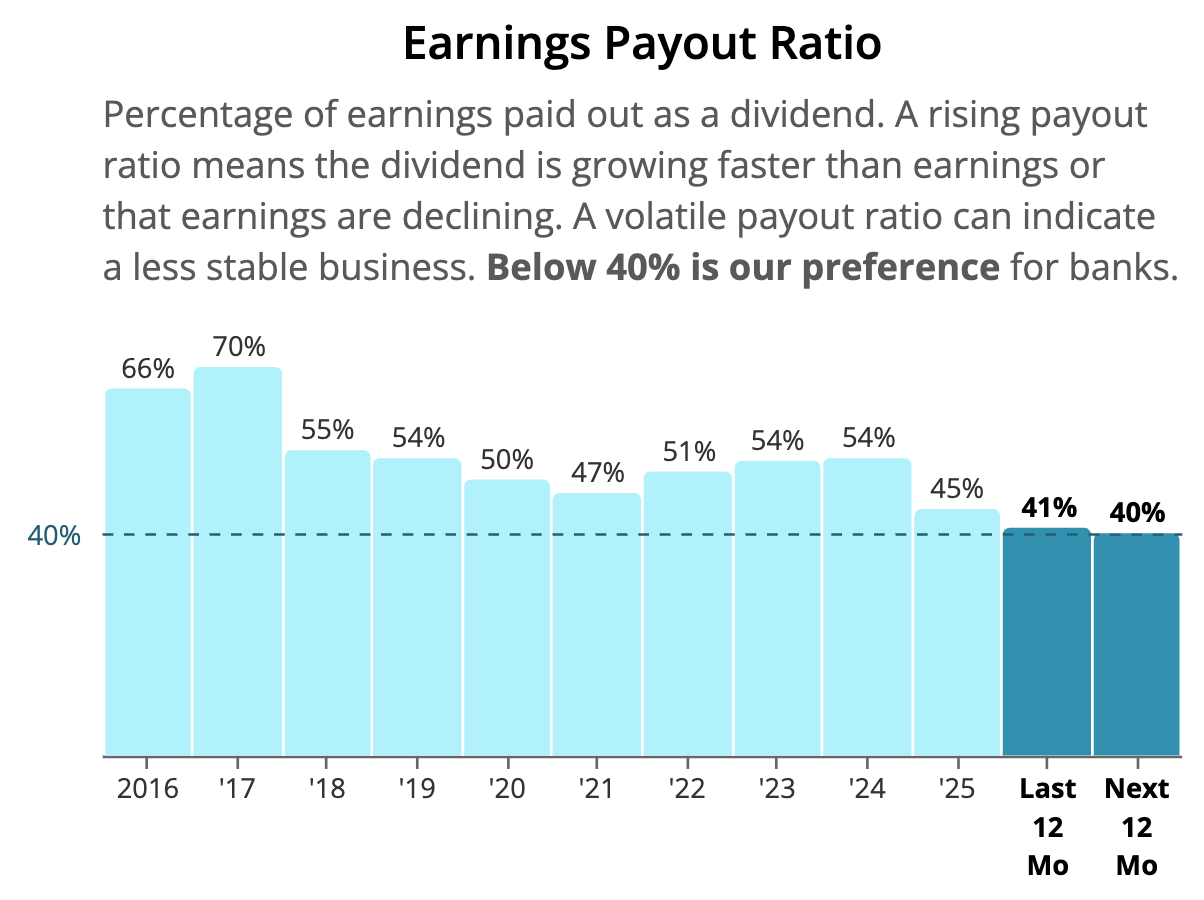
Its payout ratio has fallen from 70% in 2017 to about 41%.
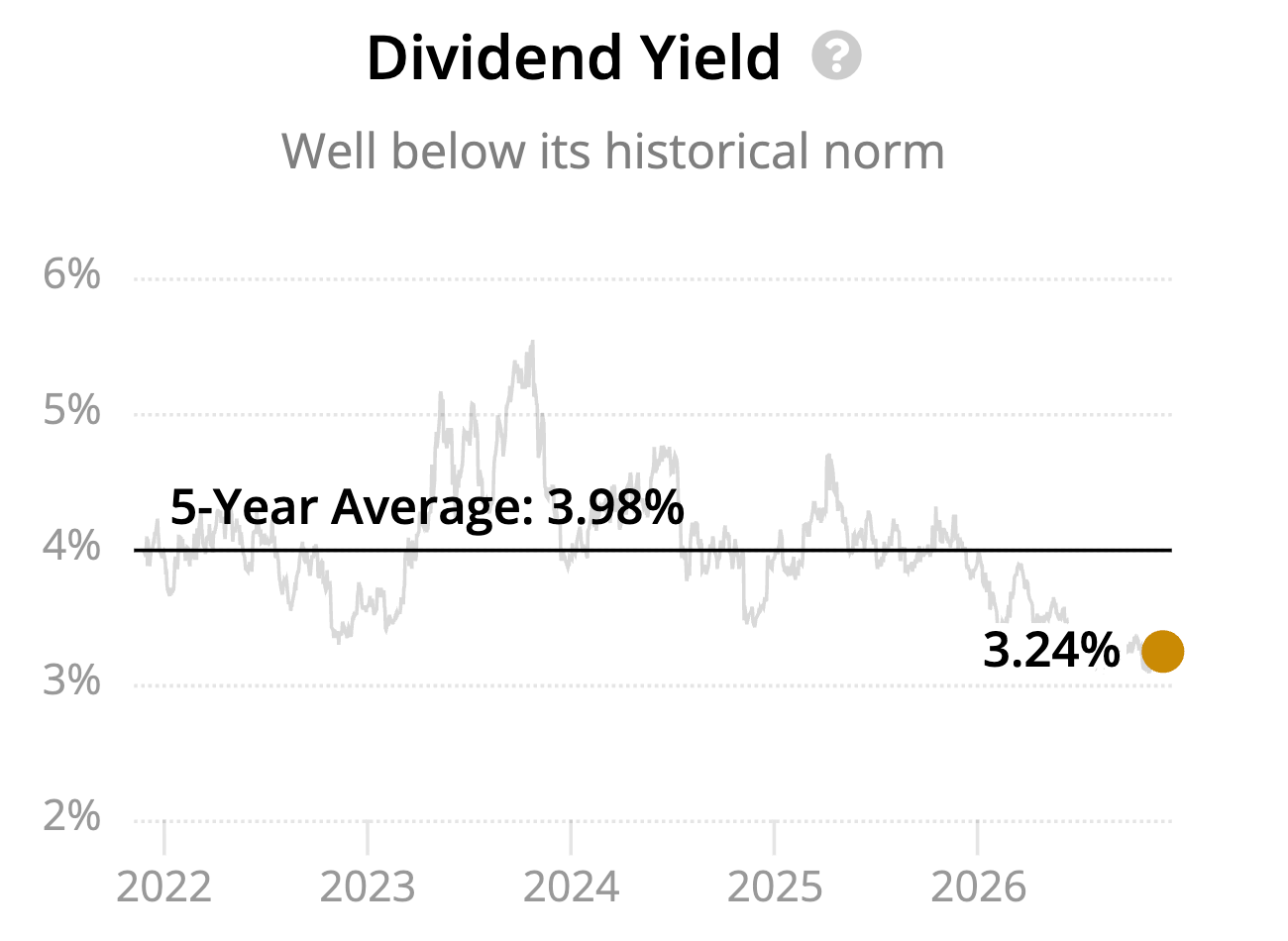
The 3.24% yield is well below its five-year average of 3.98%, which suggests the shares are pricier than usual.
Emerson Electric (EMR): Industrial Automation Equipment Maker, 70 Years of Dividend Growth
Sector: Industrials – Electrical Components and Equipment
Dividend Growth Streak: 70 years
Dividend Safety Score: Safe (78)
Dividend Yield: 1.5%
Credit Rating: A
Dividend Growth Streak: 70 years
Dividend Safety Score: Safe (78)
Dividend Yield: 1.5%
Credit Rating: A
Emerson sells industrial automation equipment and software, including valves, sensors, measurement instruments, and control systems. It has reshaped itself around automation in recent years by selling slower-growing businesses.
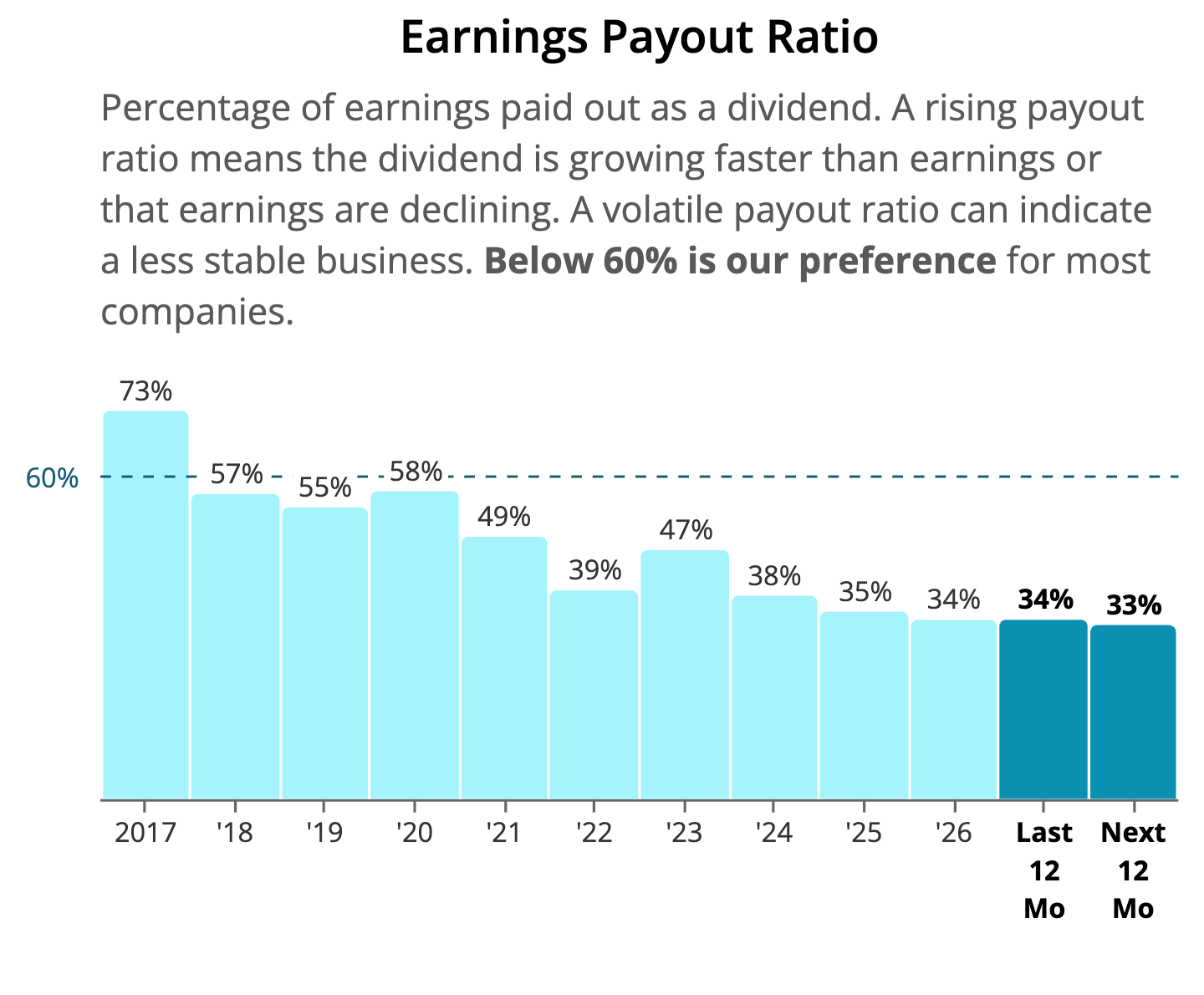
Its payout ratio has fallen from 73% in 2017 to about 34%, because its dividend grew only about 2% a year over the past five years. Its latest raise, in November 2026, was larger, at 7%, and marked its 70th consecutive annual increase.
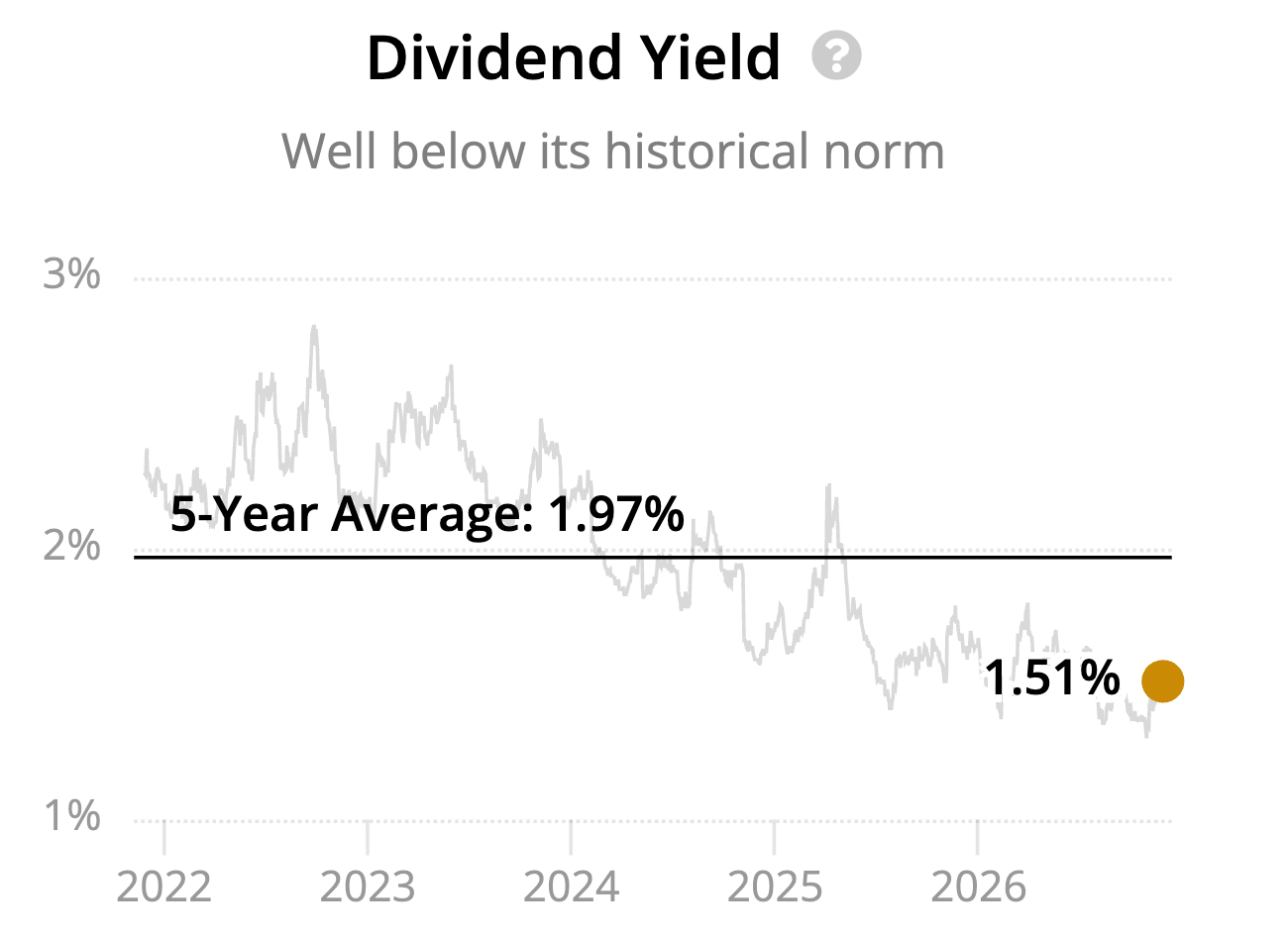
Emerson's 1.51% yield sits well below its five-year average of 1.97%, so the stock looks expensive.
Bright Horizon Energy (HZN): Rocky Mountain and Midwest Utility, 55 Years of Dividend Growth
Sector: Utilities – Multi-Utilities
Dividend Growth Streak: 55 years
Dividend Safety Score: Safe (77)
Dividend Yield: 3.5%
Credit Rating: BBB+
Dividend Growth Streak: 55 years
Dividend Safety Score: Safe (77)
Dividend Yield: 3.5%
Credit Rating: BBB+
Bright Horizon Energy, formerly Black Hills, delivers electricity and natural gas across the Rocky Mountain and Midwest regions. It took its new name in November 2026, when it completed its all-stock merger with NorthWestern Energy, and it carries forward Black Hills' 55-year dividend growth streak.
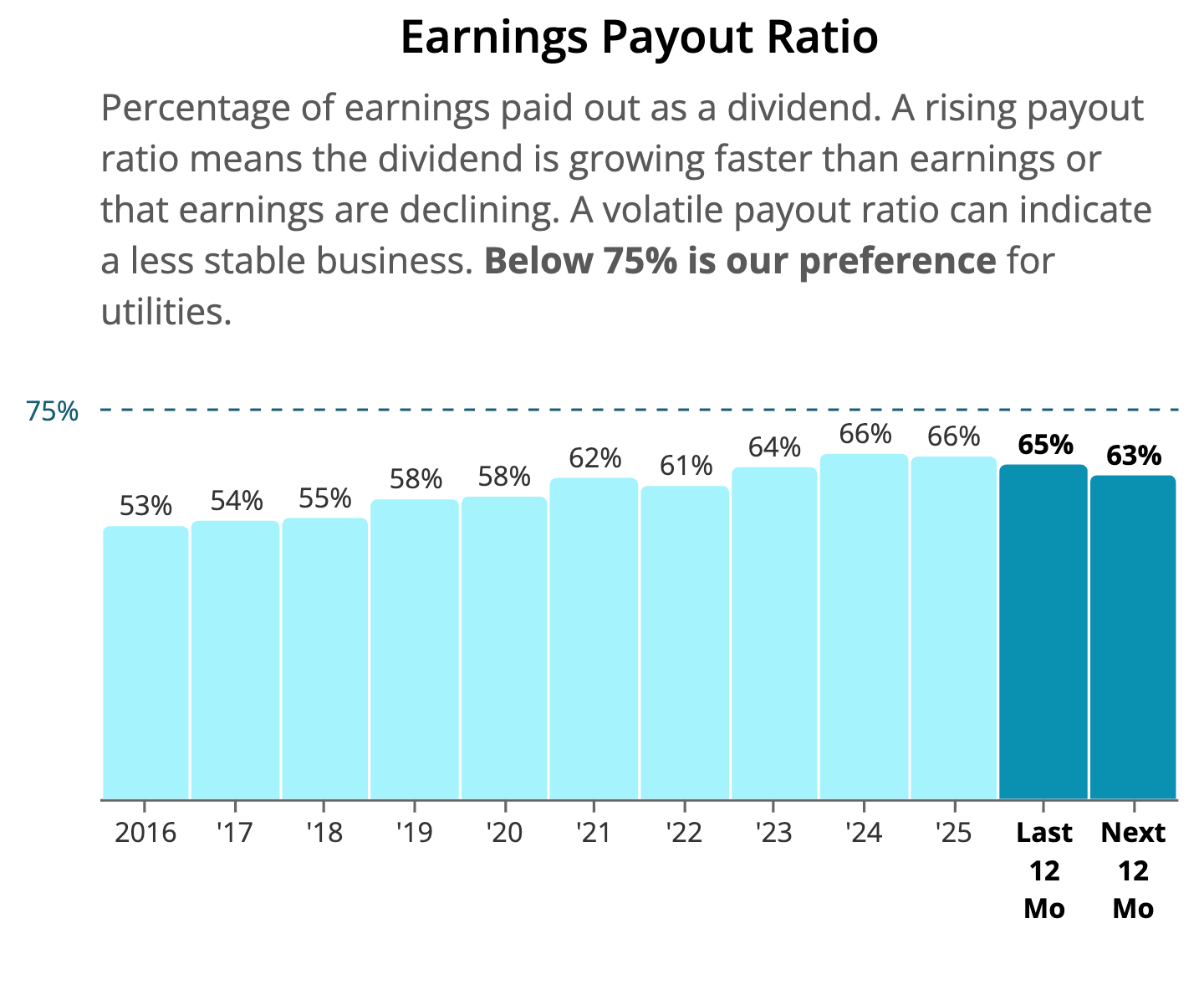
Its payout ratio has risen steadily from 53% in 2016 to about 65%, and its leverage is low for a utility.
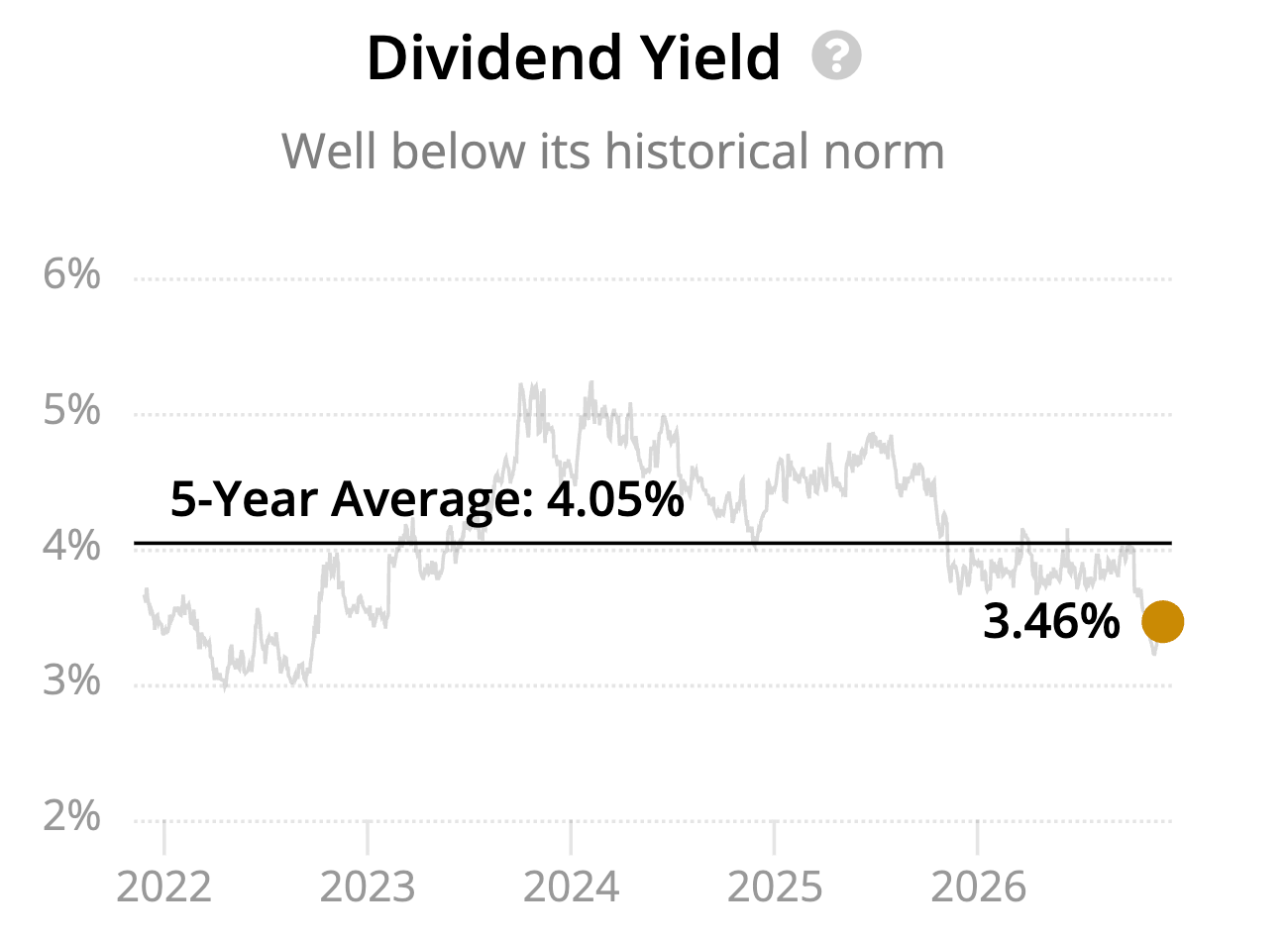
The 3.46% yield is well below its five-year average of 4.05%, which suggests the shares are pricier than usual.
McDonald's (MCD): Franchised Restaurant Chain, 50 Years of Dividend Growth
Sector: Consumer Discretionary – Restaurants
Dividend Growth Streak: 50 years
Dividend Safety Score: Safe (77)
Dividend Yield: 2.7%
Credit Rating: BBB+
Dividend Growth Streak: 50 years
Dividend Safety Score: Safe (77)
Dividend Yield: 2.7%
Credit Rating: BBB+
McDonald's franchises nearly all of its restaurants and collects royalties and rent from the operators, which insulates it from swings in restaurant-level profit. It raised its dividend for the 50th year in a row in September 2026, making it the newest Dividend King.
Traffic has softened as lower-income customers push back on higher menu prices.
Traffic has softened as lower-income customers push back on higher menu prices.
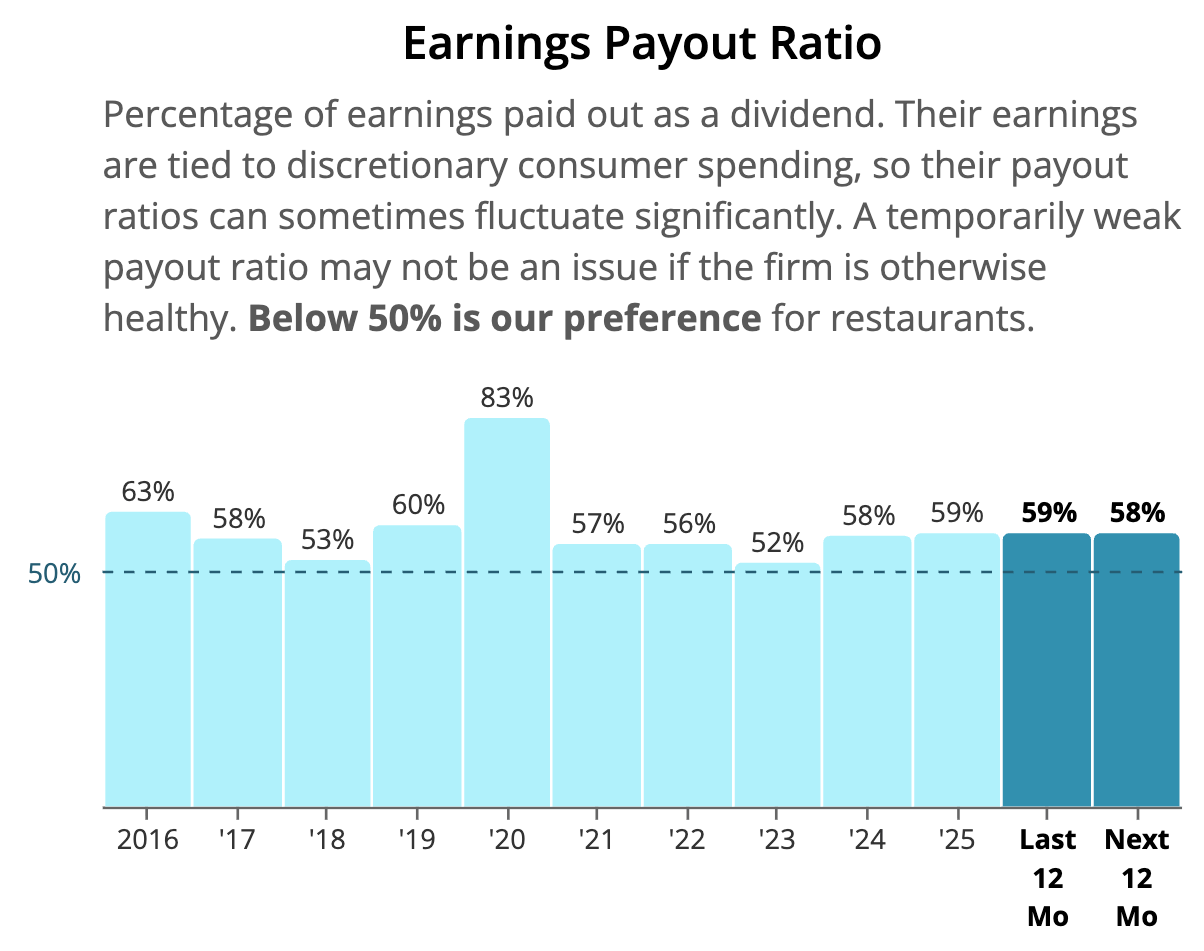
It pays out about 59% of its earnings, and its leverage is low for a restaurant company.
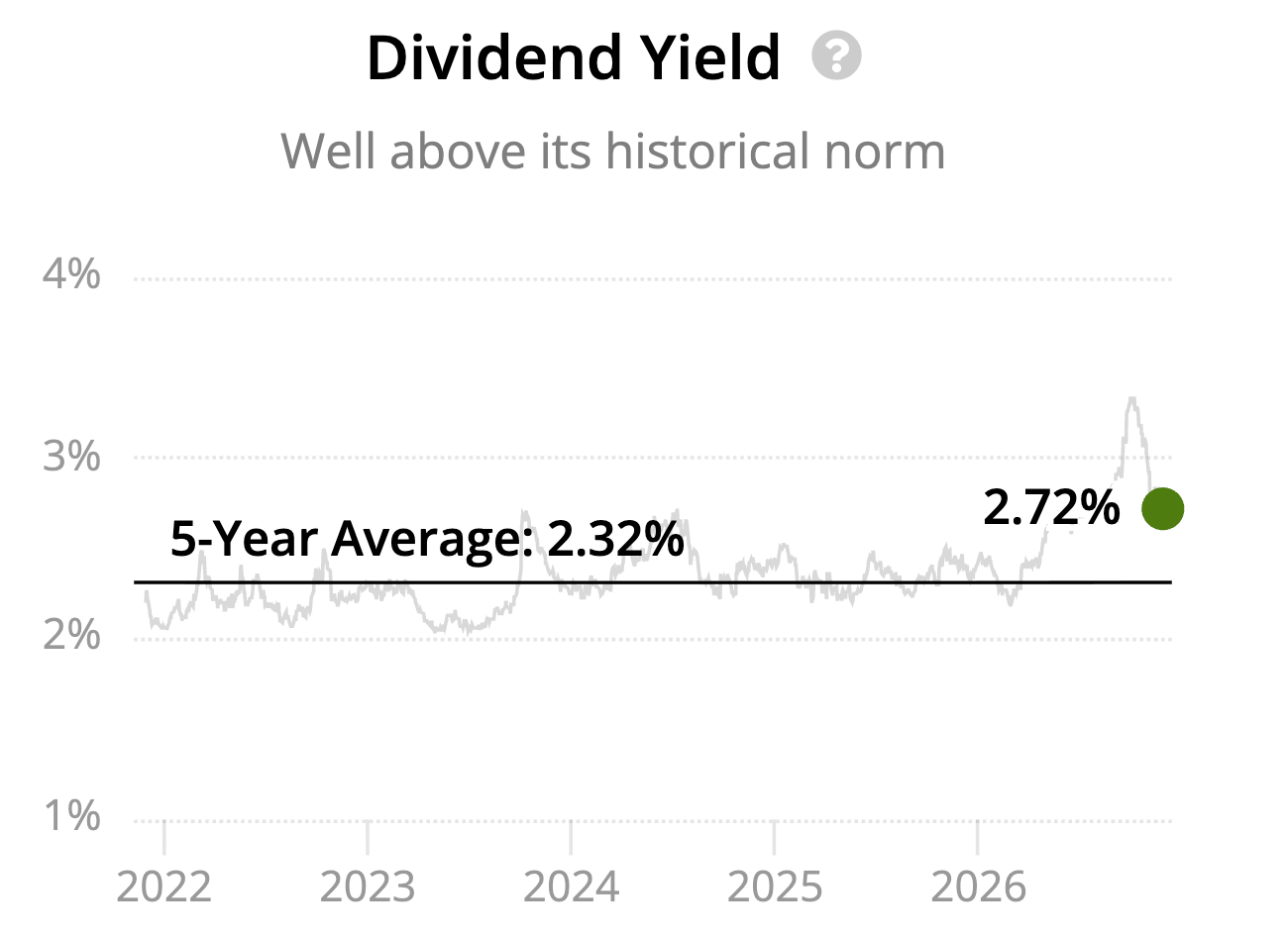
McDonald's yields 2.72%, well above its five-year average of 2.32%, a sign the stock may be undervalued.
Cincinnati Financial (CINF): Property and Casualty Insurer, 65 Years of Dividend Growth
Sector: Financials – Property and Casualty Insurance
Dividend Growth Streak: 65 years
Dividend Safety Score: Safe (71)
Dividend Yield: 2.0%
Credit Rating: BBB+
Dividend Growth Streak: 65 years
Dividend Safety Score: Safe (71)
Dividend Yield: 2.0%
Credit Rating: BBB+
Cincinnati Financial sells property and casualty insurance through independent agents across most of the U.S.
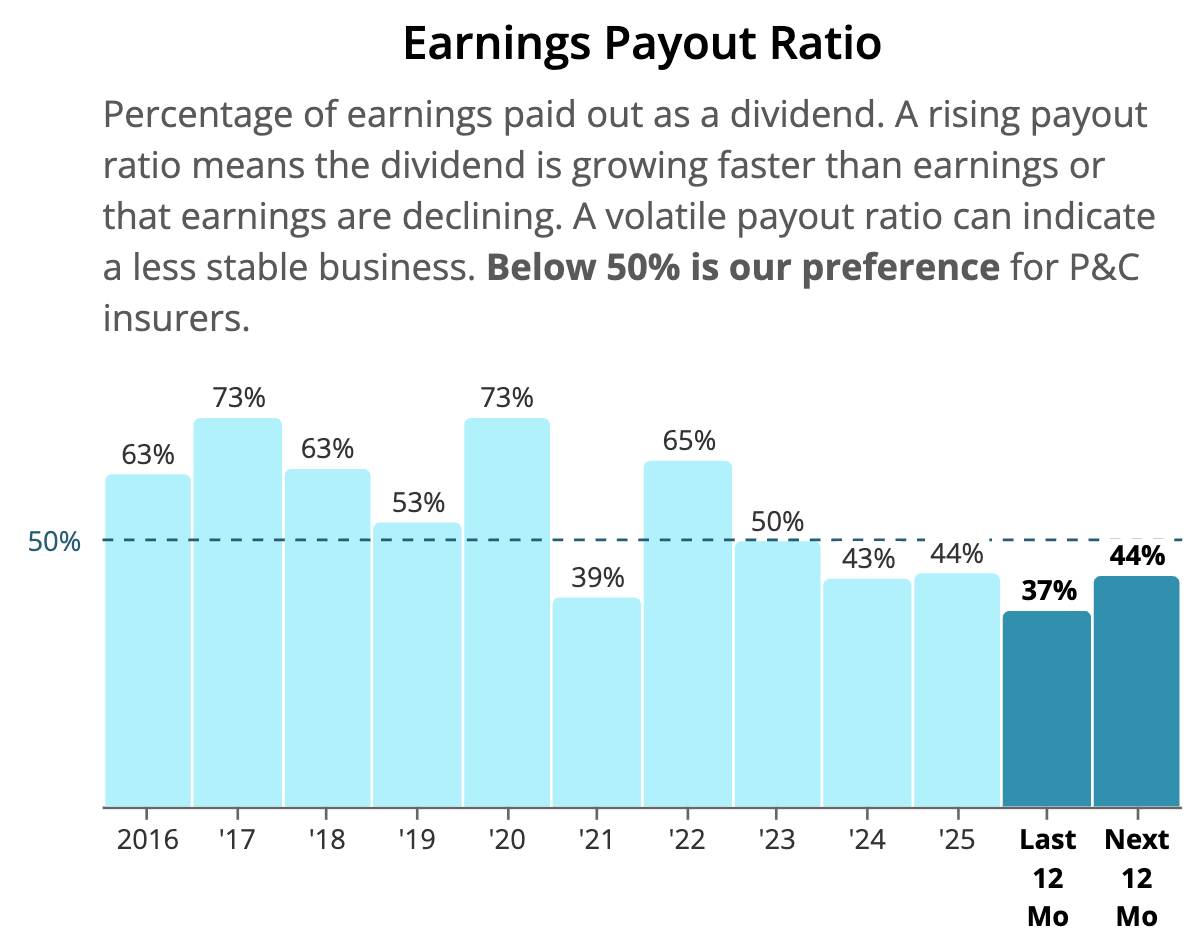
Its payout ratio swings with catastrophe losses and investment gains, but it has stayed below 50% since 2024.
Cincinnati Financial pays out 37% of its earnings, expected to be 44% next year.
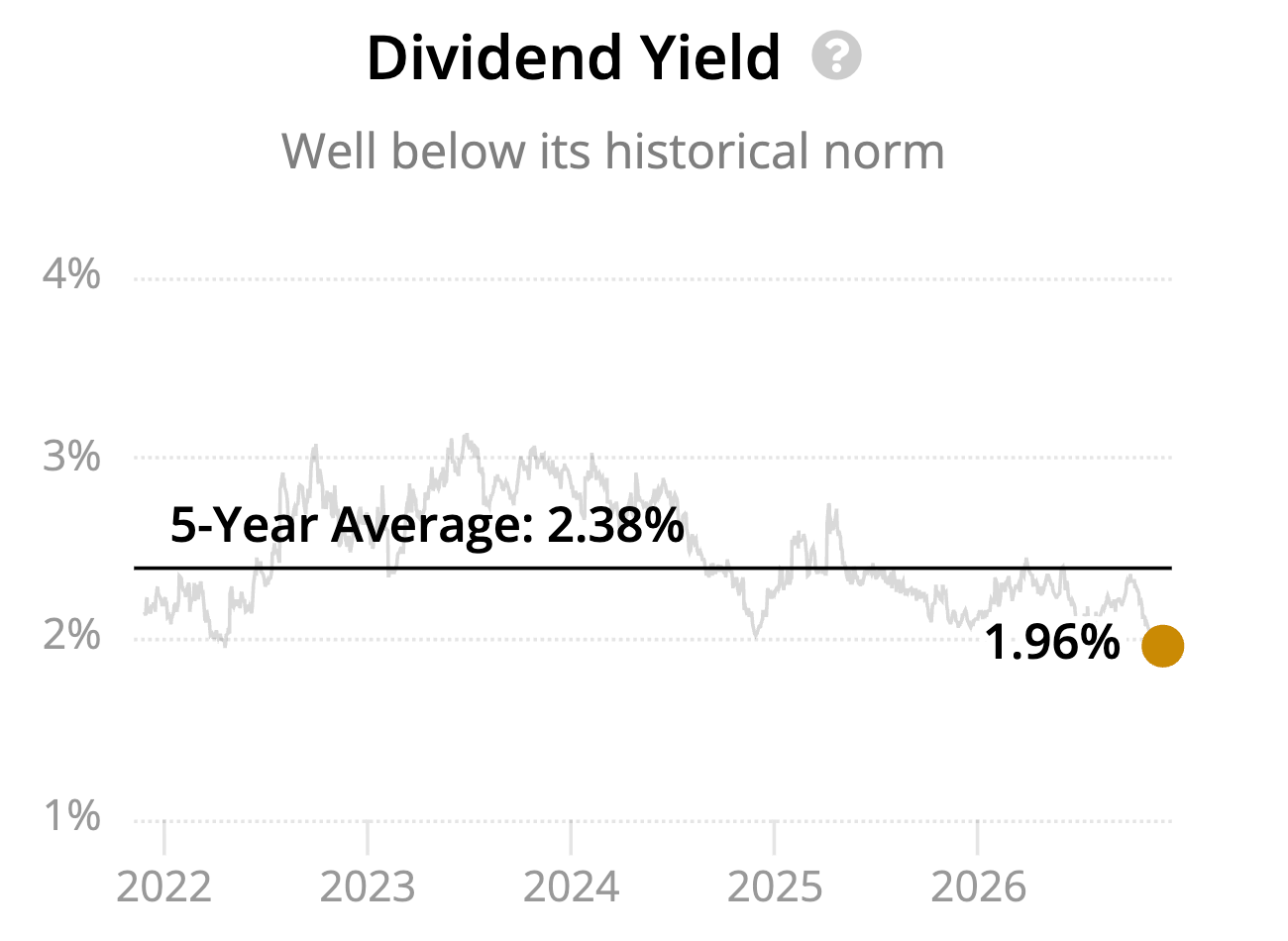
The 1.96% yield is well below its five-year average of 2.38%. Insurance earnings swing with catastrophe losses, so the yield is only a rough guide to valuation here.
Tennant Company (TNC): Floor Cleaning Equipment Maker, 55 Years of Dividend Growth
Sector: Industrials – Industrial Machinery and Components
Dividend Growth Streak: 55 years
Dividend Safety Score: Safe (71)
Dividend Yield: 1.7%
Credit Rating: Not rated by S&P
Dividend Growth Streak: 55 years
Dividend Safety Score: Safe (71)
Dividend Yield: 1.7%
Credit Rating: Not rated by S&P
Tennant makes floor scrubbers, sweepers, and other cleaning machines, and it earns a steady stream of revenue from parts and service. It raised its dividend 5% in November 2026, its 55th consecutive annual increase.
Its payout ratio has stayed below 60% every year since 2016, and it is expected to fall to 26%.
Tennant pays out 37% of its earnings, expected to be 26% next year.
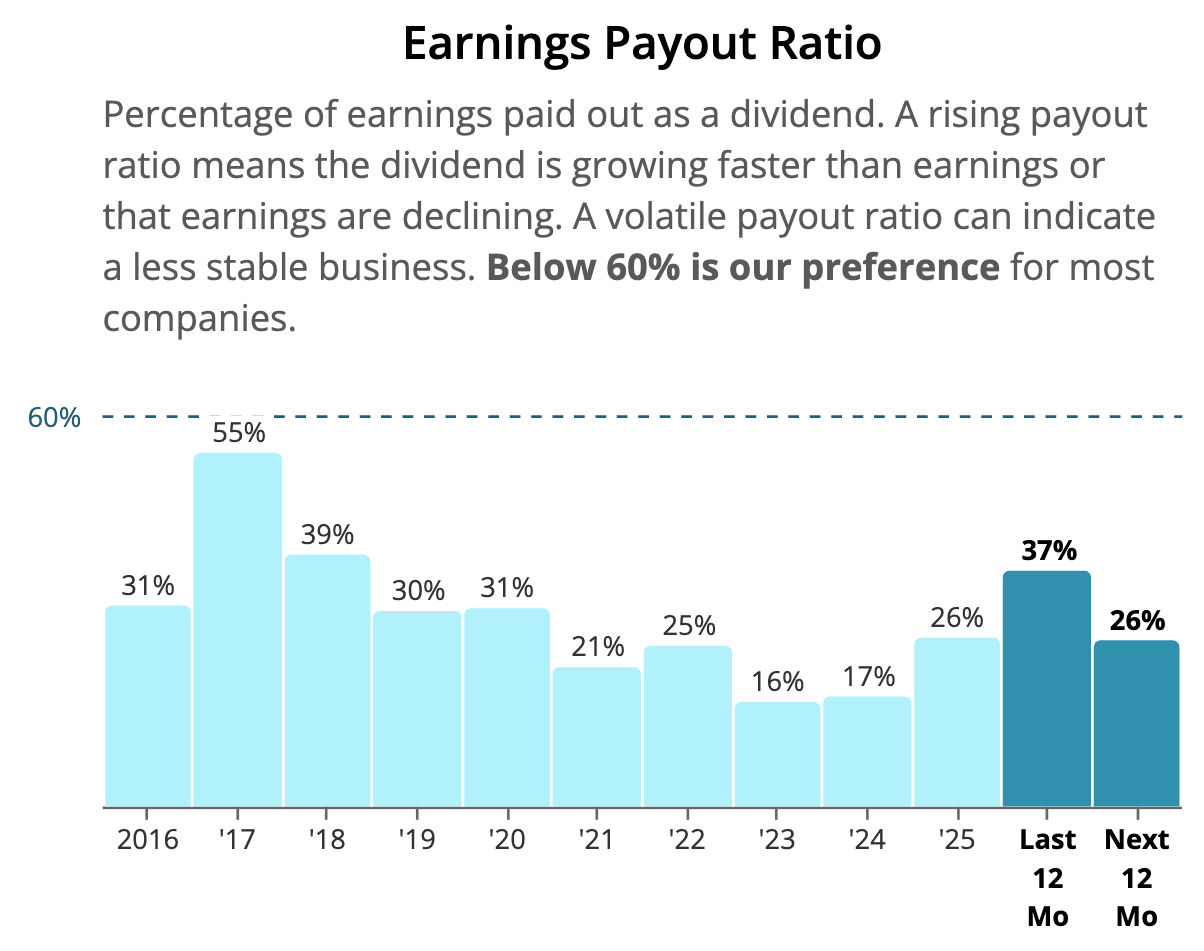
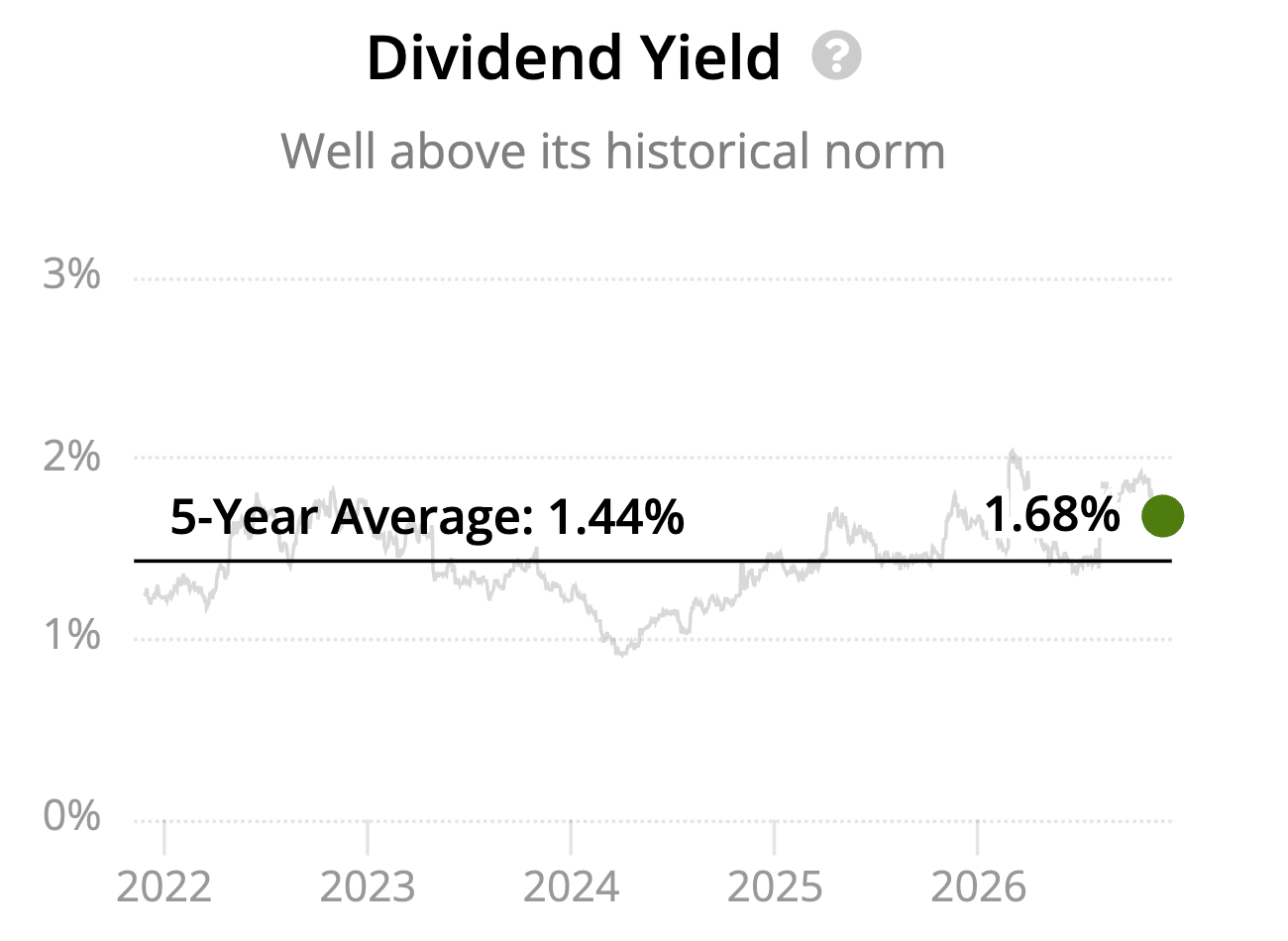
Tennant yields 1.68%, well above its five-year average of 1.44%, which suggests the shares may be undervalued.
Hormel Foods (HRL): Packaged Meats and Foods Maker, 61 Years of Dividend Growth
Sector: Consumer Staples – Packaged Foods and Meats
Dividend Growth Streak: 61 years
Dividend Safety Score: Safe (70)
Dividend Yield: 5.1%
Credit Rating: BBB+
Dividend Growth Streak: 61 years
Dividend Safety Score: Safe (70)
Dividend Yield: 5.1%
Credit Rating: BBB+
Hormel sells Spam, Skippy, Planters, Jennie-O, and dozens of other food brands. Inflation in pork, turkey, and nuts squeezed its margins, and we lowered its Dividend Safety Score from 90 to 80 in September 2025. We lowered it again, from 80 to 70, in October 2026 after Hormel agreed to buy chicken processor Brakebush Brothers for about $1.1 billion while its turnaround was still slow.
It has not cut its dividend in 98 years, and its 1% raise in November 2026 was its 61st consecutive annual increase.
It has not cut its dividend in 98 years, and its 1% raise in November 2026 was its 61st consecutive annual increase.
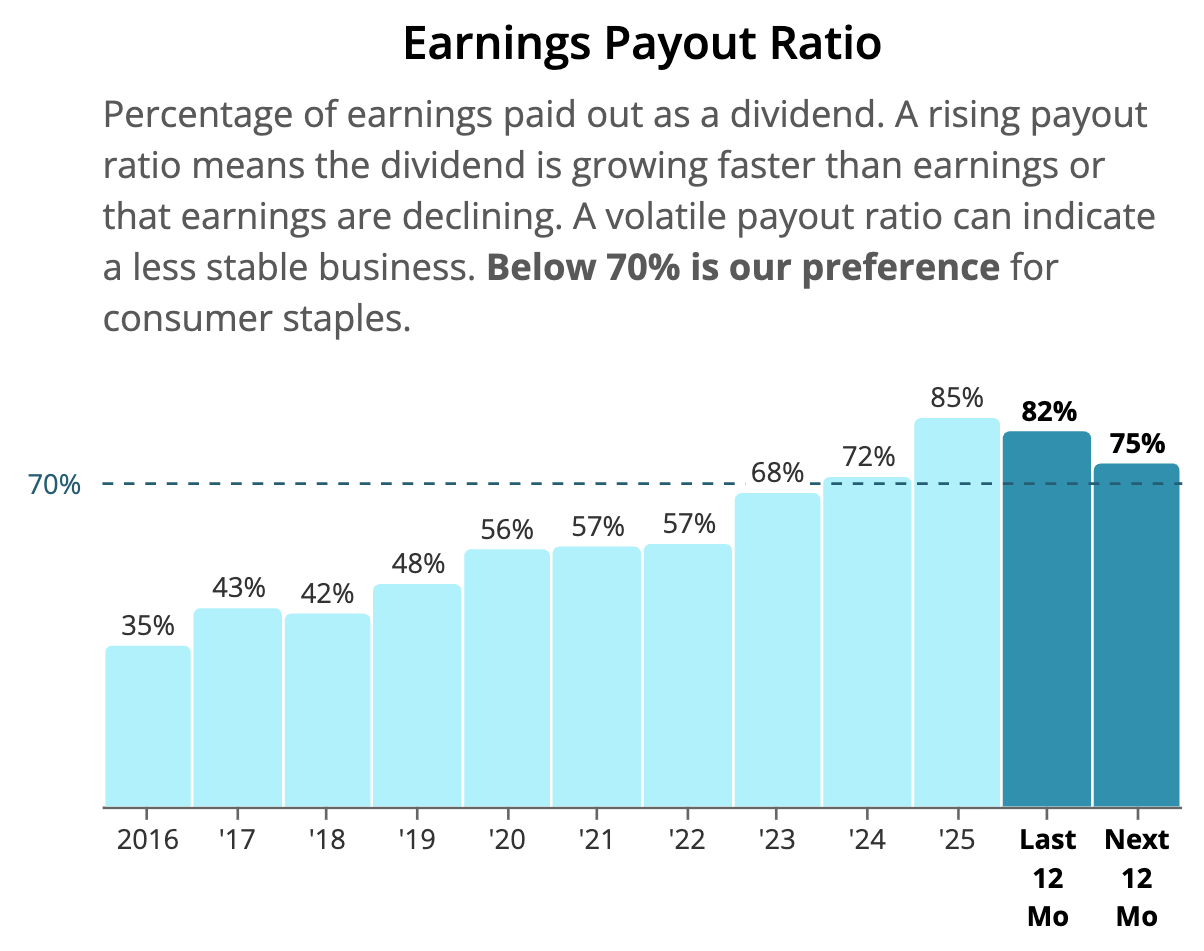
The payout ratio climbed from 35% in 2016 to 85% in 2025, easily its highest in decades, and it is expected to ease to 75%. The deal adds debt, and its credit rating now sits at BBB+, which leaves less room for error while earnings recover.
Hormel pays out 82% of its earnings, expected to be 75% next year.
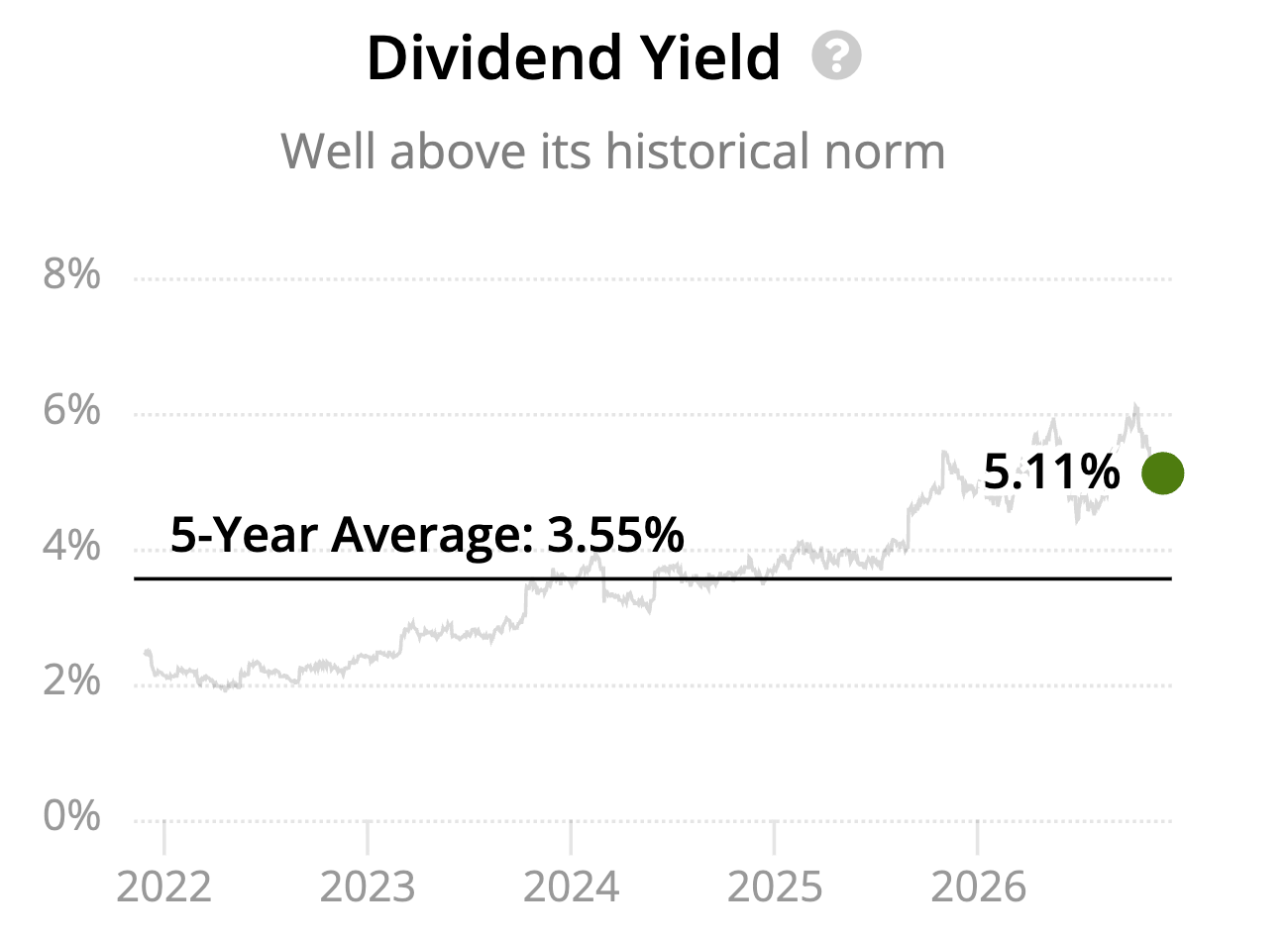
At 5.11%, Hormel still has the highest yield of any Dividend King with a Safe Dividend Safety Score or better, well above its five-year average of 3.55%. That points to a cheap stock, but also to real doubts about its turnaround.
Stepan Company (SCL): Surfactant and Specialty Chemical Maker, 59 Years of Dividend Growth
Sector: Materials – Specialty Chemicals
Dividend Growth Streak: 59 years
Dividend Safety Score: Safe (70)
Dividend Yield: 2.5%
Credit Rating: Not rated by S&P
Dividend Growth Streak: 59 years
Dividend Safety Score: Safe (70)
Dividend Yield: 2.5%
Credit Rating: Not rated by S&P
Stepan makes surfactants, the cleaning agents in detergents and shampoos, along with polymers for insulation. We lowered its Dividend Safety Score from 80 to 70, still Safe, in February 2026 because its recovery is taking longer than expected.
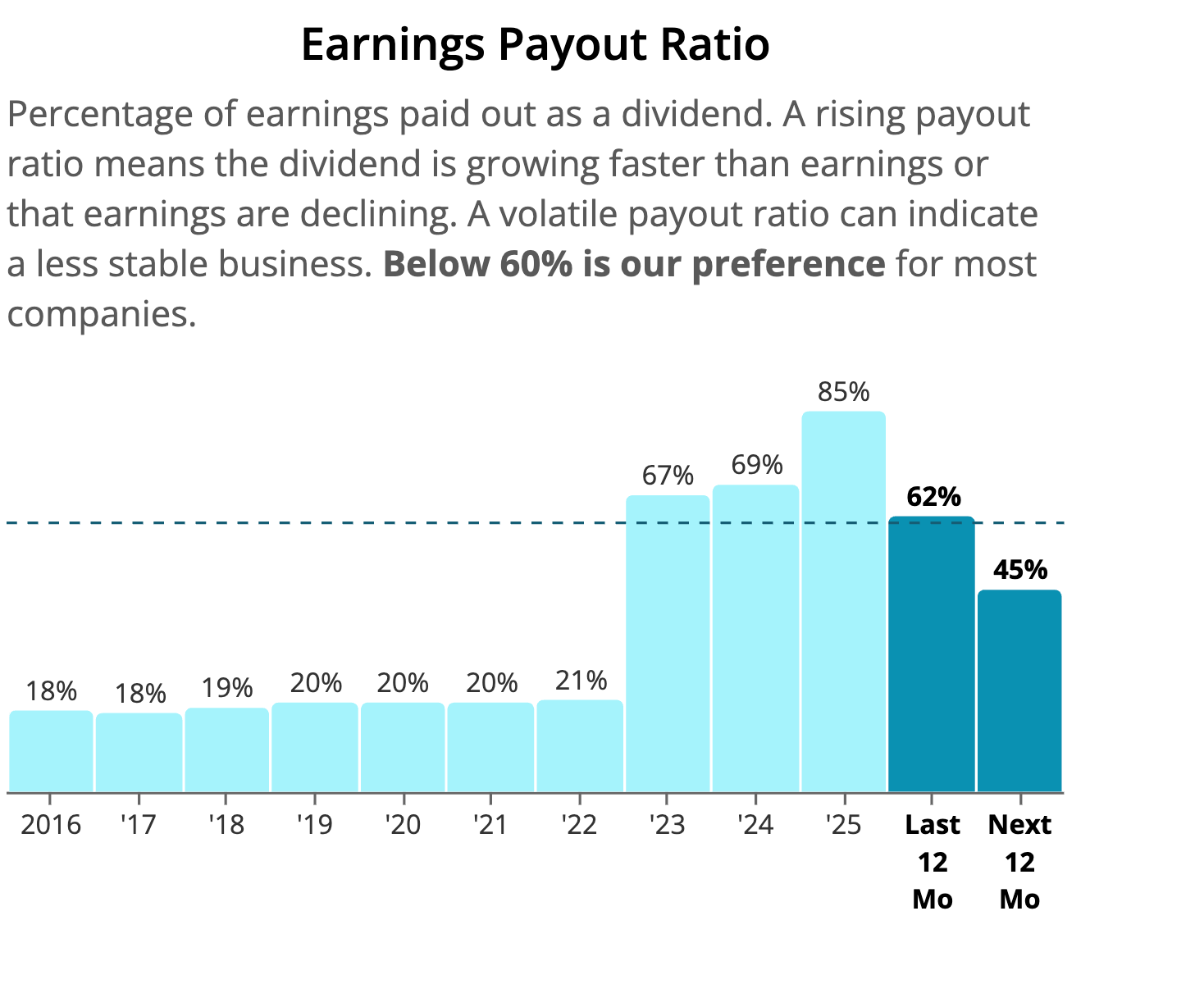
Its payout ratio jumped from about 20% to 85% as earnings fell, and it is expected to recover to 45%.
Stepan pays out 62% of its earnings, expected to be 45% next year.
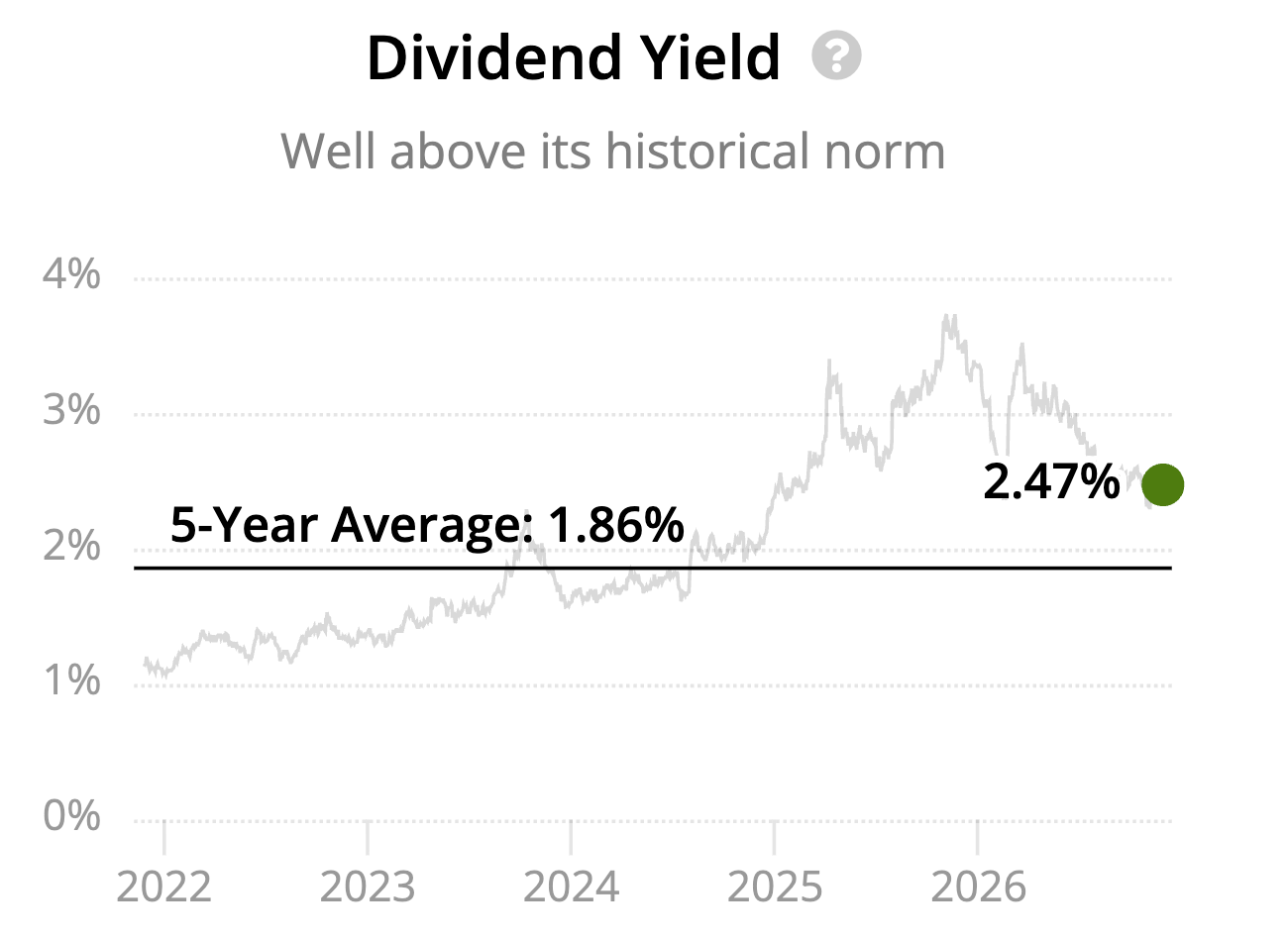
The 2.47% yield is well above its five-year average of 1.86%. Because Stepan's payout ratio has swung so widely as earnings fell, treat that comparison with some care.
H.B. Fuller (FUL): Adhesives Maker, 56 Years of Dividend Growth
Sector: Materials – Specialty Chemicals
Dividend Growth Streak: 56 years
Dividend Safety Score: Safe (70)
Dividend Yield: 2.0%
Credit Rating: BB
Dividend Growth Streak: 56 years
Dividend Safety Score: Safe (70)
Dividend Yield: 2.0%
Credit Rating: BB
H.B. Fuller is the world's largest pure-play adhesives maker, supplying glues for packaging, hygiene products, electronics, and construction. Its BB credit rating is the lowest of any Dividend King, a legacy of acquisitions that pushed debt higher.
Still, it pays out only about 20% of its earnings.
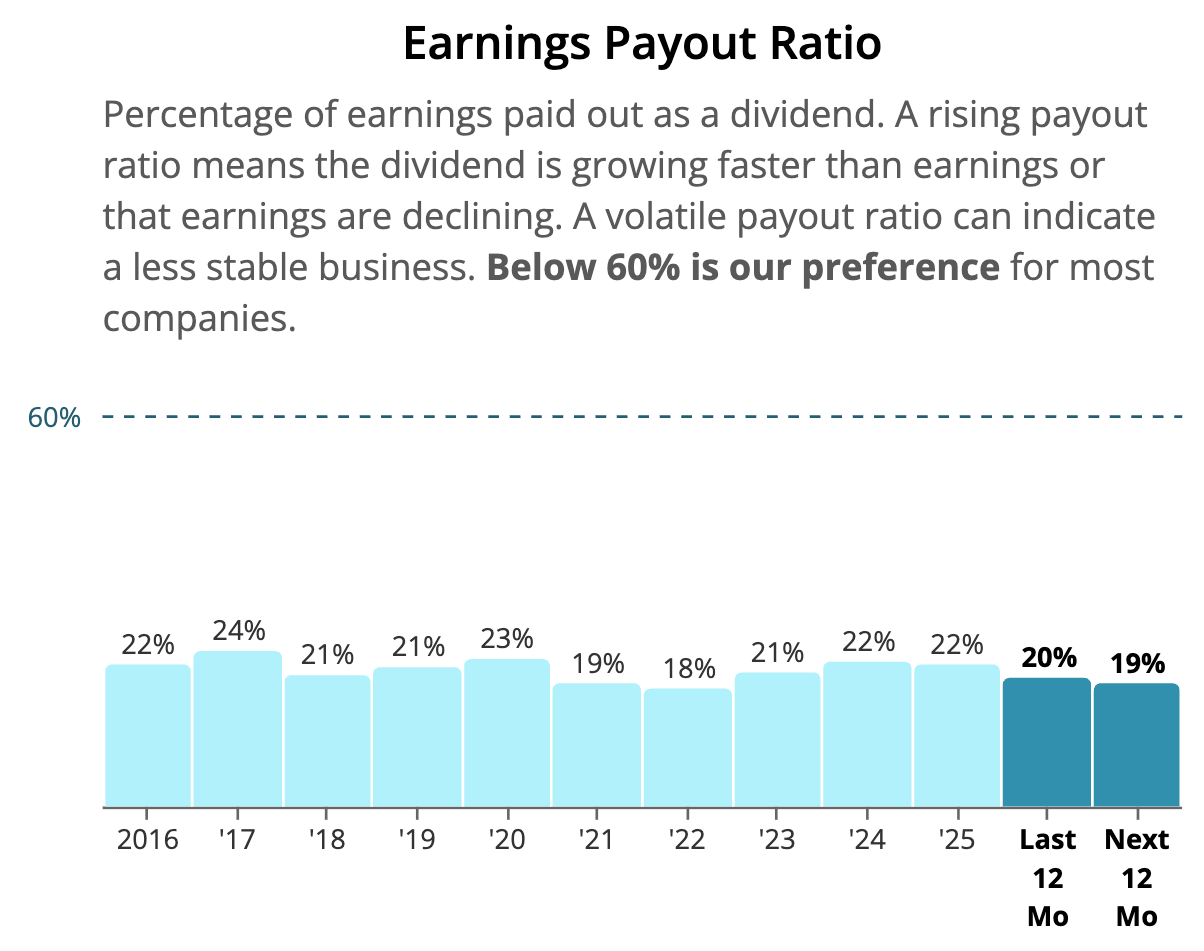
H.B. Fuller yields 1.97%, well above its five-year average of 1.19%, which suggests the stock may be undervalued.
Target (TGT): General Merchandise Retailer, 54 Years of Dividend Growth
Sector: Consumer Staples – General Merchandise Retail
Dividend Growth Streak: 54 years
Dividend Safety Score: Safe (70)
Dividend Yield: 2.7%
Credit Rating: A
Dividend Growth Streak: 54 years
Dividend Safety Score: Safe (70)
Dividend Yield: 2.7%
Credit Rating: A
Target sells apparel, home goods, groceries, and beauty products through its stores and online. About half of its sales come from discretionary categories, which have lagged as shoppers focus on essentials.
We lowered its Dividend Safety Score from 80 to 70, still Safe, in November 2025.
We lowered its Dividend Safety Score from 80 to 70, still Safe, in November 2025.
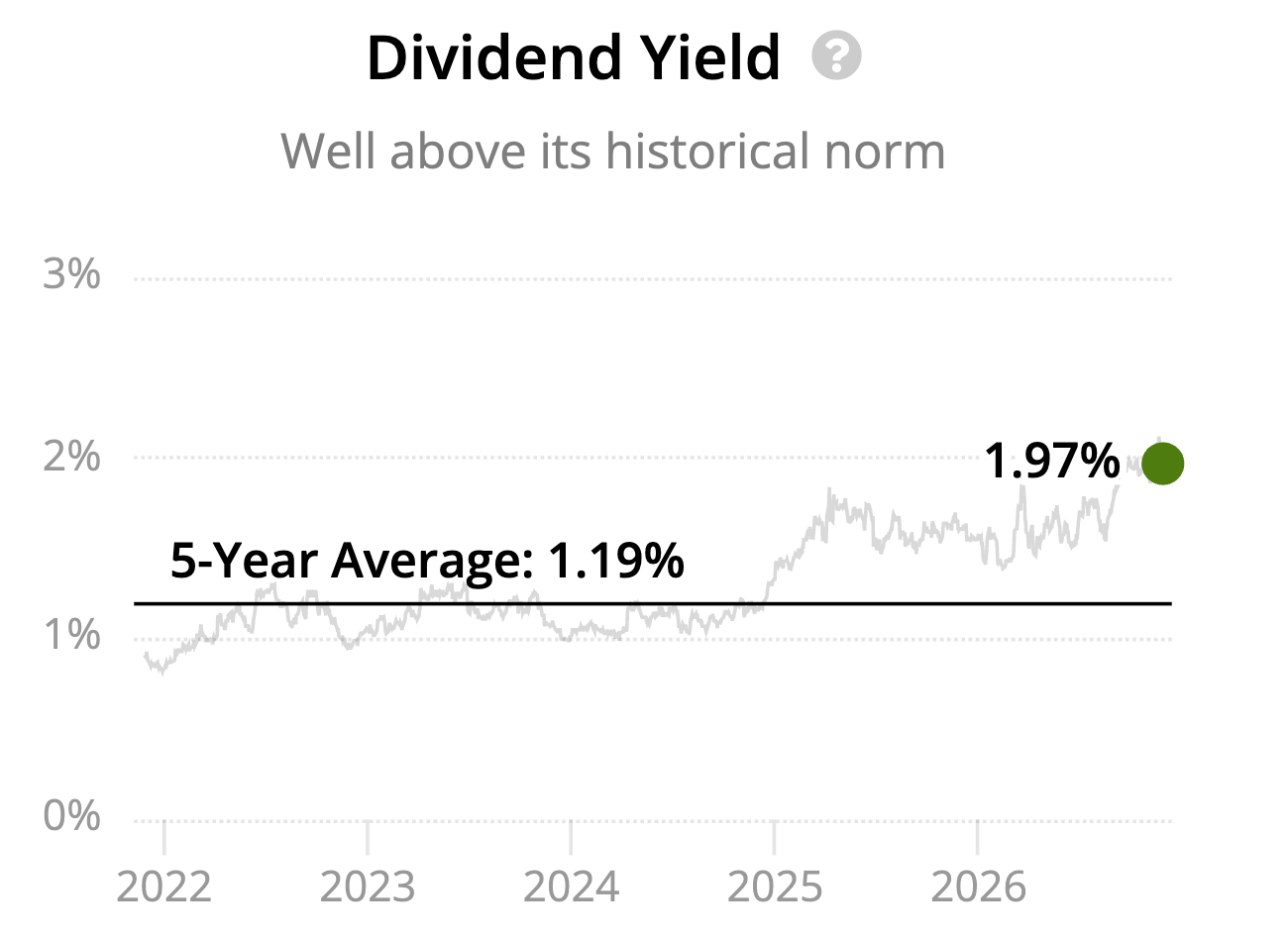
Its payout ratio jumped to 60% in fiscal 2026 and is expected to be about 50% next year.
Target pays out 45% of its earnings, expected to be 50% next year.
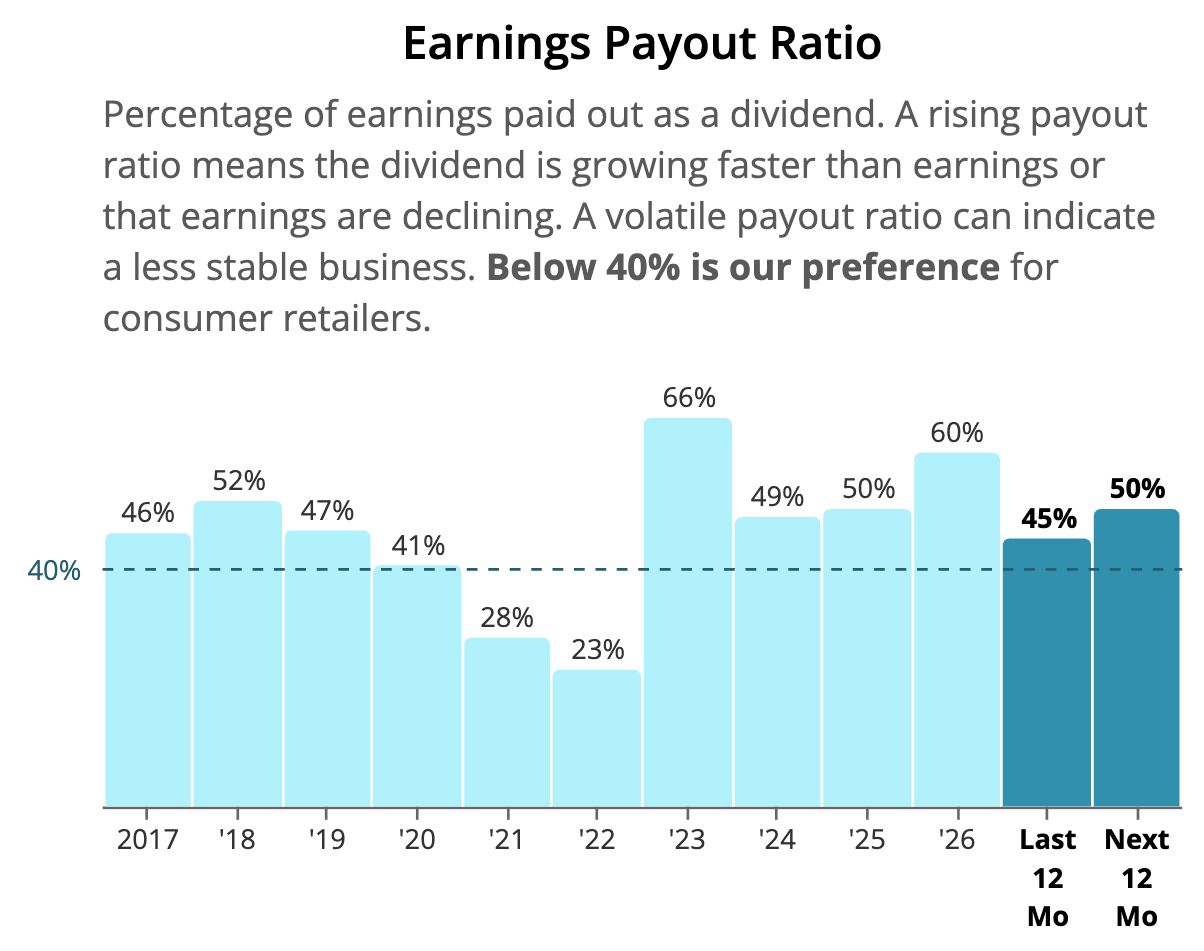
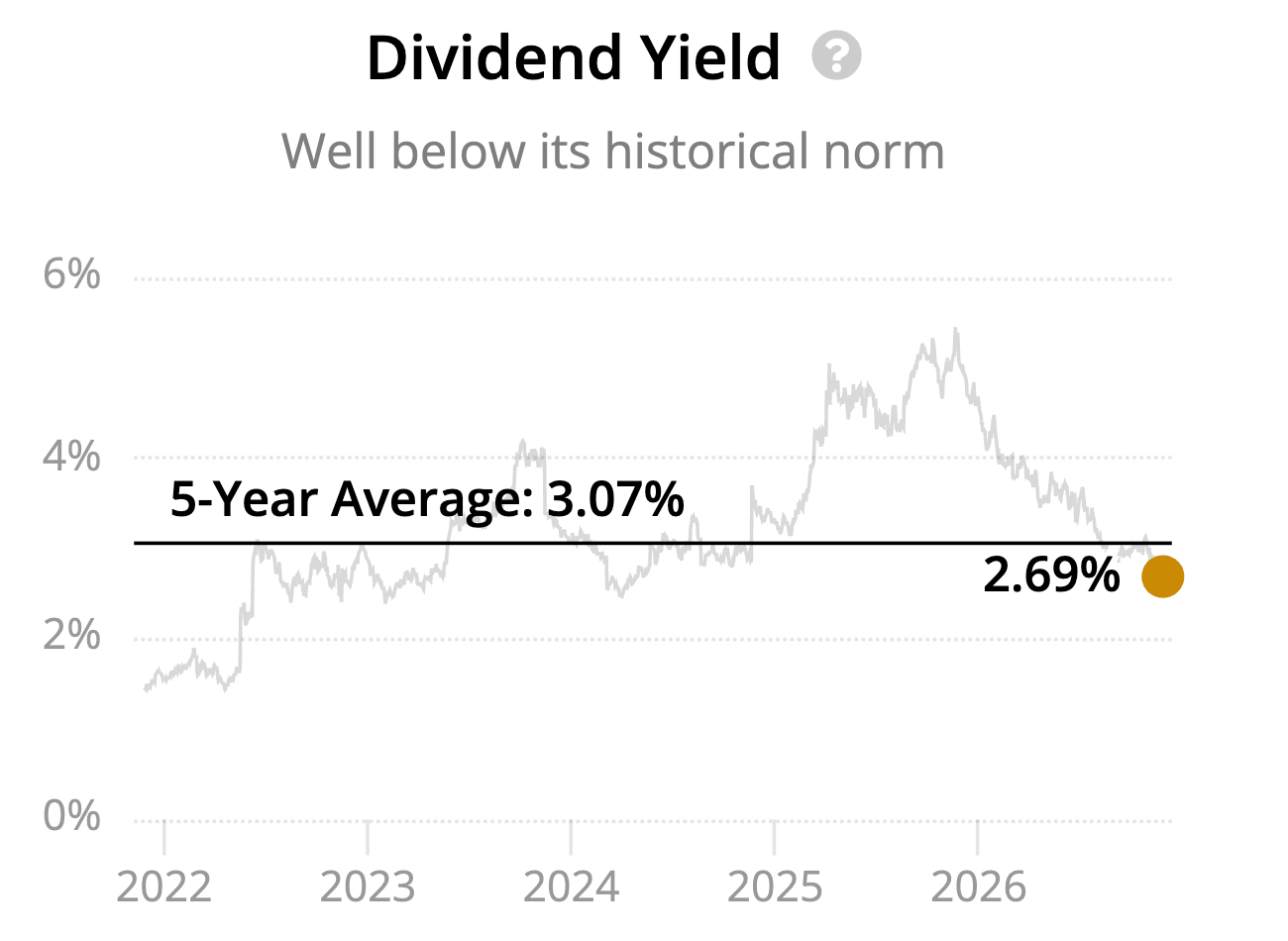
Target's 2.69% yield is below its five-year average of 3.07%, so the shares look a bit pricier than usual.
Kimberly-Clark (KMB): Tissue, Diaper and Health Products Maker, 53 Years of Dividend Growth
Sector: Consumer Staples – Household Products
Dividend Growth Streak: 53 years
Dividend Safety Score: Safe (70)
Dividend Yield: 4.7%
Credit Rating: A
Dividend Growth Streak: 53 years
Dividend Safety Score: Safe (70)
Dividend Yield: 4.7%
Credit Rating: A
Kimberly-Clark sells Huggies, Kleenex, Cottonelle, and Depend. We lowered its Dividend Safety Score from Very Safe to Safe in November 2025 after it agreed to buy Kenvue for nearly $50 billion, a deal that adds debt and litigation risk. The deal closed on November 2, 2026.
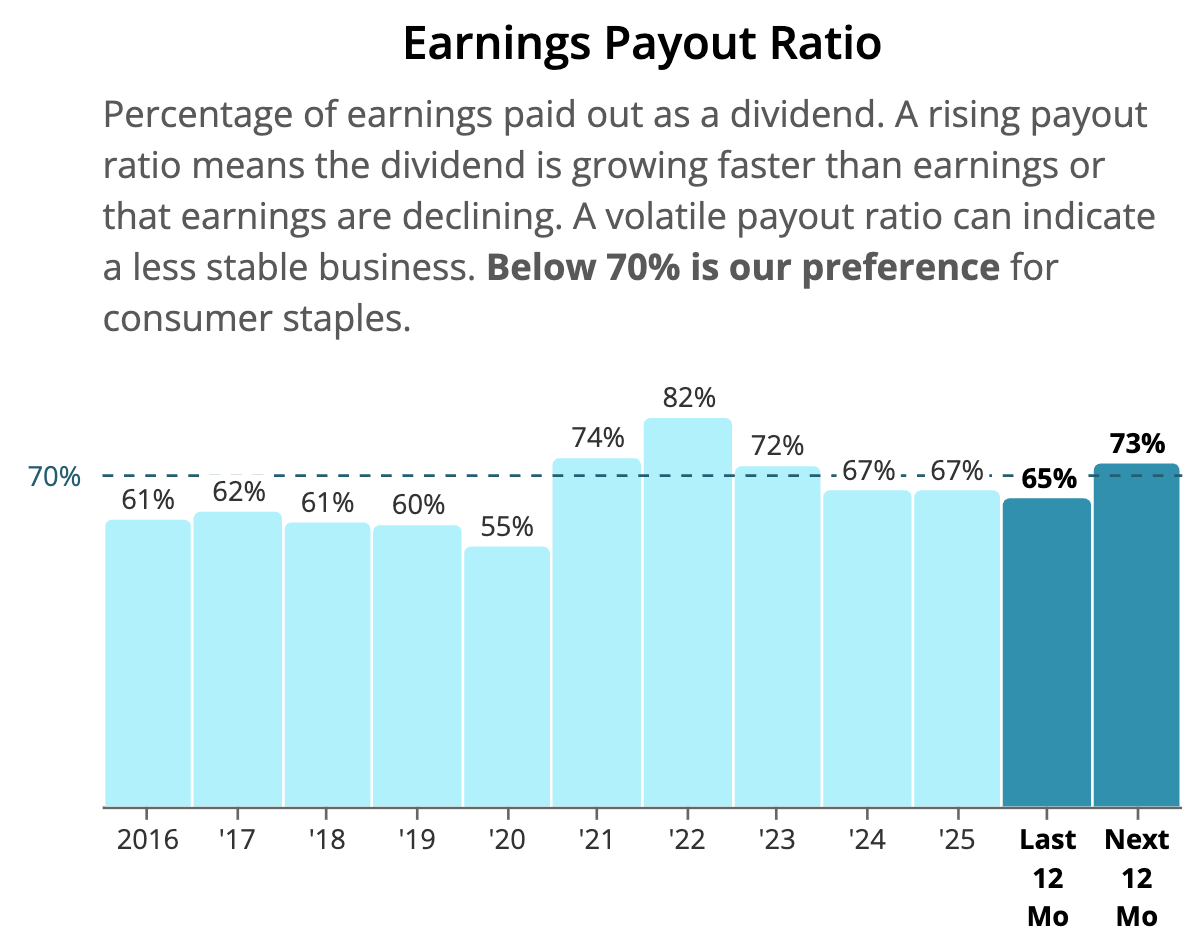
Its payout ratio is expected to rise to 73% over the next year.
Kimberly-Clark pays out 65% of its earnings, expected to be 73% next year.
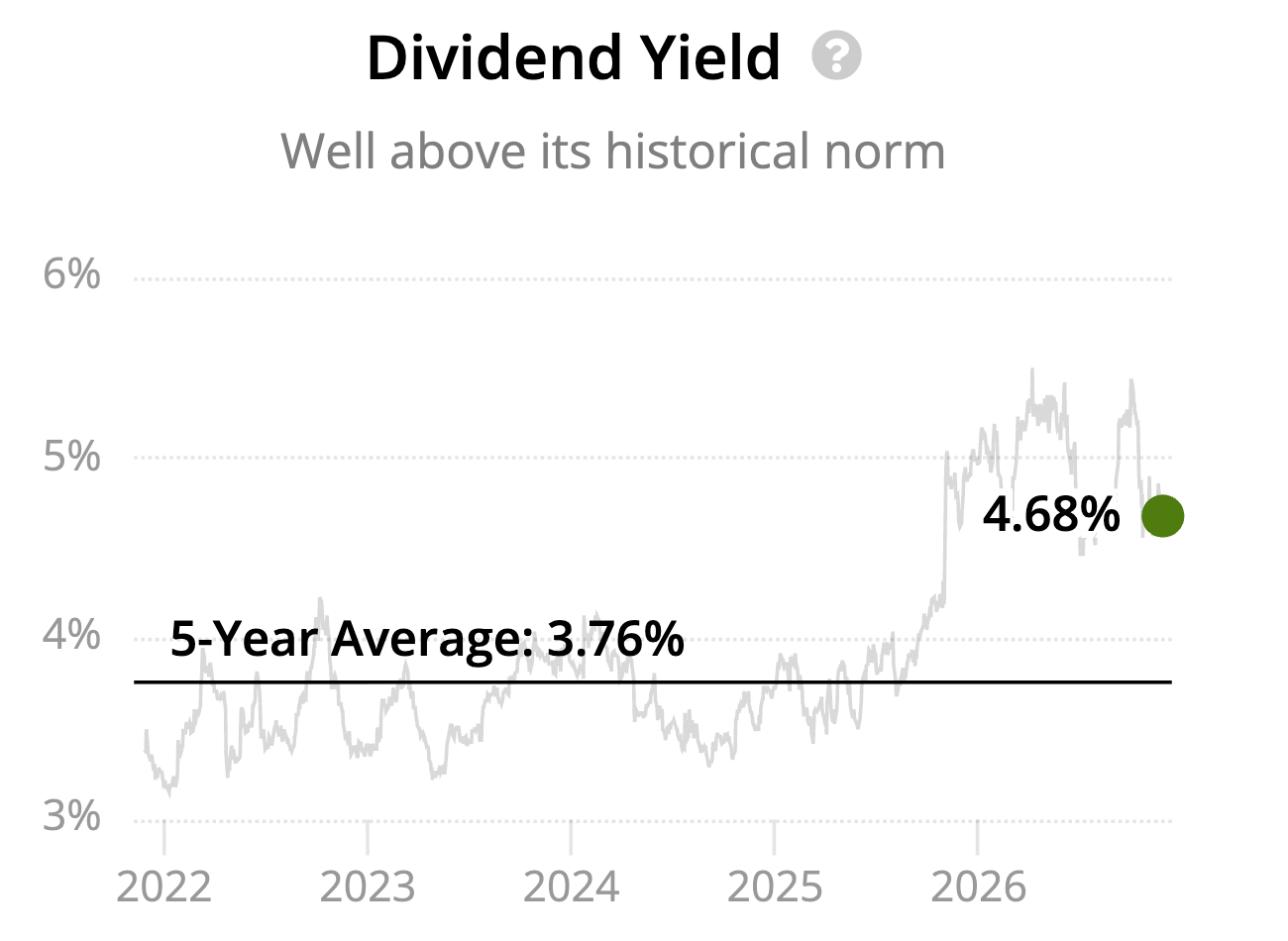
The 4.68% yield is well above its five-year average of 3.76%, a sign the shares trade below their usual valuation.
Canadian Utilities (CDUAF): Alberta Electric and Gas Utility, 53 Years of Dividend Growth
Sector: Utilities – Multi-Utilities
Dividend Growth Streak: 53 years
Dividend Safety Score: Safe (70)
Dividend Yield: 3.4%
Credit Rating: Not rated by S&P
Dividend Growth Streak: 53 years
Dividend Safety Score: Safe (70)
Dividend Yield: 3.4%
Credit Rating: Not rated by S&P
Canadian Utilities, majority owned by ATCO, distributes electricity and natural gas in Alberta. Its 53-year streak ties Fortis for the longest among the Canadian companies on this list.
Canadian companies' dividends paid to U.S. investors are subject to a 15% withholding tax. Holding them in a retirement account generally avoids it, and in a taxable account you can usually claim a foreign tax credit.
Canadian companies' dividends paid to U.S. investors are subject to a 15% withholding tax. Holding them in a retirement account generally avoids it, and in a taxable account you can usually claim a foreign tax credit.
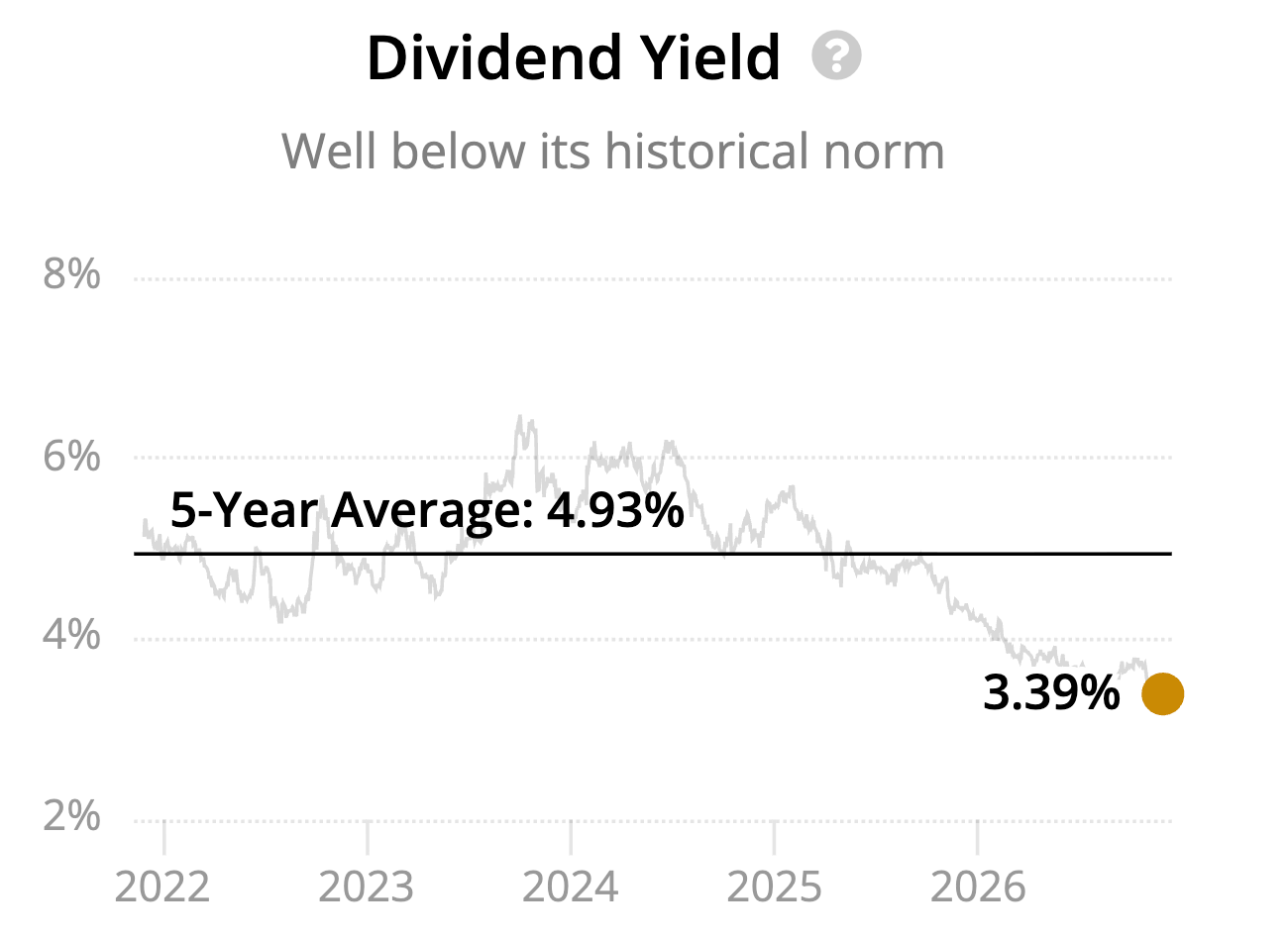
Its payout ratio has eased from 88% in 2020 to about 71%, but its leverage is edging high for a utility.
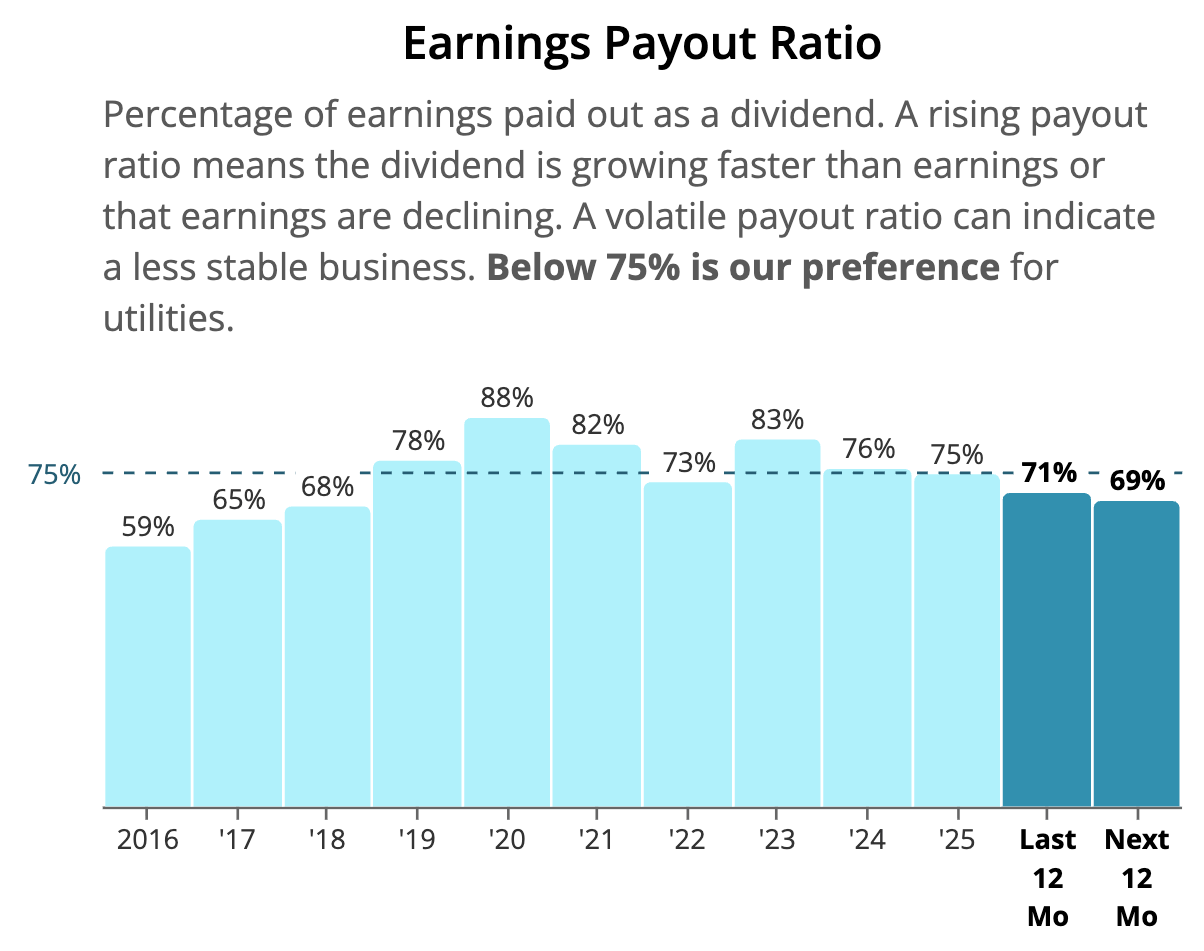
Its 3.39% yield is well below its five-year average of 4.93%, so the shares look expensive by this measure.
Archer-Daniels-Midland (ADM): Crop Processor and Food Ingredients Maker, 52 Years of Dividend Growth
Sector: Consumer Staples – Agricultural Products
Dividend Growth Streak: 52 years
Dividend Safety Score: Safe (70)
Dividend Yield: 3.1%
Credit Rating: A
Dividend Growth Streak: 52 years
Dividend Safety Score: Safe (70)
Dividend Yield: 3.1%
Credit Rating: A
Archer-Daniels-Midland buys, stores, and processes corn, oilseeds, and wheat into food ingredients, animal feed, and biofuels. Its profits swing with crop supplies and trade policy.
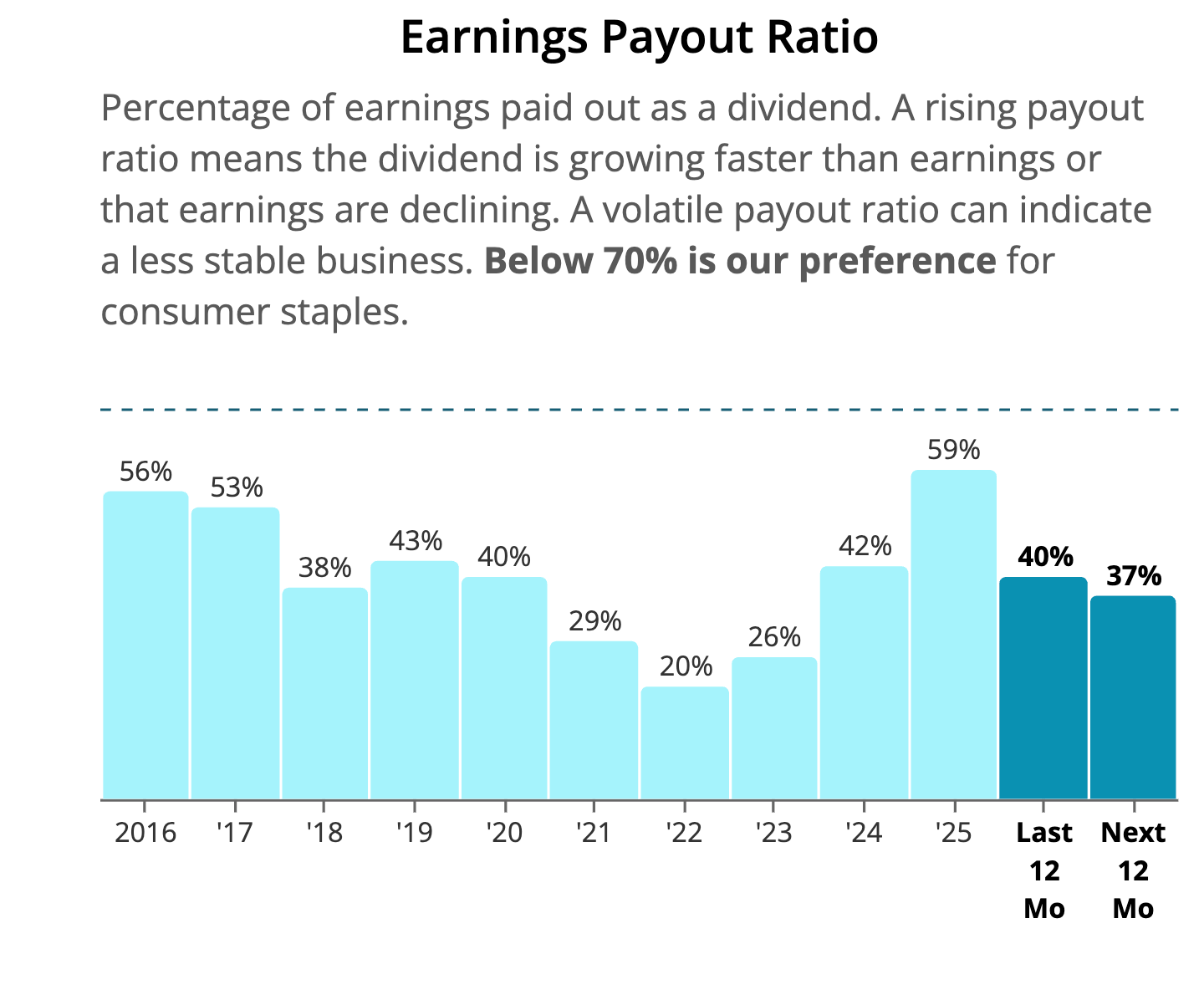
Its payout ratio has ranged from 20% to 59% over the past decade and has eased to 40% over the past year, with 37% expected next year.
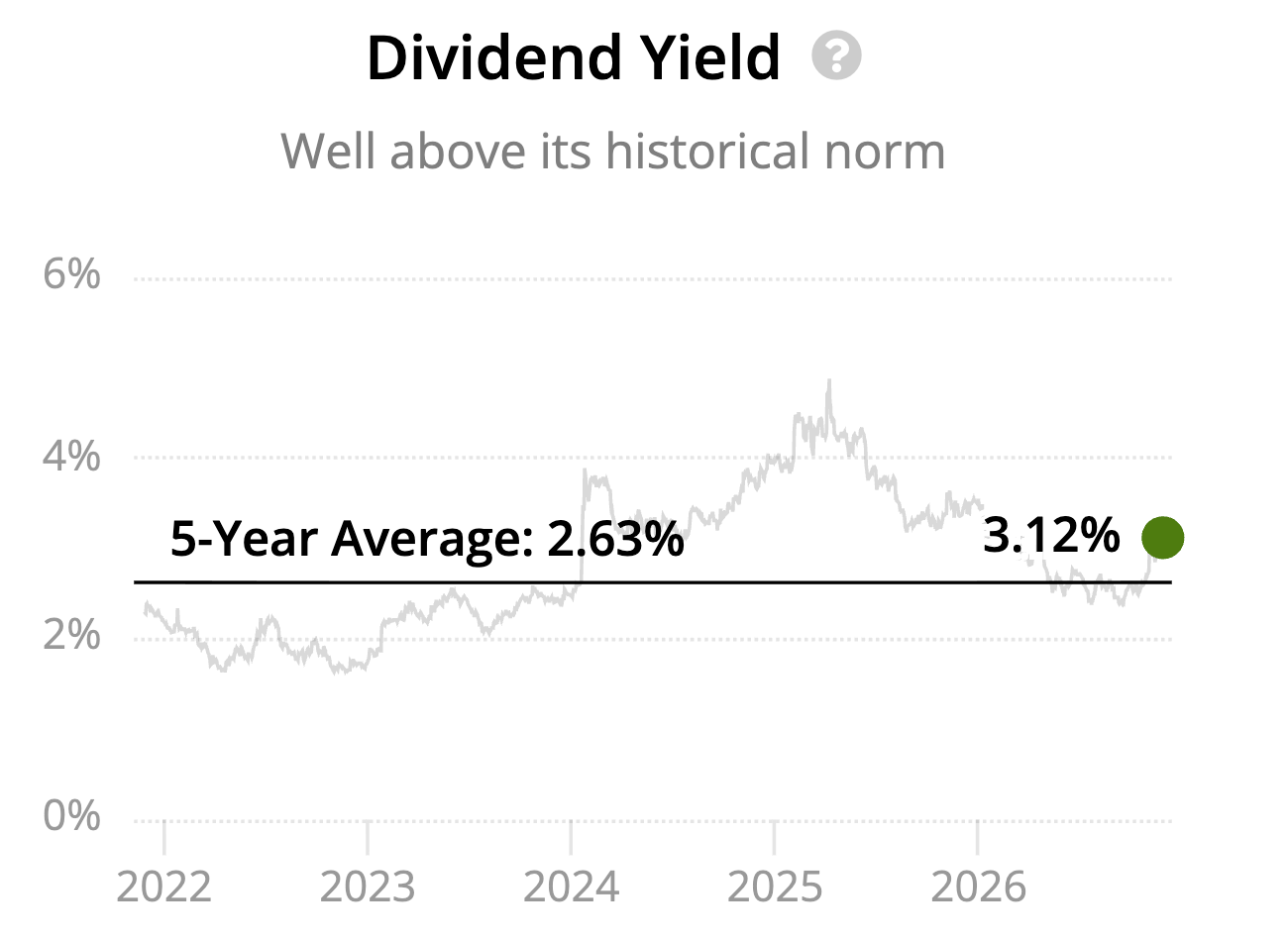
ADM yields 3.12%, above its five-year average of 2.63%. Its earnings swing with crop markets, so the yield gives only a rough read on value.
Fortis (FTS): North American Electric and Gas Utility, 53 Years of Dividend Growth
Sector: Utilities – Electric Utilities
Dividend Growth Streak: 53 years
Dividend Safety Score: Safe (62)
Dividend Yield: 3.2%
Credit Rating: A-
Dividend Growth Streak: 53 years
Dividend Safety Score: Safe (62)
Dividend Yield: 3.2%
Credit Rating: A-
Fortis owns regulated electric and gas utilities in Canada, the U.S., and the Caribbean, including ITC's transmission lines in the Midwest. It raised its dividend about 4% in November 2026, its 53rd consecutive annual increase.
Canadian companies' dividends paid to U.S. investors are subject to a 15% withholding tax. Holding them in a retirement account generally avoids it, and in a taxable account you can usually claim a foreign tax credit.
Canadian companies' dividends paid to U.S. investors are subject to a 15% withholding tax. Holding them in a retirement account generally avoids it, and in a taxable account you can usually claim a foreign tax credit.
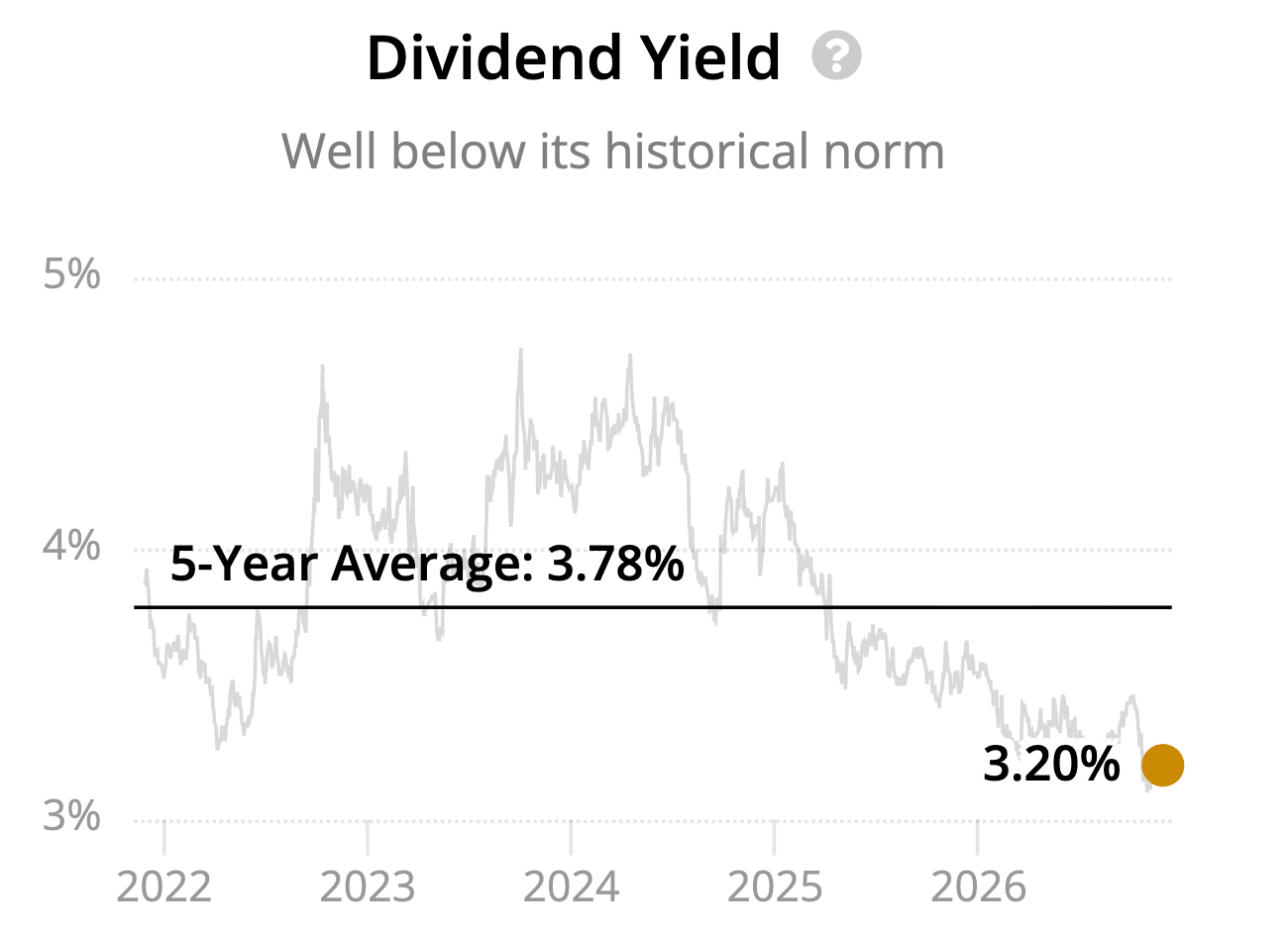
Its payout ratio has hovered around 70% to 80%, and its leverage is edging high.
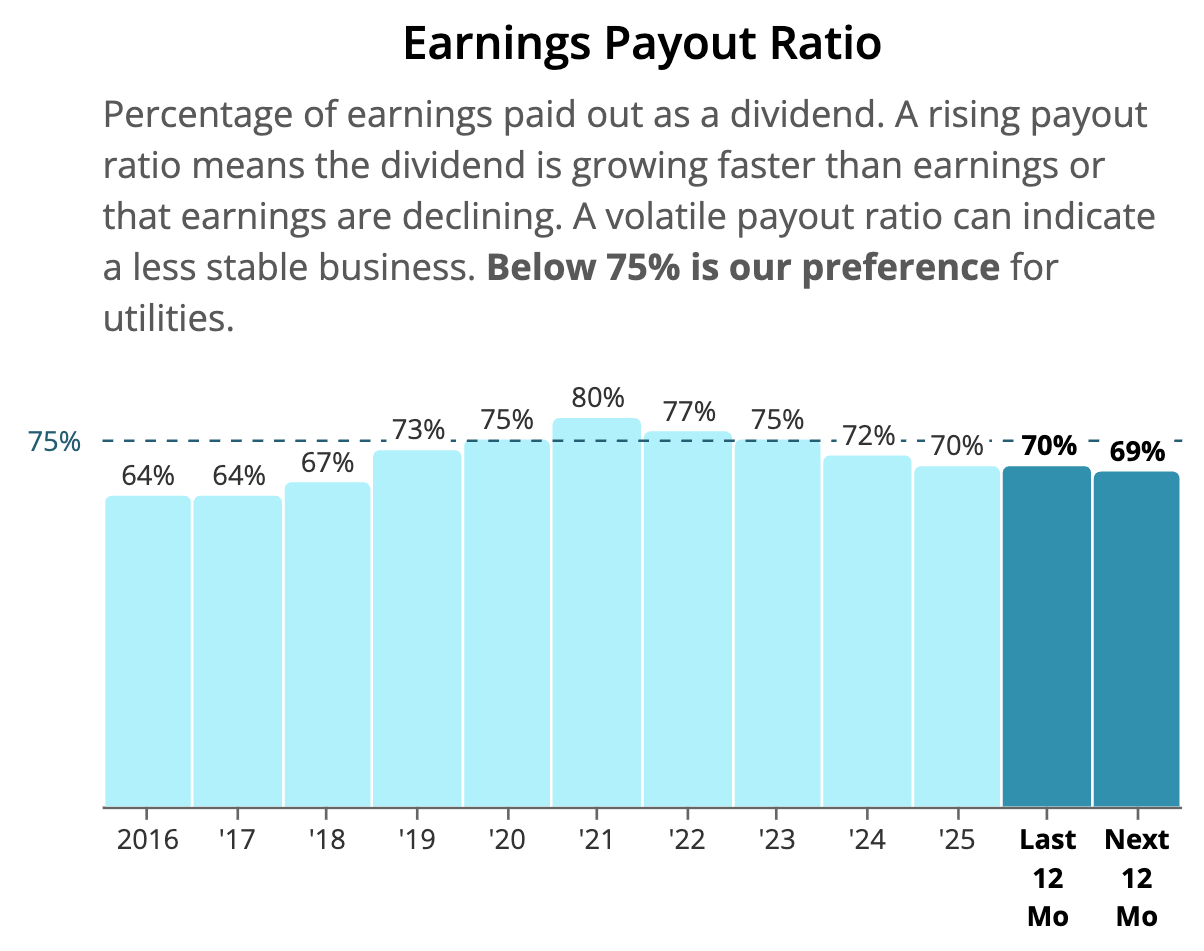
The 3.20% yield is well below its five-year average of 3.78%, which suggests the shares are pricier than usual.
Northwest Natural (NWN): Pacific Northwest Gas Utility, 71 Years of Dividend Growth
Sector: Utilities – Gas Utilities
Dividend Growth Streak: 71 years
Dividend Safety Score: Safe (61)
Dividend Yield: 3.9%
Credit Rating: A-
Dividend Growth Streak: 71 years
Dividend Safety Score: Safe (61)
Dividend Yield: 3.9%
Credit Rating: A-
Northwest Natural distributes natural gas in Oregon and southwest Washington and has expanded into gas in Texas and water utilities. It has raised its dividend for 71 straight years, but only by about 0.5% a year over the past decade.
The payout ratio was above 75% in most years from 2016 to 2024 before easing to about 66%, and its leverage is edging high for a utility.
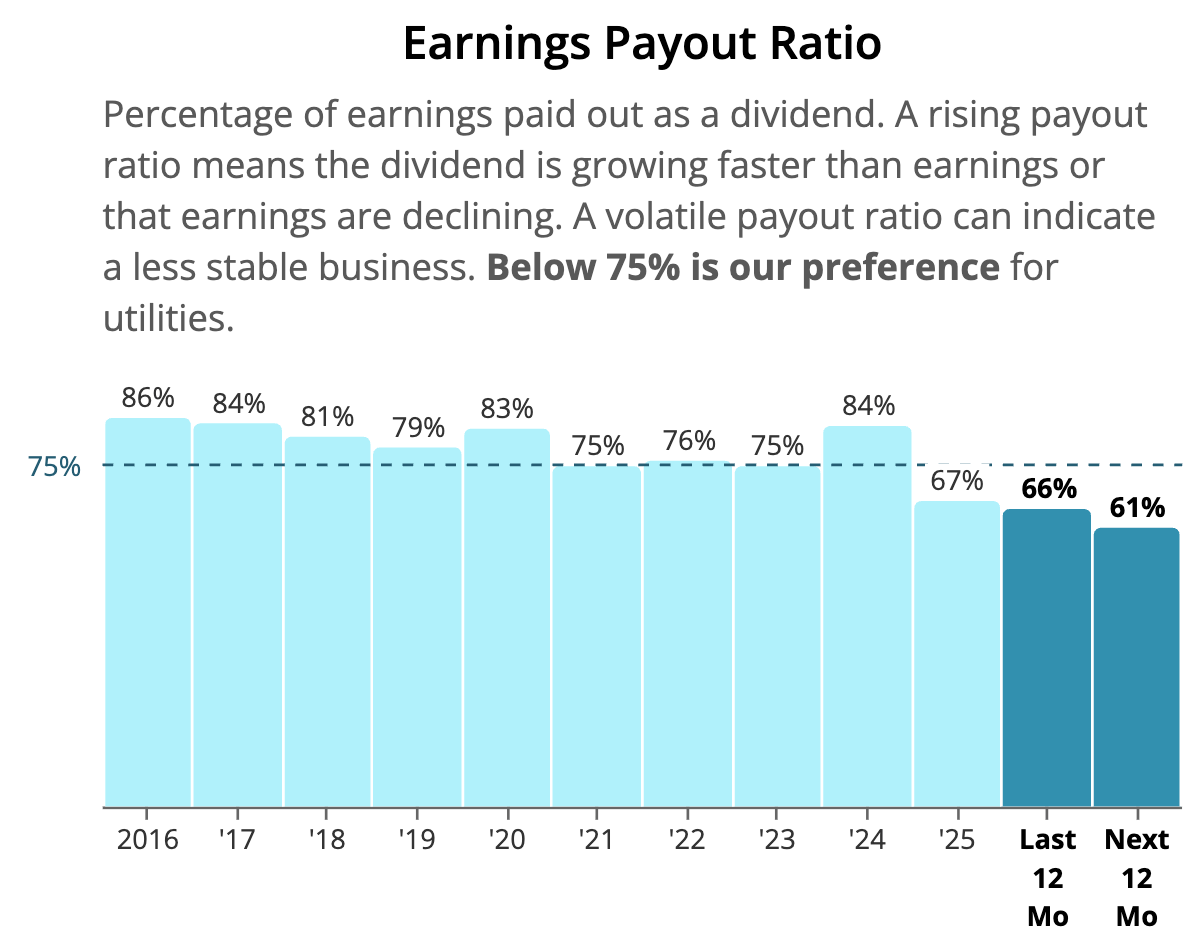
Northwest Natural yields 3.86%, below its five-year average of 4.30%, so the stock looks a little expensive.
Stanley Black & Decker (SWK): Tool Maker, 58 Years of Dividend Growth
Sector: Industrials – Industrial Machinery and Components
Dividend Growth Streak: 58 years
Dividend Safety Score: Borderline Safe (60)
Dividend Yield: 3.1%
Credit Rating: BBB+
Dividend Growth Streak: 58 years
Dividend Safety Score: Borderline Safe (60)
Dividend Yield: 3.1%
Credit Rating: BBB+
Stanley Black & Decker sells DEWALT, CRAFTSMAN, and BLACK+DECKER tools. We lowered its Dividend Safety Score from Safe to Borderline Safe in March 2026 as volumes kept falling.
It is selling its aerospace fasteners business to pay down debt.
It is selling its aerospace fasteners business to pay down debt.
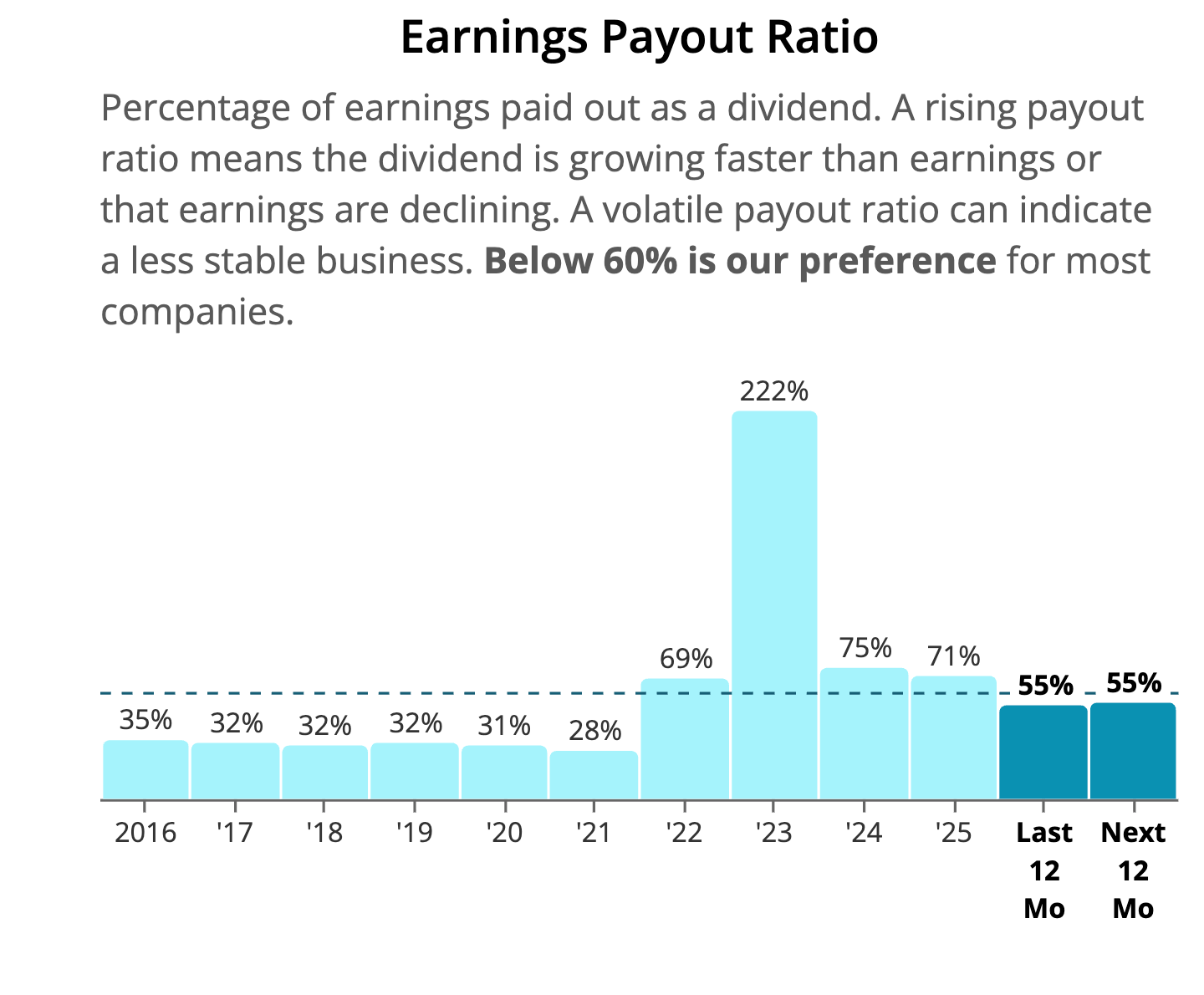
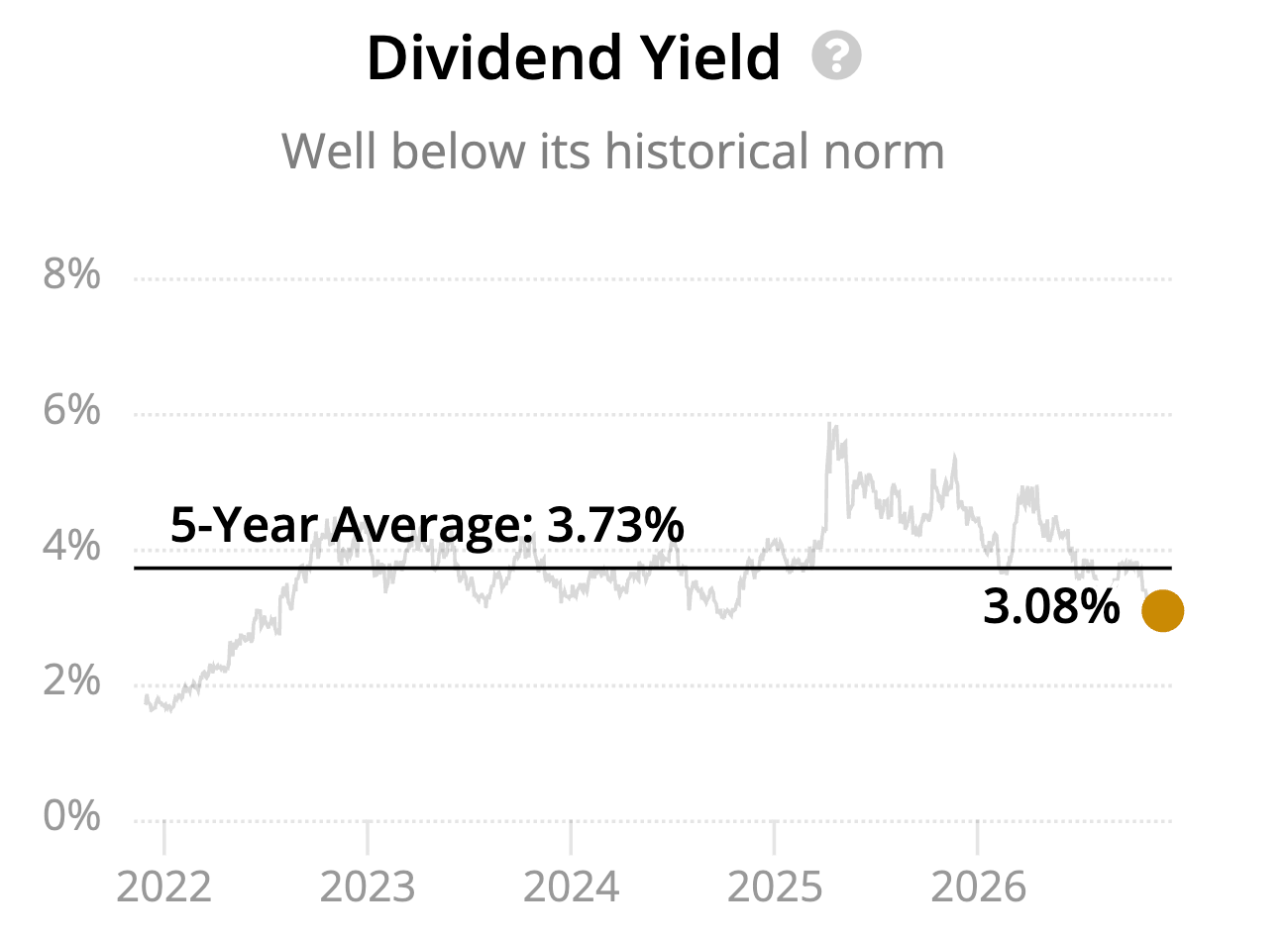
The payout ratio spiked to 222% in 2023 and stayed above 60% from 2022 through 2025, but it has eased to 55% over the past year.
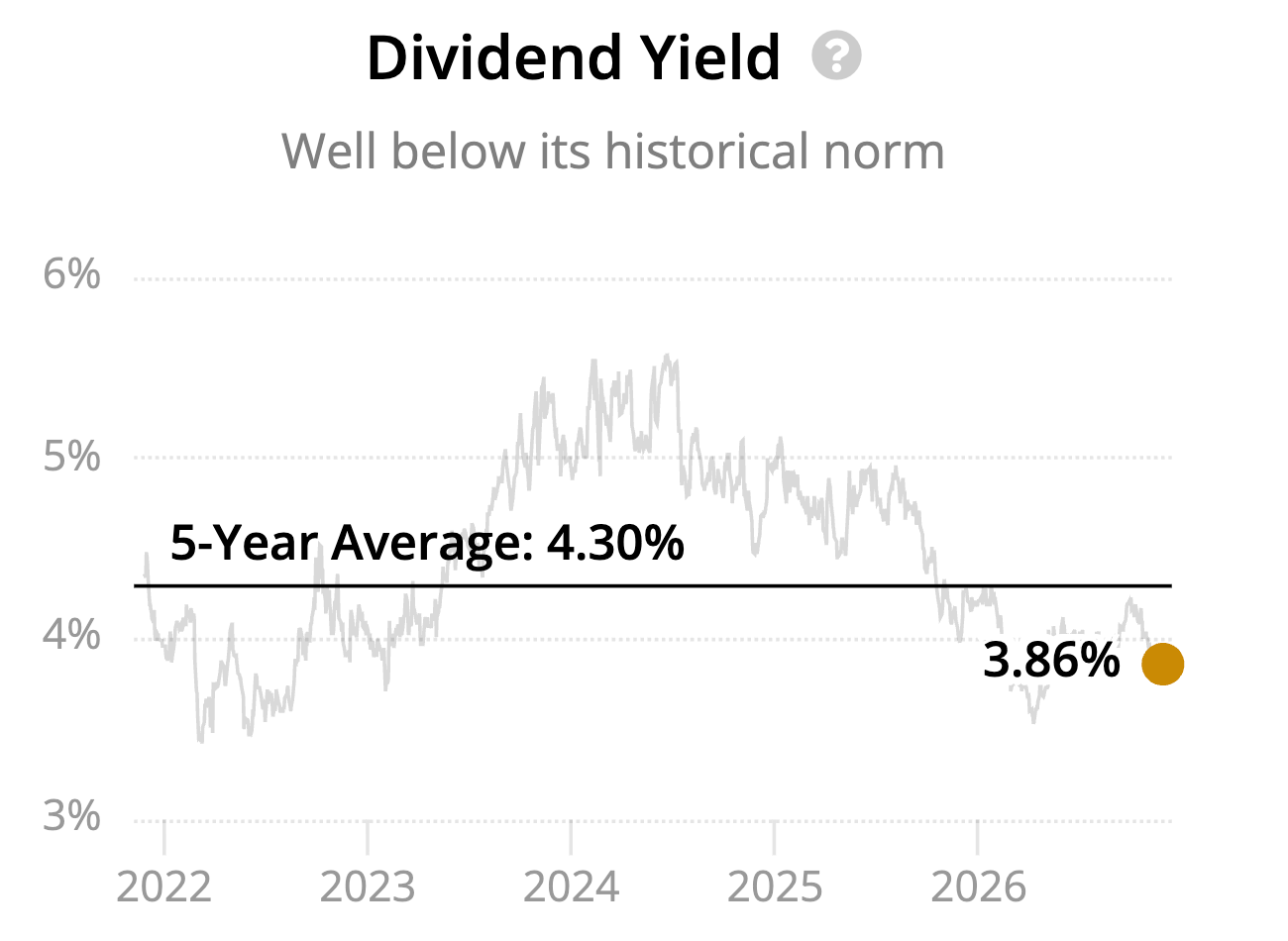
The 3.08% yield is well below its five-year average of 3.73%. Its payout ratio swung widely as earnings fell, so that comparison is only a rough guide.
Sysco (SYY): Foodservice Distributor, 57 Years of Dividend Growth
Sector: Consumer Staples – Food Distributors
Dividend Growth Streak: 57 years
Dividend Safety Score: Borderline Safe (60)
Dividend Yield: 2.7%
Credit Rating: BBB
Dividend Growth Streak: 57 years
Dividend Safety Score: Borderline Safe (60)
Dividend Yield: 2.7%
Credit Rating: BBB
Sysco is one of the world's largest foodservice distributors, delivering food and supplies to restaurants, schools, and hospitals. We lowered its Dividend Safety Score from Safe to Borderline Safe in March 2026 after it agreed to buy Restaurant Depot for $29 billion.
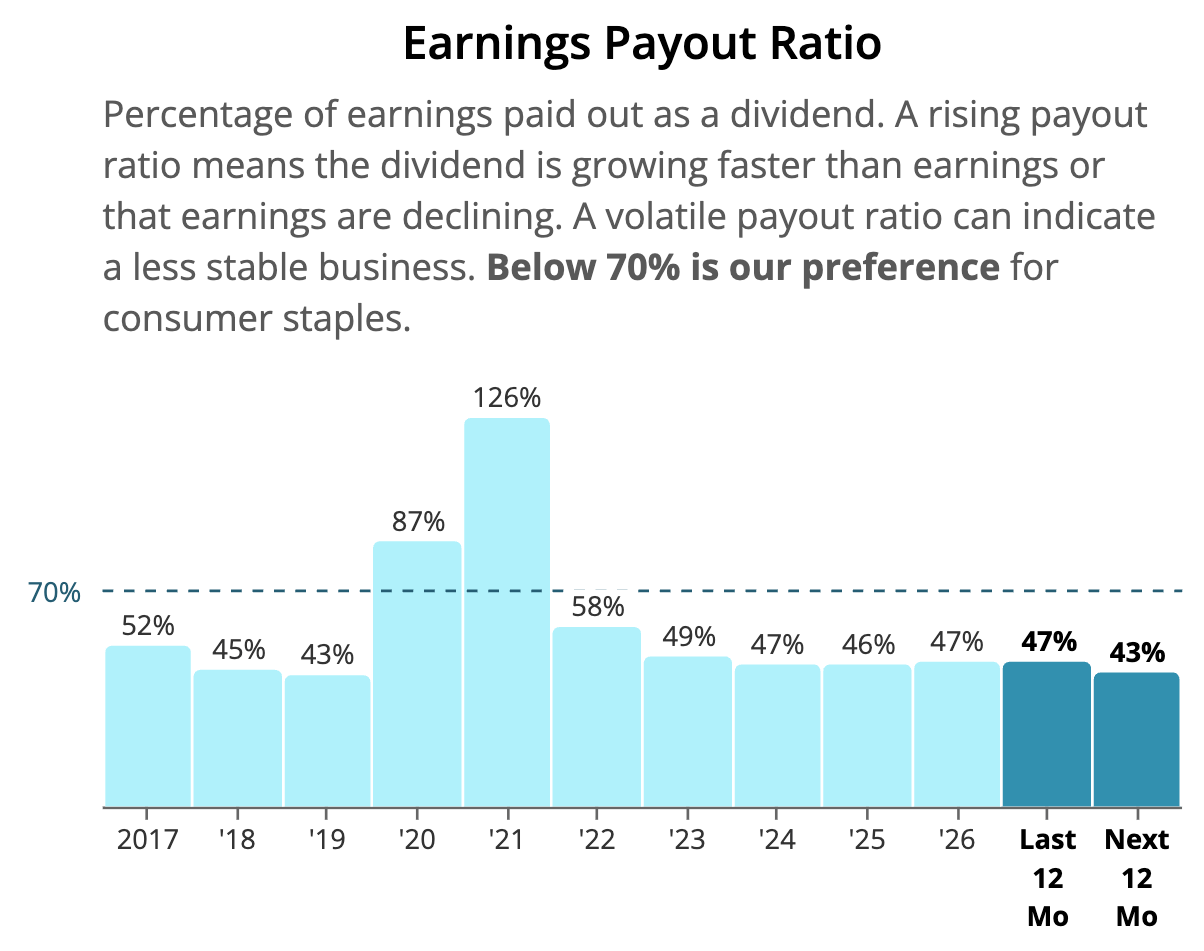
Its payout ratio sits around 47%, but the deal adds debt and is expected to slow dividend growth.
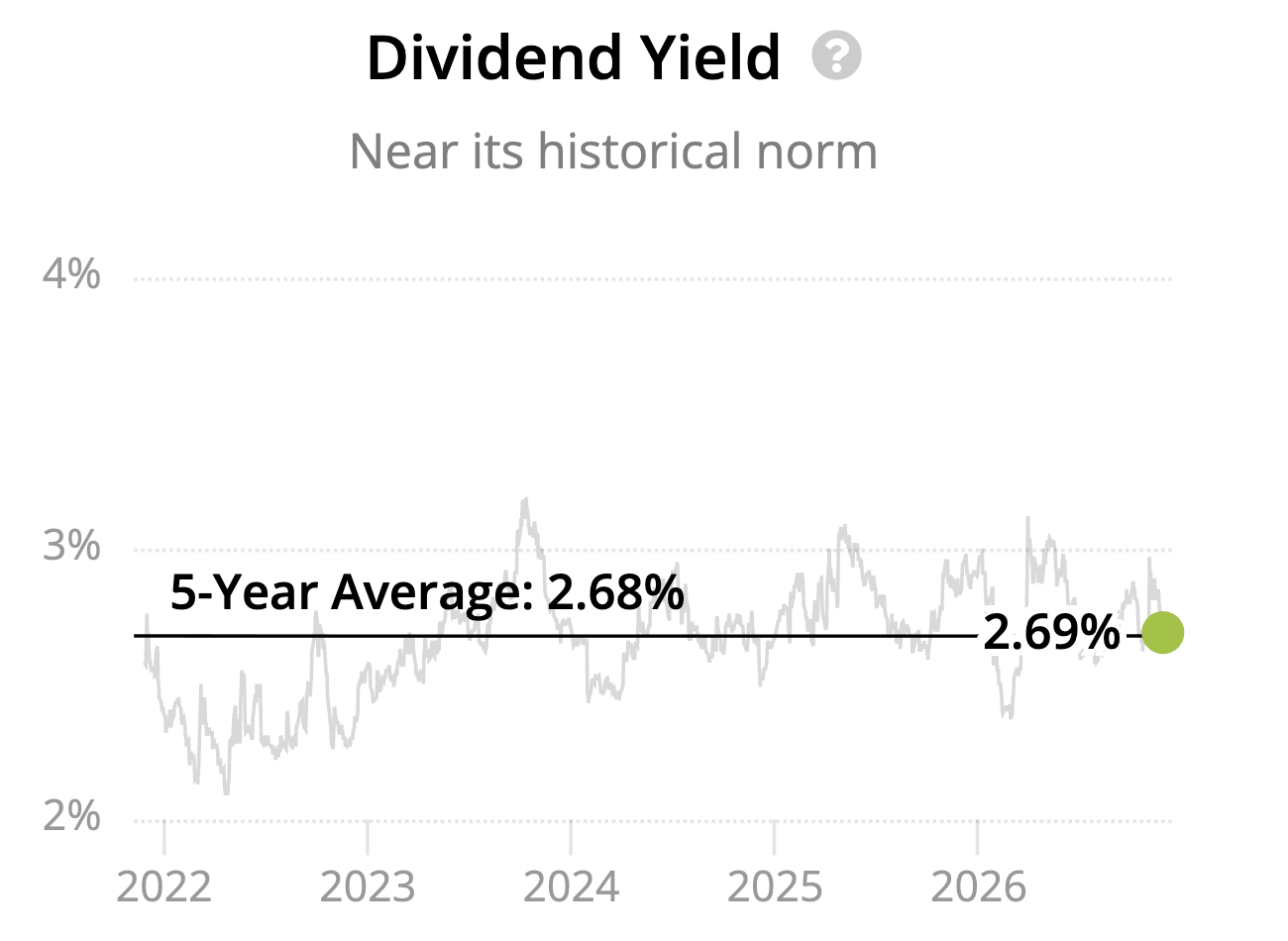
Sysco's 2.69% yield is essentially equal to its five-year average of 2.68%, which suggests a fair valuation.
Altria (MO): Cigarette and Smokeless Tobacco Maker, 56 Years of Dividend Growth
Sector: Consumer Staples – Tobacco
Dividend Growth Streak: 56 years
Dividend Safety Score: Borderline Safe (60)
Dividend Yield: 5.8%
Credit Rating: BBB+
Dividend Growth Streak: 56 years
Dividend Safety Score: Borderline Safe (60)
Dividend Yield: 5.8%
Credit Rating: BBB+
Altria sells Marlboro cigarettes, Copenhagen chewing tobacco, and on! nicotine pouches in the U.S. We raised its Dividend Safety Score from 55 to 60, still Borderline Safe, in July 2026 as three regulatory threats faded, but cigarette volumes continue to decline.
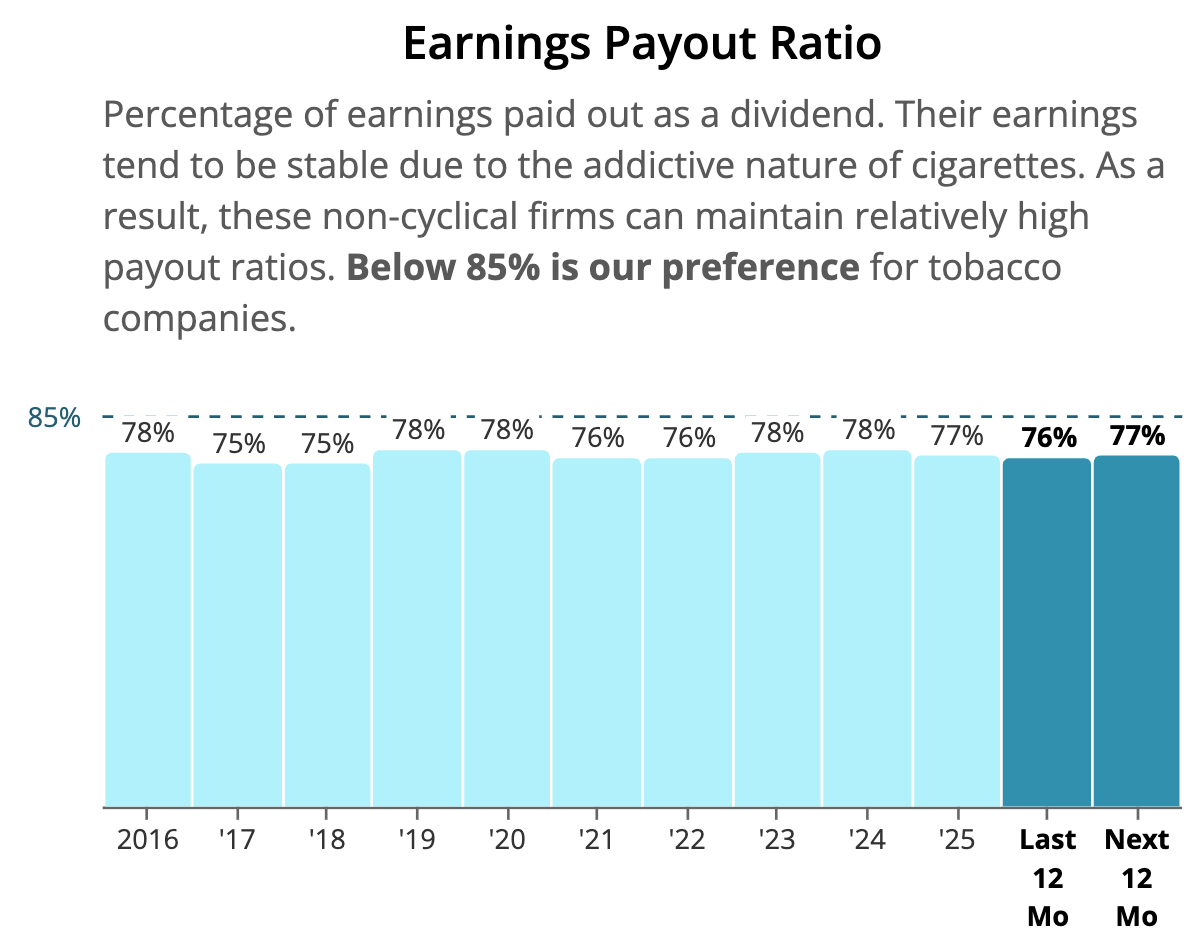
Altria pays out about 76% of its earnings, and its leverage is very low for the industry.
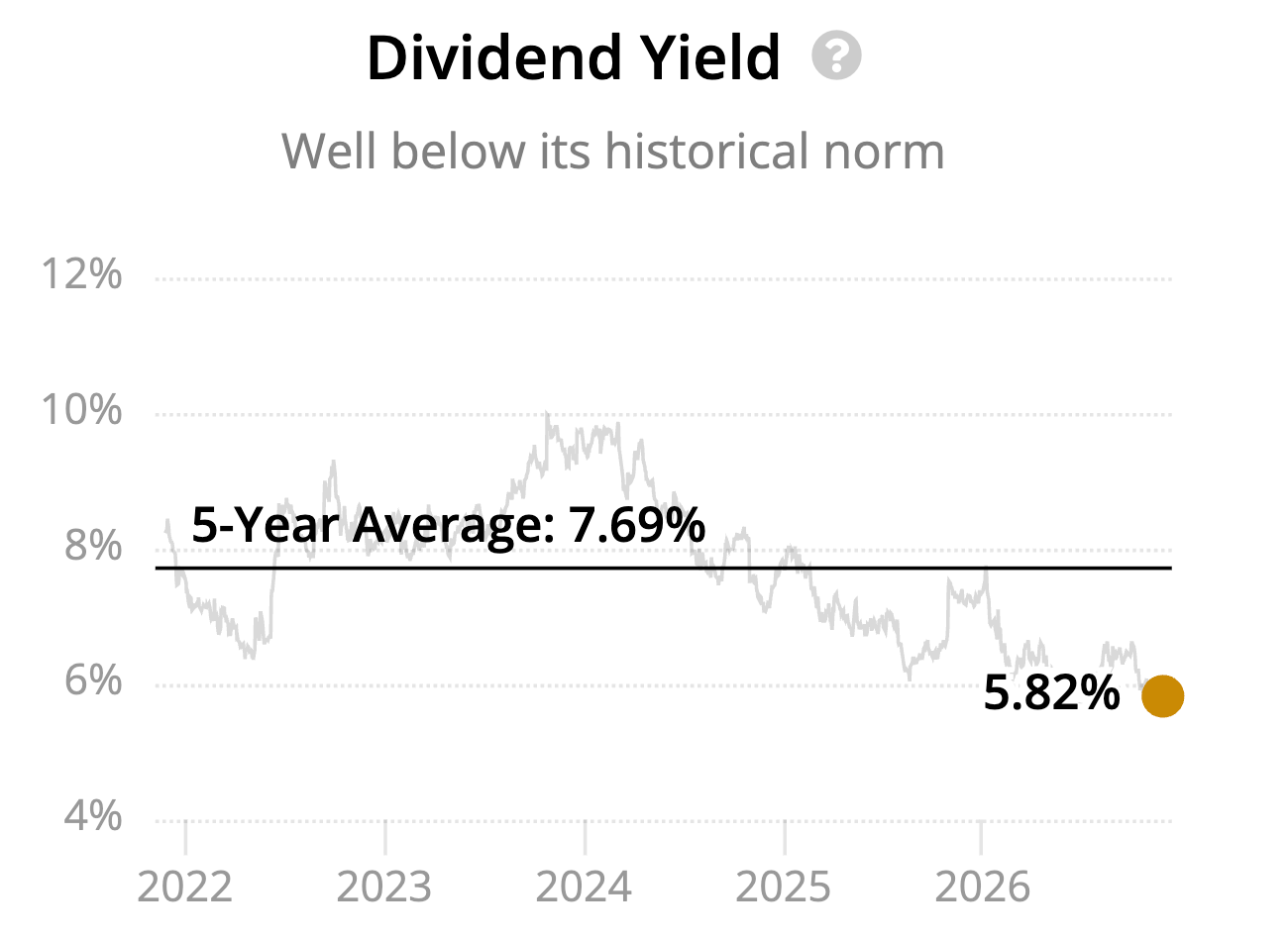
The 5.82% yield is well below its five-year average of 7.69%, because the shares have climbed sharply since early 2024.
Genuine Parts (GPC): Auto and Industrial Parts Distributor, 69 Years of Dividend Growth
Sector: Consumer Discretionary – Distributors
Dividend Growth Streak: 69 years
Dividend Safety Score: Borderline Safe (50)
Dividend Yield: 3.4%
Credit Rating: BBB-
Dividend Growth Streak: 69 years
Dividend Safety Score: Borderline Safe (50)
Dividend Yield: 3.4%
Credit Rating: BBB-
Genuine Parts distributes NAPA auto parts and Motion industrial parts. We lowered its Dividend Safety Score three times in 2026, most recently to 50 in July after O'Reilly bid about $10 billion for its auto parts business.
A sale would likely leave a smaller, industrial-only company paying a lower dividend.
A sale would likely leave a smaller, industrial-only company paying a lower dividend.
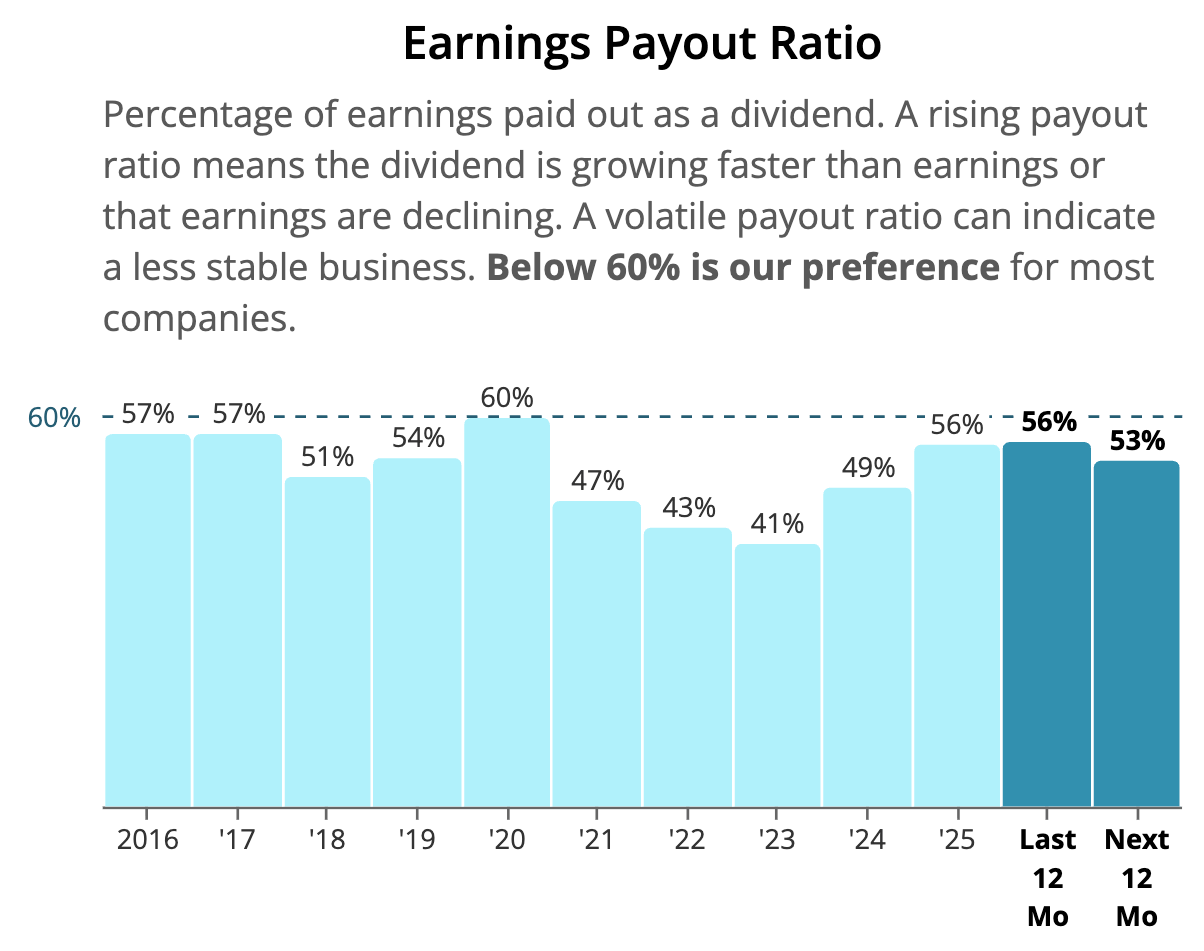
Its payout ratio sits around 56%.
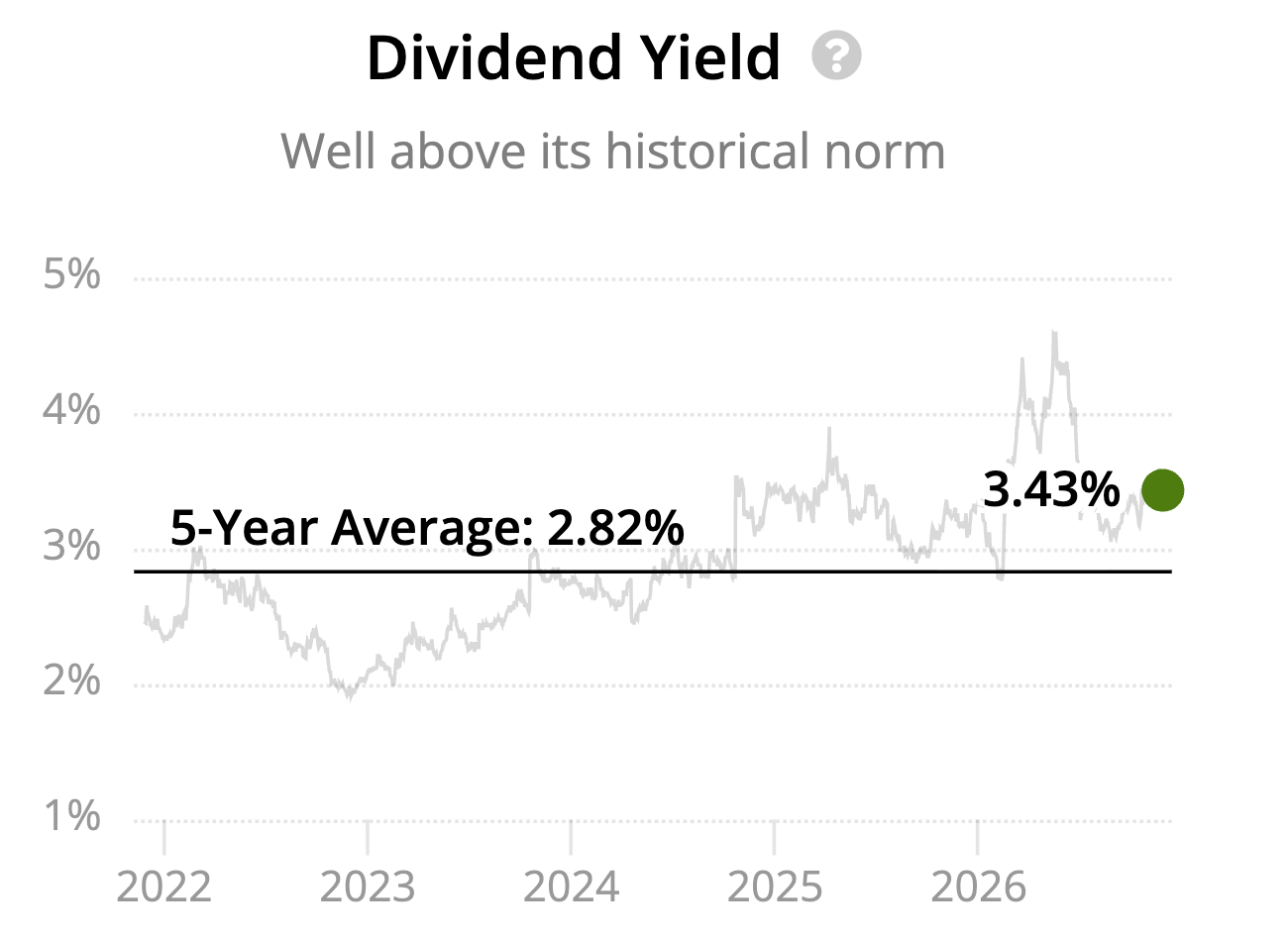
Genuine Parts yields 3.43%, well above its five-year average of 2.82%, though a sale of its auto parts business could change what the dividend looks like.
Universal (UVV): Leaf Tobacco Supplier, 56 Years of Dividend Growth
Sector: Consumer Staples – Tobacco
Dividend Growth Streak: 56 years
Dividend Safety Score: Unsafe (40)
Dividend Yield: 10.2%
Credit Rating: BBB-
Dividend Growth Streak: 56 years
Dividend Safety Score: Unsafe (40)
Dividend Yield: 10.2%
Credit Rating: BBB-
Universal buys, processes, and sells leaf tobacco to cigarette makers around the world. We lowered its Dividend Safety Score from Borderline Safe to Unsafe in August 2026 as oversupplied leaf markets and the long decline in smoking squeezed profits.
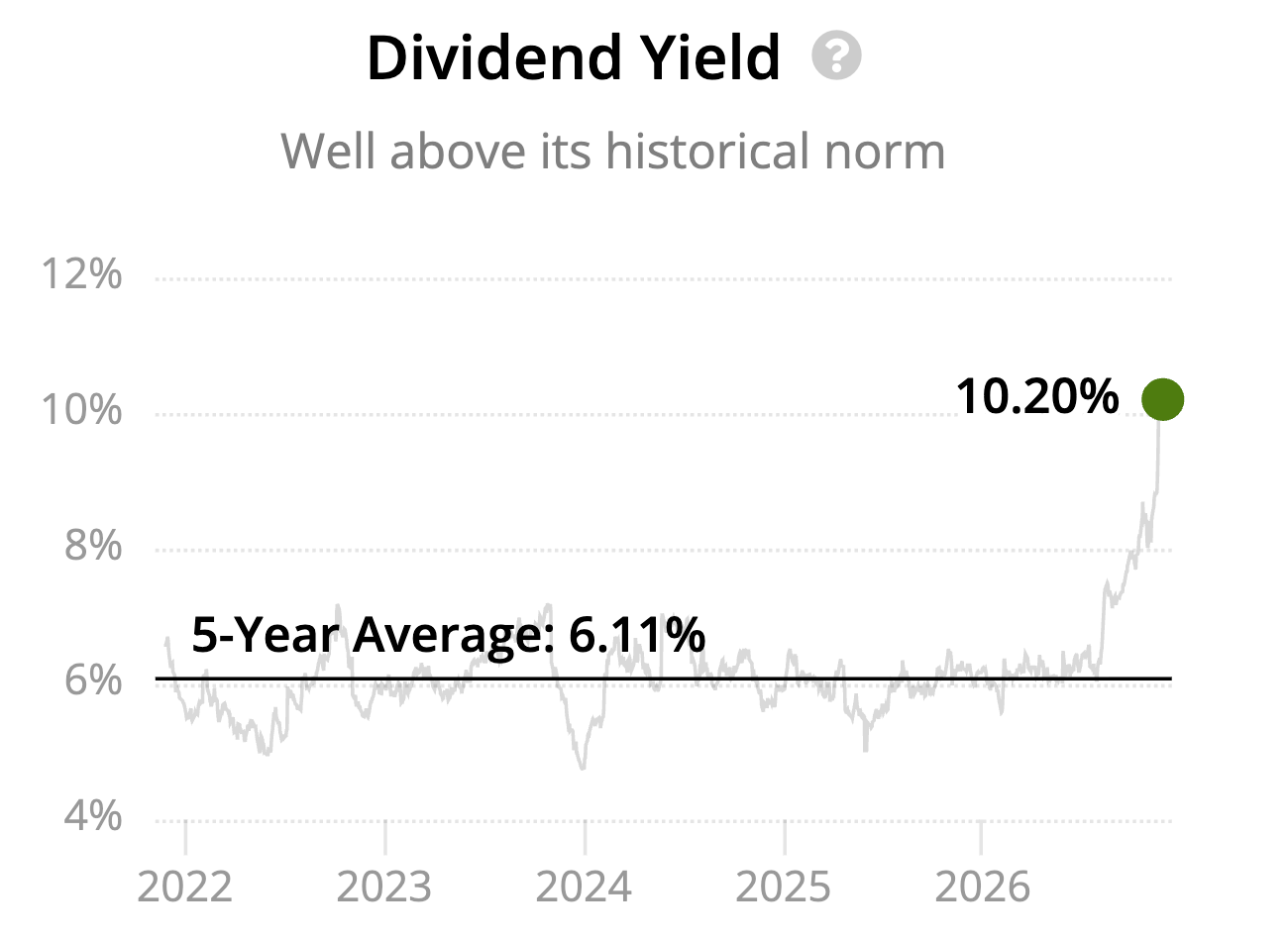
It paid out 303% of its earnings over the past year. Revenue fell 18% in its latest quarter, and the shares have dropped enough to push the yield above 10%.
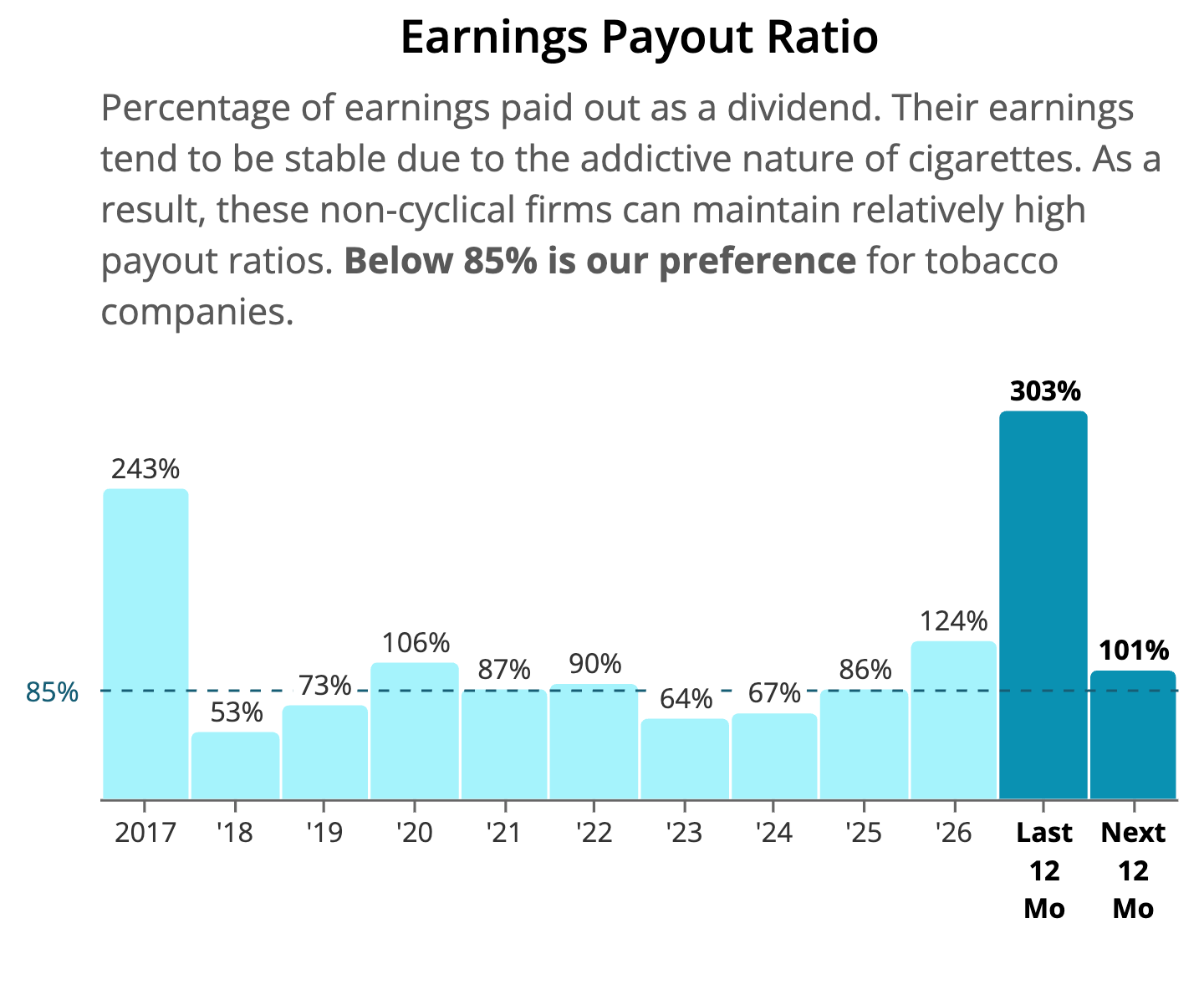
At 10.20%, Universal has the highest yield of any Dividend King, far above its five-year average of 6.11%. That yield reflects risk, not value.
Frequently Asked Questions
What is a Dividend King?
A Dividend King is a company that has raised its dividend for at least 50 consecutive years. Unlike Dividend Aristocrats, Kings do not need to belong to the S&P 500, so the list includes small companies such as Tootsie Roll and Middlesex Water.
How many Dividend Kings are there?
There are 58 Dividend Kings in 2026 by our count, after Kenvue left the list when Kimberly-Clark acquired it in November 2026. Pentair, Carlisle, and McDonald's reached 50 consecutive years of dividend increases in the past year.
Who are the Dividend Kings with the longest streaks?
American States Water has raised its dividend for 72 consecutive years, the longest streak of any Dividend King. Dover and Northwest Natural follow at 71 years, then Emerson, Parker-Hannifin, and Procter & Gamble at 70.
Which Dividend King has the highest yield?
Universal yields 10.2%, the most of any Dividend King, but it earns an Unsafe Dividend Safety Score. Among Kings rated Safe or better, Hormel yields the most at 5.1%, followed by Kimberly-Clark at 4.7% and PepsiCo at 4.1%.
Is Clorox a Dividend King?
Not yet. Clorox raised its dividend for the 49th consecutive year in July 2026, so it would become a Dividend King with another increase in 2027. It earns a Borderline Safe Dividend Safety Score.
Is PepsiCo a Dividend King?
Yes. PepsiCo has raised its dividend for 53 consecutive years and yields 4.1%. We lowered its Dividend Safety Score from Very Safe to Safe in April 2026 as shoppers traded down to cheaper snacks and drinks.
Is General Mills a Dividend King?
No. General Mills has paid dividends without a reduction for 128 years, but it has not raised its dividend every year, so its current growth streak is six years.
Is Kimberly-Clark a Dividend King?
Yes. Kimberly-Clark has raised its dividend for 53 consecutive years and yields 4.7%. It earns a Safe Dividend Safety Score, which we lowered from Very Safe after it agreed to buy Kenvue.
Is Hormel a Dividend King?
Yes. Hormel has raised its dividend for 61 consecutive years and yields 5.1%, the highest of any King with a Safe Dividend Safety Score or better.
Is Universal a Dividend King?
Yes. Universal has raised its dividend for 56 consecutive years, but it paid out 303% of its earnings over the past year and earns an Unsafe Dividend Safety Score.
Closing Thoughts on Dividend Kings
Fifty years of dividend increases says a lot about a business, but not everything. Of the 58 Dividend Kings, 53 earn Safe or Very Safe Dividend Safety Scores, and most of this year's downgrades came from acquisitions and shifting consumer habits rather than any threat to the payouts.
Many of the people interested in Dividend Kings are retirees looking to generate safe, growing income. If you want higher current income, our list of high dividend stocks ranks the safest yields above 4%.
To see how the Kings you own stack up, try our online portfolio tools. They track your dividend income, show the Dividend Safety Score of each stock you own, and alert you when a score changes.