3 Beaten-Down Dividend Stocks Yielding Near 5%: FNF, ADC, and BIPC
A stock that falls 10% or 20% in a couple of months can be an opportunity as long as the business and the dividend are still in good shape.
Fidelity National Financial (FNF), Agree Realty (ADC), and Brookfield Infrastructure Corporation (BIPC) fit that description today. They yield 5.1%, 4.8%, and 5.2%, and all three had their Safe Dividend Safety Scores reaffirmed after second-quarter results.
How We Screened for Beaten-Down Dividend Stocks
A high yield on a falling stock is often a warning, so the screen started with what protects a payout and only then looked for a selloff.
Of the 867 companies we rate, 19 earn a Safe or better Dividend Safety Score, yield at least 4.5%, have raised their dividend for at least 10 straight years, and trade at least 15% below their 52-week high.
From that list, we looked for investment-grade balance sheets, recent raises big enough to keep up with inflation, and share prices near their 52-week lows. Those names offer yields close to their highest levels in years, so each dollar invested today buys more income than it normally would.
These three stood out.
Fidelity National Financial (FNF): The Largest Title Insurer Waiting on Housing
Sector: Financials – Property and Casualty Insurance
Dividend Yield: 5.1%
Dividend Safety Score: Safe (70)
Uninterrupted Dividend Streak: 14 years
Credit Rating: BBB
Dividend Yield: 5.1%
Dividend Safety Score: Safe (70)
Uninterrupted Dividend Streak: 14 years
Credit Rating: BBB
Fidelity National Financial has two businesses, and the bigger one is title insurance. It is the largest title insurer in North America.
Whenever a house or a building gets sold, somebody has to make sure the seller really owns it and that there are no surprise liens attached. Fidelity does that homework, then insures the buyer and the lender in case it missed something.
Since most of that work happens up front, title insurance does not pay out much in claims. And unlike home or auto insurers, Fidelity does not have to worry about hurricanes, wildfires, or rising claim costs.
Fidelity also owns most of F&G, which sells annuities to people saving for retirement. That business has nothing to do with the housing market, and it contributed roughly 23% of Fidelity's adjusted net earnings in the first half of 2026.
Why FNF stock is down
It mostly comes down to housing. Existing home sales have been stuck near 30-year lows since 2023, averaging about 4.1 million a year so far in 2026 against a 30-year average of 5.1 million.
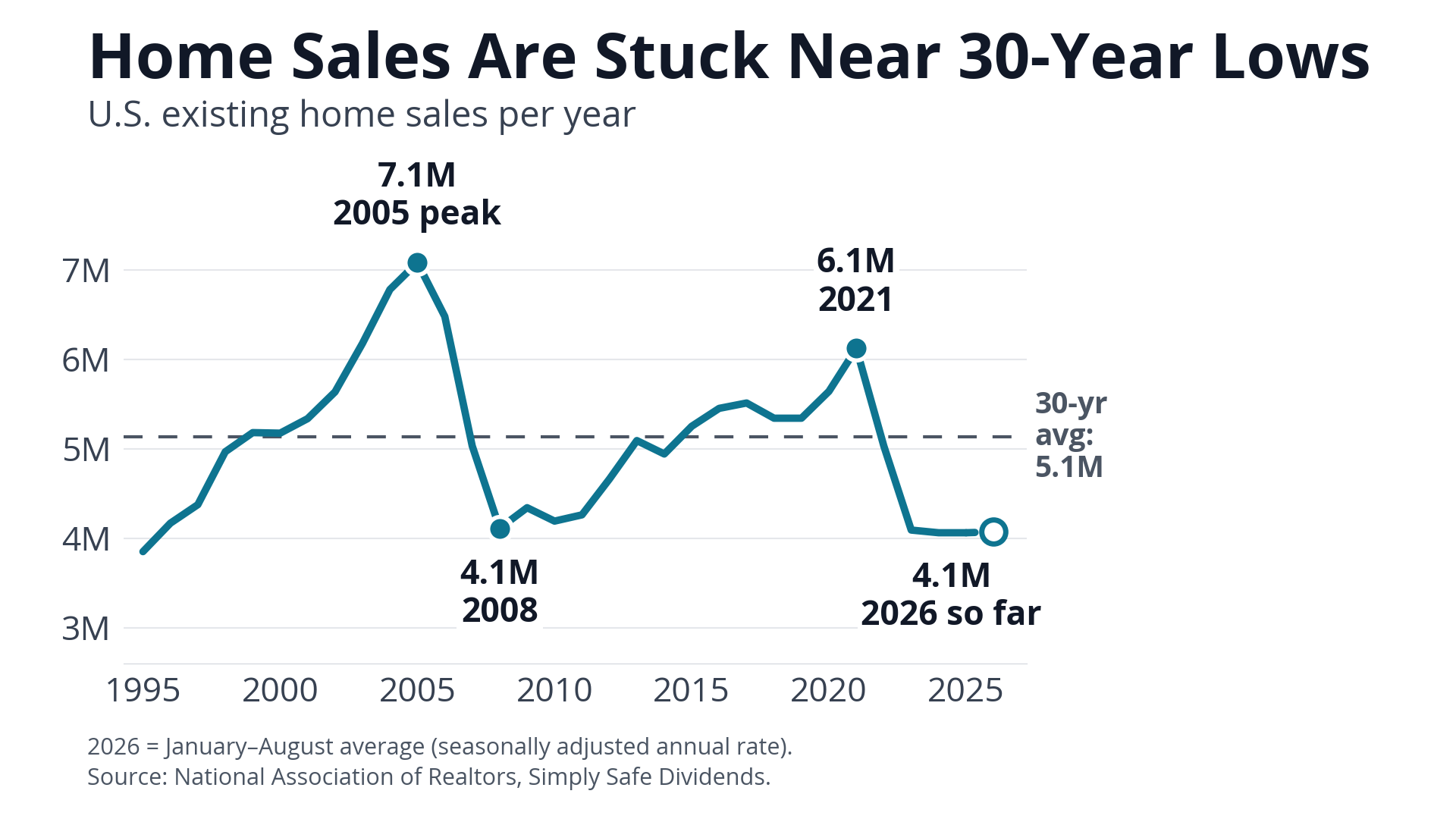
A lot of people hoped this would finally be the year housing picked back up. Then the war with Iran pushed oil prices and bond yields higher, and in September the average 30-year mortgage rate crossed 7% for the first time in more than a year.
On top of that, investors have grown nervous about F&G's exposure to private credit. For what it's worth, most of what F&G owns is high-quality, investment-grade bonds.
Why the dividend still looks safe
Despite those concerns, the business is holding up well. Fidelity's adjusted earnings over the last 12 months are about as high as they were in 2020, when the housing market was booming. If home sales ever get back to normal, there is a lot of upside to these earnings.
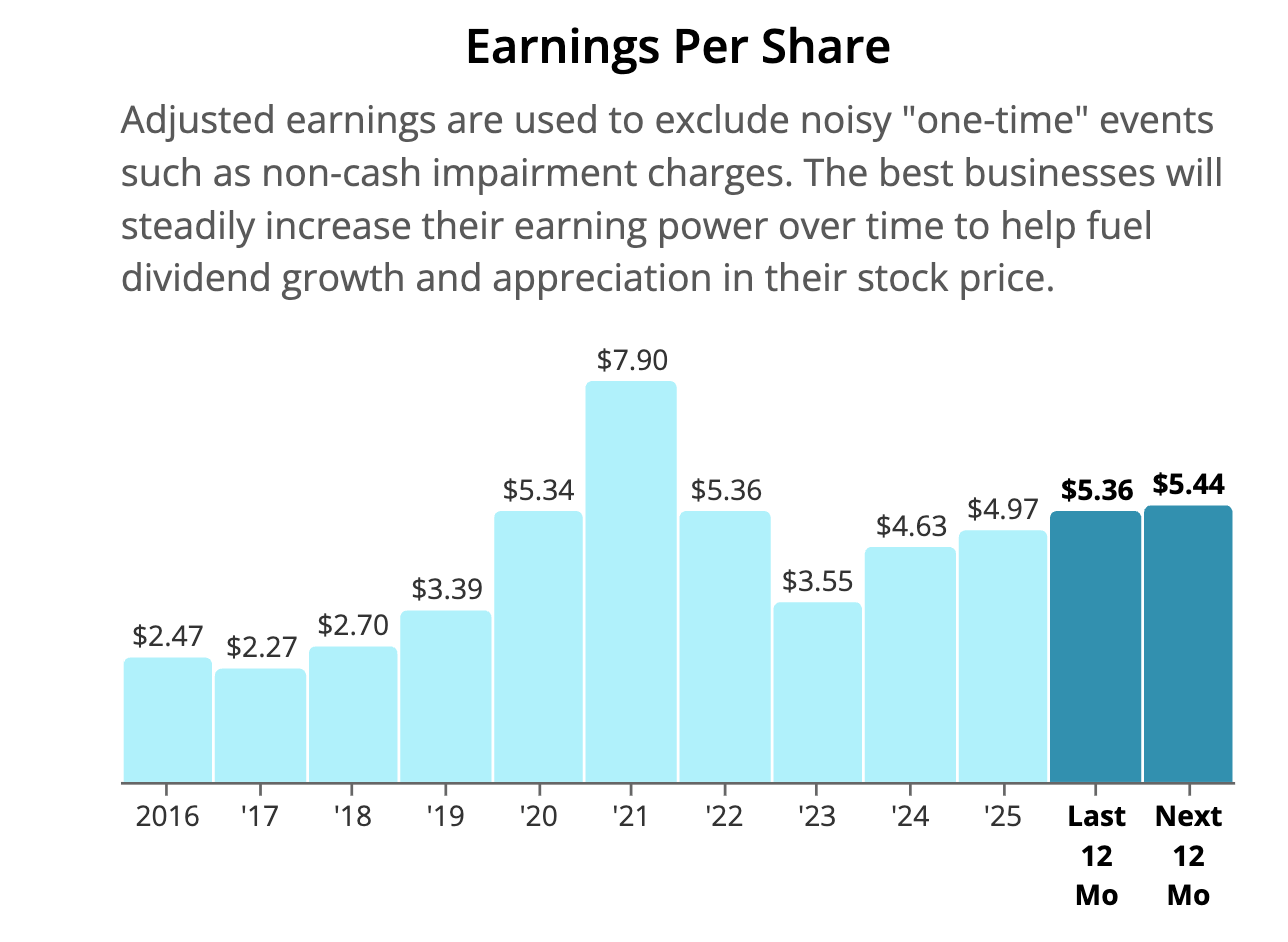
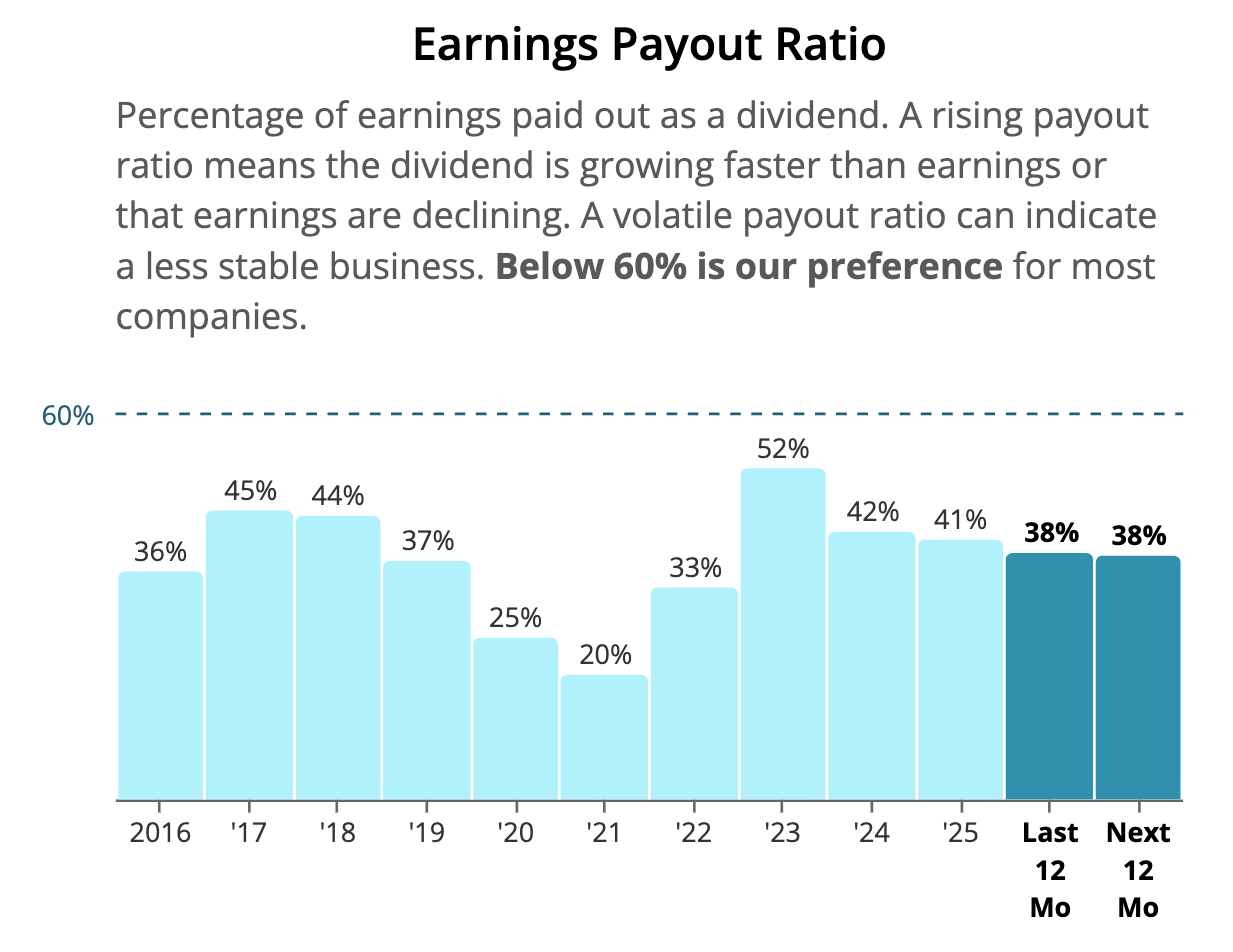
Fidelity also pays out less than 40% of its earnings as dividends, providing a margin of safety if demand weakens further. Even in 2023, one of the worst years for home sales in decades, it paid out only about half of profits.
The company has very little debt as well, and its leverage is very low for most companies. We upgraded Fidelity National from Borderline Safe to Safe in December 2024, once F&G had proven it could steady profits through a housing slump, and we reaffirmed that rating on August 20, 2026.
Fidelity did cut its dividend in 2008. At the time, it was carrying a lot more debt, and claims from the housing bubble were piling up. Today it has far less debt and is much more conservative about setting money aside for claims.
Since then, Fidelity has raised its dividend 14 years in a row, by about 8% a year over the last five years. Last November's raise was a smaller 4%, and with mortgage rates this high another modest raise this November would not be surprising. Once home sales pick back up, earnings could grow a lot faster, and the dividend should follow.
Valuation
Mature dividend stocks like this one tend to trade within a fairly consistent yield range over time, so their share prices usually follow their dividends. The blue band below shows where the stock would trade if its yield were within 10% of its five-year average of about 3.9%.
As the dividend has been raised, that band has climbed, and the stock has mostly tracked it. Today the shares sit well below the band. Just getting back to the bottom of that range would put the stock around $48, and you would collect a 5% yield while you wait.
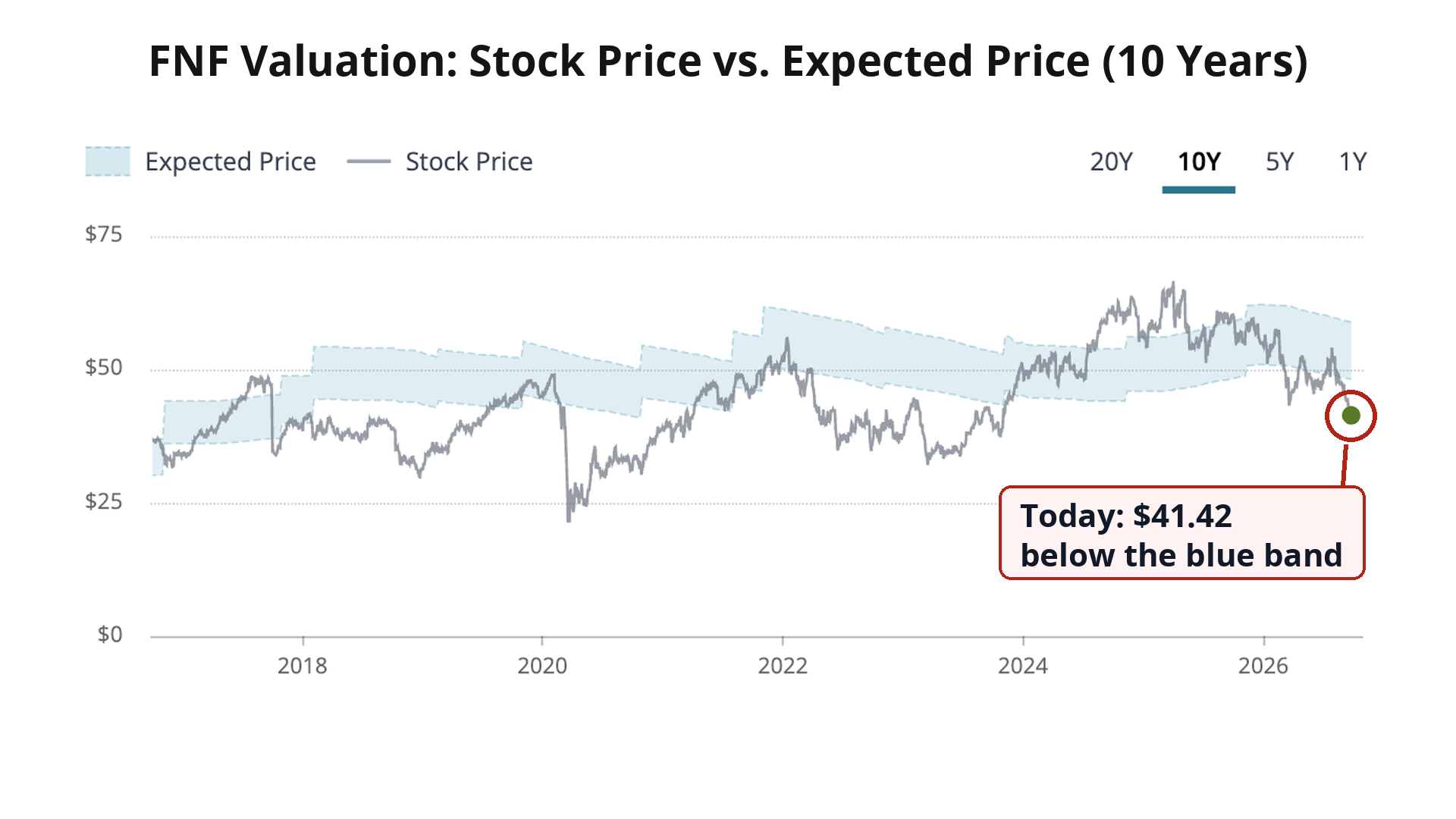
Fidelity also trades at less than 8 times earnings, compared with a five-year average closer to 9.
What to watch
The business will stay sensitive to housing, and with mortgage rates above 7% conditions could get worse before a recovery takes hold. AI is another factor, since it could make the closing process cheaper and invite new competition. But as the biggest player, Fidelity looks well positioned to use AI to cut its own costs.
In the meantime, you are getting paid a 5% yield from the industry leader, with a strong balance sheet behind the dividend.
Agree Realty (ADC): A Monthly Dividend REIT Under Rate Pressure
Sector: Real Estate – Retail REITs
Dividend Yield: 4.8%
Dividend Safety Score: Safe (70)
Uninterrupted Dividend Streak: 14 years
Credit Rating: BBB+
Dividend Yield: 4.8%
Dividend Safety Score: Safe (70)
Uninterrupted Dividend Streak: 14 years
Credit Rating: BBB+
Agree Realty is a REIT that owns stores and rents them to big national chains like Walmart, Home Depot, and Dollar General. These are triple net leases, so the tenants pay property taxes, insurance, and maintenance, and Agree is essentially a landlord collecting rent. The dividend arrives every month rather than every quarter.
Agree owns over 2,800 properties across all 50 states, and its biggest tenant, Walmart, makes up less than 6% of its rent. Most of its tenants sell things that are well insulated from e-commerce, like groceries, home improvement supplies, and auto parts.
Why ADC stock is down
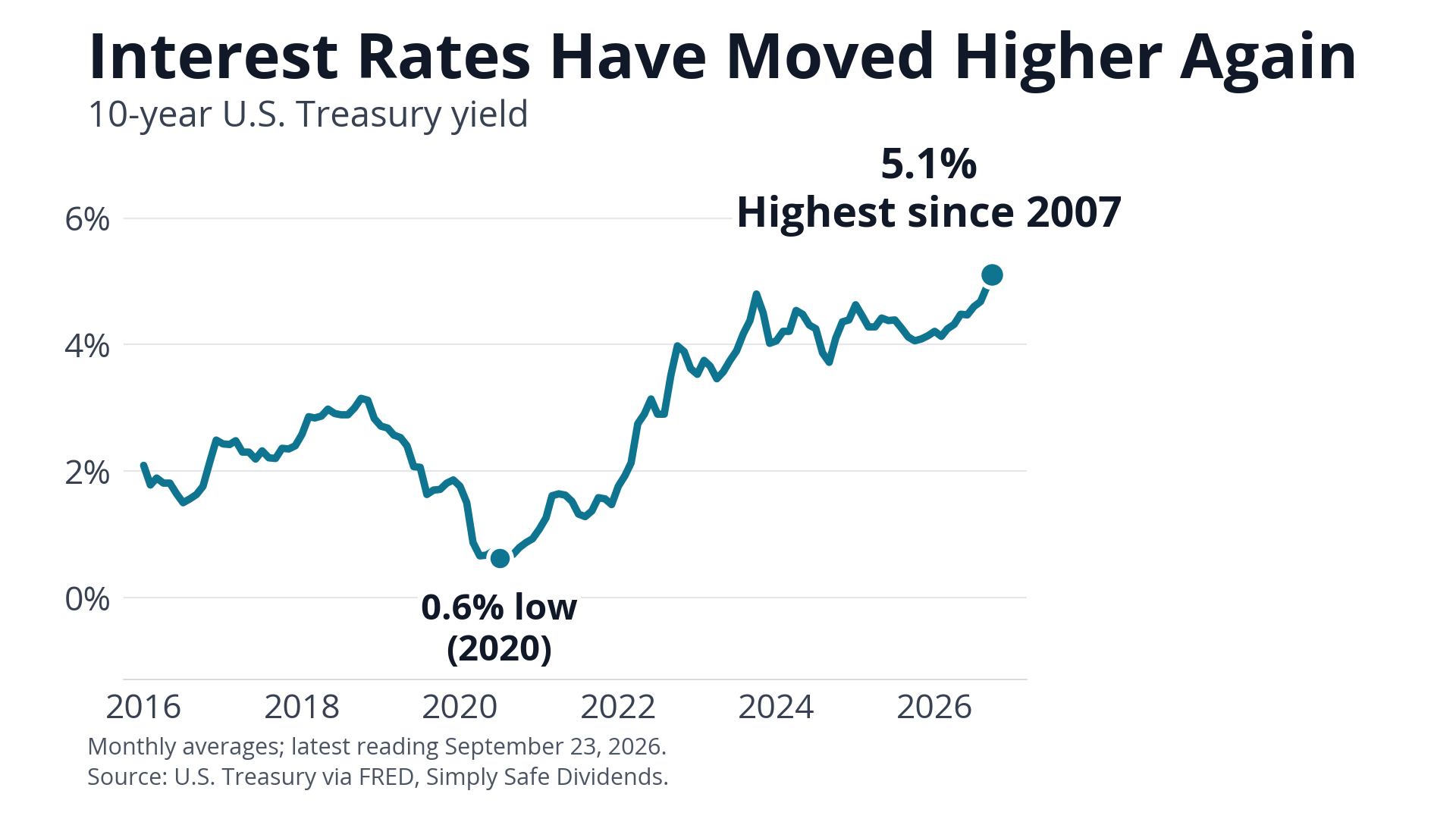
It is mostly interest rates. REITs like Agree are somewhat bond-like, so when bond yields rise, a 5% dividend does not look quite as special. With inflation picking up and the Federal Reserve raising rates in September for the first time since 2023, the 10-year Treasury yield has climbed to its highest level since 2007, and the REIT sector has fallen out of favor.
Why the dividend still looks safe
The business itself is doing well. Agree just had the biggest quarter for new investments in its history, putting $502 million to work in 102 properties, and its portfolio is nearly 100% leased.
Its adjusted funds from operations (AFFO) per share, the REIT version of cash flow, has grown every single year for the last decade, including through the pandemic.
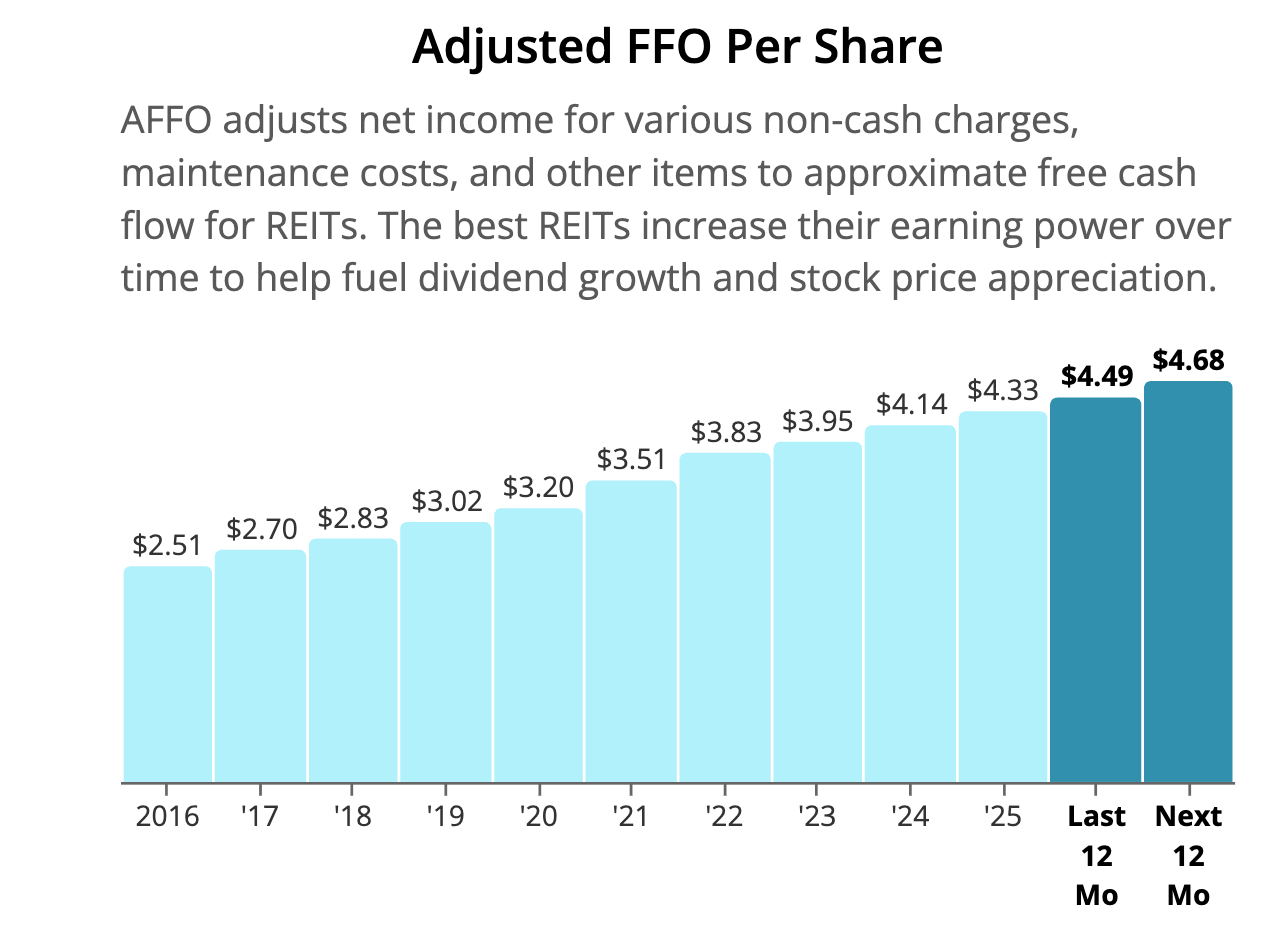
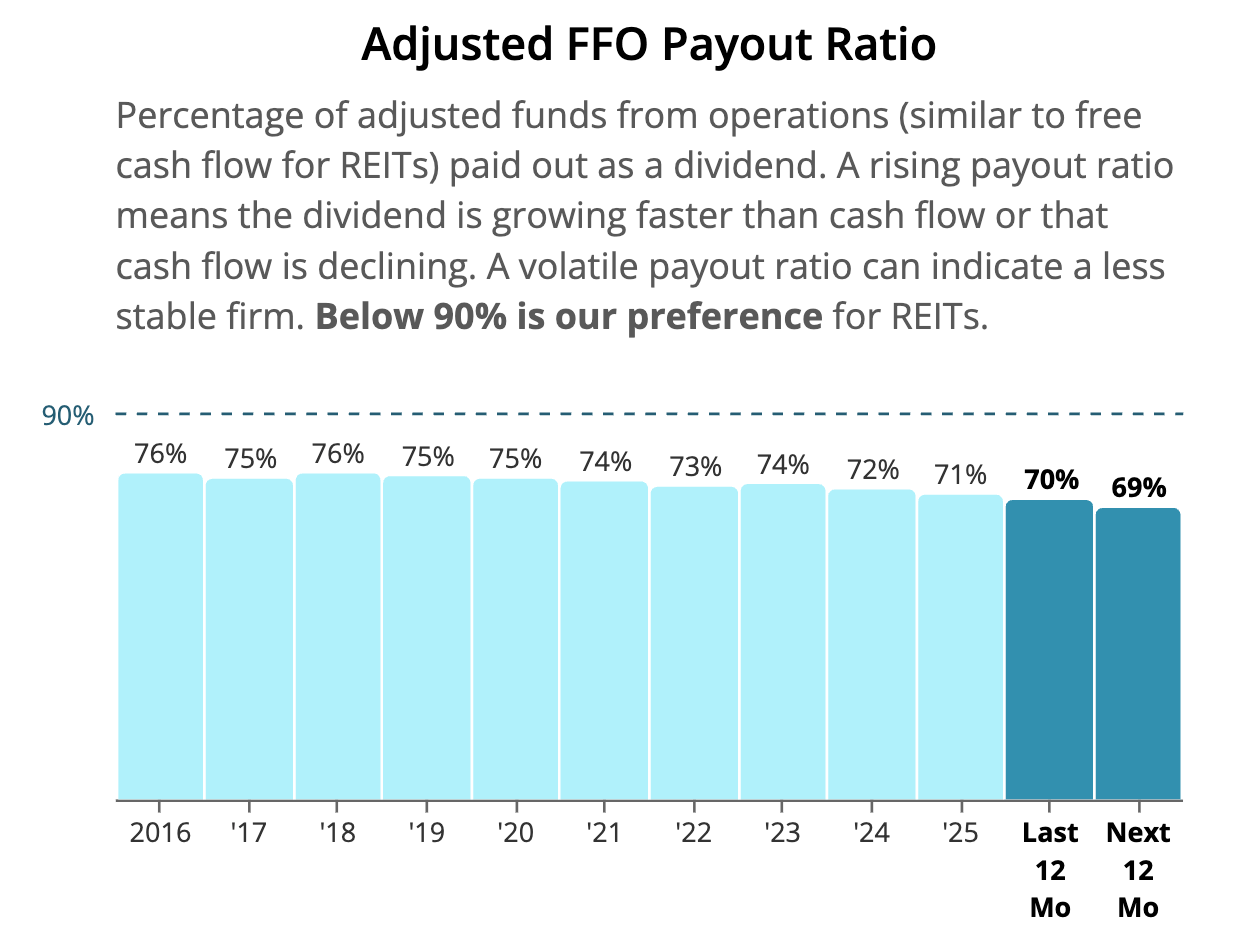
The payout ratio has drifted steadily lower as a result. Agree pays out about 70% of its AFFO, comfortably below the 90% we prefer for REITs, and the ratio is on track for its lowest level in at least 10 years. That leaves more retained cash to reinvest in new properties.
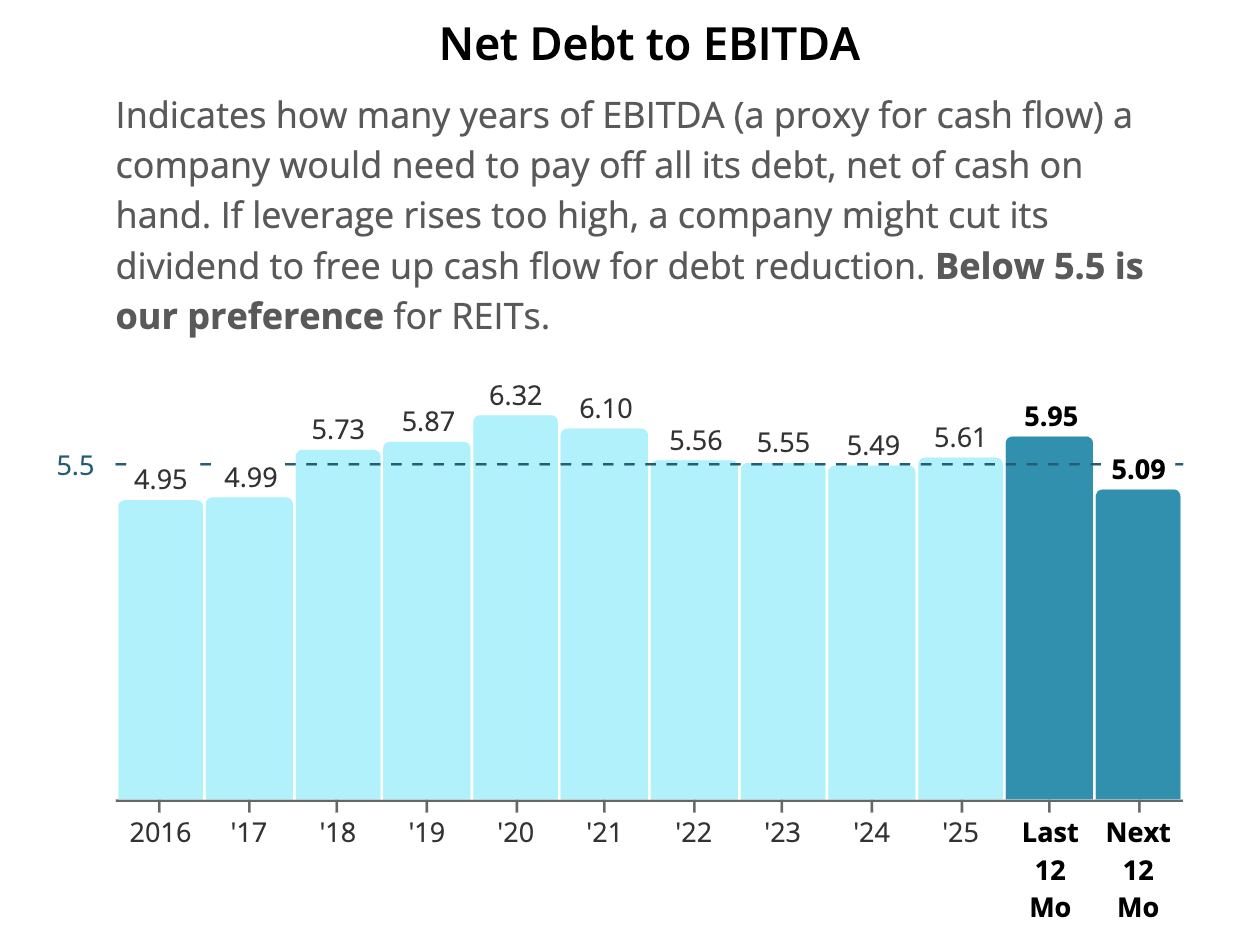
Leverage does sit a bit above what we prefer for REITs today, but it is expected to fall to its lowest level since 2017 over the next 12 months. The BBB+ credit rating from S&P also helps keep borrowing costs relatively low.
Agree did cut its dividend in 2011. At the time, just a few tenants made up more than half of its rent, including Borders, the bookstore chain that went bankrupt, and Walgreens, which was about a third of its rent on its own.
Agree clearly learned from that. It steadily reduced its Walgreens exposure to less than 1% of rent, which turned out to be a great call once Walgreens was downgraded to junk and closed a number of stores.
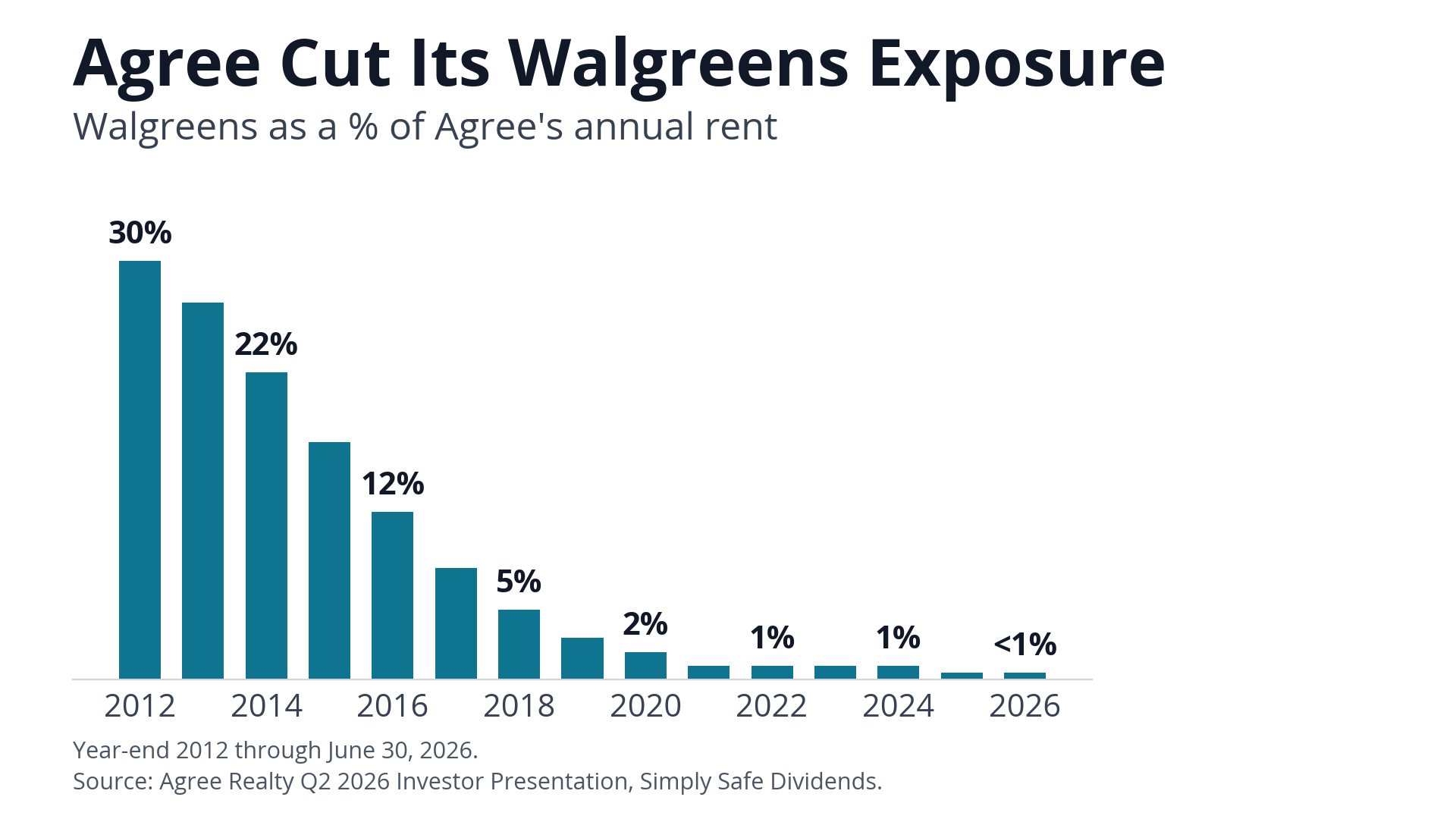
Since that cut, Agree has raised its dividend 13 years in a row. The raises have been a little smaller lately, but with cash flow still growing and the balance sheet strengthening, increases of roughly 3% to 4% a year look sustainable.
Valuation
For many REITs we base the expected price range on cash flow instead of dividend yield, but the idea is the same, and Agree is trading below that range today. Its 4.8% yield is also well above its five-year average of about 4.2%.
Agree will remain sensitive to interest rates, and if rates stay high, REITs like this could stay out of favor for a while. But you are getting a yield of almost 5%, paid monthly, from one of the most conservatively positioned landlords in retail.
Brookfield Infrastructure Corporation (BIPC): A Restructuring, Not a Dividend Problem
Sector: Utilities – Gas Utilities
Dividend Yield: 5.2%
Dividend Safety Score: Safe (65)
Uninterrupted Dividend Streak: 17 years
Credit Rating: BBB+
Dividend Yield: 5.2%
Dividend Safety Score: Safe (65)
Uninterrupted Dividend Streak: 17 years
Credit Rating: BBB+
Brookfield owns the kind of assets the world cannot really run without: utilities, pipelines, railroads, ports, cell towers, and data centers spread across the globe. Transport and utilities together generated 60% of its cash flow over the last 12 months.
Around 85% of that cash flow is regulated or locked in by long-term contracts, so the business is fairly predictable regardless of the economy. Most of it is also linked to inflation, so the same inflation pushing up interest rates and weighing on the stock should not pressure profits much.
Why BIPC stock is down
At first glance BIPC looks like it has crashed. The shares recently traded at $34.99, about 31% below their 52-week high. But a lot of that has nothing to do with the business.
Brookfield has two stocks that own the exact same assets: BIPC, and a partnership that trades under the ticker BIP. For years, BIPC traded at a higher price because many funds cannot own partnerships. In July, Brookfield announced it will combine the two into one company, one share for one unit, so that premium has been melting away.
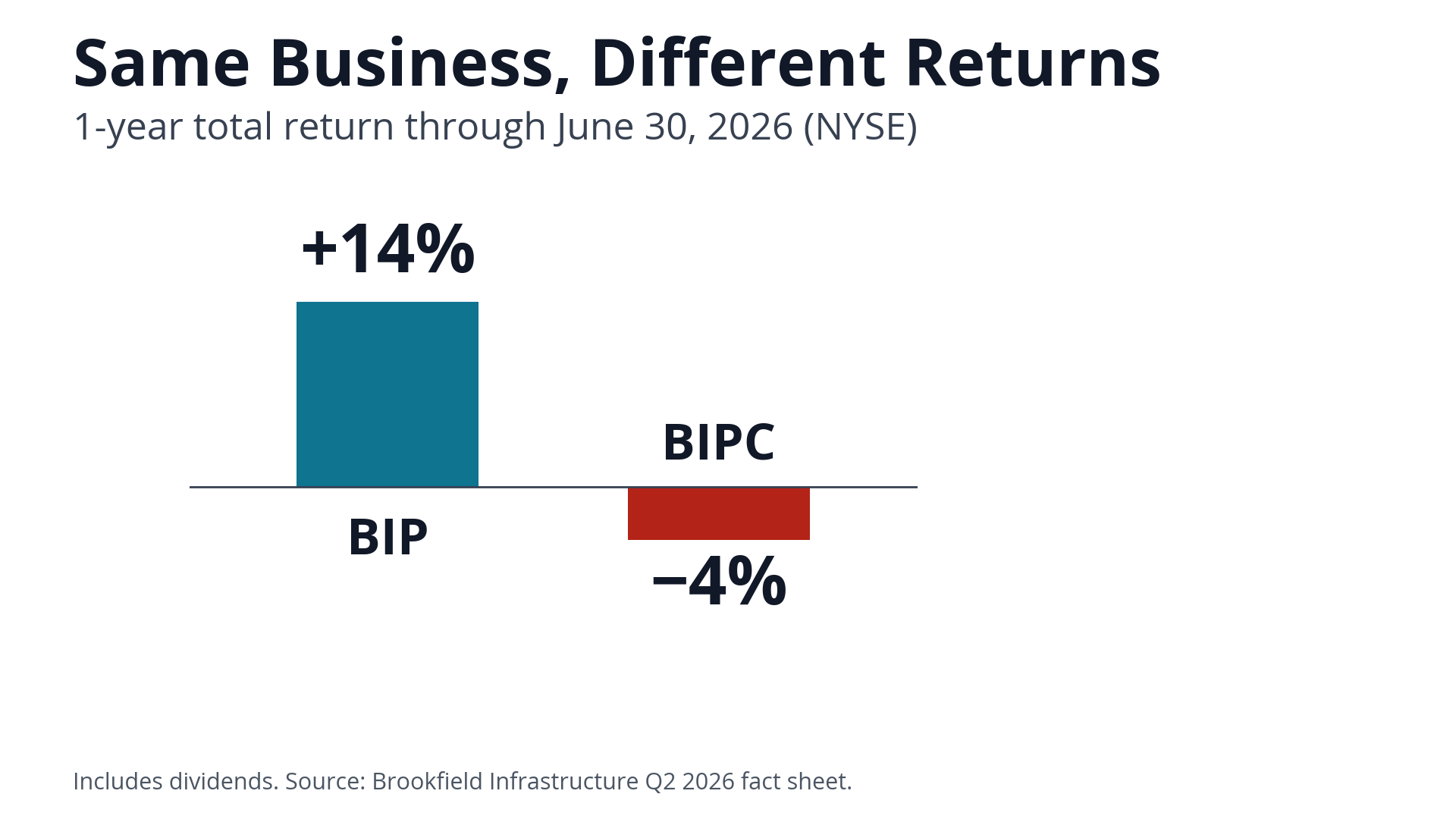
You can see it in the returns. Over the year through June 30, 2026, BIPC lost 4% while BIP gained 14%, even though they own the same business.
Shareholders vote on the combination on October 14, and the deal is expected to close in the fourth quarter of 2026. Brookfield expects the exchange to be tax-deferred for most U.S. and Canadian investors, and BIPC holders already own a corporate security, so their tax reporting should not change.
Why the dividend still looks safe
Meanwhile, the business keeps growing, with funds from operations (FFO) per unit up around 10% so far this year. And unlike many REITs and utilities, Brookfield does not need to sell new stock at today's lower prices to fund that growth. It mostly sells mature assets and reinvests the capital.
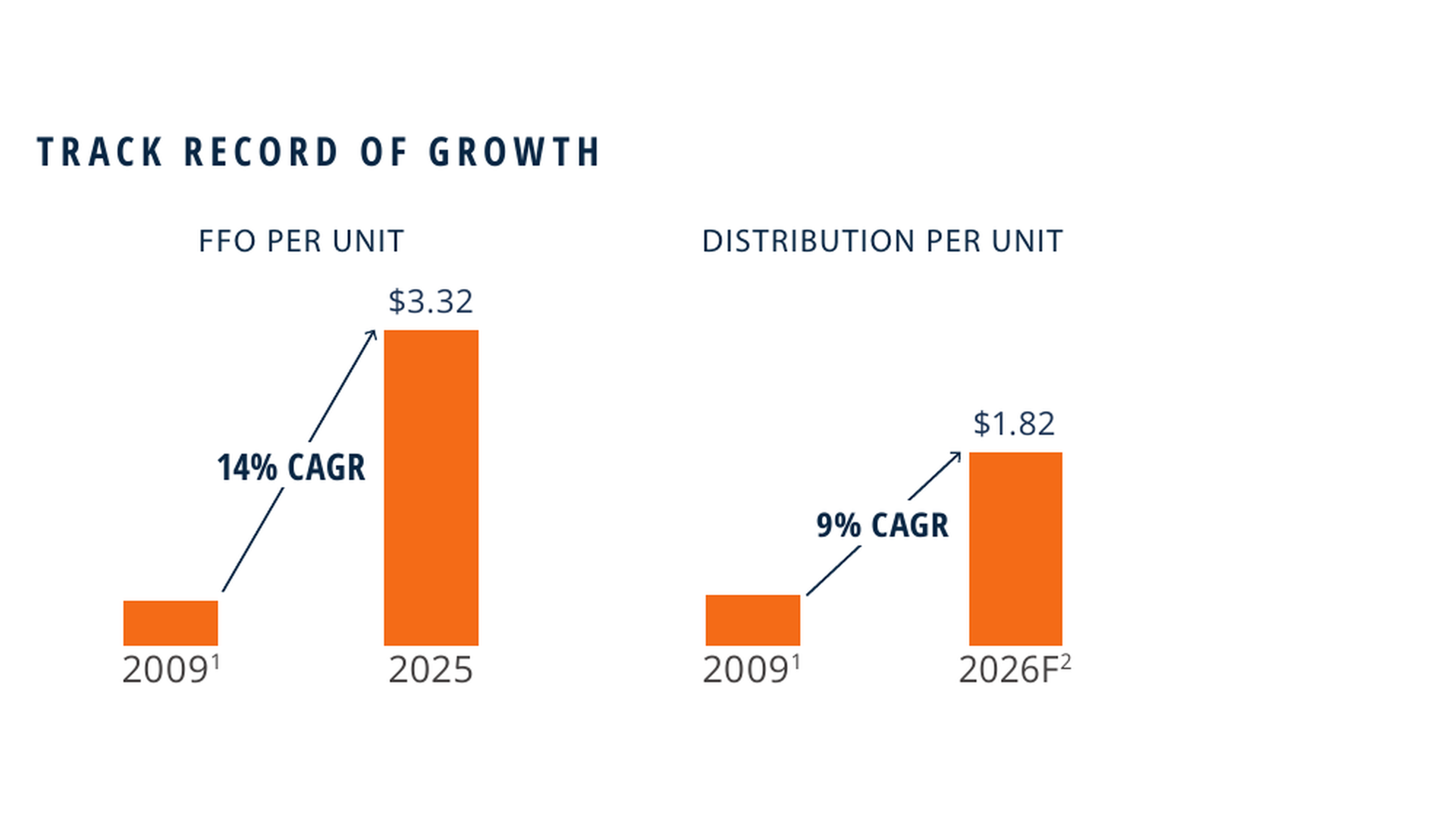
Brookfield has confirmed that combining the two stocks will not change the dividend, and we do not expect it to. Its payout ratio was 66% in the second quarter, right in the middle of management's 60% to 70% target range.
Cash flow has also grown faster than the dividend over time, which is how Brookfield has kept raising its payout without hurting its financial flexibilty.
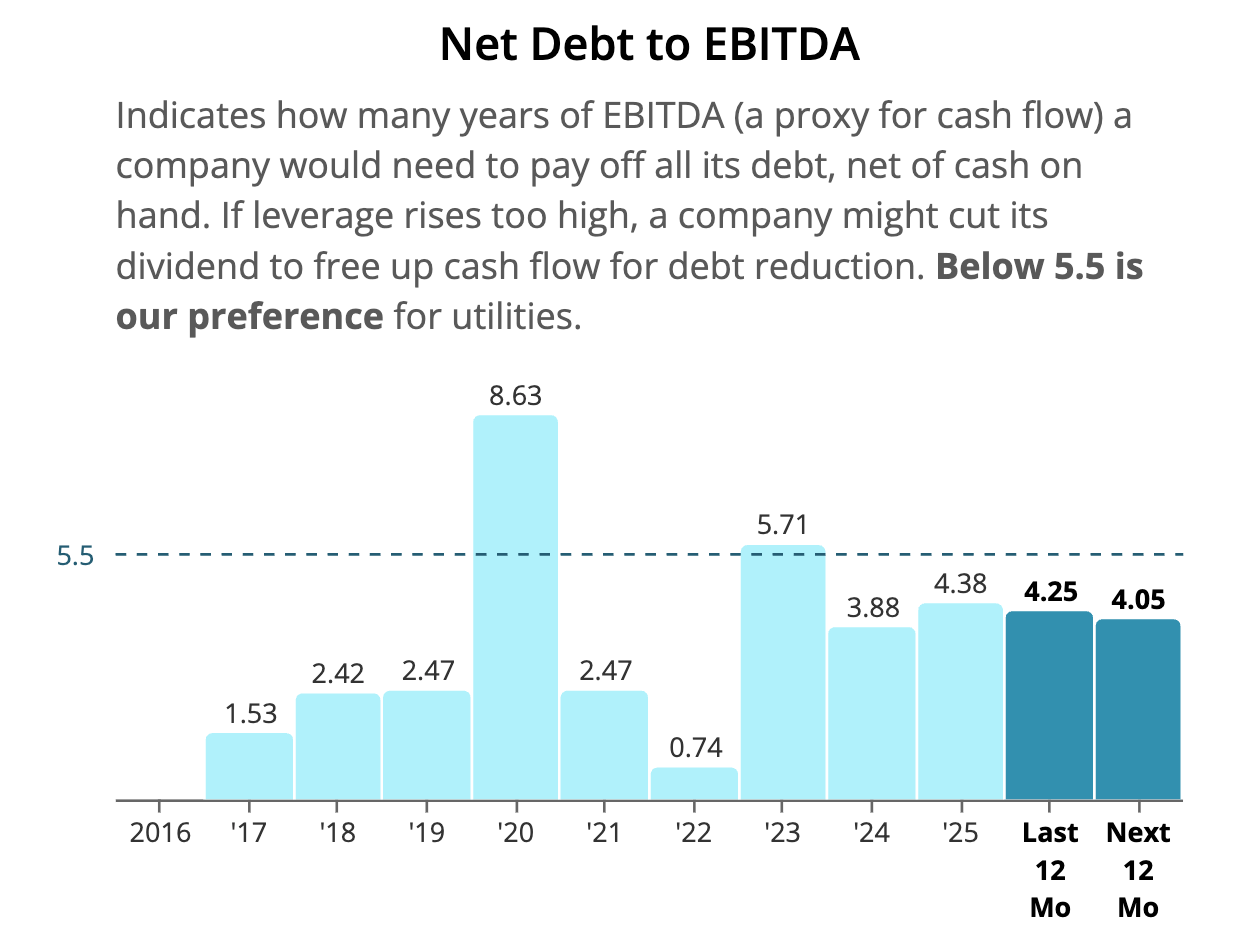
Leverage supports that view, too. It is quite reasonable for a utility and has come down meaningfully from its 2020 peak.
Brookfield has raised its dividend every year since 2008, including a 5.8% increase this January. Management targets 5% to 9% growth a year, and with cash flow up 10%, the next raise in early 2027 should land somewhere in that range.
BIPC is a Canadian company, so some of your dividend may be withheld for Canadian taxes in a regular brokerage account. That is generally not an issue in U.S. retirement accounts.
Valuation
BIPC's own valuation chart makes the stock look cheaper than it really is because its five-year average yield was held down by that old premium. BIP's chart is the cleaner guide, and it shows the shares sitting near the bottom of their expected range.
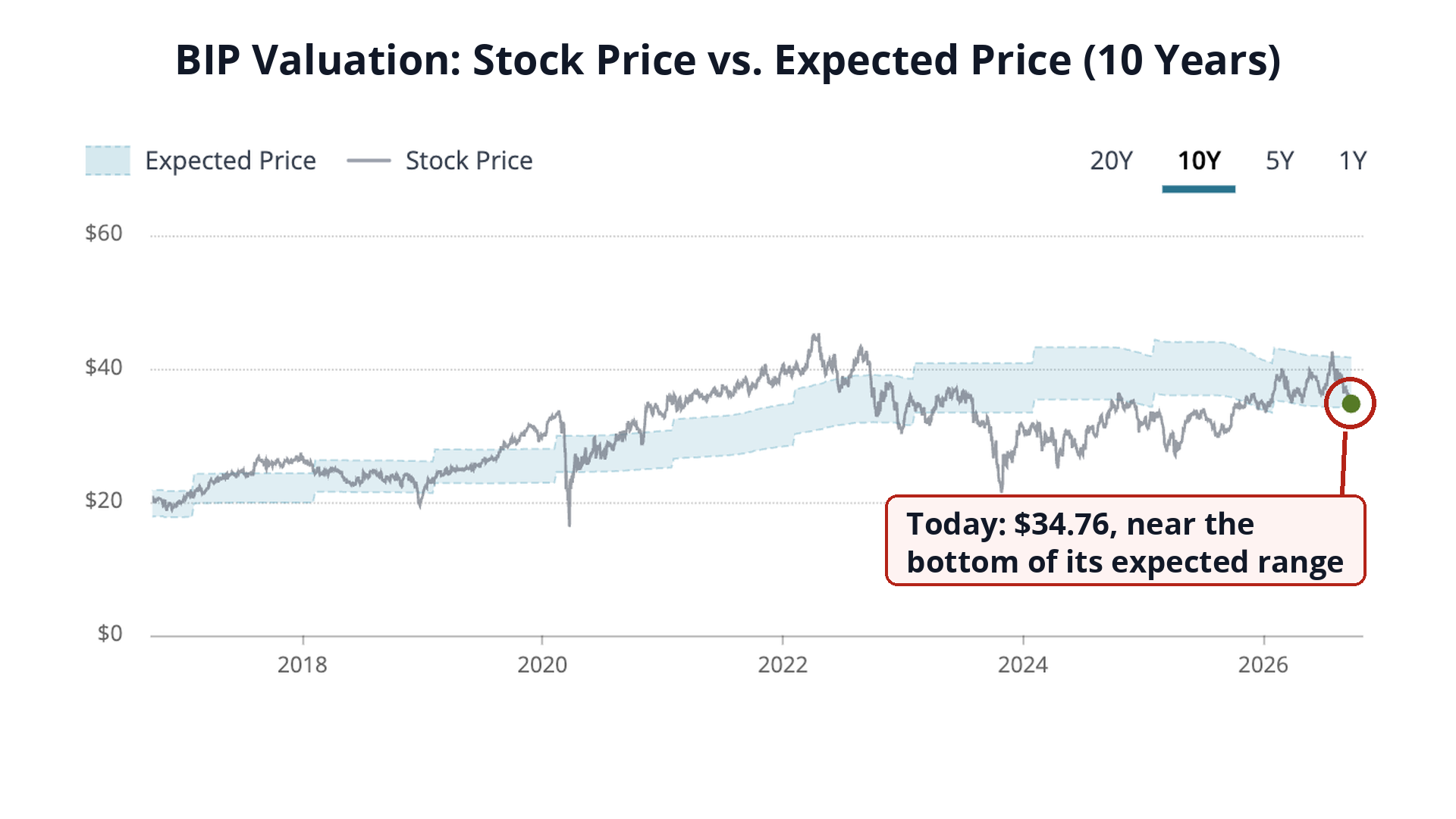
So the stock looks reasonably valued rather than a bargain. But you are getting a higher yield than usual from a diversified collection of hard-to-replicate assets that is still growing and comes with some built-in protection from inflation.
Down, but Not Broken
All three of these stocks show that a falling share price is not always a sign of trouble for the dividend.
Higher interest rates reach each company differently. They freeze the home sales that drive Fidelity's title business, make bonds more competitive with Agree's monthly dividend, and compress the valuations of Brookfield's long-lived infrastructure while its old premium to BIP unwinds.
In every case the business is still in good shape and the dividend looks well covered. When that happens, you can lock in a higher yield than you would normally get while you wait for conditions to improve.
Not every beaten-down stock is a bargain, though. Sometimes the price is falling because the business is getting weaker, and a high yield is really a warning sign. That is why dividend safety matters so much. Since 2015, 97% of the 946 dividend cuts we have tracked came from companies we had rated below Safe before the cut was announced.
Frequently Asked Questions
Is Fidelity National Financial's dividend safe?
Fidelity National Financial earns a Safe Dividend Safety Score, reaffirmed on August 20, 2026. It pays out about 38% of its earnings, well below the 60% we prefer for most companies, and has raised its dividend for 14 consecutive years.
Why is FNF stock down?
Existing home sales have averaged about 4.1 million a year in 2026, near 30-year lows, and mortgage rates crossed 7% in September. Fewer home sales mean fewer title policies, and investors have also worried about F&G's private credit exposure. FNF recently traded about 32% below its 52-week high.
Why is Agree Realty stock down?
Higher interest rates. The Federal Reserve raised rates in September 2026 for the first time since 2023, and the 10-year Treasury yield reached its highest level since 2007. That made bonds more competitive with Agree's 4.8% monthly dividend, even as the company posted a record investment quarter.
Did Agree Realty ever cut its dividend?
Yes, in 2011, when Walgreens, Borders and Kmart together made up more than half of its rent. Walgreens is now less than 1% of rent, its largest tenant, Walmart, is under 6%, and Agree has raised its dividend 13 years in a row.
What happens to the BIPC dividend when BIP and BIPC combine?
Brookfield has said the combination will not change the dividend, and we do not expect it to. The shareholder vote is October 14, with closing expected in the fourth quarter of 2026, and the payout ratio was 66% in the second quarter.
Which of these three stocks pays a monthly dividend?
Agree Realty pays monthly. Fidelity National Financial and Brookfield Infrastructure Corporation both pay quarterly.
How many high yield dividend stocks actually score Safe?
Of the 867 companies we rate, 53 earn a Safe or better Dividend Safety Score and yield at least 4%. Narrowing that to names with at least a 10-year dividend growth streak, a yield of at least 4.5%, and a price at least 15% below the 52-week high leaves 19.
Does a beaten-down price mean the dividend is at risk?
Not by itself. 318 of the 867 companies we rate trade at least 20% below their 52-week high, and many of those payouts remain well covered by earnings or cash flow. A Dividend Safety Score is what separates a price problem from a payout problem.
Where to Look Next
Beaten-down names are only one route to income. Our list of top high dividend stocks yielding 4% to 10% covers the wider field, and our Dividend Safety Scores explain how each rating is built.
You can review your own portfolio's dividend safety and see every score, payout ratio and leverage chart referenced above with a free demo of Simply Safe Dividends.